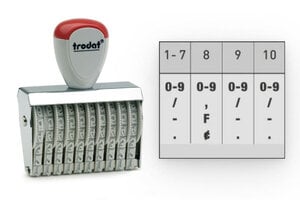
Number Stamps

Create professional document numbering systems with our comprehensive range of number stamps, designed to streamline your administrative processes with precision and reliability. From manual numbering stamps for controlled applications to automatic sequential models for high-volume operations, our European-quality stamps offer the perfect solution for efficient document management and organisation in any business environment.
Show more...
starting at £12.90
View our products
10  products
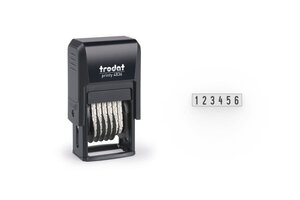
Trodat Number Stamp Printy 4836

Trodat Number Stamp Printy 4836

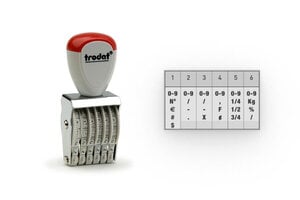
Text height 3.8mm - 6 bands
£12.83
view details
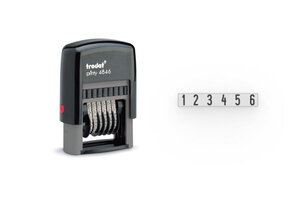
Trodat Number Stamp Printy 4846

Trodat Number Stamp Printy 4846

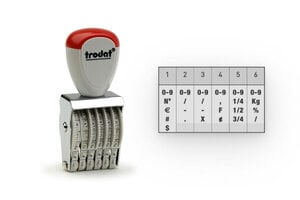
Text height 4mm - 6 bands
£15.75
view details
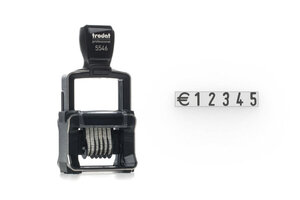
Trodat Number Stamp Metal Line 5546

Trodat Number Stamp Metal Line 5546

Text height 4mm - 6 bands
£38.25
view details
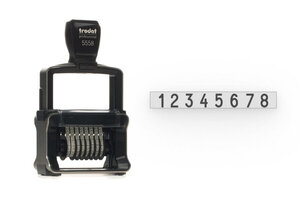
Trodat Number Stamp Metal Line 5558

Trodat Number Stamp Metal Line 5558

Text height 5mm - 8 bands
£51.58
view details
fast shipping
fast shipping
Express 24h or free shipping from £60.00
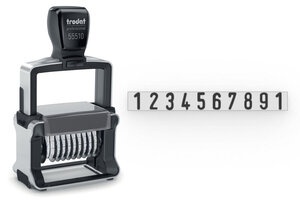
Trodat Number Stamp Metal Line 55510

Trodat Number Stamp Metal Line 55510

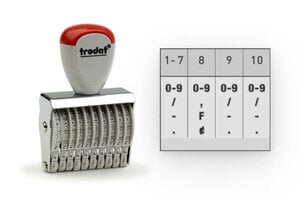
Text height 4mm - 10 bands
£54.08
view details
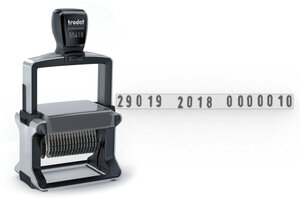
Trodat Number Stamp Metal Line 55418

Trodat Number Stamp Metal Line 55418

Text height 4mm - 18 bands
£115.75
view details
Trodat Number Stamp Classic 1536

Trodat Number Stamp Classic 1536

Zahlenstempel - text height 3mm - 6 bands
£10.75
view details
Trodat Number Stamp Classic 1556

Trodat Number Stamp Classic 1556

Zahlenstempel - text height 5mm - 6 bands
£11.58
view details
Trodat Number Stamp Classic 15310

Trodat Number Stamp Classic 15310

Zahlenstempel - text height 3mm - 10 bands
£15.75
view details
Trodat Number Stamp Classic 15510

Trodat Number Stamp Classic 15510

Zahlenstempel - text height 5mm - 10 bands
£18.25
view details
volume pricing
volume pricing
auto-applied from 2 stamps up to -20%

What is the difference between self-inking and manual numbering stamps?

The primary difference lies in the ink delivery system and operational convenience. Manual numbering stamps require separate ink pads and deliberate activation of the numbering mechanism between impressions, providing complete operator control over the numbering process.

Self-inking numbering stamps incorporate integrated ink reservoirs that automatically re-ink the numbering wheels between impressions. Key differences include:

  • Manual stamps offer cost-effectiveness and mechanical simplicity with exceptional durability
  • Self-inking stamps provide enhanced efficiency through automatic ink delivery systems
  • Manual stamps excel in low-volume applications where precision takes precedence over speed
  • Self-inking stamps are ideal for medium to high-volume operations requiring consistent workflow efficiency

Manual stamps are particularly valuable when selective numbering is required or verification of each number before impression is essential, whilst self-inking variants dramatically improve operational efficiency for regular document processing tasks.

How do I maintain my numbering stamp for optimal performance?

Proper maintenance varies depending on your stamp type and directly influences both impression quality and operational lifespan. Regular maintenance prevents common problems that could compromise document quality or workflow efficiency.

For self-inking numbering stamps:

  • Replace ink pads after several thousand impressions when print quality diminishes
  • Clean numbering wheels regularly with appropriate solvents to remove ink buildup
  • Store in clean, dry environments with protective covers to prevent premature ink drying
  • Maintain appropriate temperature and humidity levels during storage

For manual numbering stamps:

  • Clean numbering wheels gently to prevent ink accumulation that affects clarity
  • Maintain ink pads at optimal moisture levels - neither too dry nor excessively saturated
  • Store in clean, dry environments protecting against dust and temperature extremes
  • Regularly inspect the advancement mechanism for smooth operation

Implementing systematic maintenance protocols maximises performance whilst minimising operational disruptions and extends your stamp's operational lifespan significantly.

Can I customise a numbering stamp with my company information?

Yes, modern numbering stamps offer extensive customisation possibilities that extend far beyond basic sequential numbering. These advanced features enable businesses to create comprehensive document identification systems within a single impression.

Available customisation options include:

  • Text plate additions incorporating company names, department identifiers, or standard phrases alongside sequential numbers
  • Date integration combining sequential numbering with automatic date stamping in hybrid devices
  • Logo incorporation using advanced manufacturing techniques to integrate company logos or symbols
  • Custom character heights ranging from 3mm to 8mm depending on readability requirements
  • Prefix and suffix characters alongside numerical sequences for specialised applications

These customisation capabilities prove particularly valuable for creating professional, branded impressions that enhance document presentation whilst maintaining operational efficiency. The combination of sequential numbering with company branding creates reliable identification systems that satisfy both functional requirements and professional presentation standards.

At Otypo, our comprehensive customisation options ensure your numbering stamp reflects your business identity whilst delivering the systematic organisation and professional appearance that UK businesses demand.

What capacity should I choose for my numbering stamp wheels?

Number wheel capacity determines the maximum sequential range available before manual reset becomes necessary, making this selection crucial for long-term operational efficiency. The choice should account for anticipated numbering requirements with adequate margin for future growth.

Common capacity configurations include:

  • 4-digit capacity (0001-9999): Suitable for small offices, low-volume applications, or departments with limited daily numbering requirements
  • 6-digit capacity (000001-999999): Ideal for medium-volume operations, invoice numbering, or systematic document control in larger organisations
  • 8-digit capacity (00000001-99999999): Perfect for high-volume commercial applications, warehouse operations, or extensive inventory management systems
  • Specialised models: Some advanced stamps offer even greater capacity for industrial applications

Selection considerations:

  • Assess your daily impression volume and multiply by operational periods to estimate total requirements
  • Consider future business growth and expansion of numbering needs
  • Account for different numbering sequences that may run simultaneously
  • Insufficient capacity necessitates frequent manual resets that disrupt workflow efficiency

Choosing appropriate capacity prevents operational interruptions whilst ensuring your numbering system can accommodate business growth and changing requirements over time.

Which type of numbering stamp is best for high-volume office use?

For high-volume office applications exceeding 200 daily impressions, automatic sequential numbering stamps represent the optimal choice, designed specifically for intensive commercial use where speed and consistency are paramount.

Automatic sequential stamps offer superior advantages for high-volume use:

  • Automatic advancement with each impression eliminates operator intervention whilst maintaining perfect sequential order
  • Commercial-grade construction with heavy-duty frames and precision-engineered components
  • Designed to handle thousands of daily impressions whilst maintaining clear, professional results
  • Adjustable increment settings allowing customisation of numbering sequences
  • Reinforced impression mechanisms ensuring consistent performance throughout extended operational periods

Key features for high-volume environments:

  • Robust metal frame construction resisting wear and maintaining precise alignment
  • Self-inking systems with high-capacity ink reservoirs reducing maintenance frequency
  • Ergonomic design reducing operator fatigue during intensive use
  • Replaceable components extending operational life and maintaining cost-effectiveness

These advanced devices automatically advance the numbering sequence with each impression, eliminating the possibility of human error whilst ensuring consistent, professional documentation that meets stringent commercial quality standards. The investment in automatic sequential stamps pays dividends through improved efficiency, reduced errors, and enhanced professional presentation in demanding office environments.

Number stamps represent an essential tool for efficient document management and organisation in today's fast-paced business environment. Whether you're managing invoices, tracking inventory, or maintaining quality control records, a reliable number stamp transforms time-consuming manual numbering into a swift, accurate process. These ingenious devices automatically increment numbers with each impression, eliminating human error whilst ensuring consistent, professional documentation across your organisation.

Modern numbering stamps have evolved far beyond simple manual devices, offering sophisticated self-inking mechanisms, customisable text options, and heavy-duty construction suitable for high-volume commercial use. From small office environments to industrial warehouses, these tools streamline administrative workflows whilst maintaining the professional standards that UK businesses demand. The efficiency gains are immediately apparent: what once required careful handwriting or time-consuming computer printing now happens with a simple press.

At Otypo, we understand that reliable document numbering isn't just about convenience—it's about maintaining accurate records, ensuring compliance, and presenting a professional image to clients and stakeholders. Our comprehensive range of numbering stamps combines European quality engineering with intuitive operation, backed by over 60 years of expertise in precision marking solutions.

Understanding number stamps and their essential applications

A numbering stamp functions as an automated sequential marking device, designed to apply consecutive numbers to documents, products, or materials with remarkable consistency. Unlike traditional date stamps that focus on temporal marking, number stamps specifically address the need for systematic numerical identification across various business processes. The mechanism typically incorporates rotating wheels or bands containing digits 0-9, which advance automatically or manually depending on the stamp design.

The fundamental appeal of numbering stamps lies in their ability to eliminate the variability and potential errors associated with manual numbering. When processing hundreds of invoices, receipts, or inventory items, the human tendency towards mistakes becomes a significant operational risk. A quality numbering stamp ensures each document receives the correct sequential number, creating reliable audit trails and systematic organisation that regulatory bodies and internal processes demand.

Essential components of modern numbering stamps

Contemporary numbering stamps incorporate several sophisticated elements that ensure reliable operation and professional results. The numbering wheels represent the heart of the system, typically constructed from durable polymer or metal materials that maintain precise alignment throughout thousands of impressions. These wheels rotate in predetermined increments, usually advancing by one digit per impression, though some models offer customisable increment settings for specialised applications.

The ink delivery system varies significantly between manual and self-inking models, fundamentally affecting both convenience and operational efficiency. Traditional numbering stamps require separate ink pads, offering flexibility in ink colour and type but demanding additional preparation for each use. Self-inking variants incorporate integrated ink reservoirs that automatically re-ink the numbering wheels between impressions, dramatically improving workflow efficiency whilst maintaining consistent print quality.

Frame construction materials directly impact both durability and operational comfort. Heavy-duty commercial models typically feature reinforced metal frames designed to withstand intensive daily use, whilst lighter office versions may utilise high-grade plastics that balance durability with ergonomic considerations. The impression mechanism itself requires precise engineering to ensure even pressure distribution across all numbering wheels, preventing partial or unclear impressions that could compromise document integrity.

Types of numbering stamps for different business requirements

The diversity of numbering stamp designs reflects the varied demands of modern business environments, from occasional office use to intensive industrial applications. Understanding these distinctions enables informed selection based on specific operational requirements, volume expectations, and environmental conditions. Each category offers distinct advantages that align with particular use cases and budget considerations.

Manual numbering stamps for controlled applications

Manual numbering stamps represent the traditional approach to sequential marking, requiring deliberate activation of the numbering mechanism between impressions. These devices typically feature a lever or button that advances the numbering wheels to the next sequential number, providing complete operator control over the numbering process. This manual control proves particularly valuable in applications where selective numbering is required, or where verification of each number before impression is essential.

The primary advantages of manual numbering stamps include cost-effectiveness, mechanical simplicity, and exceptional durability. Without complex automatic mechanisms, these stamps often provide decades of reliable service with minimal maintenance requirements. The manual advancement system also eliminates the possibility of accidental number progression, ensuring that each impression is intentional and properly documented.

Manual stamps excel in low-volume applications where precision takes precedence over speed. Legal offices, for instance, often prefer manual numbering stamps for case file organisation, where each document requires careful consideration before numbering. Similarly, quality control processes may benefit from the deliberate nature of manual operation, ensuring that only approved items receive sequential identification numbers.

Self-inking numbering stamps for enhanced efficiency

Self-inking numbering stamps revolutionise document processing through integrated ink systems that eliminate the need for separate ink pads. These sophisticated devices incorporate internal ink reservoirs that automatically re-ink the numbering wheels between impressions, ensuring consistent print quality whilst dramatically improving operational efficiency. The self-contained design makes these stamps ideal for mobile applications or environments where maintaining separate ink supplies proves impractical.

The automatic inking mechanism typically utilises a spring-loaded system that brings the numbering wheels into contact with an internal ink pad before each impression. This ensures optimal ink coverage whilst preventing over-saturation that could lead to smudged or unclear impressions. Modern self-inking designs also incorporate protective covers that prevent accidental impressions whilst maintaining ink freshness during storage periods.

Maintenance requirements for self-inking numbering stamps focus primarily on ink pad replacement, typically required after several thousand impressions depending on usage patterns. The replacement process is generally straightforward, involving simple removal of the old ink pad and installation of a fresh unit. Many models feature indicator systems that alert users when ink levels are approaching replacement thresholds, preventing unexpected interruptions to workflow processes.

Automatic sequential numbering stamps for high-volume operations

Automatic sequential numbering stamps represent the pinnacle of numbering efficiency, designed for high-volume commercial applications where speed and consistency are paramount. These advanced devices automatically advance the numbering sequence with each impression, eliminating operator intervention whilst maintaining perfect sequential order. The automatic mechanism typically utilises spring-loaded or gear-driven systems that ensure reliable advancement regardless of impression force or operator technique.

Commercial-grade automatic numbering stamps often incorporate adjustable increment settings, allowing customisation of the numbering sequence to match specific operational requirements. Some models offer the ability to skip certain numbers, repeat sequences, or incorporate prefix/suffix characters alongside the sequential numbers. This flexibility proves invaluable in complex inventory systems or specialised documentation processes that require non-standard numbering schemes.

The robust construction of automatic numbering stamps reflects their intended high-volume applications. Heavy-duty frames, precision-engineered numbering wheels, and reinforced impression mechanisms ensure consistent performance throughout extended operational periods. Many industrial models are designed to handle thousands of daily impressions whilst maintaining clear, professional results that meet stringent quality standards.

Selecting the optimal numbering stamp for your specific needs

Choosing the appropriate numbering stamp requires careful consideration of multiple factors that directly impact both immediate functionality and long-term operational efficiency. The decision process should encompass volume requirements, environmental conditions, customisation needs, and integration with existing workflow processes. A systematic evaluation approach ensures that the selected stamp will deliver optimal performance whilst providing excellent value for the investment.

Volume assessment represents perhaps the most critical selection criterion, as it directly influences both stamp type and construction requirements. Low-volume applications, typically involving fewer than 50 impressions daily, may be adequately served by manual or basic self-inking models. Medium-volume environments, processing 50-200 daily impressions, generally benefit from quality self-inking stamps that balance efficiency with reasonable maintenance requirements. High-volume operations, exceeding 200 daily impressions, typically require automatic sequential stamps with commercial-grade construction to ensure reliable long-term performance.

Key selection criteria and technical specifications

Character height and readability requirements vary significantly across different applications, influencing both stamp selection and operational effectiveness. Standard character heights typically range from 3mm to 8mm, with larger characters providing enhanced readability but requiring correspondingly larger impression areas. Document types, viewing distances, and reproduction requirements all influence optimal character size selection. Legal documents may require smaller, discrete numbering, whilst warehouse applications might benefit from larger, more visible characters that remain readable in challenging lighting conditions.

Number wheel capacity determines the maximum sequential range available before manual reset becomes necessary. Common configurations include 4-digit (0001-9999), 6-digit (000001-999999), and 8-digit (00000001-99999999) options, with some specialised models offering even greater capacity. The selection should account for anticipated numbering requirements with adequate margin for future growth. Insufficient capacity necessitates frequent manual resets that disrupt workflow efficiency and may introduce numbering errors.

Frame material selection impacts both durability and operational characteristics. Metal frames, typically constructed from steel or aluminium alloys, provide exceptional durability and dimensional stability under intensive use. These materials resist wear, maintain precise alignment, and often incorporate replaceable components that extend operational life. Plastic frames, usually manufactured from high-grade polymers, offer lighter weight and ergonomic advantages whilst providing adequate durability for moderate-use applications.

Customisation options and advanced features

Modern numbering stamps offer extensive customisation possibilities that extend far beyond basic sequential numbering. Text plate additions enable incorporation of company names, department identifiers, or standard phrases alongside the sequential numbers. This capability proves particularly valuable for creating comprehensive document identification systems that include both numerical sequences and contextual information within a single impression.

Date integration represents another sophisticated customisation option, combining sequential numbering with automatic date stamping in a single device. These hybrid stamps prove invaluable for applications requiring both temporal and sequential identification, such as receipt processing, quality control documentation, or time-sensitive inventory management. The date mechanism typically operates independently of the numbering system, allowing flexible configuration of date formats and update frequencies.

Logo incorporation capabilities enable businesses to reinforce brand identity whilst maintaining systematic numbering. Advanced manufacturing techniques allow integration of company logos, symbols, or decorative elements alongside functional numbering components. This customisation creates professional, branded impressions that enhance document presentation whilst maintaining operational efficiency.

Practical applications across diverse industry sectors

The versatility of numbering stamps enables their effective deployment across virtually every industry sector, from traditional office environments to specialised industrial applications. Understanding these diverse use cases provides insight into the practical benefits and operational improvements that quality numbering stamps deliver. Each sector presents unique requirements that influence stamp selection and implementation strategies.

Office and administrative environments

Administrative environments represent perhaps the most common application for numbering stamps, where systematic document organisation directly impacts operational efficiency and regulatory compliance. Invoice numbering exemplifies this application, where sequential identification enables rapid document retrieval, simplifies accounting processes, and satisfies audit requirements. The consistent, professional appearance of stamped numbers also enhances business credibility whilst reducing the time investment required for manual numbering systems.

Document control systems in larger organisations often rely heavily on numbering stamps to maintain systematic filing and retrieval processes. Meeting minutes, correspondence, and internal reports benefit from sequential identification that enables rapid location and reference. The numerical sequences also facilitate chronological organisation and provide clear audit trails that demonstrate procedural compliance and systematic record-keeping practices.

Compliance and audit trail requirements in many industries mandate systematic document identification that numbering stamps provide efficiently and reliably. Financial services, healthcare, and legal sectors particularly benefit from the clear, tamper-evident identification that quality numbering stamps deliver. The permanent, professional impressions create reliable documentation that satisfies regulatory scrutiny whilst streamlining internal processes.

Warehouse and inventory management applications

Warehouse environments present unique challenges that highlight the durability and reliability advantages of quality numbering stamps. Product identification and tracking systems often incorporate sequential numbering alongside barcode or RFID technologies, providing backup identification methods that remain readable even when electronic systems fail. The robust construction of commercial-grade numbering stamps ensures consistent performance in demanding environments characterised by dust, temperature variations, and intensive daily use.

Receiving and dispatch documentation benefits significantly from systematic numbering that enables rapid processing and accurate record-keeping. Sequential identification of delivery notes, picking lists, and shipping documents creates clear operational trails that facilitate problem resolution and performance analysis. The speed and consistency of numbering stamps prove particularly valuable during peak operational periods when manual numbering would create unacceptable delays.

Quality control processes frequently incorporate numbering stamps to identify inspection points, batch numbers, or approval stages within manufacturing workflows. The clear, permanent impressions provide reliable identification that withstands handling, storage, and transportation whilst maintaining readability throughout product lifecycles. This systematic identification proves invaluable for tracking quality issues, implementing recalls, or demonstrating compliance with manufacturing standards.

Professional services and specialised applications

Legal and professional service environments often require numbering systems that combine precision with professional presentation. Case file numbering, contract identification, and court document preparation all benefit from the consistent, professional appearance that quality numbering stamps provide. The permanent, tamper-evident nature of stamped impressions also satisfies legal requirements for document authentication and chain-of-custody documentation.

Healthcare applications frequently utilise numbering stamps for patient record organisation, prescription tracking, and equipment identification. The clear, permanent impressions remain readable throughout extended storage periods whilst providing reliable identification that supports patient safety and regulatory compliance. Specialised medical-grade inks and materials ensure compatibility with sterilisation processes and medical documentation requirements.

Educational institutions often implement numbering systems for student records, examination papers, and administrative documentation. The systematic organisation that numbering stamps enable supports efficient record-keeping whilst providing clear identification that facilitates rapid retrieval and reference. The durability and reliability of quality stamps ensure consistent performance throughout academic years whilst minimising maintenance requirements.

Maintenance protocols for optimal numbering stamp performance

Proper maintenance represents the foundation of reliable numbering stamp performance, directly influencing both impression quality and operational lifespan. Understanding the specific requirements of different stamp types enables implementation of appropriate maintenance protocols that maximise performance whilst minimising operational disruptions. Regular maintenance also prevents common problems that could compromise document quality or workflow efficiency.

The maintenance approach varies significantly between manual and self-inking numbering stamps, reflecting their different operational mechanisms and wear patterns. Manual stamps typically require attention to the numbering wheels, impression mechanism, and external ink pad compatibility. Self-inking models focus primarily on internal ink system maintenance, including pad replacement and mechanism cleaning. Understanding these distinctions enables targeted maintenance efforts that address the most critical performance factors.

Self-inking stamp maintenance and care procedures

Self-inking numbering stamps require systematic attention to their integrated ink systems to maintain optimal performance throughout their operational lifespan. Ink pad replacement represents the most common maintenance requirement, typically necessary after several thousand impressions depending on usage patterns and environmental conditions. The replacement process generally involves accessing the internal mechanism, removing the depleted ink pad, and installing a fresh replacement unit according to manufacturer specifications.

Cleaning procedures for self-inking stamps focus on removing ink buildup and debris that can accumulate on numbering wheels and internal mechanisms. Regular cleaning with appropriate solvents prevents ink from hardening and ensures smooth operation of the automatic advancement system. The cleaning frequency depends on usage intensity and environmental conditions, with dusty or high-volume environments requiring more frequent attention to maintain optimal performance.

Storage recommendations for self-inking stamps emphasise protection of the internal ink system and prevention of premature drying. Proper storage involves maintaining appropriate temperature and humidity levels whilst protecting the stamp from direct sunlight and extreme temperature variations. Many models include protective covers or storage cases that maintain optimal conditions whilst preventing accidental impressions during storage periods.

Manual stamp care and operational guidelines

Manual numbering stamps require different maintenance approaches that focus on the mechanical components and external ink pad systems. Regular cleaning of the numbering wheels prevents ink buildup that could affect impression clarity or interfere with the manual advancement mechanism. The cleaning process typically involves gentle removal of accumulated ink and debris using appropriate solvents and soft brushes that won't damage the wheel surfaces or numerical characters.

Proper ink pad selection and application significantly influence both impression quality and stamp longevity. High-quality ink pads provide consistent coverage whilst minimising the risk of over-saturation that could lead to smudged impressions. The ink pad should be maintained at optimal moisture levels, neither too dry nor excessively saturated, to ensure clear, professional impressions throughout the operational period.

Storage best practices for manual numbering stamps emphasise protection of the mechanical components and prevention of damage during non-operational periods. The stamps should be stored in clean, dry environments that protect against dust accumulation and temperature extremes. Regular inspection of the advancement mechanism ensures smooth operation whilst identifying potential issues before they compromise performance or require extensive repairs.

Implementing a systematic approach to number stamp selection and maintenance ensures optimal performance whilst maximising the return on your investment. Whether you require basic manual numbering for occasional use or sophisticated automatic systems for high-volume operations, understanding the available options and their specific advantages enables informed decisions that enhance operational efficiency. At Otypo, our commitment to European quality and customer satisfaction ensures that every numbering stamp delivers the reliability and performance that UK businesses demand, backed by comprehensive support and rapid delivery throughout Europe.

Read more...
Quote on requestCustom quotes available for bulk or special requests
Secure paymentSecure payment via card or PayPal
Free shippingFree delivery from £60
Volume discountsUp to 20% off with volume discounts!
Custom productsCreate your own product easily with our online editor
Quote on requestCustom quotes available for bulk or special requests
Secure paymentSecure payment via card or PayPal
Free shippingFree delivery from £60
Volume discountsUp to 20% off with volume discounts!
Custom productsCreate your own product easily with our online editor