Business Stamps
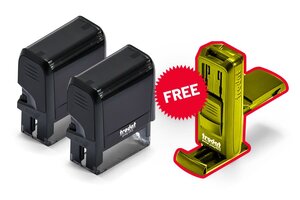
Create an affordable stamp in just 2 minutes.
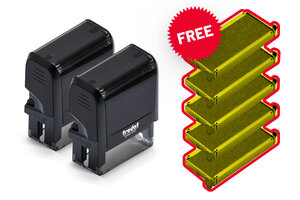
Ink pad included with every automatic stamp
Stamps engraved on site, shipped within 24h
starting at £14.40


Create an affordable stamp in just 2 minutes.
Ink pad included with every automatic stamp
Stamps engraved on site, shipped within 24h
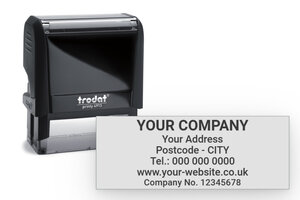
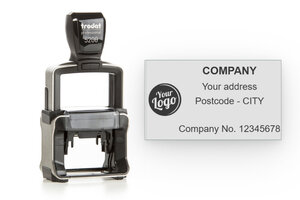
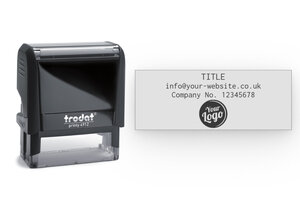



No, business stamps are not legally required for UK companies or sole traders. The UK regulatory environment treats business stamps as standard business tools rather than controlled items, placing them under general consumer protection and trading standards legislation rather than specific stamp-related regulations.
However, while not mandatory, business stamps have become essential tools for UK entrepreneurs who value efficiency and professional presentation. They serve as convenient marking tools that enhance business operations and brand consistency, with their value emerging from industry practice and customer expectations rather than legal requirements.
Professional standards in various industries often influence stamp usage, particularly where professional bodies establish documentation standards or where client expectations create practical requirements for stamped communications.
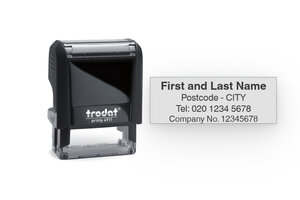
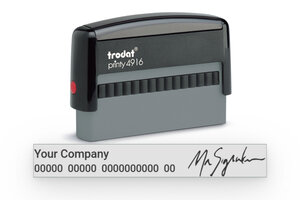
Your business stamp should include essential company information that reflects your business priorities while maintaining clarity and professional presentation. The information hierarchy should emphasise the most important details prominently.
Key information to consider including:
For optimal results, balance information density with readability. Multi-line text arrangements require careful spacing and alignment to prevent crowding whilst maximising information inclusion. Professional stamp design considers the relationship between text elements, ensuring that contact details, addresses, and supplementary information create a cohesive, easily readable impression.
The design should complement your existing business materials to maintain brand consistency and avoid confusion or brand dilution across all communication channels.
The choice between stamp types depends on your specific usage patterns, volume requirements, and operational preferences. Each technology offers distinct advantages for different business applications.
Self-inking stamps are ideal for high-volume convenience. They incorporate the ink pad directly into the stamp mechanism, eliminating mess and ensuring consistent quality. Most deliver 1,000 to 5,000 clear impressions before requiring ink pad replacement, making them perfect for busy offices processing large volumes of documents.
Traditional rubber stamps offer maximum flexibility and cost-effectiveness. They allow you to choose from multiple ink colours and types, with the ability to vary pressure and ink coverage for different effects. This makes them ideal for businesses requiring stamps on various paper types or those needing colour coordination with existing branding.
Pre-inked stamps represent the premium option, providing superior impression quality and extended operational life. They typically deliver 10,000 or more impressions before requiring refilling, with embedded ink technology ensuring consistent quality from first to last impression. Professional services firms often prefer these for their superior detail definition and longevity.
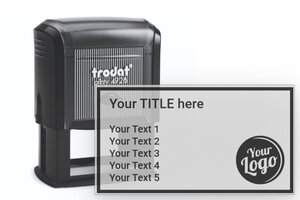
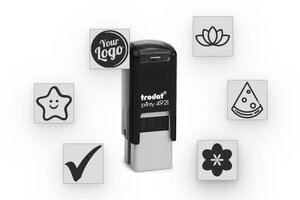
Yes, modern business stamp customisation allows comprehensive design solutions that incorporate your company logo and business details. Today's manufacturing capabilities accommodate complex logos, multiple text lines, and sophisticated layouts that rival printed materials in quality and impact.
For optimal results, high-resolution vector files typically produce the best outcomes, as they maintain clarity when scaled to stamp dimensions whilst preserving fine details that make logos recognisable. The online customisation process provides real-time design feedback, allowing you to experiment with layouts, fonts, and sizing options whilst visualising the final product before production.
Design considerations include:
Professional design consultation helps optimise artwork for stamp production whilst maintaining brand integrity and visual impact. Complex designs may require simplification to ensure clear reproduction, whilst colour logos need conversion to single-colour formats that work effectively with standard stamp inks.
Business stamp longevity varies significantly depending on the stamp type, usage frequency, and maintenance practices. Understanding these factors helps you select the right solution and maximise your investment value.
Self-inking stamps typically deliver between 1,000 and 5,000 clear impressions before requiring ink pad replacement. With proper maintenance and care, the stamp mechanism itself can last several years of regular daily use, making them exceptionally cost-effective for busy offices.
Traditional rubber stamps can last indefinitely with proper care, as the rubber die itself doesn't wear out significantly with normal use. The limiting factor is usually the separate ink pad, which requires replacement based on usage frequency.
Pre-inked stamps offer the longest operational life, typically providing 10,000 or more impressions before requiring refilling. The embedded ink system ensures consistent quality throughout the stamp's extended operational period.
Proper maintenance significantly extends operational life for all stamp types. Regular cleaning maintains impression quality, whilst appropriate storage conditions protect stamps from environmental factors. With proper care, quality business stamps represent a long-term investment that supports business operations for years while maintaining professional presentation standards.
Running a business in the UK means dealing with countless documents, invoices, and paperwork that require your company details time and again. Whether you're a sole trader stamping invoices, a small business owner marking correspondence, or a self-employed professional authenticating documents, a business stamp transforms tedious administrative tasks into swift, professional processes. These customisable tools have become essential for UK entrepreneurs who value efficiency without compromising on brand presentation.
Modern business stamps offer far more than simple text reproduction. Today's solutions combine durability with sophisticated customisation options, allowing you to incorporate company logos, contact details, and professional messaging into a single, reliable tool. From self-inking mechanisms that eliminate messy ink pads to heavy-duty designs built for high-volume use, the right business stamp becomes an extension of your professional identity whilst streamlining daily operations.
For UK businesses navigating everything from VAT documentation to client communications, investing in quality business stamps represents both practical efficiency and brand consistency. With European manufacturing standards ensuring longevity and precision, these tools deliver thousands of crisp impressions whilst maintaining the professional appearance that British commerce demands.
A business stamp serves as your company's portable signature, transforming blank documents into branded, professional communications with a single press. Unlike personal stamps used for hobbies or correspondence, business stamps are precision-engineered tools designed to withstand frequent use whilst delivering consistent, clear impressions that reflect your company's standards.
The fundamental appeal of business stamps lies in their ability to solve multiple professional challenges simultaneously. They eliminate the repetitive task of hand-writing company information, ensure consistency across all business documents, and provide instant brand recognition on everything from invoices to packaging. For sole traders and small businesses operating with limited administrative resources, this efficiency translates directly into time savings and enhanced professional presentation.
Business stamps excel in several key areas that directly impact daily operations. Document authentication becomes instantaneous when you can quickly mark invoices as "PAID" or "RECEIVED" with a single stamp action. Return address applications eliminate envelope preparation time, whilst internal organisation systems benefit from department stamps and filing instructions that keep paperwork properly categorised.
The branding aspect cannot be understated in today's competitive marketplace. Every stamped document becomes a subtle marketing tool, reinforcing your company name, logo, and contact details in the minds of clients and suppliers. This consistent brand exposure builds recognition and professionalism that distinguishes your business from competitors who rely on generic, unstamped communications.
British businesses increasingly recognise that professional presentation extends beyond digital communications to physical documentation. A well-designed business stamp ensures that your company maintains visual consistency across all touchpoints, from handwritten notes to formal contracts. This attention to detail signals reliability and established business practices that clients and partners value.
The psychological impact of stamped documents shouldn't be overlooked. Recipients immediately recognise the effort and investment behind custom stamps, interpreting this as evidence of a serious, established business operation. This perception proves particularly valuable for new businesses seeking to establish credibility and for self-employed professionals competing against larger organisations.
The modern business stamp market offers sophisticated options tailored to specific usage patterns and professional requirements. Understanding these variations ensures you select a solution that matches your operational demands whilst providing optimal value and performance over time.
Each stamp type brings distinct advantages depending on your business model, volume requirements, and application preferences. From traditional rubber stamps that offer maximum flexibility to cutting-edge pre-inked systems delivering thousands of impressions, the right choice depends on careful consideration of your specific circumstances and long-term needs.
Self-inking stamps represent the gold standard for businesses requiring frequent, hassle-free document marking. These ingenious devices incorporate the ink pad directly into the stamp mechanism, eliminating the mess and inconvenience of separate ink supplies whilst ensuring consistent impression quality throughout their operational life.
The built-in mechanism automatically re-inks the stamp surface with each use, making them ideal for processing large volumes of invoices, correspondence, or internal documentation. Most quality self-inking stamps deliver between 1,000 and 5,000 clear impressions before requiring ink pad replacement, making them exceptionally cost-effective for busy offices and active sole traders.
Maintenance remains refreshingly simple with self-inking designs. When ink levels diminish, replacement pads slot easily into the existing mechanism, restoring full functionality without requiring specialist knowledge or tools. This user-friendly approach ensures uninterrupted operation even during peak business periods when document processing demands are highest.
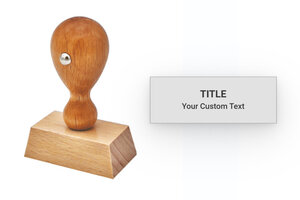
Traditional rubber stamps maintain their relevance in professional settings through unmatched versatility and cost-effectiveness. These classic designs separate the stamp die from the ink source, allowing users to choose from multiple ink colours and types depending on specific application requirements.
The flexibility extends to impression control, as users can vary pressure and ink coverage to achieve different effects. This proves particularly valuable for businesses requiring stamps on various paper types, from standard office stationery to glossy promotional materials or textured packaging surfaces where ink absorption varies significantly.
Professional applications often favour traditional stamps when colour coordination with existing branding becomes important. The ability to switch between black, blue, red, or green inks using the same stamp die provides design flexibility that self-contained systems cannot match, making them ideal for businesses with sophisticated brand guidelines or seasonal colour requirements.
Pre-inked stamps represent the premium segment of business stamping solutions, incorporating advanced ink reservoir technology that embeds ink directly into the stamp material. This sophisticated approach delivers superior impression quality whilst extending operational life far beyond conventional alternatives.
The embedded ink system typically provides 10,000 or more impressions before requiring refilling, making pre-inked stamps exceptionally economical for high-volume applications. The ink distribution remains remarkably even throughout the stamp's life, ensuring that the first impression matches the quality of the ten-thousandth, maintaining professional standards regardless of usage intensity.
Professional services firms, legal practices, and businesses requiring consistently crisp logo reproduction often prefer pre-inked stamps for their superior detail definition and longevity. The initial investment proves worthwhile when calculated against the extended operational life and reduced maintenance requirements compared to other stamp technologies.
Modern business stamp customisation extends far beyond simple text reproduction, offering comprehensive design solutions that transform basic administrative tools into powerful branding instruments. Today's manufacturing capabilities allow businesses to incorporate complex logos, multiple text lines, and sophisticated layouts that rival printed materials in quality and impact.
The customisation process begins with understanding your specific requirements and usage patterns. Whether you need a compact stamp for invoice processing or a large-format design for packaging applications, the available options accommodate virtually any professional requirement whilst maintaining the clarity and durability that business applications demand.
Professional logo integration requires careful attention to file quality and design adaptation for stamp reproduction. High-resolution vector files typically produce the best results, as they maintain clarity when scaled to stamp dimensions whilst preserving the fine details that make logos recognisable and impactful.
Design considerations extend beyond simple file conversion to encompass practical usage factors. Complex logos with fine lines or intricate details may require simplification to ensure clear reproduction across thousands of impressions. Professional stamp manufacturers provide design consultation to optimise your logo for stamp production whilst maintaining brand integrity and recognition value.
The positioning of logos within the overall stamp design affects both visual impact and practical functionality. Balanced layouts that integrate company names, contact information, and logos create cohesive designs that work effectively across various document types and business applications.
Effective text customisation balances information density with readability, ensuring that essential business details remain clear and professional regardless of stamp size or application surface. The hierarchy of information should reflect your business priorities, with company names and key contact details receiving prominent placement whilst secondary information provides supporting context.
Font selection plays a crucial role in both readability and brand consistency. Professional fonts that match your existing business materials create visual continuity, whilst ensuring that text remains legible when reproduced through stamp impression. Sans-serif fonts typically perform better in stamp applications, maintaining clarity even when impressed on textured or absorbent surfaces.
Multi-line text arrangements require careful spacing and alignment to prevent crowding whilst maximising information inclusion. Professional stamp design considers the relationship between text elements, ensuring that contact details, addresses, and supplementary information create a cohesive, easily readable impression that enhances rather than clutters your business communications.
Choosing the right business stamp involves evaluating multiple factors that directly impact both immediate functionality and long-term value. Your decision should reflect not only current needs but also anticipated business growth and evolving operational requirements that may affect stamp usage patterns over time.
The selection process benefits from systematic consideration of usage frequency, document types, durability requirements, and budget constraints. By understanding how these factors interact with available stamp technologies, you can identify solutions that deliver optimal performance whilst providing excellent value throughout their operational life.
Daily usage patterns provide the foundation for stamp selection, as different technologies excel under specific operational demands. Businesses processing dozens of documents daily benefit from self-inking or pre-inked systems that eliminate repetitive ink pad management, whilst occasional users may find traditional rubber stamps more cost-effective and flexible.
Durability requirements extend beyond simple impression counts to encompass environmental factors and handling conditions. Stamps used in workshop environments require robust construction that withstands dust, temperature variations, and occasional rough handling, whilst office-based applications can prioritise precision and ease of use over rugged durability.
The relationship between usage frequency and stamp technology becomes particularly important when calculating long-term operational costs. High-volume users benefit from the convenience and consistency of self-contained systems, even when initial costs exceed traditional alternatives, whilst infrequent users may prefer the flexibility and lower entry costs of traditional rubber stamp systems.
Stamp size directly affects both information capacity and practical usability across different business applications. Compact stamps excel for invoice marking and document annotation where space constraints limit options, whilst larger formats accommodate comprehensive company information including logos, addresses, and supplementary details.
The relationship between stamp size and impression quality requires careful consideration, as larger stamps demand more precise pressure application to ensure even ink distribution across the entire surface. This factor becomes particularly relevant for businesses using stamps on various paper types or in situations where consistent pressure application may be challenging.
Application-specific size requirements often dictate optimal dimensions more than aesthetic preferences. Return address stamps benefit from compact designs that fit standard envelope corners, whilst packaging stamps may require larger formats to ensure visibility and impact on diverse surface materials and colours.
Different industries place varying demands on business stamp performance, requiring tailored solutions that address specific operational challenges and regulatory requirements. Professional services firms typically prioritise crisp logo reproduction and consistent quality for client-facing documents, whilst tradespeople may emphasise durability and weather resistance for outdoor applications.
Healthcare and educational professionals often require stamps that comply with specific documentation standards whilst maintaining hygiene and cleanliness requirements. Self-inking systems prove particularly valuable in these environments, as they minimise contact with external ink sources whilst ensuring consistent, professional impressions across patient records or academic documentation.
Retail and hospitality businesses frequently benefit from date stamps and loyalty programme applications that enhance customer interaction whilst streamlining operational processes. These applications often require stamps that perform reliably under high-volume conditions whilst maintaining the quality standards that customer-facing businesses demand.
UK businesses operate within a regulatory framework that places no mandatory requirements on business stamp usage, providing flexibility whilst maintaining professional standards through industry best practices and customer expectations. Understanding this context helps businesses make informed decisions about stamp implementation without unnecessary compliance concerns.
Professional standards emerge from industry practice rather than legal mandate, with established businesses and professional services firms setting expectations that influence broader market practices. These informal standards often prove more influential than regulatory requirements in determining appropriate business stamp applications and design considerations.
The UK regulatory environment treats business stamps as standard business tools rather than controlled items, placing them under general consumer protection and trading standards legislation rather than specific stamp-related regulations. This approach provides businesses with maximum flexibility whilst ensuring that stamp-related claims and representations remain truthful and verifiable.
Document authentication using business stamps carries no specific legal weight beyond the general principles of business record-keeping and evidence provision. Stamps serve as convenient marking tools rather than legal validation instruments, with their evidential value depending on broader business practices and documentation standards rather than the stamps themselves.
Industry-specific requirements may influence stamp usage in certain sectors, particularly where professional bodies establish documentation standards or where client expectations create practical requirements for stamped communications. These sector-specific considerations often prove more influential than general legal requirements in determining appropriate stamp applications.
Professional stamp design follows established business communication principles rather than specific regulatory requirements, emphasising clarity, accuracy, and brand consistency over mandatory information inclusion. The information hierarchy should reflect business priorities whilst ensuring that essential contact details remain easily accessible to recipients.
Accuracy in business information becomes particularly important given the permanent nature of stamp impressions and their role in business communications. Regular review and updating of stamp content ensures that contact details, business names, and regulatory information remain current and accurate throughout the stamp's operational life.
Consistency with other business materials enhances professional presentation whilst avoiding confusion or brand dilution. Stamps should complement rather than contradict existing business stationery, ensuring that all communication channels present a cohesive professional image that reinforces brand recognition and business credibility.
The modern business stamp ordering process combines sophisticated online customisation tools with streamlined production workflows, enabling businesses to design, preview, and order custom stamps with unprecedented ease and accuracy. This technological integration eliminates traditional barriers whilst ensuring that final products meet exact specifications and professional standards.
Online customisation platforms provide real-time design feedback, allowing businesses to experiment with layouts, fonts, and sizing options whilst visualising the final product before committing to production. This iterative approach ensures satisfaction whilst minimising the risk of design errors or misunderstandings that could affect final product quality.
Successful stamp production begins with proper design preparation, particularly when incorporating logos or complex graphics that require precise reproduction. Vector-based files typically produce superior results compared to bitmap images, maintaining clarity and detail when scaled to stamp dimensions whilst ensuring consistent reproduction quality.
File preparation extends beyond simple format considerations to encompass colour conversion and detail optimisation for stamp production. Complex designs may require simplification to ensure clear reproduction, whilst colour logos need conversion to single-colour formats that work effectively with standard stamp inks and production processes.
Professional design consultation helps optimise artwork for stamp production whilst maintaining brand integrity and visual impact. This collaborative approach ensures that final products meet both technical production requirements and business presentation standards, delivering stamps that perform effectively whilst representing your business professionally.
Modern stamp production combines advanced manufacturing techniques with rigorous quality control processes, typically delivering custom products within 24 to 48 hours of order confirmation. This rapid turnaround reflects both technological advancement and streamlined production workflows that prioritise efficiency without compromising quality standards.
Quality assurance processes include design verification, production testing, and final inspection to ensure that completed stamps meet specified requirements and performance standards. These comprehensive checks prevent quality issues whilst ensuring that stamps deliver consistent, professional impressions throughout their operational life.
Production scheduling accommodates both standard and expedited delivery requirements, with express options available for urgent business needs. The flexibility in delivery timing ensures that businesses can obtain required stamps when needed whilst planning for routine replacements or expansion requirements without operational disruption.
Proper maintenance extends business stamp operational life whilst ensuring consistent impression quality that maintains professional standards throughout extended use periods. Understanding basic maintenance requirements helps businesses maximise their stamp investment whilst preventing performance degradation that could affect document quality or business presentation.
Different stamp technologies require varying maintenance approaches, from simple cleaning procedures for traditional rubber stamps to ink pad replacement for self-inking systems. Familiarity with these requirements enables proactive maintenance that prevents operational interruptions whilst preserving stamp performance under demanding business conditions.
Regular cleaning maintains stamp impression quality whilst preventing ink buildup that can degrade performance over time. Simple cleaning procedures using appropriate solvents remove accumulated debris whilst preserving stamp material integrity, ensuring continued operation without damage to delicate engraving details or mechanical components.
Storage conditions significantly impact stamp longevity, particularly for self-inking and pre-inked systems where ink exposure and temperature variations can affect performance. Proper storage in controlled environments protects stamps from environmental factors whilst maintaining ink consistency and mechanical reliability throughout extended periods of non-use.
Protective storage also prevents physical damage to stamp surfaces and mechanisms, preserving engraving quality whilst protecting investment value. Simple storage solutions provide adequate protection whilst ensuring stamps remain readily accessible for business use without unnecessary handling or setup requirements.
Understanding common stamp issues enables quick resolution without professional intervention, maintaining business operations whilst preserving stamp performance. Most operational problems stem from ink-related issues, mechanical wear, or improper usage techniques that can be addressed through simple adjustments or maintenance procedures.
Impression quality problems often indicate ink depletion, uneven pressure application, or surface contamination that responds to basic maintenance or technique adjustment. Systematic troubleshooting identifies root causes whilst implementing solutions that restore optimal performance without requiring stamp replacement or professional service.
Preventive maintenance schedules help avoid operational issues whilst extending stamp life through proactive care and attention. Regular inspection and maintenance prevent minor issues from developing into major problems that could affect business operations or require premature stamp replacement.
Investing in a quality business stamp represents a strategic decision that enhances operational efficiency whilst reinforcing professional presentation across all business communications. From sole traders seeking to streamline invoice processing to established companies maintaining brand consistency, the right stamp solution delivers measurable benefits that extend far beyond simple administrative convenience. With European manufacturing standards ensuring durability and precision, modern business stamps provide reliable service that supports business growth whilst maintaining the professional standards that UK commerce demands. Consider exploring the comprehensive customisation options available through Otypo's online design platform, where decades of expertise combine with cutting-edge technology to deliver stamps that truly represent your business excellence.
 Custom quotes available for bulk or special requests
'%3e%3cpath%20d='M20.5563%202.67834H1.42533C0.639422%202.67834%200%203.31772%200%204.10363V15.5822C0%2016.3682%200.639422%2017.0076%201.42533%2017.0076H15.3578C15.6167%2017.0076%2015.8265%2016.7977%2015.8265%2016.5388C15.8265%2016.2799%2015.6167%2016.0701%2015.3578%2016.0701H1.42533C1.15636%2016.0701%200.9375%2015.8512%200.9375%2015.5822V8.87691H21.0442V11.2778C21.0442%2011.5367%2021.254%2011.7465%2021.5129%2011.7465C21.7718%2011.7465%2021.9817%2011.5367%2021.9817%2011.2778V4.10363C21.9817%203.31772%2021.3423%202.67834%2020.5563%202.67834ZM1.42533%203.61584H20.5563C20.8253%203.61584%2021.0442%203.83466%2021.0442%204.10363V5.54799H0.9375V4.10363C0.9375%203.83466%201.15631%203.61584%201.42533%203.61584ZM0.9375%207.93941V6.48549H21.0442V7.93941H0.9375Z'%20fill='%230C4D5A'/%3e%3cpath%20d='M20.5563%202.67834H1.42533C0.639422%202.67834%200%203.31772%200%204.10363V15.5822C0%2016.3682%200.639422%2017.0076%201.42533%2017.0076H15.3578C15.6167%2017.0076%2015.8265%2016.7977%2015.8265%2016.5388C15.8265%2016.2799%2015.6167%2016.0701%2015.3578%2016.0701H1.42533C1.15636%2016.0701%200.9375%2015.8512%200.9375%2015.5822V8.87691H21.0442V11.2778C21.0442%2011.5367%2021.254%2011.7465%2021.5129%2011.7465C21.7718%2011.7465%2021.9817%2011.5367%2021.9817%2011.2778V4.10363C21.9817%203.31772%2021.3423%202.67834%2020.5563%202.67834ZM1.42533%203.61584H20.5563C20.8253%203.61584%2021.0442%203.83466%2021.0442%204.10363V5.54799H0.9375V4.10363C0.9375%203.83466%201.15631%203.61584%201.42533%203.61584ZM0.9375%207.93941V6.48549H21.0442V7.93941H0.9375Z'%20fill='black'%20fill-opacity='0.5'/%3e%3cpath%20d='M6.92061%2013.6835H2.61612C1.9962%2013.7059%201.99409%2014.5977%202.61612%2014.621H6.92061C7.54054%2014.5986%207.54265%2013.7067%206.92061%2013.6835Z'%20fill='%230C4D5A'/%3e%3cpath%20d='M6.92061%2013.6835H2.61612C1.9962%2013.7059%201.99409%2014.5977%202.61612%2014.621H6.92061C7.54054%2014.5986%207.54265%2013.7067%206.92061%2013.6835Z'%20fill='black'%20fill-opacity='0.5'/%3e%3cpath%20d='M6.92061%2011.7704H2.61612C1.9962%2011.7928%201.99409%2012.6846%202.61612%2012.7079H6.92061C7.54054%2012.6855%207.54265%2011.7936%206.92061%2011.7704Z'%20fill='%230C4D5A'/%3e%3cpath%20d='M6.92061%2011.7704H2.61612C1.9962%2011.7928%201.99409%2012.6846%202.61612%2012.7079H6.92061C7.54054%2012.6855%207.54265%2011.7936%206.92061%2011.7704Z'%20fill='black'%20fill-opacity='0.5'/%3e%3cpath%20fill-rule='evenodd'%20clip-rule='evenodd'%20d='M16.9424%2010.7995L14.5898%2013.152C14.5898%2016.752%2015.1919%2020.2222%2019.2948%2021.3216C23.3978%2020.2222%2023.9998%2016.752%2023.9998%2013.152L21.6473%2010.7995H16.9424Z'%20fill='%23FDF300'/%3e%3cpath%20d='M19.2949%2019.7875C16.7214%2019.0081%2016.1647%2016.8451%2016.0451%2013.9479C16.0413%2013.8187%2016.0909%2013.6937%2016.1822%2013.6023L17.4034%2012.3812C17.4913%2012.2933%2017.6105%2012.2439%2017.7348%2012.2439H20.8549C20.9792%2012.2439%2021.0985%2012.2933%2021.1864%2012.3812L22.4075%2013.6023C22.4989%2013.6937%2022.5485%2013.8187%2022.5446%2013.9478C22.4255%2016.8443%2021.8681%2019.0084%2019.2949%2019.7875ZM16.9894%2014.121C17.1385%2016.4295%2017.4228%2018.0275%2019.2949%2018.8167C21.1665%2018.0277%2021.4513%2016.4301%2021.6004%2014.121L20.6608%2013.1814H17.929L16.9894%2014.121Z'%20fill='%230C4D5A'/%3e%3cpath%20d='M19.2949%2019.7875C16.7214%2019.0081%2016.1647%2016.8451%2016.0451%2013.9479C16.0413%2013.8187%2016.0909%2013.6937%2016.1822%2013.6023L17.4034%2012.3812C17.4913%2012.2933%2017.6105%2012.2439%2017.7348%2012.2439H20.8549C20.9792%2012.2439%2021.0985%2012.2933%2021.1864%2012.3812L22.4075%2013.6023C22.4989%2013.6937%2022.5485%2013.8187%2022.5446%2013.9478C22.4255%2016.8443%2021.8681%2019.0084%2019.2949%2019.7875ZM16.9894%2014.121C17.1385%2016.4295%2017.4228%2018.0275%2019.2949%2018.8167C21.1665%2018.0277%2021.4513%2016.4301%2021.6004%2014.121L20.6608%2013.1814H17.929L16.9894%2014.121Z'%20fill='black'%20fill-opacity='0.5'/%3e%3c/g%3e%3cdefs%3e%3cclipPath%20id='clip0'%3e%3crect%20width='24'%20height='24'%20fill='white'/%3e%3c/clipPath%3e%3c/defs%3e%3c/svg%3e) Secure payment via card or PayPal
Secure payment via card or PayPal Free delivery from £60
 Up to 20% off with volume discounts!
 Create your own product easily with our online editorCustom quotes available for bulk or special requestsSecure payment via card or PayPalFree delivery from £60Up to 20% off with volume discounts!Create your own product easily with our online editor