Name Stamps for Clothes
Create an affordable stamp in just 2 minutes.
Ink pad included with every automatic stamp
Stamps engraved in France shipped within 24h
starting at £16.90


Create an affordable stamp in just 2 minutes.
Ink pad included with every automatic stamp
Stamps engraved in France shipped within 24h

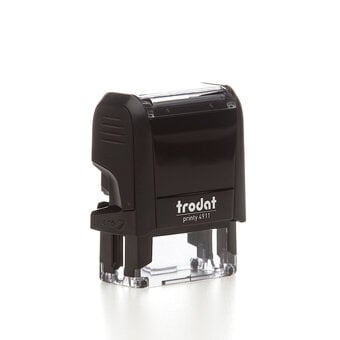


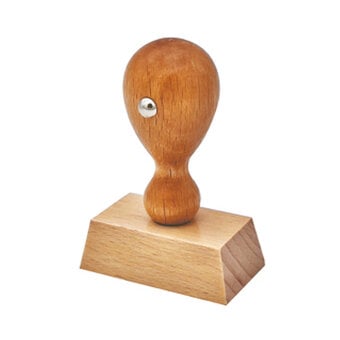



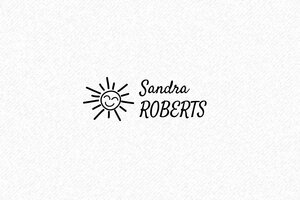
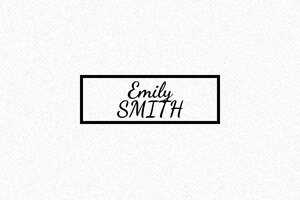
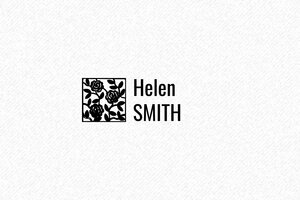

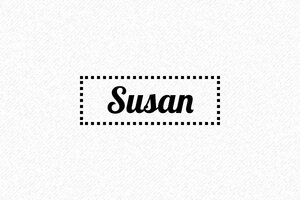

A quality clothing name stamp contains enough textile-safe ink to mark hundreds of garments before requiring a refill. Most pre-inked name stamps are designed to provide between 300-500 clear imprints, depending on the size of the stamp and the pressure applied during use.
The longevity of your stamp depends on several factors:
When you notice the imprints becoming lighter or incomplete, it's time for a refill. Many quality clothing stamps feature refillable ink systems, making them more economical and environmentally friendly than disposable alternatives.
Yes, name stamps can be used on dark-coloured care labels, though the visibility of the imprint will depend on the ink colour chosen. For optimal results on dark fabrics and care labels, consider these guidelines:
Best practices for dark materials:
While black ink provides excellent durability and clarity on light-coloured care labels, it may not be visible on dark materials. Most clothing name stamp suppliers offer a range of ink colours specifically designed for different fabric types and colours. The key is selecting an ink colour that provides sufficient contrast with your garment's care label for clear, long-lasting identification.
Yes, quality clothing name stamps are specifically designed to be safe for children's clothing, including baby and toddler garments. However, it's essential to choose stamps that use non-toxic, skin-safe inks formulated specifically for textile applications.
Safety features to look for:
The stamping process targets the care label rather than the main fabric, which minimises any direct contact with your child's skin. Care labels are typically positioned in discrete locations such as the back neck or side seam, away from areas of frequent skin contact.
For added peace of mind, allow the stamped care label to dry completely before dressing your child, and consider washing new garments before first wear to ensure any excess ink is removed during the laundering process.
Clothing name stamps are specifically engineered for textile applications and differ significantly from regular office stamps in several crucial ways:
Ink formulation:
Durability and wash-resistance:
Safety considerations:
While office stamps might seem like a cost-effective alternative, they simply cannot provide the durability, safety, and wash-resistance required for effective clothing identification.
Proper storage is essential for maintaining your clothing name stamp's performance and extending its useful life. Follow these storage guidelines to prevent ink from drying out:
Essential storage practices:
Environmental considerations:
Long-term storage tips:
With proper storage, a quality textile stamp can remain functional for years, providing hundreds of clear imprints throughout its lifetime.
When it comes to labelling children's clothing for school, nursery, or sports activities, name stamps for clothes represent a modern solution that's transforming how British families tackle the age-old problem of lost property. These innovative textile stamps offer a quick, permanent, and professional way to mark garments without the fuss of iron-on labels or the time-consuming process of sewing name tags. For busy parents across the UK, clothing name stamps have become an essential tool for keeping track of school uniforms, PE kits, and everyday wear.
The concept is brilliantly simple: a pre-inked stamp designed specifically for fabric application that creates clear, washable imprints on clothing care labels. Unlike traditional labelling methods, name stamps for clothes require no heat, no needlework, and no waiting for adhesives to cure. Simply press the stamp onto the garment's care label, and within seconds, you've created a permanent identification mark that will survive countless wash cycles, tumble drying, and the rough-and-tumble of school life.
What makes textile stamps particularly appealing to UK families is their versatility and durability. These aren't ordinary ink stamps repurposed for fabric use – they're specially engineered devices containing textile-safe, washable ink that bonds effectively with care label materials. The result is a crisp, legible imprint that remains clearly visible even after months of regular washing at temperatures up to 60°C, making them ideal for everything from delicate school shirts to robust sports kit.
A name stamp for clothes is essentially a self-contained marking device that combines a rubber impression plate with an integrated ink reservoir specifically formulated for textile applications. Unlike conventional stamps that require separate ink pads, these pre-inked systems contain enough textile-safe ink to mark hundreds of garments before requiring a refill. The stamp mechanism works by applying gentle pressure to transfer ink from the internal reservoir through the rubber plate onto the fabric surface.
The technology behind clothing name stamps centres on the ink formulation, which must meet several demanding criteria. The ink needs to be permanent enough to withstand repeated washing and drying cycles, yet safe enough for direct contact with children's skin. Most quality textile stamps use water-based, non-toxic inks that cure quickly upon application and form a durable bond with synthetic and natural fibres commonly found in care labels.
The stamping process itself is remarkably straightforward. The optimal application point is typically the garment's care label – that small white or coloured tag sewn into the seam that displays washing instructions. Care labels provide an ideal surface for stamping because they're made from synthetic materials that accept ink well, they're positioned in discrete locations, and they're designed to withstand the same washing conditions as the garment itself.
Modern clothing stamps utilise sophisticated pre-inked technology that eliminates the mess and inconvenience of traditional ink pads. The stamp housing contains a specially designed ink reservoir that gradually releases textile-safe ink to the rubber impression surface. This controlled release system ensures consistent ink coverage for each application while preventing oversaturation that could cause smudging or bleeding.
The ink itself represents a significant technological advancement over standard stamping inks. Textile-specific formulations must remain fluid enough for smooth application while possessing the chemical properties necessary to bond permanently with fabric fibres. Quality name stamps for clothes use inks that are specifically tested for wash-fastness, ensuring they won't fade, run, or transfer to other garments during laundering.
The primary advantage of clothing name stamps lies in their remarkable time efficiency compared to traditional labelling methods. Where sewing on name tapes might take several minutes per garment, and iron-on labels require heating equipment and careful positioning, a textile stamp can mark a care label in mere seconds. For families preparing multiple children's wardrobes for the new school term, this time saving becomes genuinely significant – what might have been an evening's work can be completed in under an hour.
Cost-effectiveness represents another compelling benefit, particularly for families with multiple children or those who regularly need to replace lost items. A single name stamp can mark hundreds of garments over its lifetime, making the cost per application extremely low compared to purchasing individual iron-on or sew-on labels. When you factor in the time saved and the convenience of having a marking solution always ready to use, the economic argument becomes even stronger.
The durability of properly applied textile stamps often exceeds that of alternative labelling methods. Quality clothing name stamps create imprints that remain clearly legible after 60 or more wash cycles at standard temperatures. This longevity is particularly valuable for school uniforms and sports kit that undergo frequent washing. Unlike stick-on labels that may eventually peel away, or iron-on transfers that can crack and fade, stamped names become an integral part of the care label.
Modern family life rarely allows for lengthy labelling sessions, making the instant-use nature of clothing stamps particularly attractive. There's no need to heat up an iron, find a suitable pressing surface, or gather sewing supplies – the stamp is always ready for immediate use. This convenience proves invaluable for those last-minute labelling needs that inevitably arise, whether it's marking a new school jumper purchased at short notice or adding identification to items for an overnight school trip.
The portability of textile stamps also appeals to families on the go. Unlike iron-on labels that require access to electrical equipment, or sewing solutions that need good lighting and a stable work surface, a clothing stamp can be used anywhere. This flexibility means you can label items while travelling, mark new purchases immediately after shopping, or handle emergency labelling needs wherever you happen to be.
Successful application of clothing name stamps begins with proper preparation and understanding of the process. Start by identifying the care label on your garment – this is typically a small rectangular tag sewn into a seam, most commonly found at the back neck, side seam, or inside waistband. The care label provides the ideal stamping surface because it's designed to withstand washing conditions and is made from materials that accept ink well.
Before stamping, ensure the care label is clean and dry. Any moisture, fabric softener residue, or dirt can interfere with ink adhesion and result in a poor-quality imprint. If the garment is new, it's worth giving it a quick wash first to remove any manufacturing residues, though this isn't always necessary. Position the garment on a firm, flat surface with the care label easily accessible and fully supported from underneath.
The stamping technique itself requires a firm, even pressure applied vertically downward. Hold the stamp perpendicular to the care label surface and press down decisively for about two to three seconds. Avoid rocking or sliding the stamp, as this can cause smudging or double impressions. The pressure should be firm enough to ensure good ink transfer but not so forceful as to damage the care label or push ink through to the garment fabric.
Different care label materials may require slight adjustments to stamping technique for optimal results. Synthetic care labels, which are most common, typically provide excellent ink reception and produce crisp, clear imprints with standard pressure. Cotton or cotton-blend care labels may require slightly firmer pressure to achieve good ink penetration, while very smooth or coated labels might need a moment longer contact time.
After stamping, allow the ink to dry completely before handling the garment. Most textile inks dry within minutes under normal conditions, but it's wise to wait at least ten minutes before folding or packing the item. For best results, avoid washing the newly stamped garment for at least 24 hours to allow the ink to fully cure and bond with the label material.
When evaluating clothing identification solutions, it's helpful to understand how textile stamps compare to other popular methods. Iron-on labels, perhaps the most traditional alternative, require heat application and careful positioning but offer excellent durability and a professional appearance. However, they demand access to an iron and ironing board, take considerably longer to apply, and can be challenging to position accurately on small garments or awkward seam locations.
Sew-on name tapes provide perhaps the most permanent labelling solution and work well for items that undergo heavy use. However, they require basic sewing skills, take significant time to apply, and may not be suitable for delicate fabrics or garments with limited seam allowances. For families without sewing experience or time for detailed needlework, sew-on labels can prove impractical despite their durability advantages.
Stick-on labels offer convenience and speed of application similar to stamps but generally provide less durability. While modern adhesive labels are much improved from earlier versions, they may eventually peel away from care labels, particularly after numerous wash cycles or exposure to high temperatures. They also tend to be more expensive per application than stamped names and may leave adhesive residue if they do detach.
Textile stamps excel in situations where speed, convenience, and reasonable durability are priorities. They're particularly well-suited for families with multiple children, those who frequently need to label new items, or anyone who values having a labelling solution that's always ready for immediate use. The ability to create professional-looking identification marks without any additional equipment makes stamps ideal for busy households.
For items that undergo frequent washing but don't face extreme wear conditions – such as school uniforms, casual clothing, and most sports kit – clothing stamps provide an optimal balance of durability and convenience. They're also excellent for temporary labelling needs, such as marking items for school trips, camp attendance, or shared activities where permanent identification might not be necessary.
Choosing an appropriate clothing name stamp involves considering several factors that will affect both the quality of results and long-term satisfaction with your purchase. Font size represents a crucial consideration, as the stamp needs to create legible imprints on relatively small care labels while remaining clear after washing. Most effective clothing stamps use fonts between 2mm and 4mm in height, providing good readability without overwhelming the available space on typical care labels.
Ink colour selection can impact both visibility and aesthetic appeal. While black ink provides excellent contrast on most care labels and tends to remain crisp over time, some families prefer coloured inks that stand out more distinctly or match school colour schemes. However, it's worth noting that darker colours generally provide better longevity and clarity than lighter alternatives, particularly after multiple wash cycles.
The customisation options available vary significantly between suppliers. Basic name stamps typically accommodate standard text in predetermined fonts, while more advanced options might allow for symbols, logos, or contact information alongside names. For families with multiple children, consider whether you need individual stamps for each child or prefer a single stamp with surname and contact details that works for all family members.
Safety considerations are paramount when selecting textile stamps for children's clothing. Ensure that any stamp you choose uses non-toxic, skin-safe inks that have been specifically formulated for textile applications. Quality manufacturers will provide clear information about ink composition and safety testing, particularly regarding potential skin contact and wash-fastness properties.
The application process should also be considered from a safety perspective. While the stamping action itself is simple, it's generally recommended that adults handle the stamping process, particularly for young children's clothing. This ensures proper application technique and prevents accidental ink contact with skin or other surfaces.
Proper maintenance of your textile stamp will significantly extend its useful life and ensure consistent print quality over time. Most clothing stamps are designed to provide hundreds of clear imprints before requiring attention, but simple care practices can maximise this performance. Store the stamp in a cool, dry place with the cap securely fitted to prevent ink from drying out. Avoid exposure to extreme temperatures, which can affect ink viscosity and flow characteristics.
When the stamp begins to produce lighter or incomplete imprints, it may be time for an ink refill rather than replacement. Many quality clothing stamps are designed with refillable ink systems, making them more economical and environmentally friendly than disposable alternatives. Refill procedures are typically straightforward, involving the addition of compatible textile ink to the reservoir system.
If print quality becomes inconsistent despite adequate ink levels, the rubber impression surface may need cleaning. Gentle cleaning with a damp cloth can remove any accumulated lint or residue that might interfere with ink transfer. Avoid using solvents or harsh cleaning agents that could damage the rubber or affect ink chemistry.
Occasional stamping problems are usually easily resolved with simple adjustments to technique or maintenance. Faint or incomplete impressions often indicate either insufficient pressure during application or low ink levels in the reservoir. Try applying slightly more pressure for a longer duration, and check whether the stamp requires refilling if problems persist.
Smudged or blurred imprints typically result from stamp movement during application or excessive ink flow. Ensure you're applying the stamp vertically with steady pressure, and avoid any sliding or rocking motion. If smudging continues, the stamp may be over-inked or the care label surface may be unsuitable for stamping.
While school uniform labelling represents the most common application for clothing name stamps, these versatile tools prove valuable in numerous other contexts. Care homes and residential facilities increasingly rely on textile stamps for efficient clothing identification, as they provide a quick, cost-effective way to mark residents' personal items without the time investment required for sewing or the potential durability issues of stick-on labels.
Sports clubs and team organisations find clothing stamps particularly useful for marking kit and equipment. The ability to quickly identify team members' personal items helps prevent mix-ups during training sessions and competitions, while the wash-resistant properties ensure identifications remain clear despite frequent laundering of sports clothing. Many clubs appreciate the professional appearance of stamped names compared to handwritten labels or temporary markers.
Holiday and travel applications represent another area where clothing stamps excel. Marking family members' clothing before trips helps identify ownership in shared accommodation, reduces the risk of leaving items behind, and simplifies laundry sorting during extended stays. The compact size of most clothing stamps makes them ideal travel companions, requiring no additional equipment or preparation.
Healthcare facilities, particularly those providing residential care, have embraced clothing stamps as an efficient solution for patient clothing identification. The speed of application makes it practical to mark large quantities of items, while the durability ensures identifications survive the frequent, high-temperature washing required in healthcare environments. The professional appearance of stamped names also contributes to the dignified presentation of personal belongings.
Educational institutions beyond primary and secondary schools also benefit from clothing stamp applications. Universities, colleges, and boarding schools often recommend textile stamps for students' personal items, particularly in shared accommodation situations where clothing mix-ups are common. The permanent nature of stamped identification provides long-term solutions for the duration of academic courses.
For families seeking reliable, efficient clothing identification solutions, name stamps for clothes represent a practical investment that pays dividends in time saved and items recovered. The combination of speed, durability, and convenience makes textile stamps an ideal choice for modern British households juggling the demands of school, work, and family life. Whether you're preparing for a new school term, organising sports kit, or simply wanting to keep track of family clothing, a quality clothing name stamp provides the professional, permanent marking solution that busy families need. With European quality manufacturing and attention to customer satisfaction, companies like Otypo understand the importance of providing reliable tools that make family organisation simpler and more effective.
 Custom quotes available for bulk or special requests
'%3e%3cpath%20d='M20.5563%202.67834H1.42533C0.639422%202.67834%200%203.31772%200%204.10363V15.5822C0%2016.3682%200.639422%2017.0076%201.42533%2017.0076H15.3578C15.6167%2017.0076%2015.8265%2016.7977%2015.8265%2016.5388C15.8265%2016.2799%2015.6167%2016.0701%2015.3578%2016.0701H1.42533C1.15636%2016.0701%200.9375%2015.8512%200.9375%2015.5822V8.87691H21.0442V11.2778C21.0442%2011.5367%2021.254%2011.7465%2021.5129%2011.7465C21.7718%2011.7465%2021.9817%2011.5367%2021.9817%2011.2778V4.10363C21.9817%203.31772%2021.3423%202.67834%2020.5563%202.67834ZM1.42533%203.61584H20.5563C20.8253%203.61584%2021.0442%203.83466%2021.0442%204.10363V5.54799H0.9375V4.10363C0.9375%203.83466%201.15631%203.61584%201.42533%203.61584ZM0.9375%207.93941V6.48549H21.0442V7.93941H0.9375Z'%20fill='%230C4D5A'/%3e%3cpath%20d='M20.5563%202.67834H1.42533C0.639422%202.67834%200%203.31772%200%204.10363V15.5822C0%2016.3682%200.639422%2017.0076%201.42533%2017.0076H15.3578C15.6167%2017.0076%2015.8265%2016.7977%2015.8265%2016.5388C15.8265%2016.2799%2015.6167%2016.0701%2015.3578%2016.0701H1.42533C1.15636%2016.0701%200.9375%2015.8512%200.9375%2015.5822V8.87691H21.0442V11.2778C21.0442%2011.5367%2021.254%2011.7465%2021.5129%2011.7465C21.7718%2011.7465%2021.9817%2011.5367%2021.9817%2011.2778V4.10363C21.9817%203.31772%2021.3423%202.67834%2020.5563%202.67834ZM1.42533%203.61584H20.5563C20.8253%203.61584%2021.0442%203.83466%2021.0442%204.10363V5.54799H0.9375V4.10363C0.9375%203.83466%201.15631%203.61584%201.42533%203.61584ZM0.9375%207.93941V6.48549H21.0442V7.93941H0.9375Z'%20fill='black'%20fill-opacity='0.5'/%3e%3cpath%20d='M6.92061%2013.6835H2.61612C1.9962%2013.7059%201.99409%2014.5977%202.61612%2014.621H6.92061C7.54054%2014.5986%207.54265%2013.7067%206.92061%2013.6835Z'%20fill='%230C4D5A'/%3e%3cpath%20d='M6.92061%2013.6835H2.61612C1.9962%2013.7059%201.99409%2014.5977%202.61612%2014.621H6.92061C7.54054%2014.5986%207.54265%2013.7067%206.92061%2013.6835Z'%20fill='black'%20fill-opacity='0.5'/%3e%3cpath%20d='M6.92061%2011.7704H2.61612C1.9962%2011.7928%201.99409%2012.6846%202.61612%2012.7079H6.92061C7.54054%2012.6855%207.54265%2011.7936%206.92061%2011.7704Z'%20fill='%230C4D5A'/%3e%3cpath%20d='M6.92061%2011.7704H2.61612C1.9962%2011.7928%201.99409%2012.6846%202.61612%2012.7079H6.92061C7.54054%2012.6855%207.54265%2011.7936%206.92061%2011.7704Z'%20fill='black'%20fill-opacity='0.5'/%3e%3cpath%20fill-rule='evenodd'%20clip-rule='evenodd'%20d='M16.9424%2010.7995L14.5898%2013.152C14.5898%2016.752%2015.1919%2020.2222%2019.2948%2021.3216C23.3978%2020.2222%2023.9998%2016.752%2023.9998%2013.152L21.6473%2010.7995H16.9424Z'%20fill='%23FDF300'/%3e%3cpath%20d='M19.2949%2019.7875C16.7214%2019.0081%2016.1647%2016.8451%2016.0451%2013.9479C16.0413%2013.8187%2016.0909%2013.6937%2016.1822%2013.6023L17.4034%2012.3812C17.4913%2012.2933%2017.6105%2012.2439%2017.7348%2012.2439H20.8549C20.9792%2012.2439%2021.0985%2012.2933%2021.1864%2012.3812L22.4075%2013.6023C22.4989%2013.6937%2022.5485%2013.8187%2022.5446%2013.9478C22.4255%2016.8443%2021.8681%2019.0084%2019.2949%2019.7875ZM16.9894%2014.121C17.1385%2016.4295%2017.4228%2018.0275%2019.2949%2018.8167C21.1665%2018.0277%2021.4513%2016.4301%2021.6004%2014.121L20.6608%2013.1814H17.929L16.9894%2014.121Z'%20fill='%230C4D5A'/%3e%3cpath%20d='M19.2949%2019.7875C16.7214%2019.0081%2016.1647%2016.8451%2016.0451%2013.9479C16.0413%2013.8187%2016.0909%2013.6937%2016.1822%2013.6023L17.4034%2012.3812C17.4913%2012.2933%2017.6105%2012.2439%2017.7348%2012.2439H20.8549C20.9792%2012.2439%2021.0985%2012.2933%2021.1864%2012.3812L22.4075%2013.6023C22.4989%2013.6937%2022.5485%2013.8187%2022.5446%2013.9478C22.4255%2016.8443%2021.8681%2019.0084%2019.2949%2019.7875ZM16.9894%2014.121C17.1385%2016.4295%2017.4228%2018.0275%2019.2949%2018.8167C21.1665%2018.0277%2021.4513%2016.4301%2021.6004%2014.121L20.6608%2013.1814H17.929L16.9894%2014.121Z'%20fill='black'%20fill-opacity='0.5'/%3e%3c/g%3e%3cdefs%3e%3cclipPath%20id='clip0'%3e%3crect%20width='24'%20height='24'%20fill='white'/%3e%3c/clipPath%3e%3c/defs%3e%3c/svg%3e) Secure payment via card or PayPal
Secure payment via card or PayPal Free delivery from £60
 Up to 20% off with volume discounts!
 Create your own product easily with our online editorCustom quotes available for bulk or special requestsSecure payment via card or PayPalFree delivery from £60Up to 20% off with volume discounts!Create your own product easily with our online editor