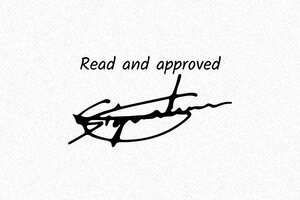
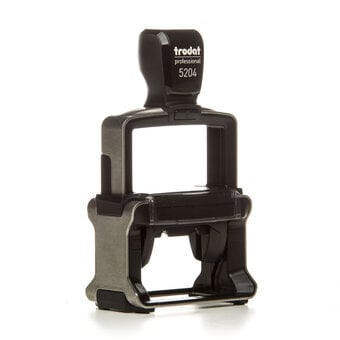
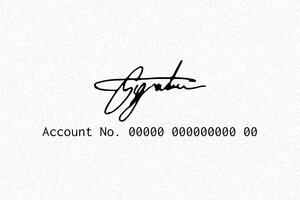
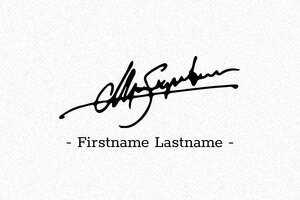
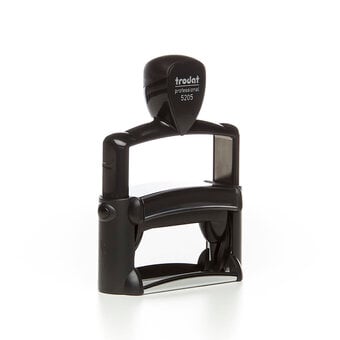
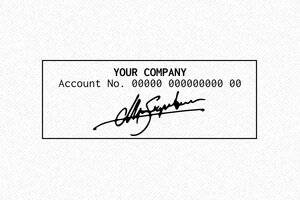
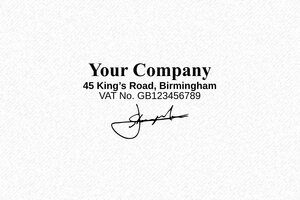
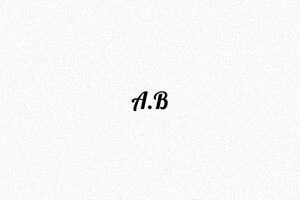
Signature Stamps
Create an affordable stamp in just 2 minutes.
Ink pad included with every automatic stamp
Stamps engraved in France shipped within 24h
starting at £13.98


Create an affordable stamp in just 2 minutes.
Ink pad included with every automatic stamp
Stamps engraved in France shipped within 24h
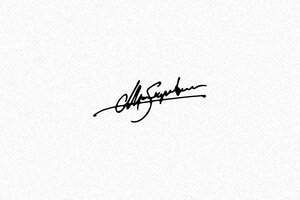
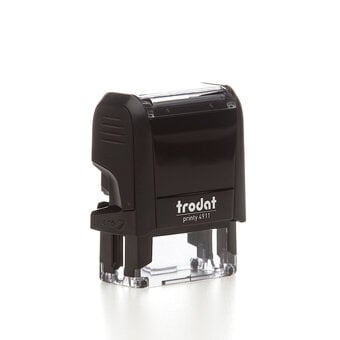
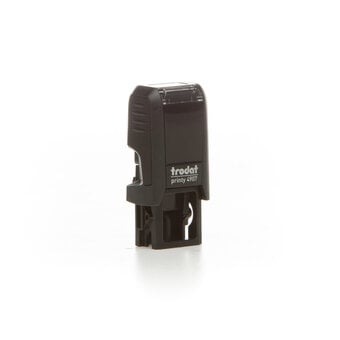
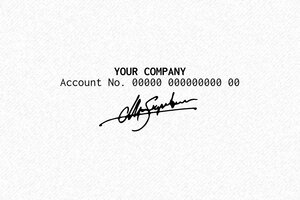
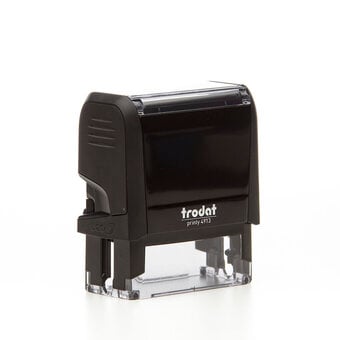
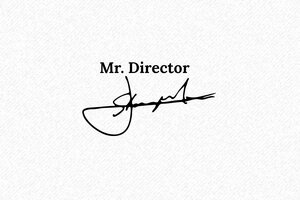
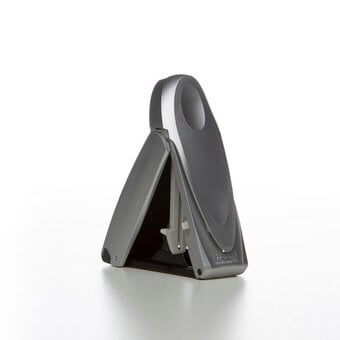

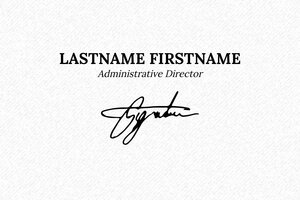
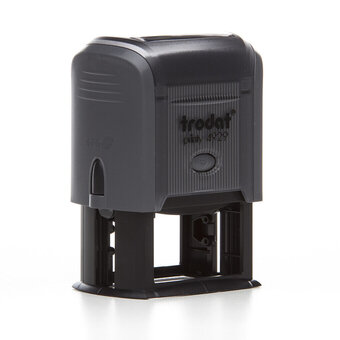


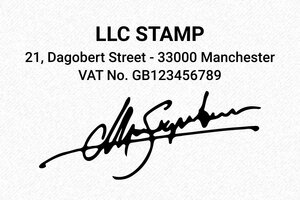
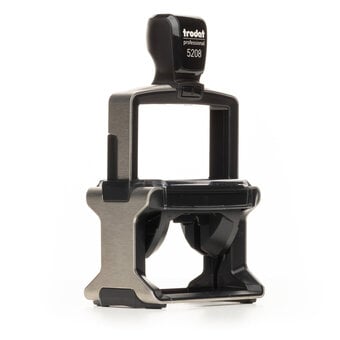
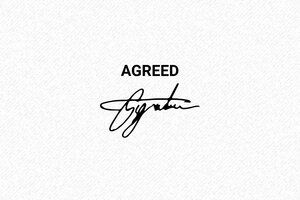
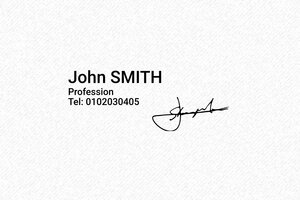
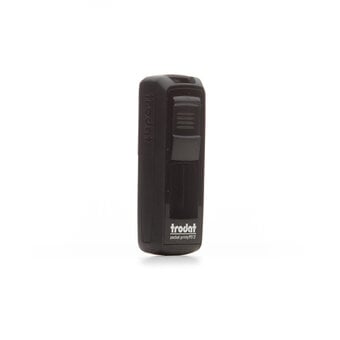


Yes, signature stamps are legally valid for most business documents in the UK. The Electronic Communications Act 2000 and subsequent legislation recognise various forms of signature authentication, including stamped signatures, provided they meet specific criteria for intent and authentication.
Signature stamps are commonly accepted for:
However, certain high-stakes documents typically require wet ink signatures for maximum legal protection, including wills, property transfers, and some financial agreements. The key to legal compliance lies in demonstrating clear intent to authenticate the document and maintaining proper security protocols around stamp usage.
Self-inking signature stamps and traditional rubber stamps differ significantly in their construction and operation:
Self-inking stamps:
Traditional rubber stamps:
Self-inking stamps are generally preferred by professionals who need to apply signatures frequently throughout the day, while traditional rubber stamps work well for occasional use or when superior impression quality is paramount.
Creating a custom signature stamp with your actual signature involves several important steps to ensure optimal results:
Preparation of your signature:
Design considerations:
Professional consultation:
Working with experienced suppliers like Otypo ensures optimal stamp selection and design. Expert guidance helps avoid common pitfalls and ensures your signature stamp meets both your practical needs and professional presentation requirements.
Yes, signature stamps can be used for cheques and many financial documents in the UK. Banks commonly accept stamped signatures on cheques and deposit slips, making them a practical solution for businesses and professionals who process numerous financial transactions.
Suitable financial applications include:
Design considerations for financial documents:
Important limitations:
While signature stamps are widely accepted for routine financial documents, certain high-stakes financial agreements may require wet ink signatures for maximum legal protection. It's advisable to check with your bank or financial institution regarding their specific policies for stamped signatures on important financial documents.
Proper security and storage of signature stamps is crucial to prevent fraud and maintain professional accountability. Treat your signature stamp with the same care as important financial documents or professional credentials.
Physical security measures:
Documentation and accountability:
Regular maintenance and monitoring:
Establishing clear protocols regarding stamp custody, usage authorisation, and documentation helps maintain security while supporting legal compliance in professional environments.
A signature stamp represents a practical solution for professionals and individuals who need to authenticate documents efficiently while maintaining consistency and legality. In today's fast-paced business environment, the ability to apply your signature quickly and uniformly across multiple documents has become increasingly valuable. Whether you're signing contracts, authorising invoices, or authenticating correspondence, a signature stamp offers the perfect balance between speed and authenticity that modern professionals demand.
The concept of using stamps for signature purposes has evolved significantly, with contemporary designs offering remarkable clarity and durability. Unlike traditional handwritten signatures that can vary in appearance and take considerable time to apply repeatedly, signature stamps provide consistent, professional results every time. This reliability has made them particularly popular among solicitors, accountants, medical professionals, and business owners who handle substantial volumes of paperwork daily.
Understanding the legal framework, technical options, and practical applications of signature stamps in the UK context ensures you make an informed decision that serves your professional needs effectively. From self-inking mechanisms to custom design capabilities, the modern signature stamp market offers sophisticated solutions that combine convenience with professional presentation.
Signature stamps occupy a unique position within UK legal frameworks, offering legitimate authentication for many document types while maintaining certain limitations that users must understand. The Electronic Communications Act 2000 and subsequent legislation recognise various forms of signature authentication, including stamped signatures, provided they meet specific criteria for intent and authentication.
For most commercial correspondence, internal business documents, and routine administrative paperwork, signature stamps provide legally acceptable authentication. Banks commonly accept stamped signatures on cheques and deposit slips, while many professional service providers use them for client communications and standard documentation. However, certain high-stakes documents—including wills, property transfers, and some financial agreements—typically require wet ink signatures to ensure maximum legal protection.
The key to legal compliance lies in demonstrating clear intent to authenticate the document and maintaining proper security protocols around stamp usage. Courts generally recognise stamped signatures when evidence shows the stamp was applied by the authorised individual or their designated representative, with appropriate safeguards against unauthorised use.
Healthcare professionals frequently rely on signature stamps for patient records, prescription authorisations, and administrative documentation where speed and legibility are paramount. The consistent, clear impression ensures that signatures remain readable even after multiple photocopying or scanning processes, reducing potential confusion in critical medical contexts.
Legal professionals use signature stamps for routine correspondence, file notations, and preliminary document reviews, while reserving handwritten signatures for court filings and client agreements. This approach maximises efficiency during high-volume periods while maintaining appropriate formality for significant legal documents.
Financial services professionals find signature stamps particularly valuable for internal approvals, routine client communications, and administrative processes. The consistent appearance helps establish professional credibility while streamlining workflows that might otherwise require numerous individual signatures throughout the day.
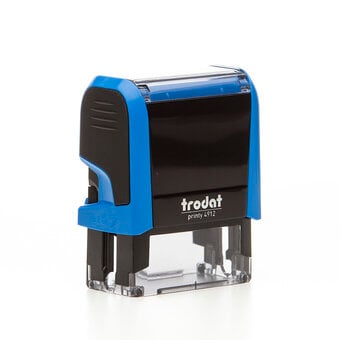
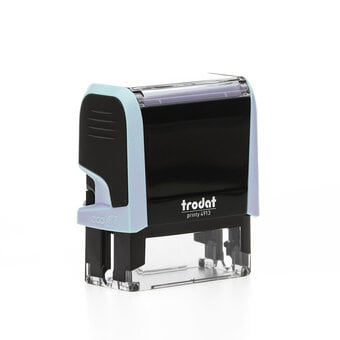
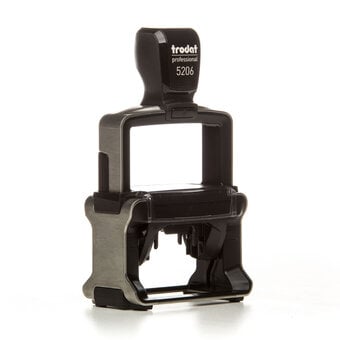
Self-inking signature stamps represent the most popular choice for regular users, featuring an integrated ink pad that automatically re-inks the stamp impression with each use. This mechanism eliminates the need for separate ink pads while providing thousands of clear impressions before requiring refill or replacement. The internal spring system ensures consistent pressure and ink distribution, resulting in uniform signature quality across extended use periods.
Traditional rubber stamps with separate ink pads offer greater flexibility in ink colour selection and tend to provide slightly sharper impressions for detailed signature designs. While requiring more deliberate application technique, these stamps often deliver superior results for signatures containing intricate flourishes or fine details that might blur with other technologies.
Pre-inked stamps contain ink stored within the stamp die itself, providing exceptionally crisp impressions without requiring separate pads or re-inking mechanisms. These stamps typically offer the highest quality impressions but may require more frequent replacement as the internal ink supply depletes with use.
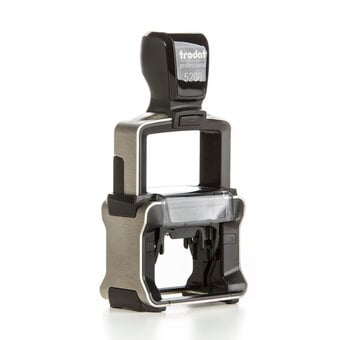
Professional-grade signature stamps typically feature heavy-duty plastic construction designed to withstand frequent daily use while maintaining precise alignment and impression quality. The stamp mechanism must endure thousands of applications without developing play or misalignment that could affect signature consistency.
Rubber die quality significantly impacts impression sharpness and longevity, with premium formulations resisting wear and maintaining fine detail reproduction over extended periods. The rubber compound must balance flexibility for clear impressions with durability to prevent premature degradation of signature elements.
Ink formulations vary considerably, with water-based options providing environmental benefits and easy cleanup, while oil-based alternatives offer superior permanence and resistance to fading. Professional users often prefer quick-drying formulations that minimise smudging risks while maintaining excellent adhesion to various paper types.
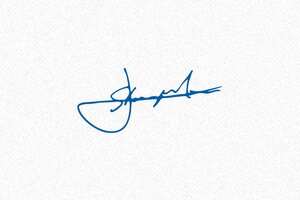
Creating an effective signature stamp requires careful consideration of your actual signature characteristics and intended usage patterns. The design process typically begins with providing a high-quality scan or photograph of your signature, preferably captured using black ink on white paper to ensure maximum contrast and detail clarity.
Size selection significantly impacts both practicality and professional appearance, with most business applications benefiting from stamps measuring between 15mm and 25mm in height. Smaller stamps work well for cheques and compact documents, while larger versions provide better visibility on contracts and formal correspondence. The width varies according to signature length, but maintaining proportional scaling ensures natural appearance.
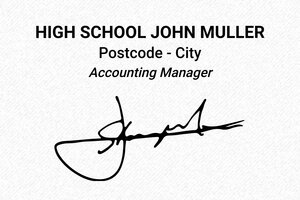
Font considerations become relevant when incorporating printed text elements alongside the signature image, such as professional titles or company names. Clean, professional typefaces complement signature elements without overwhelming the overall design, while appropriate spacing ensures all elements remain clearly legible.
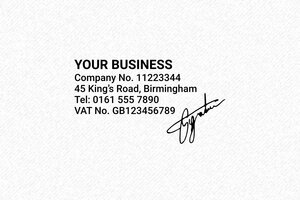
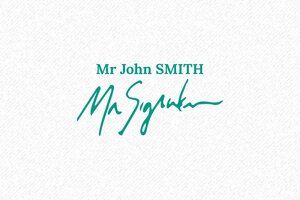
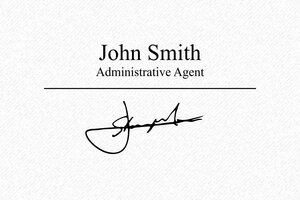
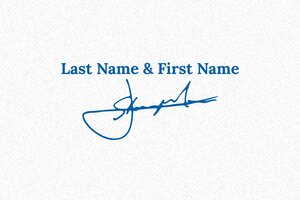
Business correspondence typically benefits from signature stamps that include both the signature image and printed name beneath, ensuring recipient clarity while maintaining professional presentation. This combination proves particularly valuable for international communications where signature interpretation might prove challenging.
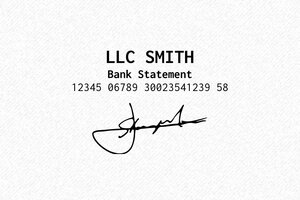
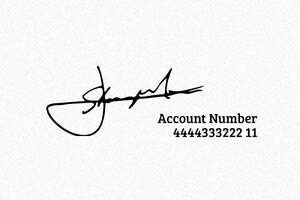
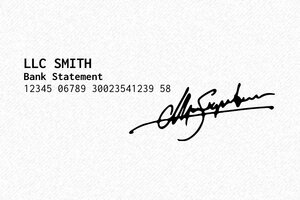
Financial document applications often require more compact designs that fit within designated signature areas on cheques, forms, and standardised paperwork. These stamps prioritise signature clarity over additional text elements, focusing on reproducing the essential characteristics that enable recognition and verification.
Legal document usage may incorporate professional designations or qualifications alongside the signature, providing immediate context about the signatory's authority and credentials. However, users must ensure such additions don't compromise the signature's core recognisability or create confusion about the authentication method.
Maintaining signature stamp security requires treating the device with the same care afforded to important financial documents or professional credentials. Unauthorised access to signature stamps could enable document fraud, making secure storage and controlled access essential components of responsible usage.
Professional environments benefit from establishing clear protocols regarding stamp custody, usage authorisation, and documentation of stamped documents. Many organisations maintain logs of significant documents authenticated using signature stamps, creating audit trails that support legal compliance and internal controls.
Regular inspection of stamp impressions helps identify wear patterns or damage that might affect signature quality or security. Stamps showing signs of deterioration should be replaced promptly to maintain consistent authentication standards and prevent potential disputes about signature validity.
Physical security measures include secure storage when stamps aren't in active use, with many professionals keeping signature stamps in locked drawers or safes alongside other sensitive materials. Access control becomes particularly important in shared office environments where multiple individuals might have proximity to the stamp.
Documentation practices should include maintaining records of when and how signature stamps are used for important documents, particularly those with legal or financial implications. This documentation supports authentication efforts if questions arise about document validity or authorisation.
Regular review of stamped documents helps ensure consistency and identify any irregularities that might indicate unauthorised use or stamp damage. Establishing baseline impression samples facilitates comparison and verification processes when needed.
Usage frequency significantly influences the optimal stamp type selection, with heavy daily users benefiting from robust self-inking mechanisms that minimise maintenance requirements while providing consistent results. Occasional users might prefer traditional rubber stamps that offer greater control over ink application and colour selection.
Document variety considerations include the range of paper types, sizes, and formats you regularly encounter in professional activities. Stamps intended for use on glossy paper or specialised forms may require specific ink formulations or pressure adjustments to ensure reliable adhesion and clarity.
Professional image requirements vary among industries and roles, with some contexts demanding more formal presentation while others prioritise practicality and efficiency. Understanding your professional environment helps guide decisions about stamp size, design complexity, and additional text elements.
Initial investment in quality signature stamp construction typically provides superior long-term value through extended service life and consistent performance. While premium options require higher upfront costs, their durability and reliability often result in lower total ownership costs over time.
Replacement and maintenance costs vary significantly among stamp types, with self-inking mechanisms requiring periodic ink refills or cartridge replacements, while traditional stamps may need new ink pads or complete die replacement as components wear.
Professional consultation services offered by reputable suppliers like Otypo can help identify the most suitable options for specific usage patterns and requirements. Expert guidance ensures optimal stamp selection while avoiding common pitfalls that might compromise performance or satisfaction.
Regular cleaning maintains impression quality and extends stamp life, with most stamps benefiting from periodic gentle cleaning using appropriate solvents or cleaning solutions. Accumulated debris or dried ink can affect impression clarity and potentially damage stamp components if left unaddressed.
Proper storage conditions protect stamps from environmental factors that might affect performance, including extreme temperatures, humidity, and direct sunlight. Many professional users store stamps in protective cases or designated drawers that maintain stable conditions while preventing accidental damage.
Ink management includes monitoring ink levels in self-inking stamps and maintaining appropriate supplies for traditional stamps. Timely replacement of depleted ink prevents poor impressions and potential damage from operating stamps without adequate lubrication.
Faint impressions often indicate low ink levels, worn stamp components, or insufficient application pressure. Systematic diagnosis helps identify the root cause and appropriate corrective measures, whether involving ink replacement, stamp adjustment, or technique modification.
Uneven impressions may result from stamp misalignment, uneven pressure application, or surface irregularities in the documents being stamped. Addressing these issues typically involves technique adjustment or stamp mechanism inspection and potential repair.
Smudging problems frequently stem from excessive ink application, inappropriate ink formulation for the paper type, or insufficient drying time between application and document handling. Understanding the interaction between ink, paper, and environmental conditions helps optimise results.
Professional signature stamps represent a sophisticated solution for modern authentication needs, combining legal validity with practical efficiency in ways that serve diverse professional requirements. The technology has evolved to offer remarkable reliability and quality, making signature stamps an increasingly popular choice among UK professionals who value both speed and authenticity in their document processes.
Whether you're managing a busy legal practice, running a growing business, or handling extensive administrative responsibilities, the right signature stamp can streamline your workflow while maintaining the professional standards your clients and colleagues expect. With proper selection, security protocols, and maintenance practices, signature stamps provide years of reliable service that enhances both efficiency and professional presentation across your important documentation needs.
 Custom quotes available for bulk or special requests
'%3e%3cpath%20d='M20.5563%202.67834H1.42533C0.639422%202.67834%200%203.31772%200%204.10363V15.5822C0%2016.3682%200.639422%2017.0076%201.42533%2017.0076H15.3578C15.6167%2017.0076%2015.8265%2016.7977%2015.8265%2016.5388C15.8265%2016.2799%2015.6167%2016.0701%2015.3578%2016.0701H1.42533C1.15636%2016.0701%200.9375%2015.8512%200.9375%2015.5822V8.87691H21.0442V11.2778C21.0442%2011.5367%2021.254%2011.7465%2021.5129%2011.7465C21.7718%2011.7465%2021.9817%2011.5367%2021.9817%2011.2778V4.10363C21.9817%203.31772%2021.3423%202.67834%2020.5563%202.67834ZM1.42533%203.61584H20.5563C20.8253%203.61584%2021.0442%203.83466%2021.0442%204.10363V5.54799H0.9375V4.10363C0.9375%203.83466%201.15631%203.61584%201.42533%203.61584ZM0.9375%207.93941V6.48549H21.0442V7.93941H0.9375Z'%20fill='%230C4D5A'/%3e%3cpath%20d='M20.5563%202.67834H1.42533C0.639422%202.67834%200%203.31772%200%204.10363V15.5822C0%2016.3682%200.639422%2017.0076%201.42533%2017.0076H15.3578C15.6167%2017.0076%2015.8265%2016.7977%2015.8265%2016.5388C15.8265%2016.2799%2015.6167%2016.0701%2015.3578%2016.0701H1.42533C1.15636%2016.0701%200.9375%2015.8512%200.9375%2015.5822V8.87691H21.0442V11.2778C21.0442%2011.5367%2021.254%2011.7465%2021.5129%2011.7465C21.7718%2011.7465%2021.9817%2011.5367%2021.9817%2011.2778V4.10363C21.9817%203.31772%2021.3423%202.67834%2020.5563%202.67834ZM1.42533%203.61584H20.5563C20.8253%203.61584%2021.0442%203.83466%2021.0442%204.10363V5.54799H0.9375V4.10363C0.9375%203.83466%201.15631%203.61584%201.42533%203.61584ZM0.9375%207.93941V6.48549H21.0442V7.93941H0.9375Z'%20fill='black'%20fill-opacity='0.5'/%3e%3cpath%20d='M6.92061%2013.6835H2.61612C1.9962%2013.7059%201.99409%2014.5977%202.61612%2014.621H6.92061C7.54054%2014.5986%207.54265%2013.7067%206.92061%2013.6835Z'%20fill='%230C4D5A'/%3e%3cpath%20d='M6.92061%2013.6835H2.61612C1.9962%2013.7059%201.99409%2014.5977%202.61612%2014.621H6.92061C7.54054%2014.5986%207.54265%2013.7067%206.92061%2013.6835Z'%20fill='black'%20fill-opacity='0.5'/%3e%3cpath%20d='M6.92061%2011.7704H2.61612C1.9962%2011.7928%201.99409%2012.6846%202.61612%2012.7079H6.92061C7.54054%2012.6855%207.54265%2011.7936%206.92061%2011.7704Z'%20fill='%230C4D5A'/%3e%3cpath%20d='M6.92061%2011.7704H2.61612C1.9962%2011.7928%201.99409%2012.6846%202.61612%2012.7079H6.92061C7.54054%2012.6855%207.54265%2011.7936%206.92061%2011.7704Z'%20fill='black'%20fill-opacity='0.5'/%3e%3cpath%20fill-rule='evenodd'%20clip-rule='evenodd'%20d='M16.9424%2010.7995L14.5898%2013.152C14.5898%2016.752%2015.1919%2020.2222%2019.2948%2021.3216C23.3978%2020.2222%2023.9998%2016.752%2023.9998%2013.152L21.6473%2010.7995H16.9424Z'%20fill='%23FDF300'/%3e%3cpath%20d='M19.2949%2019.7875C16.7214%2019.0081%2016.1647%2016.8451%2016.0451%2013.9479C16.0413%2013.8187%2016.0909%2013.6937%2016.1822%2013.6023L17.4034%2012.3812C17.4913%2012.2933%2017.6105%2012.2439%2017.7348%2012.2439H20.8549C20.9792%2012.2439%2021.0985%2012.2933%2021.1864%2012.3812L22.4075%2013.6023C22.4989%2013.6937%2022.5485%2013.8187%2022.5446%2013.9478C22.4255%2016.8443%2021.8681%2019.0084%2019.2949%2019.7875ZM16.9894%2014.121C17.1385%2016.4295%2017.4228%2018.0275%2019.2949%2018.8167C21.1665%2018.0277%2021.4513%2016.4301%2021.6004%2014.121L20.6608%2013.1814H17.929L16.9894%2014.121Z'%20fill='%230C4D5A'/%3e%3cpath%20d='M19.2949%2019.7875C16.7214%2019.0081%2016.1647%2016.8451%2016.0451%2013.9479C16.0413%2013.8187%2016.0909%2013.6937%2016.1822%2013.6023L17.4034%2012.3812C17.4913%2012.2933%2017.6105%2012.2439%2017.7348%2012.2439H20.8549C20.9792%2012.2439%2021.0985%2012.2933%2021.1864%2012.3812L22.4075%2013.6023C22.4989%2013.6937%2022.5485%2013.8187%2022.5446%2013.9478C22.4255%2016.8443%2021.8681%2019.0084%2019.2949%2019.7875ZM16.9894%2014.121C17.1385%2016.4295%2017.4228%2018.0275%2019.2949%2018.8167C21.1665%2018.0277%2021.4513%2016.4301%2021.6004%2014.121L20.6608%2013.1814H17.929L16.9894%2014.121Z'%20fill='black'%20fill-opacity='0.5'/%3e%3c/g%3e%3cdefs%3e%3cclipPath%20id='clip0'%3e%3crect%20width='24'%20height='24'%20fill='white'/%3e%3c/clipPath%3e%3c/defs%3e%3c/svg%3e) Secure payment via card or PayPal
Secure payment via card or PayPal Free delivery from £60
 Up to 20% off with volume discounts!
 Create your own product easily with our online editorCustom quotes available for bulk or special requestsSecure payment via card or PayPalFree delivery from £60Up to 20% off with volume discounts!Create your own product easily with our online editor