Data Plates
Your sign in just 2 minutes.
Full editor: 27 materials, 219 colors, 12 mounting options
Marking: laser engraving, mechanical or printed
starting at £2.50

Your sign in just 2 minutes.
Full editor: 27 materials, 219 colors, 12 mounting options
Marking: laser engraving, mechanical or printed


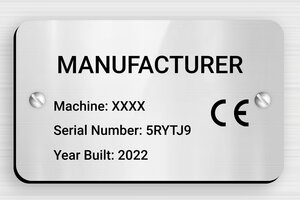


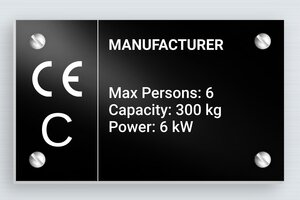

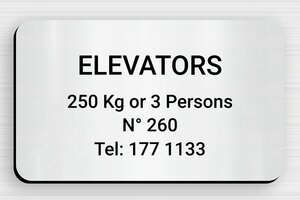

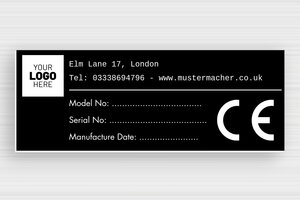

UK regulations mandate specific information display requirements under the Health and Safety (Safety Signs and Signals) Regulations 1996, which implement European Directive 92/58/EEC standards for workplace identification systems.
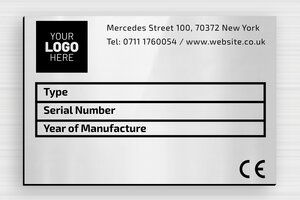
Industrial data plates must display:
The information hierarchy must prioritise safety-critical data whilst ensuring traceability for maintenance, warranty, and regulatory inspection purposes. Equipment operating in industrial settings requires clearly visible identification that supports preventive maintenance schedules and regulatory audit trails.
Material selection determines data plate longevity in industrial applications where exposure to chemicals, temperature extremes, mechanical stress, and environmental conditions can rapidly degrade inferior identification solutions.
The best materials for demanding environments include:
These materials support various marking techniques including laser engraving, acid etching, and electrochemical marking that create permanent, high-contrast identification capable of withstanding decades of industrial use.
Post-Brexit regulations require UKCA (UK Conformity Assessed) marking for industrial equipment placed on the UK market, replacing CE marking for domestic applications whilst maintaining CE requirements for European exports.
Key considerations for industrial data plates include:
Industrial data plates must accommodate both marking systems when required, and suppliers must understand these evolving requirements to provide solutions that accommodate current regulations whilst anticipating future compliance changes that may affect equipment identification standards.
Yes, logo integration and corporate branding elements can enhance professional appearance whilst maintaining compliance with identification standards that prioritise safety-critical information visibility.
Customisation considerations include:
Modern industrial data plates can incorporate sophisticated information systems including QR codes, data matrix symbols, and NFC technology alongside traditional branding, bridging physical identification with digital asset management platforms while maintaining compliance standards.
Production timelines for custom industrial data plates depend on several factors including material selection, customisation complexity, quantity requirements, and specific compliance needs.
Factors affecting production schedules include:
Professional data plate manufacturing incorporates advanced quality management systems that trace material sources, monitor production parameters, and validate finished product performance against established durability standards. Each production batch undergoes systematic inspection before dispatch to ensure customers receive identification solutions that meet exacting industrial standards.
Industrial data plates serve as the permanent identification backbone of UK manufacturing, providing essential equipment information that ensures regulatory compliance, safety protocols, and asset management efficiency. These durable identification solutions display critical details including serial numbers, technical specifications, safety warnings, and compliance markings that meet stringent British and European standards. With industrial data plates becoming increasingly sophisticated to accommodate digital tracking systems and evolving regulatory requirements, UK businesses require reliable suppliers who understand both technical demands and compliance frameworks that govern modern industrial environments.
Otypo specialises in creating custom industrial data plates that combine European manufacturing excellence with comprehensive customisation capabilities, ensuring each plate meets specific operational requirements whilst maintaining the durability standards essential for harsh industrial conditions. Our advanced online configurator allows precise specification of materials, dimensions, text layouts, and compliance markings, delivering professional identification solutions that withstand decades of industrial use.
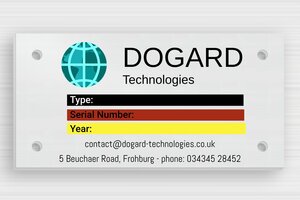
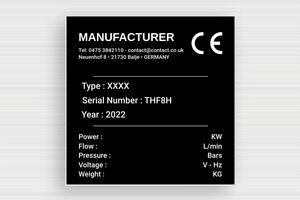
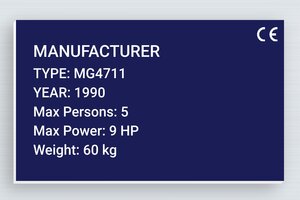
Industrial data plates function as permanent information carriers that must remain legible throughout equipment lifecycles, often spanning 20-30 years in demanding environments. These identification solutions typically display manufacturer details, model numbers, serial identifiers, technical ratings, safety warnings, and regulatory compliance marks including UKCA and CE markings where applicable. The information hierarchy follows established conventions that prioritise safety-critical data whilst ensuring traceability for maintenance, warranty, and regulatory inspection purposes.
UK regulations mandate specific information display requirements under the Health and Safety (Safety Signs and Signals) Regulations 1996, which implement European Directive 92/58/EEC standards for workplace identification systems. Equipment operating in industrial settings must display clearly visible identification that includes manufacturer identity, technical specifications relevant to safe operation, and appropriate warning symbols conforming to BS EN ISO 7010 standards. These requirements extend beyond basic identification to encompass asset tracking systems that support preventive maintenance schedules and regulatory audit trails.
Post-Brexit regulations require UKCA (UK Conformity Assessed) marking for industrial equipment placed on the UK market, replacing CE marking for domestic applications whilst maintaining CE requirements for European exports. Industrial data plates must accommodate both marking systems when equipment serves dual markets, requiring careful layout planning to ensure compliance visibility without compromising essential technical information. The UKCA marking dimensions follow specific proportional requirements, with minimum 5mm height for standard applications and proportional scaling for larger identification plates.
Transitional arrangements permit CE marking acceptance until specific sector deadlines, but forward-thinking manufacturers increasingly specify dual-marking capabilities to ensure long-term compliance flexibility. Data plate suppliers must understand these evolving requirements to provide solutions that accommodate current regulations whilst anticipating future compliance changes that may affect equipment identification standards.
Material selection determines data plate longevity in industrial applications where exposure to chemicals, temperature extremes, mechanical stress, and environmental conditions can rapidly degrade inferior identification solutions. Anodised aluminium represents the gold standard for most industrial applications, offering exceptional corrosion resistance, mechanical durability, and engraving retention that maintains legibility throughout extended service periods. The anodising process creates a protective oxide layer that resists chemical attack whilst providing an ideal surface for laser engraving or sub-surface printing techniques.
Stainless steel grades, particularly 316 marine specification, provide superior performance in chemically aggressive environments including food processing, pharmaceutical manufacturing, and coastal industrial facilities. These materials resist chloride corrosion, maintain structural integrity under thermal cycling, and support various marking techniques including acid etching, laser engraving, and electrochemical marking that create permanent, high-contrast identification.
High-performance polymer materials including phenolic laminates and engineering plastics offer advantages in specific industrial contexts where metal solutions prove unsuitable. Electrical equipment often requires non-conductive identification materials that eliminate electrical hazard risks whilst maintaining information visibility and durability standards. These materials support precision laser engraving that creates subsurface marking protected from surface wear and chemical exposure.
Traffolyte and similar engraving laminates provide cost-effective solutions for indoor applications where environmental exposure remains limited. These materials offer excellent engraving contrast, dimensional stability, and mounting flexibility that accommodates various installation requirements whilst maintaining professional appearance standards expected in modern industrial facilities.
Modern industrial data plates extend far beyond basic text display to incorporate sophisticated information systems including QR codes, data matrix symbols, and NFC technology that bridge physical identification with digital asset management platforms. These advanced marking techniques enable instant access to maintenance histories, technical documentation, and compliance certificates through mobile device scanning, revolutionising equipment management efficiency whilst maintaining traditional visual identification capabilities.
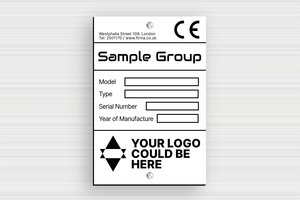
Logo integration and corporate branding elements enhance professional appearance whilst maintaining compliance with identification standards that prioritise safety-critical information visibility. Careful design hierarchy ensures regulatory markings, safety warnings, and technical specifications receive appropriate prominence whilst incorporating brand elements that reinforce corporate identity and quality standards. Colour coding systems can differentiate equipment categories, maintenance schedules, or operational zones whilst maintaining high contrast ratios essential for industrial visibility requirements.
Contemporary industrial environments increasingly demand identification solutions that support Industry 4.0 initiatives through embedded digital technologies. QR codes and data matrix symbols enable comprehensive information storage that links physical equipment to cloud-based management systems containing maintenance schedules, spare parts catalogues, and operational documentation. These systems reduce maintenance downtime whilst improving compliance audit efficiency through instant access to certification and inspection records.
Variable data capabilities support serialised production runs where each data plate contains unique identifiers that enable individual equipment tracking throughout manufacturing, installation, and operational phases. This granular identification supports warranty management, recall procedures, and asset lifecycle analysis that optimises replacement scheduling and maintenance resource allocation.
Proper installation ensures data plate longevity and compliance with visibility requirements that mandate clear identification access for operators, maintenance personnel, and regulatory inspectors. Mechanical fixing methods including countersunk screws, stand-off mounting systems, and rivet installation provide permanent attachment that withstands vibration, thermal expansion, and mechanical stress common in industrial environments. Stand-off mounting creates professional appearance whilst protecting plate surfaces from direct contact damage and facilitating cleaning procedures essential in hygienic manufacturing environments.
Adhesive mounting systems utilise advanced structural adhesives that provide permanent bonding suitable for smooth, clean surfaces where mechanical fixing proves impractical or aesthetically undesirable. High-performance adhesives maintain bonding strength across temperature ranges from -40°C to +150°C whilst resisting chemical exposure that could compromise attachment integrity. Surface preparation requirements include degreasing, abrasion, and primer application where specified to ensure optimal adhesive performance throughout service life.
Outdoor installations require mounting systems that accommodate thermal expansion differentials between data plates and substrate materials whilst maintaining weatherproof sealing that prevents moisture ingress behind identification surfaces. Stainless steel fixings eliminate galvanic corrosion risks when mounting aluminium plates to steel structures, whilst nylon washers provide electrical isolation where required by safety regulations.
Vibration-prone environments including mobile equipment, rotating machinery, and transportation applications demand mounting systems that resist fatigue failure through flexible mounting techniques or vibration-damping materials that absorb mechanical stress whilst maintaining secure attachment. Regular inspection schedules should verify mounting integrity in these demanding applications to prevent identification loss that could compromise safety or compliance status.
Manufacturing facilities utilise custom data plates across diverse applications from production machinery identification to quality control station marking, each requiring specific information content and durability characteristics matched to operational environments. CNC machining centres demand identification that withstands coolant exposure, metal chip impact, and cleaning solvent contact whilst maintaining barcode readability for automated production tracking systems. Food processing equipment requires hygienic design compliance with smooth surfaces, crevice-free mounting, and chemical resistance to cleaning agents and sanitising compounds.
Pharmaceutical manufacturing environments impose stringent cleanliness standards that affect both material selection and mounting techniques, with stainless steel construction and validated cleaning procedures ensuring contamination prevention whilst maintaining identification integrity. Batch tracking requirements often necessitate variable data capabilities that link equipment identification to production records and quality assurance documentation required by regulatory authorities.
Electrical distribution systems require comprehensive identification that supports safe operation, maintenance planning, and emergency response procedures through clear circuit identification, voltage ratings, and safety warnings displayed on durable plates that withstand electrical cabinet environments. Switchgear identification must accommodate arc flash hazard warnings, protective device ratings, and isolation procedures whilst maintaining visibility under emergency lighting conditions.
Water treatment facilities and chemical processing plants demand identification solutions that resist aggressive chemical environments whilst displaying safety-critical information including hazardous material classifications, emergency shutdown procedures, and personal protective equipment requirements. These applications often require custom symbol integration that communicates hazard information through internationally recognised pictograms supplementing text-based warnings.
Professional data plate manufacturing requires rigorous quality control systems that ensure dimensional accuracy, marking permanence, and material performance consistency across production batches. Laser engraving parameters including power settings, pulse frequency, and traverse speeds must be optimised for each material combination to achieve specified marking depth and contrast ratios that maintain legibility throughout service life. Quality verification procedures include adhesion testing, environmental exposure simulation, and dimensional inspection that validates compliance with customer specifications.
Otypo's manufacturing processes incorporate advanced quality management systems that trace material sources, monitor production parameters, and validate finished product performance against established durability standards. Each production batch undergoes systematic inspection that verifies text accuracy, marking quality, and dimensional compliance before dispatch, ensuring customers receive identification solutions that meet exacting industrial standards.
Industrial data plates serving regulated industries often require certification that validates material properties, marking permanence, and environmental resistance characteristics through standardised testing protocols. Salt spray testing, thermal cycling, chemical resistance evaluation, and UV exposure assessment provide quantitative performance data that supports equipment certification processes and regulatory compliance documentation.
Traceability documentation accompanies certified products, providing material certificates, test reports, and manufacturing records that support quality audits and regulatory inspections. This comprehensive documentation enables customers to demonstrate due diligence in supplier selection whilst maintaining audit trails required by quality management systems including ISO 9001 and sector-specific standards.
Selecting the right industrial data plate supplier requires careful evaluation of technical capabilities, quality systems, and customer support services that ensure successful project outcomes. Industrial data plates represent critical infrastructure components that demand reliable performance throughout extended service periods, making supplier expertise and manufacturing quality paramount considerations for procurement decisions. Otypo combines decades of European manufacturing experience with advanced customisation capabilities and responsive customer service, delivering identification solutions that meet the most demanding industrial requirements whilst supporting long-term operational success through durable, compliant, and professionally designed data plates that enhance equipment management efficiency and regulatory compliance confidence.
 Custom quotes available for bulk or special requests
'%3e%3cpath%20d='M20.5563%202.67834H1.42533C0.639422%202.67834%200%203.31772%200%204.10363V15.5822C0%2016.3682%200.639422%2017.0076%201.42533%2017.0076H15.3578C15.6167%2017.0076%2015.8265%2016.7977%2015.8265%2016.5388C15.8265%2016.2799%2015.6167%2016.0701%2015.3578%2016.0701H1.42533C1.15636%2016.0701%200.9375%2015.8512%200.9375%2015.5822V8.87691H21.0442V11.2778C21.0442%2011.5367%2021.254%2011.7465%2021.5129%2011.7465C21.7718%2011.7465%2021.9817%2011.5367%2021.9817%2011.2778V4.10363C21.9817%203.31772%2021.3423%202.67834%2020.5563%202.67834ZM1.42533%203.61584H20.5563C20.8253%203.61584%2021.0442%203.83466%2021.0442%204.10363V5.54799H0.9375V4.10363C0.9375%203.83466%201.15631%203.61584%201.42533%203.61584ZM0.9375%207.93941V6.48549H21.0442V7.93941H0.9375Z'%20fill='%230C4D5A'/%3e%3cpath%20d='M20.5563%202.67834H1.42533C0.639422%202.67834%200%203.31772%200%204.10363V15.5822C0%2016.3682%200.639422%2017.0076%201.42533%2017.0076H15.3578C15.6167%2017.0076%2015.8265%2016.7977%2015.8265%2016.5388C15.8265%2016.2799%2015.6167%2016.0701%2015.3578%2016.0701H1.42533C1.15636%2016.0701%200.9375%2015.8512%200.9375%2015.5822V8.87691H21.0442V11.2778C21.0442%2011.5367%2021.254%2011.7465%2021.5129%2011.7465C21.7718%2011.7465%2021.9817%2011.5367%2021.9817%2011.2778V4.10363C21.9817%203.31772%2021.3423%202.67834%2020.5563%202.67834ZM1.42533%203.61584H20.5563C20.8253%203.61584%2021.0442%203.83466%2021.0442%204.10363V5.54799H0.9375V4.10363C0.9375%203.83466%201.15631%203.61584%201.42533%203.61584ZM0.9375%207.93941V6.48549H21.0442V7.93941H0.9375Z'%20fill='black'%20fill-opacity='0.5'/%3e%3cpath%20d='M6.92061%2013.6835H2.61612C1.9962%2013.7059%201.99409%2014.5977%202.61612%2014.621H6.92061C7.54054%2014.5986%207.54265%2013.7067%206.92061%2013.6835Z'%20fill='%230C4D5A'/%3e%3cpath%20d='M6.92061%2013.6835H2.61612C1.9962%2013.7059%201.99409%2014.5977%202.61612%2014.621H6.92061C7.54054%2014.5986%207.54265%2013.7067%206.92061%2013.6835Z'%20fill='black'%20fill-opacity='0.5'/%3e%3cpath%20d='M6.92061%2011.7704H2.61612C1.9962%2011.7928%201.99409%2012.6846%202.61612%2012.7079H6.92061C7.54054%2012.6855%207.54265%2011.7936%206.92061%2011.7704Z'%20fill='%230C4D5A'/%3e%3cpath%20d='M6.92061%2011.7704H2.61612C1.9962%2011.7928%201.99409%2012.6846%202.61612%2012.7079H6.92061C7.54054%2012.6855%207.54265%2011.7936%206.92061%2011.7704Z'%20fill='black'%20fill-opacity='0.5'/%3e%3cpath%20fill-rule='evenodd'%20clip-rule='evenodd'%20d='M16.9424%2010.7995L14.5898%2013.152C14.5898%2016.752%2015.1919%2020.2222%2019.2948%2021.3216C23.3978%2020.2222%2023.9998%2016.752%2023.9998%2013.152L21.6473%2010.7995H16.9424Z'%20fill='%23FDF300'/%3e%3cpath%20d='M19.2949%2019.7875C16.7214%2019.0081%2016.1647%2016.8451%2016.0451%2013.9479C16.0413%2013.8187%2016.0909%2013.6937%2016.1822%2013.6023L17.4034%2012.3812C17.4913%2012.2933%2017.6105%2012.2439%2017.7348%2012.2439H20.8549C20.9792%2012.2439%2021.0985%2012.2933%2021.1864%2012.3812L22.4075%2013.6023C22.4989%2013.6937%2022.5485%2013.8187%2022.5446%2013.9478C22.4255%2016.8443%2021.8681%2019.0084%2019.2949%2019.7875ZM16.9894%2014.121C17.1385%2016.4295%2017.4228%2018.0275%2019.2949%2018.8167C21.1665%2018.0277%2021.4513%2016.4301%2021.6004%2014.121L20.6608%2013.1814H17.929L16.9894%2014.121Z'%20fill='%230C4D5A'/%3e%3cpath%20d='M19.2949%2019.7875C16.7214%2019.0081%2016.1647%2016.8451%2016.0451%2013.9479C16.0413%2013.8187%2016.0909%2013.6937%2016.1822%2013.6023L17.4034%2012.3812C17.4913%2012.2933%2017.6105%2012.2439%2017.7348%2012.2439H20.8549C20.9792%2012.2439%2021.0985%2012.2933%2021.1864%2012.3812L22.4075%2013.6023C22.4989%2013.6937%2022.5485%2013.8187%2022.5446%2013.9478C22.4255%2016.8443%2021.8681%2019.0084%2019.2949%2019.7875ZM16.9894%2014.121C17.1385%2016.4295%2017.4228%2018.0275%2019.2949%2018.8167C21.1665%2018.0277%2021.4513%2016.4301%2021.6004%2014.121L20.6608%2013.1814H17.929L16.9894%2014.121Z'%20fill='black'%20fill-opacity='0.5'/%3e%3c/g%3e%3cdefs%3e%3cclipPath%20id='clip0'%3e%3crect%20width='24'%20height='24'%20fill='white'/%3e%3c/clipPath%3e%3c/defs%3e%3c/svg%3e) Secure payment via card or PayPal
Secure payment via card or PayPal Free delivery from £60
 Up to 20% off with volume discounts!
 Create your own product easily with our online editorCustom quotes available for bulk or special requestsSecure payment via card or PayPalFree delivery from £60Up to 20% off with volume discounts!Create your own product easily with our online editor