Get a quote
express 4h


Your sign in just 2 minutes.
Full editor: 27 materials, 219 colors, 12 mounting options
Marking: laser engraving, mechanical or printed




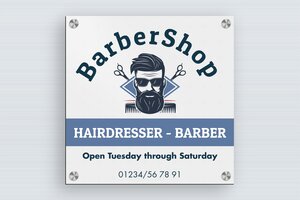



Most shop signs require some form of planning consent in the UK, governed by the Town and Country Planning (Control of Advertisements) Regulations 2007. However, requirements vary significantly based on your location and sign type.
Signs that typically require express advertisement consent include:
Properties in conservation areas face additional restrictions to preserve historical character, whilst listed buildings require even more careful consideration. We recommend early consultation with your local planning authority to identify specific requirements and streamline the approval process, preventing costly delays and design modifications.
British weather presents unique challenges requiring materials that withstand temperature fluctuations, persistent moisture, and occasional severe weather events. The best materials balance durability with aesthetic appeal whilst minimising maintenance requirements.
Top material choices for UK conditions include:
These materials accommodate thermal expansion and contraction whilst maintaining professional appearance throughout seasonal temperature variations. Quality materials ensure your signage investment maintains pristine appearance for years with minimal maintenance requirements.
Professional shop signs constructed from quality materials and properly installed typically last 10-15 years or more, depending on environmental exposure and maintenance practices. The longevity varies based on several key factors.
Factors affecting sign lifespan include:
Illuminated signs require additional consideration for electrical components, with LED technology offering exceptional longevity and minimal maintenance requirements. Quality signage represents a long-term investment that provides continuous promotion for years, delivering exceptional return on investment compared to ongoing advertising costs.
Absolutely. Professional signage solutions are designed to seamlessly integrate your existing brand guidelines, logos, and visual identity elements. Maintaining brand consistency across all customer touchpoints is essential for building recognition and trust.
Custom signage accommodates:
Modern manufacturing techniques including laser cutting and digital printing enable intricate designs and precise lettering that would be impossible with traditional methods. Professional design services ensure optimal adaptation of your brand elements for signage applications whilst maintaining consistency with your overall marketing materials and corporate identity.
The primary differences between illuminated and non-illuminated shop signs involve visibility, energy requirements, regulatory compliance, and investment considerations.
Illuminated signage advantages:
Non-illuminated signage benefits:
LED technology has revolutionised illuminated signage, offering energy-efficient solutions with exceptional longevity and minimal maintenance requirements. Illuminated signs typically require express advertisement consent, particularly in conservation areas, whilst non-illuminated signs may fall under permitted development rights depending on size and location.
The complete process from initial design through final installation typically takes several weeks, with timelines varying based on design complexity, material selection, planning requirements, and installation logistics.
Typical timeline breakdown:
Factors that may extend timelines include:
Professional signage providers work closely with clients to establish realistic timelines and provide regular progress updates throughout the process, ensuring minimal disruption to business operations.
While simple interior signs might be suitable for self-installation, exterior shop signs typically require professional installation to ensure safety, compliance, and optimal performance. Professional installation is strongly recommended for most commercial signage applications.
Professional installation ensures:
Different mounting methods suit various building types, sign weights, and environmental exposures. Professional installers assess structural adequacy and implement appropriate fixing strategies that ensure long-term security without compromising building integrity. The investment in professional installation typically pays dividends through superior outcomes and reduced long-term maintenance costs.
Professional signage requires minimal maintenance when constructed from quality materials and properly installed, but regular care ensures optimal appearance and maximum lifespan. Understanding maintenance requirements helps maintain the professional image your signage is designed to project.
Regular maintenance includes:
Seasonal considerations:
Professional cleaning products designed for specific materials ensure effective cleaning without compromising longevity, whilst preventive maintenance programmes identify potential issues before they become costly problems.
Professional shop signs serve as the cornerstone of successful business visibility, transforming ordinary storefronts into compelling brand statements that attract customers and drive commercial success. In today's competitive retail landscape, shop signs represent far more than simple identification markers – they embody your brand's personality, communicate professionalism, and create that crucial first impression that determines whether potential customers step through your doors or walk past to competitors.
The UK commercial signage market demands solutions that withstand unpredictable British weather whilst maintaining visual impact throughout changing seasons. Modern businesses require signage that seamlessly blends durability with aesthetic appeal, regulatory compliance with creative expression. Whether you're launching a boutique café in Brighton, establishing a professional practice in Manchester, or expanding retail operations across multiple locations, the right shop sign becomes an invaluable marketing asset working around the clock to promote your business.
Otypo specialises in creating bespoke commercial signage solutions that reflect European craftsmanship standards whilst meeting specific UK market requirements. Our comprehensive approach combines cutting-edge design technology with traditional attention to detail, ensuring every sign delivers exceptional quality and longevity. From initial concept through final installation, we understand that your signage investment should provide years of reliable service whilst enhancing your business's professional image.
Effective shop signage functions as silent salespeople, communicating your business identity to thousands of potential customers daily. Research consistently demonstrates that professional signage increases brand recognition by up to 80% and can boost sales figures significantly compared to businesses with poor or absent exterior identification. The psychology behind successful shop signs involves strategic colour selection, typography choices, and positioning that creates subconscious positive associations with your brand.
Modern consumers make purchasing decisions within seconds of encountering businesses, making your shop sign arguably your most important marketing investment. Unlike digital advertising or print materials that require ongoing costs, quality signage provides continuous promotion for years, delivering exceptional return on investment. Professional signs also enhance property values and contribute to neighbourhood commercial appeal, benefiting entire business districts.
Fascia signs represent the most traditional and widely recognised form of shop identification, mounted horizontally across building frontages to display business names and key information. These signs work particularly well for high street locations where consistent architectural lines create professional streetscape appearance. Modern fascia designs incorporate LED illumination, dimensional lettering, and weather-resistant materials that maintain pristine appearance despite challenging British climate conditions.
Projecting signs extend perpendicular from building walls, capturing attention from multiple directions and proving especially effective in pedestrian-heavy areas. These double-sided displays maximise visibility for businesses located mid-block or in areas where foot traffic approaches from various angles. Contemporary projecting sign designs balance traditional aesthetics with modern durability, using lightweight materials that reduce structural stress whilst maintaining visual impact.
Illuminated signage transforms businesses into prominent landmarks during evening hours, extending operational visibility and creating sophisticated brand presence. LED technology has revolutionised illuminated signs, offering energy-efficient solutions with exceptional longevity and minimal maintenance requirements. Backlit panels, halo-lit dimensional letters, and edge-lit acrylic displays provide various illumination styles suitable for different architectural contexts and brand personalities.
British weather presents unique challenges for exterior signage, requiring materials that withstand temperature fluctuations, persistent moisture, and occasional severe weather events. Premium materials ensure your investment maintains professional appearance throughout years of exposure whilst minimising maintenance requirements and replacement costs. Understanding material properties helps businesses select solutions that balance initial investment with long-term durability and aesthetic retention.
Aluminium composite panels offer exceptional strength-to-weight ratios whilst providing smooth surfaces ideal for high-resolution graphics and dimensional applications. These materials resist corrosion, maintain colour stability under UV exposure, and accommodate various mounting systems for different architectural requirements. The thermal expansion properties of quality aluminium composites prevent warping and ensure consistent appearance across seasonal temperature variations.
PVC foam boards provide cost-effective signage solutions without compromising professional appearance or weather resistance. These lightweight materials simplify installation whilst offering excellent printability for complex graphics, photographs, and detailed brand elements. Modern PVC formulations include UV stabilisers that prevent colour fading and material degradation, ensuring signs maintain vibrant appearance for extended periods.
The versatility of PVC foam board makes it suitable for both temporary promotional signage and permanent business identification. Its easy workability allows for custom shapes, routed details, and layered constructions that create dimensional effects without the weight and cost associated with solid materials. Professional-grade PVC foam boards resist moisture absorption, preventing the swelling and delamination issues that affect inferior materials.
Acrylic materials deliver sophisticated appearance with optical clarity that enhances illuminated applications and creates striking visual effects. High-quality acrylic maintains transparency and colour integrity for decades, making it ideal for businesses seeking long-term signage investments. The material's excellent light transmission properties make it particularly suitable for backlit applications where even illumination is crucial for professional appearance.
Laser-cut acrylic enables intricate designs and precise lettering that would be impossible with traditional manufacturing methods. The clean edges produced by laser cutting eliminate the need for additional finishing processes whilst creating sharp, professional details that enhance brand perception. Acrylic's chemical resistance ensures compatibility with various cleaning products, maintaining pristine appearance with minimal maintenance effort.
Successful shop sign design balances immediate visual impact with long-term brand consistency, creating memorable impressions that translate into customer recognition and loyalty. Effective designs consider viewing distances, surrounding environmental factors, and target audience preferences whilst maintaining clear communication hierarchy. Professional design approaches ensure your signage investment delivers maximum commercial benefit through strategic visual communication.
Colour psychology plays crucial roles in signage effectiveness, with different hues triggering specific emotional responses and behavioural patterns. Warm colours like red and orange create urgency and excitement, making them effective for restaurants and retail environments. Cool colours such as blue and green convey trust and stability, suitable for professional services and healthcare applications. Strategic colour combinations enhance readability whilst reinforcing brand identity and market positioning.
Font selection significantly impacts sign effectiveness, with legibility being paramount for successful communication. Sans-serif typefaces generally provide superior readability at distance and in various lighting conditions, making them preferred choices for exterior signage. Character spacing, line height, and contrast ratios must be optimised for specific viewing distances and environmental conditions to ensure consistent readability.
Letter sizing calculations should account for maximum intended viewing distances, with industry standards recommending specific height-to-distance ratios for optimal legibility. Dimensional lettering creates shadow effects that enhance readability whilst adding visual interest and premium appearance. Professional typography considers both daytime and nighttime visibility requirements, ensuring consistent communication effectiveness regardless of lighting conditions.
Navigating UK planning regulations requires understanding both national guidelines and local authority variations that affect signage installations. The Town and Country Planning (Control of Advertisements) Regulations 2007 provide framework requirements, but individual councils often impose additional restrictions based on conservation area status, architectural heritage, and local planning policies. Professional guidance ensures compliance whilst maximising design opportunities within regulatory constraints.
Illuminated signage typically requires express advertisement consent, particularly in conservation areas or locations with specific architectural significance. The application process involves detailed drawings, lighting specifications, and environmental impact assessments that demonstrate compliance with local planning objectives. Early consultation with planning authorities helps identify potential issues and streamline approval processes, preventing costly delays and design modifications.
Properties within conservation areas face additional restrictions designed to preserve historical character and architectural integrity. Signage proposals must demonstrate sensitivity to surrounding heritage whilst meeting modern business communication needs. Traditional materials, restrained colour palettes, and historically appropriate mounting methods often receive more favourable consideration from planning committees.
Listed buildings require even more careful consideration, with any alterations potentially affecting the building's historical significance. Reversible mounting systems and traditional craftsmanship techniques help satisfy conservation requirements whilst providing effective modern signage solutions. Professional conservation advice ensures proposals align with heritage protection objectives and planning policy requirements.
Professional installation ensures signage safety, longevity, and optimal visual presentation whilst complying with structural engineering requirements and health and safety regulations. Different mounting methods suit various building types, sign weights, and environmental exposures, requiring careful selection based on specific project requirements. Quality installation practices prevent premature failures and maintain professional appearance throughout the sign's operational life.
Wall-mounted systems must account for building construction materials, structural loading capabilities, and weatherproofing requirements. Masonry fixings differ significantly from steel frame attachments, requiring appropriate fastener selection and installation techniques. Professional installers assess structural adequacy and implement appropriate fixing strategies that ensure long-term security without compromising building integrity.
Standoff fixings create attractive shadow effects whilst providing ventilation behind signage panels, preventing moisture accumulation and thermal stress. These systems accommodate thermal expansion and contraction whilst maintaining consistent appearance and structural integrity. Quality standoff hardware resists corrosion and maintains secure connections despite weather exposure and thermal cycling.
Adjustable standoff systems enable precise positioning and levelling during installation, ensuring professional appearance even on irregular building surfaces. The gap created between sign and wall facilitates cleaning and maintenance access whilst preventing water entrapment that could cause long-term damage to both signage and building surfaces.
Professional signage requires minimal maintenance when constructed from quality materials and properly installed, but regular care ensures optimal appearance and maximum lifespan. Preventive maintenance programmes identify potential issues before they become costly problems whilst maintaining the professional image that signage is designed to project. Understanding maintenance requirements helps businesses budget appropriately for long-term signage ownership.
Cleaning schedules should account for environmental exposure levels, with urban locations requiring more frequent attention due to pollution and dust accumulation. Gentle cleaning methods preserve surface finishes and prevent premature wear, whilst harsh chemicals or abrasive techniques can cause permanent damage. Professional cleaning products designed for specific materials ensure effective cleaning without compromising longevity.
British weather patterns create seasonal maintenance requirements that vary throughout the year. Winter conditions may cause ice formation and thermal stress, whilst summer UV exposure can affect certain materials and finishes. Spring cleaning removes winter accumulations and identifies any weather-related damage requiring attention. Autumn preparations ensure signage is ready for challenging winter conditions.
Illuminated signage requires additional electrical system maintenance, including LED performance monitoring and weatherproofing inspection. Professional electrical maintenance ensures safety compliance whilst maximising energy efficiency and illumination quality. Regular lamp replacement schedules prevent uneven lighting that compromises professional appearance.
Shop sign investments vary significantly based on size, materials, complexity, and installation requirements, but quality signage consistently delivers exceptional return on investment through enhanced business visibility and customer attraction. Understanding cost factors helps businesses make informed decisions that balance immediate budget constraints with long-term value creation. Professional signage often pays for itself through increased customer traffic and enhanced brand recognition.
Material selection significantly impacts both initial costs and long-term value, with premium materials typically offering superior longevity and reduced maintenance requirements. While budget options may seem attractive initially, they often require earlier replacement and more frequent maintenance, resulting in higher total ownership costs. Quality materials and professional installation represent wise investments that deliver years of reliable service and professional appearance.
Comprehensive signage budgets should include design development, materials, manufacturing, installation, and ongoing maintenance costs to provide accurate investment planning. Professional design services ensure optimal results whilst avoiding costly mistakes and revisions. Quality manufacturing and installation may require higher initial investment but deliver superior results and longer service life.
Phased implementation strategies enable businesses to spread signage investments over time whilst maintaining consistent brand presentation. Priority signage addressing immediate visibility needs can be implemented first, with additional elements added as budgets allow. This approach ensures essential signage is in place whilst allowing for future enhancements and expansions.
Professional signage expertise ensures optimal results through comprehensive understanding of materials, design principles, regulatory requirements, and installation best practices. Experienced signage professionals navigate complex planning processes, recommend appropriate solutions for specific applications, and deliver quality results that enhance business success. The investment in professional services typically pays dividends through superior outcomes and reduced long-term costs.
Quality assurance throughout the design and manufacturing process ensures signage meets exacting standards for appearance, durability, and performance. Professional manufacturers maintain quality control systems that prevent defects and ensure consistent results across multiple projects. Warranty coverage provides additional protection for your signage investment, demonstrating manufacturer confidence in their products and services.
Choosing shop signs from established specialists like Otypo ensures access to comprehensive expertise, quality materials, and professional installation services that deliver exceptional results. Our commitment to customer satisfaction drives continuous innovation and quality improvement, ensuring your signage investment provides years of reliable service whilst enhancing your business's professional image and commercial success.