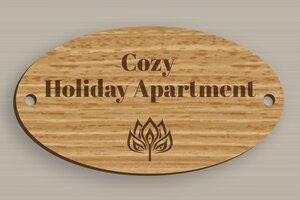
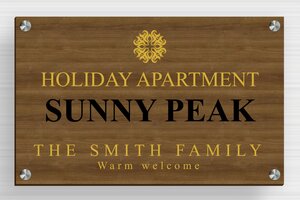
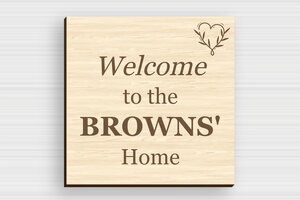
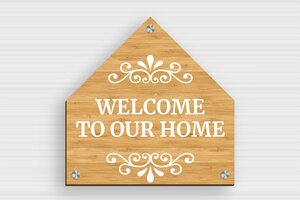
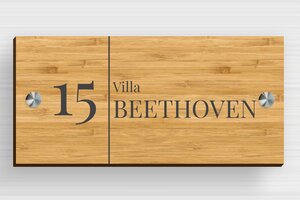
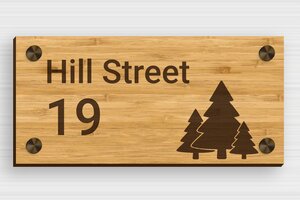
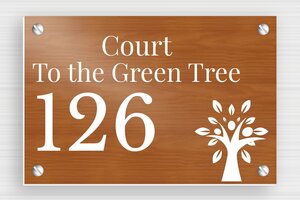
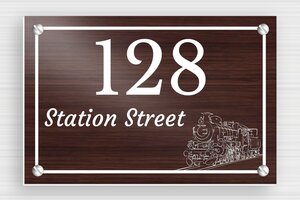
Wood Door Signs
Your sign in just 2 minutes.
Full editor: 27 materials, 219 colors, 12 mounting options
Marking: laser engraving, mechanical or printed
starting at £5.50

Your sign in just 2 minutes.
Full editor: 27 materials, 219 colors, 12 mounting options
Marking: laser engraving, mechanical or printed
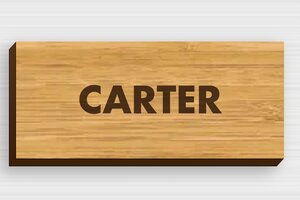
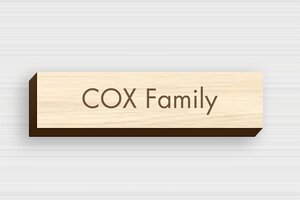
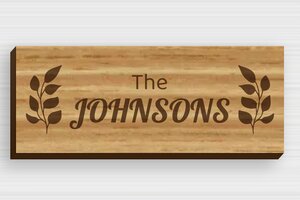
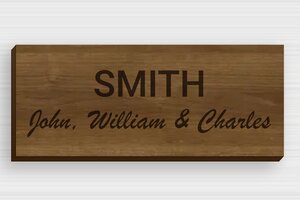


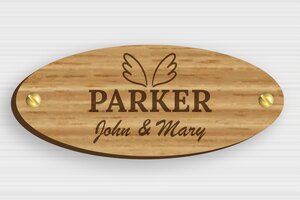

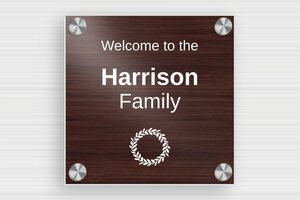
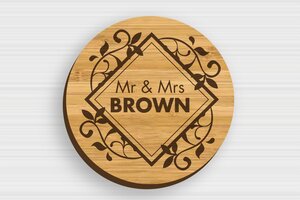
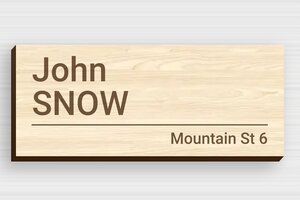

For UK weather conditions, hardwoods offer the best performance and longevity for outdoor door signs. Oak represents the quintessential choice, with its dense grain structure providing superior weather resistance and natural tannins that act as preservatives against moisture and insects.
Key wood types suitable for British climate include:
When properly finished with UV-resistant, marine-grade coatings, these woods can withstand decades of British weather, from driving rain and humidity to coastal salt spray and urban pollution, whilst developing an attractive natural patina over time.
Installation methods vary depending on your door material, with each requiring specific approaches for optimal results and longevity.
Wooden doors: Accept screws directly into the timber. Use pilot holes to prevent splitting and stainless steel screws for corrosion resistance. This creates seamless integration between sign and door.
UPVC and composite doors: Adhesive mounting often proves most suitable to avoid compromising weather seals or warranties. High-quality outdoor adhesives provide strong, permanent bonds. When mechanical fixing is necessary, use specialised screws designed for synthetic materials.
Glass doors: Require careful handling to avoid stress concentrations. Adhesive mounting with appropriate glass primers typically provides the best solution, though pre-drilled holes can work when professionally executed.
For all installations, consider:
Proper maintenance ensures your wooden door sign maintains its attractive appearance and structural integrity for decades. The UK's variable climate requires specific care approaches to protect against moisture, UV exposure, and temperature fluctuations.
Regular maintenance schedule:
Weather protection essentials:
Proper drainage design with beveled edges prevents water accumulation, whilst quality kiln-dried timber minimises movement during seasonal temperature changes. Simple maintenance routines preserve both appearance and durability with minimal time investment.
Yes, wooden door signs offer extensive customisation options for both engraving techniques and colour treatments, allowing you to create a truly personalised piece that reflects your individual style.
Engraving options include:
Colour customisation features:
The precision of modern techniques allows for perfect letter spacing and consistent results, whilst traditional methods like V-groove cutting provide authentic character that complements period properties.
When crafted from appropriate wood species and properly maintained, wooden door signs can serve your property for decades, making them both an economically and environmentally sound investment.
Longevity factors:
Expected lifespan:
The natural durability of responsibly sourced timber, combined with modern protective finishes and minimal maintenance requirements, ensures your wooden door sign remains an attractive and functional feature throughout its extended service life.
Wooden door signs represent the perfect fusion of natural beauty and practical functionality for UK homes. These handcrafted pieces transform an ordinary entrance into a welcoming statement, combining traditional craftsmanship with modern customisation possibilities. Whether you're seeking to enhance your property's kerb appeal, comply with local council requirements, or create a memorable gift, wooden door signs offer unmatched versatility and timeless charm that resonates with British homeowners who value quality and authenticity.
At Otypo, we understand that your door sign is more than mere identification—it's an extension of your home's personality. Our expertise in European quality signage, combined with over 60 years of craftsmanship excellence, ensures every wooden door sign meets the highest standards of durability and aesthetic appeal. Through our intuitive online configurator, you can create a truly personalised piece that reflects your unique style whilst benefiting from our commitment to swift 24-hour production and reliable delivery throughout the UK.
The appeal of wooden door signs extends far beyond their natural beauty, offering practical advantages that make them an excellent investment for UK homeowners. Wood possesses inherent warmth and character that synthetic materials simply cannot replicate, creating an inviting first impression that welcomes guests whilst maintaining sophisticated elegance. This natural material ages gracefully, developing a unique patina over time that adds to its charm rather than detracting from its appearance.
Wooden door signs demonstrate remarkable versatility across architectural styles, complementing everything from traditional Victorian terraces to contemporary new builds. The organic textures and grain patterns create visual interest that enhances rather than overwhelms your property's existing design elements. Unlike mass-produced alternatives, each wooden sign possesses individual characteristics that make it genuinely unique to your home.
From an environmental perspective, wooden door signs represent a sustainable choice for eco-conscious homeowners. Responsibly sourced timber provides a renewable alternative to plastic or metal signage, supporting forest management practices whilst reducing your environmental footprint. The longevity of properly treated wood means your investment will serve your property for decades, making it both economically and environmentally sound.
The durability of wooden door signs, when crafted from appropriate species and finished correctly, surpasses many expectations. Quality hardwoods resist weathering, maintain structural integrity through temperature fluctuations, and require minimal maintenance to preserve their appearance. This resilience makes them particularly suitable for the UK's variable climate, where signs must withstand everything from coastal salt spray to urban pollution.
Selecting the appropriate wood species for your door sign significantly impacts both its appearance and longevity. Different timber varieties offer distinct characteristics in terms of grain pattern, natural colour, weather resistance, and workability, making some more suitable for specific applications than others. Understanding these differences helps ensure your investment delivers the performance and aesthetic appeal you desire.
Oak represents the quintessential choice for British door signage, embodying centuries of tradition whilst offering exceptional practical benefits. This hardwood's dense grain structure provides superior weather resistance, making it ideal for exposed locations where other materials might deteriorate. The natural tannins present in oak act as preservatives, helping protect against moisture penetration and insect damage without requiring extensive chemical treatment.
The distinctive grain pattern of oak creates beautiful visual texture that becomes more pronounced with age, developing a distinguished silver-grey patina when left untreated. This natural aging process appeals to homeowners who appreciate authentic character development over time. Oak's strength allows for intricate engraving work whilst maintaining structural integrity, making it perfect for detailed designs or fine text work.
European oak, in particular, offers consistent quality and grain characteristics that ensure reliable results. The slower growth rates in European climates produce tighter grain patterns that enhance both durability and appearance. When properly finished with appropriate protective coatings, oak door signs can withstand decades of British weather whilst maintaining their elegant appearance.
Maple wood brings a lighter, more contemporary aesthetic to door signage whilst maintaining excellent durability characteristics. Its pale, creamy colour provides an ideal canvas for various finishing options, from natural clear coats that highlight the subtle grain to stained finishes that achieve specific colour matches. The fine, consistent grain pattern ensures smooth engraving results with crisp, clean lines that enhance readability.
The hardness of maple makes it particularly suitable for detailed work, allowing for precise text and decorative elements without risk of chipping or splintering. This characteristic proves especially valuable for signs featuring small text or intricate logos where clarity is paramount. Maple's ability to accept stains evenly means you can achieve custom colours whilst retaining the natural wood texture that distinguishes it from painted alternatives.
For modern homes seeking clean lines and minimalist aesthetics, maple door signs offer the perfect balance between natural warmth and contemporary sophistication. The light colour works particularly well with modern architectural elements whilst providing sufficient contrast for excellent text visibility against most door colours and finishes.
The beauty of wooden door signs lies in their infinite customisation possibilities, allowing you to create a truly personalised piece that reflects your individual style and requirements. Modern manufacturing techniques, combined with traditional craftsmanship, enable unprecedented flexibility in design, text, and finishing options whilst maintaining the authentic character that makes wood so appealing.
Text personalisation forms the foundation of most wooden door signs, whether displaying house names, numbers, family surnames, or business identifications. The choice of font significantly impacts both readability and aesthetic appeal, with options ranging from classic serif styles that complement traditional properties to clean sans-serif fonts that suit contemporary homes. Consider the viewing distance when selecting font sizes—text must remain clearly legible from the street whilst maintaining pleasing proportions relative to the sign dimensions.
Laser engraving represents the pinnacle of precision in wooden sign creation, offering unmatched accuracy and consistency in text and design reproduction. This computer-controlled process ensures perfect letter spacing, uniform depth, and crisp edges that enhance both appearance and longevity. The precision of laser engraving allows for intricate details, small text, and complex logos that would be impossible to achieve through traditional hand-carving methods.
V-groove cutting provides a more traditional appearance, creating beveled edges that catch light beautifully and add dimensional interest to the sign. This technique works particularly well with larger text and bold designs where the angular cuts enhance the overall visual impact. The depth and angle of V-groove cuts can be adjusted to achieve different effects, from subtle shadowing to dramatic three-dimensional appearance.
Infill colour options transform engraved text from subtle impressions into bold, highly visible statements. Carefully selected paint colours that contrast with the natural wood tone ensure maximum readability whilst adding visual interest. Popular combinations include white or cream text on dark woods, or deep colours like navy or forest green on lighter timber species. The key lies in achieving sufficient contrast for easy reading whilst maintaining aesthetic harmony with your property's colour scheme.
Effective wooden door sign design balances aesthetic appeal with practical functionality, ensuring your sign serves its purpose whilst enhancing your property's appearance. Text placement requires careful consideration of reading angles and distances—most door signs are viewed from below and at various angles as visitors approach, making central placement with adequate margins essential for optimal legibility.
Border and decorative elements can transform a simple text sign into an elegant design statement, but restraint is key to maintaining sophistication. Simple rules or geometric borders often prove more effective than elaborate decorative motifs, particularly on smaller signs where excessive detail can appear cluttered. Consider incorporating subtle elements that reflect your property's architectural style or personal interests without overwhelming the primary identification function.
Colour contrast plays a crucial role in sign effectiveness, particularly for outdoor applications where varying light conditions affect visibility. High contrast combinations ensure readability in both bright sunlight and shadow conditions, whilst more subtle contrasts create sophisticated appearances that may sacrifice some visibility for aesthetic appeal. Consider your specific installation location when making these decisions—signs in well-lit areas can accommodate lower contrast designs than those in shadowed locations.
Proper installation ensures your wooden door sign remains securely positioned whilst maintaining its appearance over time. The mounting method you choose depends on several factors including the door material, sign size and weight, exposure to weather, and your aesthetic preferences. Understanding the available options helps you select the most appropriate approach for your specific situation.
Self-adhesive backing offers the simplest installation method for lightweight signs on smooth, clean surfaces. High-quality outdoor adhesives provide strong, permanent bonds that resist temperature fluctuations and moisture exposure. This method works particularly well for internal applications or sheltered external locations where mechanical stress is minimal. The clean appearance of adhesive mounting appeals to homeowners who prefer seamless integration without visible fixings.
Screw fixing provides the most secure mounting option for larger signs or exposed locations where wind loading could stress adhesive bonds. Pre-drilled holes with countersunk screws create professional appearances whilst ensuring long-term security. Stainless steel screws resist corrosion in outdoor applications, maintaining both strength and appearance over time. This method allows for easy removal or repositioning if circumstances change.
Wooden doors present the most straightforward mounting scenario, accepting screws directly into the timber without requiring additional hardware. Pilot holes prevent splitting whilst ensuring secure fixing, and the natural material compatibility creates seamless integration between sign and door. Consider the door's finish when selecting screw types—matching or complementary metal finishes maintain aesthetic consistency.
UPVC and composite doors require more careful consideration due to their construction and potential warranty implications. Adhesive mounting often proves most suitable for these materials, avoiding drilling that could compromise weather seals or structural integrity. When mechanical fixing is necessary, specialised screws designed for synthetic materials ensure secure attachment without damaging the door structure.
Glass doors present unique challenges requiring specialised mounting solutions that avoid stress concentrations that could cause cracking. Adhesive mounting with appropriate primers for glass surfaces often provides the best solution, though mechanical fixings through pre-drilled holes can work when properly executed. Professional installation may be advisable for valuable or complex glass door installations.
Protecting your wooden door sign from the elements ensures years of reliable service whilst maintaining its attractive appearance. The UK's variable climate presents particular challenges, from driving rain and humidity to UV exposure and temperature fluctuations. Understanding proper protection and maintenance techniques helps maximise your investment whilst minimising ongoing care requirements.
Natural wood protection begins with appropriate species selection and extends through proper finishing and ongoing maintenance. Quality exterior wood finishes provide moisture barriers whilst allowing the wood to breathe, preventing the moisture entrapment that leads to rot and decay. UV-resistant formulations prevent the colour fading and surface degradation that can occur with prolonged sun exposure.
Seasonal maintenance requirements vary depending on exposure levels and finishing choices. Annual inspection identifies potential issues before they become serious problems, whilst periodic cleaning removes accumulated dirt and organic matter that could harbour moisture or promote decay. Simple maintenance routines preserve both appearance and structural integrity with minimal time investment.
Rain protection represents the primary concern for outdoor wooden signs in the UK climate. Proper finishing creates water-repellent surfaces that shed moisture rather than absorbing it, whilst appropriate design features like beveled edges and drainage considerations prevent water accumulation. Quality marine-grade finishes provide superior protection in particularly challenging environments like coastal locations.
UV fade prevention becomes increasingly important as climate change brings more intense sunshine to the UK. Modern UV-resistant finishes maintain colour stability whilst protecting the underlying wood from photodegradation that causes surface checking and weakening. Regular reapplication of protective finishes maintains this crucial protection throughout the sign's service life.
Winter temperature considerations include expansion and contraction cycles that can stress both the wood and mounting systems. Quality kiln-dried timber minimises movement, whilst appropriate mounting methods accommodate natural dimensional changes without compromising security. Proper drainage prevents ice formation that could damage both the sign and mounting surface.
The versatility of wooden door signs extends far beyond simple house identification, encompassing a wide range of residential and commercial applications. Understanding these various uses helps you appreciate the full potential of wooden signage whilst inspiring creative applications that enhance both functionality and aesthetic appeal throughout your property.
Residential applications represent the most common use for wooden door signs, ranging from traditional house name and number displays to more creative identification solutions. Front door applications create welcoming first impressions whilst ensuring clear identification for visitors and delivery services. The natural warmth of wood complements most architectural styles, from period properties where it maintains historical authenticity to modern homes where it adds organic contrast to synthetic materials.
Small business applications benefit from wood's professional appearance and natural authority. Office doors, consulting rooms, and retail establishments use wooden signs to convey stability, craftsmanship, and attention to detail that resonates with discerning clients. The customisation possibilities allow for logo incorporation, contact information, and branding elements that maintain consistency with overall business identity.
Interior applications for wooden door signs offer opportunities to extend consistent design themes throughout your home whilst providing practical identification for various rooms and spaces. Bedroom and bathroom identification proves particularly valuable in larger homes or guest accommodations where clear navigation enhances comfort and convenience. The warmth of wood creates more welcoming impressions than cold metal or plastic alternatives commonly used for interior signage.
Home office and study room signs establish professional boundaries within domestic environments, particularly important as remote working becomes increasingly common. Quality wooden signs convey professionalism to video conference participants whilst maintaining the comfortable residential aesthetic that makes home working appealing. Custom text options allow for titles, names, or inspirational messages that personalise these important spaces.
Children's room personalisation represents a delightful application for wooden door signs, creating special spaces that celebrate individual identity. Custom designs incorporating names, favourite colours, or themed elements make bedrooms feel truly personal whilst teaching children about ownership and responsibility for their spaces. The durability of wood ensures these signs can transition through various decorating phases whilst maintaining their fundamental appeal.
Selecting appropriate dimensions for your wooden door sign significantly impacts both its visual effectiveness and practical functionality. Size considerations must balance visibility requirements with aesthetic proportions, ensuring your sign commands attention without overwhelming the door or surrounding architectural elements. Understanding the relationships between text size, viewing distance, and overall dimensions helps achieve optimal results.
Door size relationships provide the foundation for proportional decision-making, with larger doors accommodating more substantial signs whilst smaller entrances require more restrained approaches. A general guideline suggests sign width should not exceed two-thirds of the door width, maintaining visual balance whilst ensuring the door remains the dominant architectural element. Height proportions typically work best when the sign occupies roughly one-sixth to one-quarter of the door height, though specific circumstances may justify variations from these guidelines.
Viewing distance considerations directly influence text size requirements, with longer sight lines necessitating larger lettering for adequate legibility. Street-level signs viewed from pavements or driveways require different sizing than apartment door signs viewed from close distances. Consider the typical approach routes visitors will use when determining optimal text sizes and overall sign dimensions.
Text legibility requirements establish minimum character heights based on expected viewing distances and lighting conditions. As a general rule, text height should equal approximately one inch for every ten feet of viewing distance, though this can be adjusted based on font choice, contrast levels, and lighting conditions. Sans-serif fonts typically require slightly smaller sizes than serif fonts for equivalent legibility, whilst high contrast combinations allow for reduced sizing compared to subtle colour relationships.
Proportional guidelines for aesthetic appeal extend beyond mere functionality to encompass visual harmony with architectural surroundings. Golden ratio principles suggest pleasing proportional relationships, whilst practical considerations like available wall space and mounting constraints influence final decisions. The goal is creating signs that appear deliberately sized rather than arbitrarily dimensioned, contributing to rather than detracting from overall design coherence.
Standard size recommendations provide starting points for decision-making, though customisation remains key to achieving optimal results. Typical residential door signs range from 200mm x 100mm for simple number displays to 400mm x 150mm for house names or combined name and number applications. Commercial applications often require larger dimensions to accommodate additional information like titles, contact details, or logos whilst maintaining adequate text legibility.
Wooden door signs represent an investment in both functionality and beauty, combining practical identification needs with the timeless appeal of natural materials. The versatility of wood, enhanced by modern customisation techniques, ensures your sign perfectly reflects your personal style whilst serving its essential purpose for years to come. From the selection of appropriate timber species through design customisation and proper installation, every aspect contributes to creating a truly distinctive entrance feature that welcomes visitors whilst enhancing your property's character. At Otypo, our commitment to European quality craftsmanship and customer satisfaction ensures your wooden door sign exceeds expectations, delivering the perfect balance of natural beauty, practical functionality, and lasting durability that makes every entrance memorable.
 Custom quotes available for bulk or special requests
'%3e%3cpath%20d='M20.5563%202.67834H1.42533C0.639422%202.67834%200%203.31772%200%204.10363V15.5822C0%2016.3682%200.639422%2017.0076%201.42533%2017.0076H15.3578C15.6167%2017.0076%2015.8265%2016.7977%2015.8265%2016.5388C15.8265%2016.2799%2015.6167%2016.0701%2015.3578%2016.0701H1.42533C1.15636%2016.0701%200.9375%2015.8512%200.9375%2015.5822V8.87691H21.0442V11.2778C21.0442%2011.5367%2021.254%2011.7465%2021.5129%2011.7465C21.7718%2011.7465%2021.9817%2011.5367%2021.9817%2011.2778V4.10363C21.9817%203.31772%2021.3423%202.67834%2020.5563%202.67834ZM1.42533%203.61584H20.5563C20.8253%203.61584%2021.0442%203.83466%2021.0442%204.10363V5.54799H0.9375V4.10363C0.9375%203.83466%201.15631%203.61584%201.42533%203.61584ZM0.9375%207.93941V6.48549H21.0442V7.93941H0.9375Z'%20fill='%230C4D5A'/%3e%3cpath%20d='M20.5563%202.67834H1.42533C0.639422%202.67834%200%203.31772%200%204.10363V15.5822C0%2016.3682%200.639422%2017.0076%201.42533%2017.0076H15.3578C15.6167%2017.0076%2015.8265%2016.7977%2015.8265%2016.5388C15.8265%2016.2799%2015.6167%2016.0701%2015.3578%2016.0701H1.42533C1.15636%2016.0701%200.9375%2015.8512%200.9375%2015.5822V8.87691H21.0442V11.2778C21.0442%2011.5367%2021.254%2011.7465%2021.5129%2011.7465C21.7718%2011.7465%2021.9817%2011.5367%2021.9817%2011.2778V4.10363C21.9817%203.31772%2021.3423%202.67834%2020.5563%202.67834ZM1.42533%203.61584H20.5563C20.8253%203.61584%2021.0442%203.83466%2021.0442%204.10363V5.54799H0.9375V4.10363C0.9375%203.83466%201.15631%203.61584%201.42533%203.61584ZM0.9375%207.93941V6.48549H21.0442V7.93941H0.9375Z'%20fill='black'%20fill-opacity='0.5'/%3e%3cpath%20d='M6.92061%2013.6835H2.61612C1.9962%2013.7059%201.99409%2014.5977%202.61612%2014.621H6.92061C7.54054%2014.5986%207.54265%2013.7067%206.92061%2013.6835Z'%20fill='%230C4D5A'/%3e%3cpath%20d='M6.92061%2013.6835H2.61612C1.9962%2013.7059%201.99409%2014.5977%202.61612%2014.621H6.92061C7.54054%2014.5986%207.54265%2013.7067%206.92061%2013.6835Z'%20fill='black'%20fill-opacity='0.5'/%3e%3cpath%20d='M6.92061%2011.7704H2.61612C1.9962%2011.7928%201.99409%2012.6846%202.61612%2012.7079H6.92061C7.54054%2012.6855%207.54265%2011.7936%206.92061%2011.7704Z'%20fill='%230C4D5A'/%3e%3cpath%20d='M6.92061%2011.7704H2.61612C1.9962%2011.7928%201.99409%2012.6846%202.61612%2012.7079H6.92061C7.54054%2012.6855%207.54265%2011.7936%206.92061%2011.7704Z'%20fill='black'%20fill-opacity='0.5'/%3e%3cpath%20fill-rule='evenodd'%20clip-rule='evenodd'%20d='M16.9424%2010.7995L14.5898%2013.152C14.5898%2016.752%2015.1919%2020.2222%2019.2948%2021.3216C23.3978%2020.2222%2023.9998%2016.752%2023.9998%2013.152L21.6473%2010.7995H16.9424Z'%20fill='%23FDF300'/%3e%3cpath%20d='M19.2949%2019.7875C16.7214%2019.0081%2016.1647%2016.8451%2016.0451%2013.9479C16.0413%2013.8187%2016.0909%2013.6937%2016.1822%2013.6023L17.4034%2012.3812C17.4913%2012.2933%2017.6105%2012.2439%2017.7348%2012.2439H20.8549C20.9792%2012.2439%2021.0985%2012.2933%2021.1864%2012.3812L22.4075%2013.6023C22.4989%2013.6937%2022.5485%2013.8187%2022.5446%2013.9478C22.4255%2016.8443%2021.8681%2019.0084%2019.2949%2019.7875ZM16.9894%2014.121C17.1385%2016.4295%2017.4228%2018.0275%2019.2949%2018.8167C21.1665%2018.0277%2021.4513%2016.4301%2021.6004%2014.121L20.6608%2013.1814H17.929L16.9894%2014.121Z'%20fill='%230C4D5A'/%3e%3cpath%20d='M19.2949%2019.7875C16.7214%2019.0081%2016.1647%2016.8451%2016.0451%2013.9479C16.0413%2013.8187%2016.0909%2013.6937%2016.1822%2013.6023L17.4034%2012.3812C17.4913%2012.2933%2017.6105%2012.2439%2017.7348%2012.2439H20.8549C20.9792%2012.2439%2021.0985%2012.2933%2021.1864%2012.3812L22.4075%2013.6023C22.4989%2013.6937%2022.5485%2013.8187%2022.5446%2013.9478C22.4255%2016.8443%2021.8681%2019.0084%2019.2949%2019.7875ZM16.9894%2014.121C17.1385%2016.4295%2017.4228%2018.0275%2019.2949%2018.8167C21.1665%2018.0277%2021.4513%2016.4301%2021.6004%2014.121L20.6608%2013.1814H17.929L16.9894%2014.121Z'%20fill='black'%20fill-opacity='0.5'/%3e%3c/g%3e%3cdefs%3e%3cclipPath%20id='clip0'%3e%3crect%20width='24'%20height='24'%20fill='white'/%3e%3c/clipPath%3e%3c/defs%3e%3c/svg%3e) Secure payment via card or PayPal
Secure payment via card or PayPal Free delivery from £60
 Up to 20% off with volume discounts!
 Create your own product easily with our online editorCustom quotes available for bulk or special requestsSecure payment via card or PayPalFree delivery from £60Up to 20% off with volume discounts!Create your own product easily with our online editor