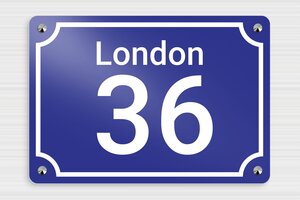
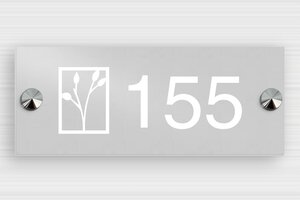
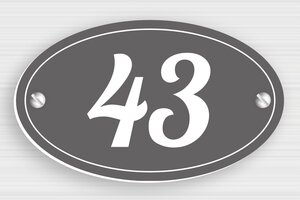
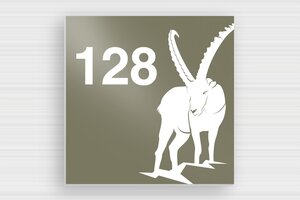
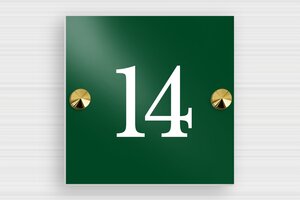
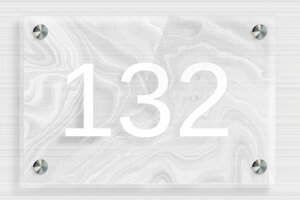
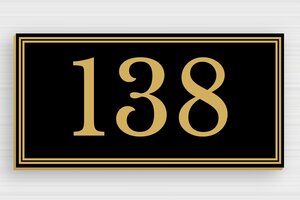
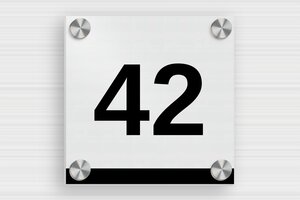
House Number Signs
Your sign in just 2 minutes.
Full editor: 27 materials, 219 colors, 12 mounting options
Marking: laser engraving, mechanical or printed
starting at £10.50

Your sign in just 2 minutes.
Full editor: 27 materials, 219 colors, 12 mounting options
Marking: laser engraving, mechanical or printed


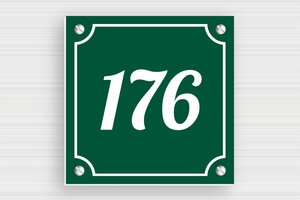
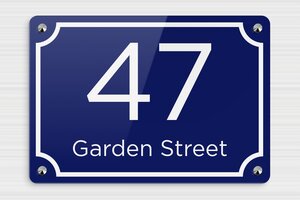
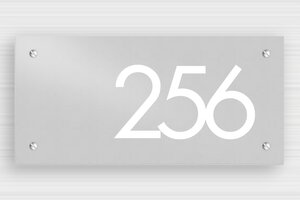
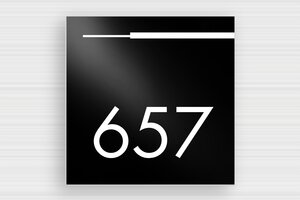
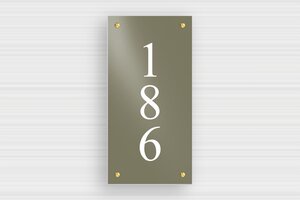
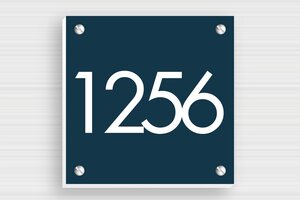

In most cases, you do not need planning permission to install a house number sign in the UK, as displaying your house number clearly is actually a legal requirement under the Towns Improvement Clauses Act 1847 and the Public Health Act 1925.
However, there are some exceptions to consider:
We recommend checking with your local planning authority before installation in sensitive areas, as unauthorised changes could result in enforcement action. For standard residential properties, ensuring your house number is visible from the public highway is not just permitted but required by law.
The UK's variable weather conditions require materials that can withstand rain, frost, UV exposure, and temperature fluctuations. Here are the best performing materials:
Stainless Steel: Offers unmatched durability and excels in coastal environments where salt air can corrode other materials. Grade 316 stainless steel provides superior corrosion resistance and requires minimal maintenance.
Aluminium: Exceptionally durable and lightweight, aluminium resists corrosion naturally. Anodised finishes provide enhanced weather resistance and come in various colours, whilst brushed aluminium maintains its appearance over time.
Natural Slate: Welsh slate has been used in British construction for centuries and provides exceptional weather resistance. Its dense structure resists water absorption, preventing frost damage during winter months.
High-Quality Acrylic: Modern acrylic resists UV degradation and won't yellow over time. It's particularly suitable when combined with appropriate protective finishes.
Each material offers distinct advantages, so consider your property's style, local climate conditions, and maintenance preferences when making your selection.
Proper sizing ensures your house number sign meets legal visibility requirements whilst maintaining proportional aesthetics. Here are the key guidelines:
Minimum Size Requirements:
Standard Dimensions:
Factors to Consider:
The key is balancing visibility requirements with proportional aesthetics relative to your property's scale. Consider the viewing angle and distance when selecting both font and sign sizes.
Most house number signs can be installed as a DIY project with basic tools and careful preparation. However, the complexity depends on your chosen mounting method and wall type.
DIY-Friendly Installations:
Tools Typically Required:
When to Consider Professional Installation:
Key Success Factors:
With careful preparation and the right tools, most homeowners can successfully install their house number sign.
Yes, UK regulations require clear visibility of house numbers, and compliance ensures accessibility for essential services whilst avoiding potential issues with local authorities.
Legal Requirements:
Visibility Standards:
Local Authority Considerations:
Best Practice Placement:
Proper maintenance extends your house number sign's lifespan whilst preserving its appearance and functionality. Different materials require specific care approaches:
Aluminium Signs:
Acrylic Signs:
Slate Signs:
Stainless Steel Signs:
General Maintenance Tips:
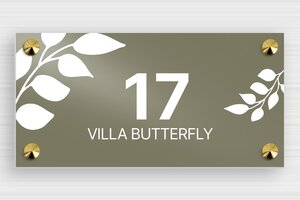
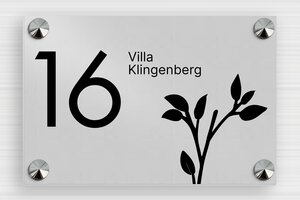
Yes, you can absolutely combine your house name with your house number on the same sign, and this is a popular choice for many UK homeowners who want to add personality whilst maintaining practical identification.
Design Considerations:
Layout Options:
Practical Benefits:
Important Guidelines:
The key is balancing personalisation with practical functionality, ensuring your house number remains the dominant identifying feature whilst allowing creative expression through your chosen house name.
Standoff fixings and traditional screw mounting offer different aesthetic and practical advantages for house number signs, each suited to different property styles and preferences.
Traditional Screw Mounting:
Standoff Fixings:
Practical Considerations:
Style Suitability:
House number signs are an essential feature of every UK home, serving both practical and legal purposes while adding character to your property's exterior. Whether you're moving into a new home, renovating your current property, or simply looking to improve your home's visibility, choosing the right house number sign can make all the difference. From traditional slate plaques that complement period properties to modern acrylic designs that suit contemporary homes, the options available today offer endless possibilities for personalisation and style.
The importance of clear, visible house numbering cannot be overstated in the UK. Emergency services, postal workers, and delivery drivers all rely on easily identifiable house numbers to locate properties quickly and efficiently. Beyond the practical benefits, a well-chosen house number sign enhances your property's kerb appeal and demonstrates attention to detail that visitors and potential buyers will notice.
At Otypo, we understand that every home is unique, which is why we offer a comprehensive range of customisable house number signs designed to meet the diverse needs of UK homeowners. With over 60 years of experience in creating high-quality signage, we combine traditional craftsmanship with modern technology to deliver products that stand the test of time whilst reflecting your personal style.
In the United Kingdom, displaying your house number clearly is not just a matter of convenience – it's a legal requirement. Under the Towns Improvement Clauses Act 1847 and the Public Health Act 1925, property owners must ensure their house numbers are visible from the street. This legislation exists to facilitate emergency services, postal delivery, and general navigation, making your house number sign a crucial safety feature as well as an aesthetic choice.
The practical benefits of a quality house number sign extend far beyond legal compliance. Emergency services rely on clear numbering to locate properties during critical situations, where every second counts. Paramedics, fire services, and police officers need to identify your home quickly, particularly during night-time emergencies or in adverse weather conditions. A well-positioned, clearly visible house number sign can literally be a lifesaver.
Postal workers and delivery drivers face daily challenges in locating properties, especially in areas with inconsistent numbering or poor visibility. A professional house number sign reduces delivery delays and ensures your post and packages reach you reliably. This is particularly important in rural areas or new developments where GPS systems may not be entirely accurate.
From a property value perspective, house number signs contribute significantly to kerb appeal. First impressions matter enormously in the property market, and a stylish, well-maintained house number sign suggests that the property is cared for and professionally presented. Estate agents often recommend updating house signage as a cost-effective way to enhance a property's marketability.
The choice of material for your house number sign affects both its appearance and longevity. Each material offers distinct advantages, making it important to consider your property's style, local climate conditions, and personal preferences when making your selection.
Aluminium has become increasingly popular for contemporary house number signs due to its exceptional durability and sleek appearance. This lightweight yet robust material resists corrosion, making it ideal for the UK's variable weather conditions. Aluminium signs can be finished in various ways, including brushed, anodised, or powder-coated surfaces, each offering different aesthetic qualities.
Brushed aluminium provides a sophisticated, professional appearance that complements modern architectural styles. The subtle texture helps hide minor scratches whilst maintaining a premium look over time. Anodised aluminium offers enhanced weather resistance and comes in various colours, allowing for greater customisation options. The material's natural properties mean it won't rust, fade, or deteriorate under normal outdoor conditions.
For homeowners seeking a floating effect, aluminium signs work exceptionally well with standoff fixings. These create a contemporary three-dimensional appearance that adds visual interest whilst maintaining clean, minimalist lines. The lightweight nature of aluminium makes installation straightforward, reducing the risk of damage to your property's exterior walls.
Acrylic house number signs offer versatility and modern styling that appeals to homeowners seeking contemporary solutions. This material provides excellent clarity and can be manufactured in clear, frosted, or coloured variants to suit different design preferences. High-quality acrylic resists UV degradation, ensuring colours remain vibrant and the material doesn't yellow over time.
The manufacturing process for acrylic signs allows for precise cutting and engraving, creating sharp, professional-looking numbers and text. LED backlighting can be incorporated for enhanced visibility during evening hours, making acrylic an excellent choice for properties where night-time identification is important. The smooth surface is easy to clean and maintain, requiring only occasional wiping with appropriate cleaning products.
Acrylic's lightweight properties make it suitable for various mounting methods, from traditional screw fixings to modern adhesive systems. The material's flexibility allows for creative design possibilities, including curved or uniquely shaped signs that wouldn't be practical with traditional materials.
Natural slate remains a popular choice for UK house number signs, particularly for period properties and homes in rural settings. Welsh slate, renowned for its quality and durability, has been used in British construction for centuries and continues to provide an authentic, heritage appearance that complements traditional architecture.
Slate's natural properties make it exceptionally weather-resistant, with many slate house signs lasting decades without significant deterioration. The material's dense structure resists water absorption, preventing frost damage during winter months. Hand-engraved slate signs offer a premium, artisanal quality that machine-produced alternatives cannot match, with each piece displaying unique natural characteristics.
The colour variations in natural slate, from deep greys to subtle blues and greens, provide options that harmonise with different property styles. Slate signs can be finished with various edge profiles, from simple rectangular shapes to more elaborate curved or chamfered designs. The material accepts various filling compounds for enhanced contrast, with gold, silver, and white being popular choices for maximum legibility.
Stainless steel represents the premium end of house number sign materials, offering unmatched durability and a professional appearance. This material excels in coastal environments where salt air can corrode lesser materials, making it an excellent choice for properties near the sea. The non-porous surface resists staining and requires minimal maintenance to retain its appearance.
Various grades of stainless steel are available, with 316 grade offering superior corrosion resistance for demanding environments. The material can be finished in numerous ways, including brushed, polished, or bead-blasted surfaces, each providing different aesthetic qualities. Laser cutting and engraving technologies allow for precise, professional results that maintain their appearance over many years.
Stainless steel's strength allows for thinner profiles whilst maintaining structural integrity, creating elegant, minimalist designs that suit contemporary architecture. The material's reflective properties can enhance visibility, particularly when combined with appropriate lighting or strategic positioning.
Modern house number signs offer extensive customisation possibilities, allowing homeowners to create unique designs that reflect their personal style whilst meeting practical requirements. The ability to personalise your house number sign ensures it complements your property's character and stands out appropriately in your neighbourhood.
Size selection plays a crucial role in both aesthetics and functionality. Standard dimensions typically range from compact 100mm x 100mm squares suitable for close viewing distances to larger 300mm x 200mm rectangles ideal for properties set back from the road. The key is balancing visibility requirements with proportional aesthetics relative to your property's scale and architectural features.
Font selection significantly impacts both legibility and style. Traditional serif fonts like Times Roman complement period properties, whilst clean sans-serif options such as Helvetica suit modern homes. Script fonts can add elegance but should be used carefully to ensure readability from typical viewing distances. Consider the viewing angle and distance when selecting font sizes, with larger numbers generally being more practical for street-facing visibility.
Colour combinations affect both visual impact and long-term maintenance. High contrast combinations, such as white text on dark backgrounds or dark text on light backgrounds, provide optimal legibility. Consider how colours will weather over time and how they complement your property's existing colour scheme. Metallic finishes can add sophistication but may require more frequent cleaning to maintain their appearance.
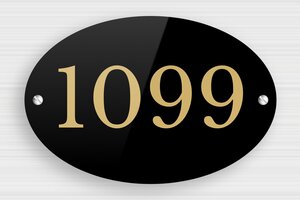
Shape options extend beyond traditional rectangles to include circles, ovals, and custom profiles. Arched tops suit Victorian properties, whilst clean geometric shapes complement contemporary architecture. Consider how the shape will integrate with your property's existing features and whether it will date well over time.
Proper installation ensures your house number sign remains secure, level, and attractive for years to come. The mounting method you choose depends on your sign material, wall type, and aesthetic preferences. Understanding the options available helps you make informed decisions that suit your specific situation.
Traditional screw fixings remain the most popular mounting method for house number signs, offering security and reliability across various wall types. This method works well with brick, stone, rendered walls, and timber cladding, providing a permanent solution that can withstand severe weather conditions.
The key to successful screw installation lies in selecting appropriate fixings for your wall type. Masonry walls require rawl plugs or wall anchors sized to match both the screw diameter and wall material density. Hollow walls need specialist fixings such as toggle bolts or cavity anchors to distribute loads effectively. Always use corrosion-resistant screws, preferably stainless steel or galvanised options, to prevent unsightly rust stains.
Decorative screw caps can enhance the finished appearance whilst protecting screw heads from corrosion. These caps, available in various finishes to match your sign material, create a professional look that integrates the fixings into the overall design. Some signs incorporate countersunk holes that allow screws to sit flush with the surface, creating clean lines without visible fixings.
Modern adhesive mounting systems offer alternatives to traditional drilling, particularly suitable for rental properties or situations where permanent fixings aren't desirable. High-performance structural adhesives can provide secure mounting for lightweight signs whilst avoiding potential damage to decorative surfaces.
Surface preparation is critical for adhesive success. Walls must be clean, dry, and free from loose material or paint. Porous surfaces may require priming to ensure optimal adhesion. Temperature and humidity conditions during installation affect curing times and final bond strength, making timing important for successful results.
Adhesive mounting works best with smooth, non-porous surfaces such as painted render, tiles, or metal cladding. The method is less suitable for textured surfaces or areas subject to extreme temperature variations. Consider the sign's weight and wind loading when evaluating adhesive mounting options, as these factors affect long-term reliability.
Standoff fixings create a modern floating appearance that adds depth and visual interest to house number signs. This mounting method uses spacers to hold the sign away from the wall surface, creating shadow effects that enhance the three-dimensional appearance. Standoff systems work particularly well with metal and acrylic signs.
The standoff distance typically ranges from 10mm to 25mm, depending on the desired visual effect and sign size. Larger standoffs create more dramatic shadows but require stronger fixings to handle increased wind loading. The spacers themselves can be decorative elements, available in various finishes to complement the sign material.
Installation requires precise positioning to ensure the sign sits level and parallel to the wall surface. Template systems help achieve accurate hole spacing, whilst adjustable standoffs allow for minor corrections during installation. This mounting method creates a premium appearance that suits contemporary architectural styles.
Selecting a house number sign that complements your property requires consideration of architectural style, materials, and proportions. The right choice enhances your home's character whilst ensuring practical functionality for years to come.
Victorian and Edwardian properties benefit from traditional materials and classic styling. Slate signs with hand-engraved numbers complement the period character, whilst cast iron or brass numbers suit properties with original metalwork features. Consider the scale of architectural details when sizing your sign – elaborate properties can accommodate larger, more decorative signs, whilst simpler facades require more restrained approaches.
Contemporary homes offer greater flexibility in material and design choices. Clean lines, minimal ornamentation, and modern materials like brushed aluminium or clear acrylic suit these properties well. Geometric shapes and sans-serif fonts complement modern architecture, whilst standoff mounting creates the three-dimensional effects that work well with contemporary styling.
Rural and cottage properties often suit natural materials that reflect their settings. Slate, timber, or stone signs harmonise with countryside locations, whilst hand-crafted details add authenticity. Consider how the sign will weather naturally over time, as some patina and aging can enhance the character of rural properties.
Colour coordination with existing features ensures visual harmony. Match or complement window frames, door colours, or architectural details rather than introducing conflicting elements. Neutral colours provide longevity and flexibility, whilst bold choices can create focal points if used thoughtfully.
Understanding UK regulations ensures your house number sign meets legal requirements whilst avoiding potential issues with local authorities. Compliance isn't just about following rules – it's about ensuring your property remains accessible to essential services and maintaining community standards.
The fundamental requirement is visibility from the public highway. Your house number must be clearly readable from the centre of the road during both day and night conditions. This means considering factors such as lighting, contrast, and potential obstructions like trees or parked vehicles. Numbers should typically be at least 75mm high for good visibility, though larger sizes may be necessary for properties set back from the road.
Local councils may have specific guidelines regarding house number displays, particularly in conservation areas or areas of outstanding natural beauty. These restrictions might affect materials, colours, or mounting methods allowed. Always check with your local planning authority before installing signs in sensitive areas, as unauthorised changes could result in enforcement action.
Emergency services accessibility standards influence house number requirements. The Fire and Rescue Service recommends numbers be visible from 30 metres distance, whilst ambulance services prefer reflective or illuminated numbers for night-time visibility. Consider these requirements when selecting materials and positioning your sign.
New developments and conversions may have specific numbering requirements imposed by local authorities. These ensure logical sequence and avoid confusion for emergency services and postal workers. If you're adding a house name alongside your number, ensure the number remains the primary identifier for official purposes.
Proper maintenance extends the life of your house number sign whilst preserving its appearance and functionality. Different materials require specific care approaches, making it important to understand the requirements for your chosen sign type.
Aluminium signs require minimal maintenance but benefit from periodic cleaning to maintain their appearance. Use mild detergent solutions and soft cloths to remove dirt and pollution residues. Avoid abrasive cleaners that could scratch protective finishes. Anodised surfaces are particularly durable but can be damaged by strong alkalis or acids, so stick to pH-neutral cleaning products.
Acrylic signs should be cleaned with appropriate plastic cleaners to avoid crazing or clouding. Avoid ammonia-based products that can cause stress cracking over time. Regular cleaning prevents dirt buildup that can make numbers difficult to read, particularly important for emergency service visibility.
Slate signs are naturally low-maintenance but may benefit from occasional cleaning to remove lichen or moss growth. Gentle brushing with soapy water usually suffices, though stubborn growth may require specialist stone cleaning products. Avoid pressure washing that could damage filled lettering or surface finishes.
Stainless steel requires regular cleaning to maintain its appearance, particularly in coastal environments where salt deposits can cause staining. Use appropriate stainless steel cleaners and always wipe in the direction of the grain to avoid creating visible scratches. Regular maintenance prevents the buildup of contaminants that could lead to corrosion.
Inspect fixings annually to ensure they remain secure and show no signs of corrosion. Replace any damaged screws or fixings promptly to prevent water ingress that could damage both the sign and your property's wall. Check that the sign remains level and hasn't shifted due to thermal expansion or building settlement.
Contemporary design trends in house number signs reflect broader architectural movements towards minimalism, sustainability, and technological integration. Understanding current trends helps ensure your choice remains stylish and relevant for years to come.
Minimalist design continues to influence house number sign styling, with clean lines, simple fonts, and restrained colour palettes proving popular. This approach suits both modern and traditional properties, as simplicity rarely dates poorly. Large, bold numbers provide excellent visibility whilst maintaining elegant proportions.
Mixed materials create visual interest whilst allowing for creative expression. Combining metal numbers with timber backing, or incorporating stone elements with modern fixings, creates unique designs that reflect individual style. The key is ensuring materials complement rather than compete with each other.
Illuminated house number signs address practical visibility needs whilst adding contemporary appeal. LED technology allows for energy-efficient lighting that enhances night-time visibility without creating light pollution. Solar-powered options eliminate wiring requirements, making installation simpler whilst supporting environmental goals.
Smart home integration represents an emerging trend, with some house number signs incorporating technology such as doorbell cameras or intercom systems. These multifunctional designs address modern security and communication needs whilst maintaining aesthetic appeal.
Sustainable materials and manufacturing processes increasingly influence purchasing decisions. Recycled metals, responsibly sourced timber, and low-impact manufacturing methods appeal to environmentally conscious homeowners. These choices often provide excellent durability whilst supporting broader sustainability goals.
When selecting a house number sign for your UK home, consider how it will serve you both practically and aesthetically for years to come. The investment in a quality, well-designed sign pays dividends in improved property presentation, reliable identification for services, and personal satisfaction with your home's appearance. At Otypo, we're committed to helping you create the perfect house number sign that reflects your style whilst meeting all practical requirements, backed by our decades of experience in delivering European quality signage solutions to discerning customers across the UK.
 Custom quotes available for bulk or special requests
'%3e%3cpath%20d='M20.5563%202.67834H1.42533C0.639422%202.67834%200%203.31772%200%204.10363V15.5822C0%2016.3682%200.639422%2017.0076%201.42533%2017.0076H15.3578C15.6167%2017.0076%2015.8265%2016.7977%2015.8265%2016.5388C15.8265%2016.2799%2015.6167%2016.0701%2015.3578%2016.0701H1.42533C1.15636%2016.0701%200.9375%2015.8512%200.9375%2015.5822V8.87691H21.0442V11.2778C21.0442%2011.5367%2021.254%2011.7465%2021.5129%2011.7465C21.7718%2011.7465%2021.9817%2011.5367%2021.9817%2011.2778V4.10363C21.9817%203.31772%2021.3423%202.67834%2020.5563%202.67834ZM1.42533%203.61584H20.5563C20.8253%203.61584%2021.0442%203.83466%2021.0442%204.10363V5.54799H0.9375V4.10363C0.9375%203.83466%201.15631%203.61584%201.42533%203.61584ZM0.9375%207.93941V6.48549H21.0442V7.93941H0.9375Z'%20fill='%230C4D5A'/%3e%3cpath%20d='M20.5563%202.67834H1.42533C0.639422%202.67834%200%203.31772%200%204.10363V15.5822C0%2016.3682%200.639422%2017.0076%201.42533%2017.0076H15.3578C15.6167%2017.0076%2015.8265%2016.7977%2015.8265%2016.5388C15.8265%2016.2799%2015.6167%2016.0701%2015.3578%2016.0701H1.42533C1.15636%2016.0701%200.9375%2015.8512%200.9375%2015.5822V8.87691H21.0442V11.2778C21.0442%2011.5367%2021.254%2011.7465%2021.5129%2011.7465C21.7718%2011.7465%2021.9817%2011.5367%2021.9817%2011.2778V4.10363C21.9817%203.31772%2021.3423%202.67834%2020.5563%202.67834ZM1.42533%203.61584H20.5563C20.8253%203.61584%2021.0442%203.83466%2021.0442%204.10363V5.54799H0.9375V4.10363C0.9375%203.83466%201.15631%203.61584%201.42533%203.61584ZM0.9375%207.93941V6.48549H21.0442V7.93941H0.9375Z'%20fill='black'%20fill-opacity='0.5'/%3e%3cpath%20d='M6.92061%2013.6835H2.61612C1.9962%2013.7059%201.99409%2014.5977%202.61612%2014.621H6.92061C7.54054%2014.5986%207.54265%2013.7067%206.92061%2013.6835Z'%20fill='%230C4D5A'/%3e%3cpath%20d='M6.92061%2013.6835H2.61612C1.9962%2013.7059%201.99409%2014.5977%202.61612%2014.621H6.92061C7.54054%2014.5986%207.54265%2013.7067%206.92061%2013.6835Z'%20fill='black'%20fill-opacity='0.5'/%3e%3cpath%20d='M6.92061%2011.7704H2.61612C1.9962%2011.7928%201.99409%2012.6846%202.61612%2012.7079H6.92061C7.54054%2012.6855%207.54265%2011.7936%206.92061%2011.7704Z'%20fill='%230C4D5A'/%3e%3cpath%20d='M6.92061%2011.7704H2.61612C1.9962%2011.7928%201.99409%2012.6846%202.61612%2012.7079H6.92061C7.54054%2012.6855%207.54265%2011.7936%206.92061%2011.7704Z'%20fill='black'%20fill-opacity='0.5'/%3e%3cpath%20fill-rule='evenodd'%20clip-rule='evenodd'%20d='M16.9424%2010.7995L14.5898%2013.152C14.5898%2016.752%2015.1919%2020.2222%2019.2948%2021.3216C23.3978%2020.2222%2023.9998%2016.752%2023.9998%2013.152L21.6473%2010.7995H16.9424Z'%20fill='%23FDF300'/%3e%3cpath%20d='M19.2949%2019.7875C16.7214%2019.0081%2016.1647%2016.8451%2016.0451%2013.9479C16.0413%2013.8187%2016.0909%2013.6937%2016.1822%2013.6023L17.4034%2012.3812C17.4913%2012.2933%2017.6105%2012.2439%2017.7348%2012.2439H20.8549C20.9792%2012.2439%2021.0985%2012.2933%2021.1864%2012.3812L22.4075%2013.6023C22.4989%2013.6937%2022.5485%2013.8187%2022.5446%2013.9478C22.4255%2016.8443%2021.8681%2019.0084%2019.2949%2019.7875ZM16.9894%2014.121C17.1385%2016.4295%2017.4228%2018.0275%2019.2949%2018.8167C21.1665%2018.0277%2021.4513%2016.4301%2021.6004%2014.121L20.6608%2013.1814H17.929L16.9894%2014.121Z'%20fill='%230C4D5A'/%3e%3cpath%20d='M19.2949%2019.7875C16.7214%2019.0081%2016.1647%2016.8451%2016.0451%2013.9479C16.0413%2013.8187%2016.0909%2013.6937%2016.1822%2013.6023L17.4034%2012.3812C17.4913%2012.2933%2017.6105%2012.2439%2017.7348%2012.2439H20.8549C20.9792%2012.2439%2021.0985%2012.2933%2021.1864%2012.3812L22.4075%2013.6023C22.4989%2013.6937%2022.5485%2013.8187%2022.5446%2013.9478C22.4255%2016.8443%2021.8681%2019.0084%2019.2949%2019.7875ZM16.9894%2014.121C17.1385%2016.4295%2017.4228%2018.0275%2019.2949%2018.8167C21.1665%2018.0277%2021.4513%2016.4301%2021.6004%2014.121L20.6608%2013.1814H17.929L16.9894%2014.121Z'%20fill='black'%20fill-opacity='0.5'/%3e%3c/g%3e%3cdefs%3e%3cclipPath%20id='clip0'%3e%3crect%20width='24'%20height='24'%20fill='white'/%3e%3c/clipPath%3e%3c/defs%3e%3c/svg%3e) Secure payment via card or PayPal
Secure payment via card or PayPal Free delivery from £60
 Up to 20% off with volume discounts!
 Create your own product easily with our online editorCustom quotes available for bulk or special requestsSecure payment via card or PayPalFree delivery from £60Up to 20% off with volume discounts!Create your own product easily with our online editor