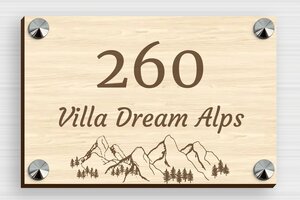
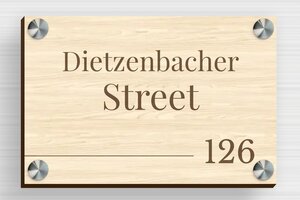
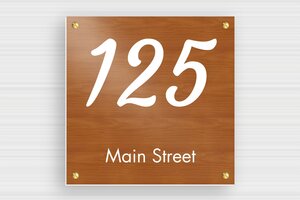
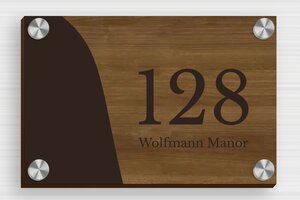
Wood House Number Signs
Your sign in just 2 minutes.
Full editor: 27 materials, 219 colors, 12 mounting options
Marking: laser engraving, mechanical or printed
starting at £18.91

Your sign in just 2 minutes.
Full editor: 27 materials, 219 colors, 12 mounting options
Marking: laser engraving, mechanical or printed
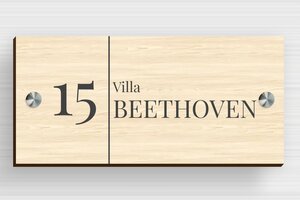
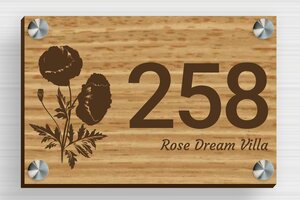
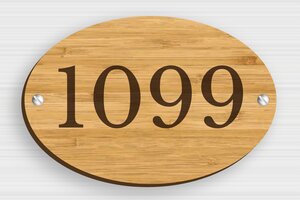
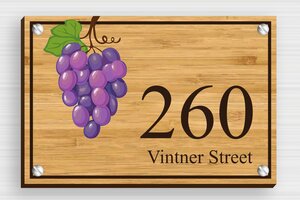

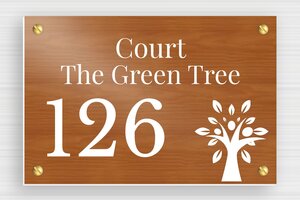
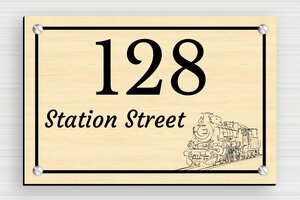
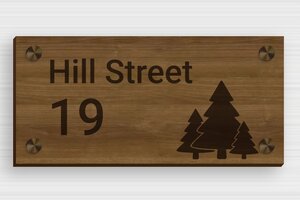
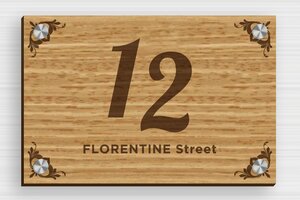
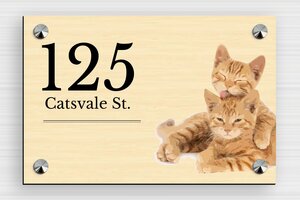
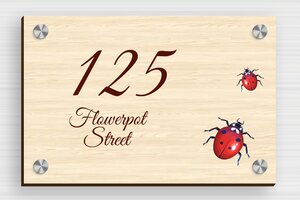

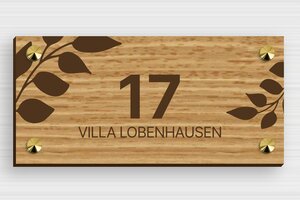
Properly constructed and maintained wooden house number signs can provide 15-25 years of service in UK weather conditions, with premium hardwoods like oak potentially lasting even longer. The lifespan depends on several key factors including timber quality, finishing system, exposure conditions, and maintenance regularity.
Quality timber selection forms the first line of defence against the UK's unpredictable climate. Naturally weather-resistant species like oak and cedar provide inherent protection against moisture, temperature fluctuations, and varying humidity levels. Modern wood preservation techniques and multi-layer finishing systems further enhance durability by protecting against fungal decay, insect attack, and UV damage.
Signs in sheltered locations naturally last longer than those facing prevailing weather or receiving full sun exposure throughout the day. Regular maintenance, including annual inspection and refinishing every three to five years, helps preserve the protective qualities and maintains optimal appearance.
The best wood types for outdoor house number signs depend on your specific requirements for durability, appearance, and budget. Here are the top recommendations:
For cost-effective solutions in protected locations, properly treated Scandinavian redwood pine can provide reliable service whilst offering the warm appearance that makes wooden signs appealing.
Yes, wooden house number signs offer extensive customisation possibilities for both font selection and sizing to create truly personalised signage that reflects your individual style.
Font Selection: You can choose from various typography options to complement your property's architectural style:
Size Options: Standard dimensions typically range from compact 150mm x 75mm plaques suitable for door mounting to impressive 400mm x 200mm signs designed for gate posts or wall mounting. Custom sizing ensures optimal proportion relative to your mounting location and viewing distance.
Letter sizing follows industry standards with minimum letter heights of 75mm for numbers visible from 10 metres, with proportional increases for greater viewing distances. At Otypo, our modern laser engraving technology combined with traditional craftsmanship ensures precise, permanent markings that maintain excellent legibility whilst reflecting your personal style preferences.
Installing wooden house number signs on masonry surfaces requires specific techniques to ensure secure mounting whilst protecting both the sign and wall surface.
Fixing Method for Masonry:
Installation Steps:
For valuable or historic masonry, consider non-penetrating mounting systems using structural adhesives. Many wooden house number signs can be successfully installed by competent DIY enthusiasts, though complex installations may benefit from professional fitting to ensure optimal results and maintain warranty coverage.
Yes, wooden house number signs benefit from regular maintenance to preserve their protective qualities and attractive appearance, though the requirements vary depending on wood species and finishing systems.
Maintenance Schedule:
Maintenance Requirements by Finish Type:
Modern wood preservation techniques and multi-layer finishing systems significantly reduce maintenance requirements. Quality timber like oak and cedar, with their natural weather resistance, combined with professional-grade finishing systems, can minimise maintenance whilst ensuring decades of reliable service. Proper maintenance not only prevents weather damage but actually enhances the wood's character as it develops a distinguished natural patina over time.
Wooden house number signs represent the perfect marriage of natural beauty and practical functionality for UK homeowners seeking to enhance their property's kerb appeal. These wooden house number signs offer a timeless elegance that complements both traditional and contemporary architectural styles, whilst providing clear identification for visitors and delivery services. Unlike mass-produced alternatives, quality wooden signs bring warmth and character to any entrance, creating that distinctive first impression that sets your home apart from the neighbourhood.
The appeal of wood as a material for house signage extends far beyond mere aesthetics. Natural timber possesses inherent durability when properly treated, making it an excellent investment for UK weather conditions. From the rich grain patterns of English oak to the sustainable appeal of responsibly sourced cedar, wooden house number signs offer homeowners the opportunity to express their personal style whilst maintaining the practical requirements of clear, visible addressing.
At Otypo, we understand that every home tells a unique story, and your house number sign should reflect that individuality. Our European craftsmanship combines traditional woodworking techniques with modern laser engraving technology, ensuring each wooden sign meets the highest standards of quality and precision. With over 60 years of experience in bespoke signage, we've perfected the art of creating wooden house number signs that withstand the test of time whilst maintaining their natural beauty.
The decision to select wooden house number signs over metal, plastic, or composite alternatives stems from wood's unique combination of natural beauty, environmental sustainability, and proven longevity. Unlike synthetic materials that can appear harsh or industrial, wood brings an organic warmth that softens the exterior of any property, creating an inviting atmosphere that welcomes guests and adds value to your home.
Wood's versatility makes it suitable for virtually any architectural style. Whether your property features Victorian charm, Georgian elegance, contemporary minimalism, or rustic cottage appeal, wooden house number signs can be crafted to complement and enhance your existing aesthetic. The natural grain patterns ensure that no two signs are identical, giving your property a truly bespoke element that cannot be replicated with manufactured materials.
Choosing wooden house number signs demonstrates environmental responsibility, particularly when selecting timber from sustainably managed forests. Modern forestry practices ensure that harvested wood is replaced through careful replanting programmes, making wood a renewable resource that supports biodiversity and carbon sequestration. FSC and PEFC certified timbers guarantee that your sign contributes to responsible forest management rather than deforestation.
The environmental impact of wooden signs extends beyond their source material. Wood requires significantly less energy to process than metal alternatives, resulting in a lower carbon footprint throughout the manufacturing process. Additionally, at the end of their service life, wooden signs can be composted or recycled, unlike plastic or composite materials that persist in landfills for decades.
While initial investment in quality wooden house number signs may exceed basic plastic alternatives, the long-term value proposition strongly favours wood. Properly maintained wooden signs can last decades, often outliving several generations of cheaper alternatives. The natural patina that develops over time actually enhances wood's character, unlike synthetic materials that simply deteriorate and require replacement.
The investment value extends to property enhancement. Estate agents consistently report that well-maintained, attractive house signage contributes to positive first impressions during property viewings. Quality wooden house number signs signal attention to detail and property pride, factors that can influence potential buyers' perceptions and, ultimately, property values.
The selection of appropriate timber forms the foundation of any quality wooden house number sign. Different wood species offer distinct characteristics in terms of durability, appearance, grain pattern, and natural weather resistance. Understanding these differences enables homeowners to make informed choices that balance aesthetic preferences with practical requirements for their specific location and climate exposure.
English oak stands as the premium choice for wooden house number signs, renowned for its exceptional durability and distinctive grain patterns. This hardwood's natural tannins provide inherent resistance to moisture and decay, making it ideally suited to the UK's variable climate conditions. Oak's density ensures that engraved numbers and letters remain crisp and clear for decades, whilst the wood's natural oils help repel water and prevent warping.
The aesthetic appeal of oak lies in its rich, golden-brown colouration that deepens with age, developing a distinguished patina that enhances rather than detracts from its appearance. Oak's prominent grain patterns create visual interest whilst maintaining the clarity essential for house number visibility. Traditional English craftsmanship has relied on oak for centuries, making it a natural choice for homeowners seeking to honour architectural heritage.
Cedar offers an excellent alternative for homeowners preferring lighter-coloured wooden house number signs with natural weather resistance. Western Red Cedar, in particular, contains natural preservatives that resist insect damage and moisture penetration without requiring chemical treatment. Its straight grain and uniform texture provide an ideal surface for both engraved and painted number applications.
Pine varieties, whilst softer than hardwoods, offer cost-effective solutions for protected locations or temporary installations. Scandinavian redwood pine, properly treated and finished, can provide years of reliable service whilst offering the warm appearance that makes wooden signs so appealing. Pine's lighter weight also makes installation easier, particularly for larger signs or post-mounted applications.
Iroko, often called African teak, provides exceptional durability for wooden house number signs in challenging environments. This hardwood's natural oils make it virtually maintenance-free, developing a silver-grey patina when left untreated that many homeowners find attractive. Iroko's stability means minimal movement with temperature and humidity changes, ensuring that fixings remain secure and the sign maintains its shape.
Sapele offers mahogany-like appearance with superior weather resistance, making it an excellent choice for homeowners seeking rich, reddish-brown tones in their wooden house number signs. Its interlocked grain provides strength whilst creating subtle visual patterns that enhance the sign's aesthetic appeal without compromising number legibility.
The beauty of wooden house number signs lies not only in their natural material but in the extensive customisation possibilities they offer. Modern manufacturing techniques, combined with traditional craftsmanship, enable homeowners to create truly personalised signage that reflects their individual style whilst meeting practical visibility and durability requirements.
Customisation begins with size selection, accommodating everything from compact apartment numbers to substantial property nameplates. Standard dimensions typically range from modest 150mm x 75mm plaques suitable for door mounting to impressive 400mm x 200mm signs designed for gate posts or wall mounting. Custom sizing ensures that your wooden house number sign achieves optimal proportion relative to its mounting location and viewing distance.
Typography plays a crucial role in both the aesthetic appeal and functional effectiveness of wooden house number signs. Traditional serif fonts like Times Roman or Trajan complement period properties, whilst clean sans-serif options such as Helvetica or Futura suit contemporary architecture. Script fonts can add elegance to property names, though careful consideration must be given to legibility, particularly for emergency services reading numbers from a distance.
Letter sizing requires balancing visual impact with practical readability. Industry standards suggest minimum letter heights of 75mm for numbers visible from 10 metres, with proportional increases for greater viewing distances. Depth of engraving affects both durability and visibility, with deeper cuts providing better shadow definition that aids reading in various lighting conditions.
Laser engraving represents the premium choice for wooden house number signs, creating precise, permanent markings that will not fade or wear away. This technique vaporises wood fibres to create clean, consistent letter forms with excellent edge definition. The engraved areas can be left natural for subtle contrast or painted for enhanced visibility, with the engraved channels helping to retain paint longer than surface applications.
V-carving, performed by skilled craftsmen or CNC machines, creates traditional raised letter effects by removing material around characters. This technique produces excellent shadow definition and suits traditional architectural styles. Hand-carved elements can be incorporated for truly bespoke applications, though this significantly increases both cost and production time.
Natural wood finishes showcase timber's inherent beauty whilst providing weather protection. Clear exterior varnishes enhance grain patterns whilst offering UV protection that prevents fading and surface degradation. Oil-based finishes penetrate deeper into wood fibres, providing long-lasting protection that can be easily maintained with periodic reapplication.
Painted finishes offer unlimited colour possibilities whilst providing maximum weather protection. High-quality exterior paints, properly applied over appropriate primers, can extend the life of wooden house number signs significantly. Traditional colour combinations like white letters on dark backgrounds provide excellent contrast for visibility, whilst more adventurous colour schemes can complement specific architectural features or personal preferences.
The UK's unpredictable climate presents unique challenges for outdoor wooden signage, with frequent rain, occasional snow, temperature fluctuations, and varying humidity levels all potentially affecting wooden house number signs. Understanding these environmental factors and implementing appropriate protective measures ensures that your investment provides decades of reliable service whilst maintaining its attractive appearance.
Moisture represents the primary threat to wooden signs, potentially causing swelling, warping, or decay if not properly managed. Quality timber selection forms the first line of defence, with naturally weather-resistant species like oak and cedar providing inherent protection. However, even the most durable woods benefit from appropriate finishing to enhance their natural resistance and extend their service life.
Modern wood preservation techniques go far beyond simple varnishing, employing sophisticated chemical treatments and multi-layer finishing systems designed specifically for exterior applications. Pressure-treated timbers receive deep penetration of preservatives that protect against fungal decay and insect attack, though surface finishing remains essential for UV protection and moisture management.
Multi-coat finishing systems typically begin with a high-quality primer that seals the wood surface and provides adhesion for subsequent layers. Intermediate coats build thickness and provide the primary weather barrier, whilst topcoats offer UV protection and the desired aesthetic finish. Professional-grade systems may include up to five separate layers, each serving a specific protective function.
Regular maintenance schedules help preserve the protective qualities of finished wooden house number signs. Annual inspection identifies areas where finish may be failing, allowing for targeted repairs before moisture penetration occurs. Complete refinishing every three to five years, depending on exposure and finish quality, maintains optimal protection and appearance.
Properly constructed and maintained wooden house number signs can provide 15-25 years of service, with premium hardwoods like oak potentially lasting even longer. Factors affecting lifespan include timber quality, finishing system, exposure conditions, and maintenance regularity. Signs in sheltered locations naturally last longer than those facing prevailing weather or receiving full sun exposure throughout the day.
Maintenance requirements vary with wood species and finishing systems. Natural oil finishes require annual reapplication but allow easy spot repairs and enhancement of wood grain. Painted finishes may last several years between major refinishing but require more extensive preparation when renewal becomes necessary. Clear varnish systems offer good protection with moderate maintenance requirements, typically needing attention every two to three years.
Successful installation of wooden house number signs requires careful consideration of mounting methods, fixing materials, and positioning to ensure both security and optimal visibility. The chosen installation approach must accommodate the sign's weight, local weather conditions, and the substrate material whilst maintaining the aesthetic integrity of both the sign and the property.
Wall-mounted installations represent the most common approach for wooden house number signs, offering stability and weather protection when positioned under eaves or in recessed areas. The mounting method must distribute loads appropriately to prevent damage to both the sign and the wall surface, whilst allowing for the natural movement that occurs with temperature and humidity changes.
Masonry surfaces, including brick, stone, and rendered walls, require specific fixing approaches that account for material hardness and potential for water penetration. Stainless steel screws and wall plugs provide reliable fixing for most applications, with the screw holes sealed using appropriate masonry sealants to prevent water ingress. For valuable or historic masonry, non-penetrating mounting systems using structural adhesives may be preferable.
Timber substrates allow for direct screw fixing, though pilot holes prevent splitting and ensure accurate positioning. Marine-grade stainless steel fixings resist corrosion in exterior applications, whilst countersunk heads can be concealed using matching wood plugs for a seamless appearance. For painted timber surfaces, careful sealing around fixings prevents moisture penetration that could cause paint failure or wood decay.
Post-mounted wooden house number signs offer excellent visibility and flexibility in positioning, particularly useful for properties set back from roads or where wall mounting is impractical. Timber posts must be appropriately sized for the sign weight and local wind loads, with proper foundation depth ensuring stability. Concrete footings typically extend below the frost line to prevent movement during freeze-thaw cycles.
Post materials should complement the sign whilst providing adequate structural support. Pressure-treated softwood posts offer cost-effective solutions for most applications, whilst hardwood posts provide premium appearance and enhanced durability. Metal posts, properly finished to prevent corrosion, offer maximum strength for large signs or exposed locations.
Many wooden house number signs can be successfully installed by competent DIY enthusiasts, particularly smaller wall-mounted versions using straightforward fixing methods. Basic tools including a drill, spirit level, measuring tape, and appropriate fixings enable most homeowners to achieve professional-looking results. Clear installation instructions and templates simplify the positioning process and reduce the risk of errors.
Complex installations, including large signs, post-mounted systems, or applications to challenging substrates, may benefit from professional installation. Experienced installers bring specialised tools, knowledge of local building practices, and insurance coverage that protects both the property and the installation quality. Professional installation may also be required to maintain warranty coverage on premium signs.
Selecting the ideal wooden house number sign requires balancing aesthetic preferences with practical considerations including property style, viewing distances, local climate conditions, and maintenance capabilities. The chosen sign should enhance your property's character whilst providing clear, reliable identification that serves both residents and visitors effectively.
Property architectural style provides the primary guide for sign design, with traditional homes typically suited to classic proportions and conservative colour schemes, whilst contemporary properties may accommodate more adventurous designs and materials. The sign should complement rather than compete with existing architectural features, creating harmony between the natural beauty of wood and the building's design language.
Determining appropriate sign dimensions requires considering viewing distances, letter sizes, and mounting height to ensure optimal legibility under various conditions. Numbers visible from 10 metres require minimum character heights of 75mm, with proportional increases for greater distances. Street-facing signs may need larger dimensions than those viewed primarily by pedestrians or delivery personnel.
Contrast between letters and background significantly affects visibility, particularly in low-light conditions. Dark letters on light backgrounds generally provide better readability than reverse combinations, though local lighting conditions and architectural context may influence the optimal choice. Illumination, either through external lighting or internally lit signs, can enhance visibility whilst creating attractive evening displays.
Positioning height affects both visibility and weather exposure, with signs mounted too low being obscured by vegetation or vehicles, whilst those positioned too high may be difficult to read. Optimal mounting height typically ranges from 1.5 to 2.5 metres above ground level, depending on viewing angles and local conditions.
Quality wooden house number signs represent a significant investment compared to basic alternatives, but the long-term value proposition strongly favours well-made timber signs. Initial costs reflect material quality, manufacturing precision, finishing systems, and customisation complexity, with premium hardwoods and complex designs commanding higher prices than standard softwood options.
Value assessment should consider expected lifespan, maintenance requirements, and aesthetic contribution to property value. A quality oak sign lasting 20 years with minimal maintenance may prove more economical than multiple replacements of cheaper alternatives. Additionally, the visual impact of attractive wooden signage can enhance property kerb appeal and potentially influence resale values.
Otypo's commitment to European quality ensures that every wooden house number sign represents excellent value through superior materials, precision manufacturing, and comprehensive finishing systems. Our experience in bespoke signage enables us to recommend optimal solutions that balance initial investment with long-term performance, ensuring that your chosen sign provides decades of reliable service whilst maintaining its attractive appearance.
The enduring appeal of wooden house number signs lies in their unique combination of natural beauty, practical functionality, and environmental responsibility. These carefully crafted pieces transform the simple necessity of property identification into an opportunity for personal expression and architectural enhancement. Whether you choose the traditional elegance of English oak, the natural weather resistance of cedar, or the premium durability of exotic hardwoods, a quality wooden sign represents an investment in your property's character and value. With proper selection, installation, and maintenance, your wooden house number sign will provide decades of reliable service whilst developing the distinguished patina that only natural materials can achieve.
 Custom quotes available for bulk or special requests
'%3e%3cpath%20d='M20.5563%202.67834H1.42533C0.639422%202.67834%200%203.31772%200%204.10363V15.5822C0%2016.3682%200.639422%2017.0076%201.42533%2017.0076H15.3578C15.6167%2017.0076%2015.8265%2016.7977%2015.8265%2016.5388C15.8265%2016.2799%2015.6167%2016.0701%2015.3578%2016.0701H1.42533C1.15636%2016.0701%200.9375%2015.8512%200.9375%2015.5822V8.87691H21.0442V11.2778C21.0442%2011.5367%2021.254%2011.7465%2021.5129%2011.7465C21.7718%2011.7465%2021.9817%2011.5367%2021.9817%2011.2778V4.10363C21.9817%203.31772%2021.3423%202.67834%2020.5563%202.67834ZM1.42533%203.61584H20.5563C20.8253%203.61584%2021.0442%203.83466%2021.0442%204.10363V5.54799H0.9375V4.10363C0.9375%203.83466%201.15631%203.61584%201.42533%203.61584ZM0.9375%207.93941V6.48549H21.0442V7.93941H0.9375Z'%20fill='%230C4D5A'/%3e%3cpath%20d='M20.5563%202.67834H1.42533C0.639422%202.67834%200%203.31772%200%204.10363V15.5822C0%2016.3682%200.639422%2017.0076%201.42533%2017.0076H15.3578C15.6167%2017.0076%2015.8265%2016.7977%2015.8265%2016.5388C15.8265%2016.2799%2015.6167%2016.0701%2015.3578%2016.0701H1.42533C1.15636%2016.0701%200.9375%2015.8512%200.9375%2015.5822V8.87691H21.0442V11.2778C21.0442%2011.5367%2021.254%2011.7465%2021.5129%2011.7465C21.7718%2011.7465%2021.9817%2011.5367%2021.9817%2011.2778V4.10363C21.9817%203.31772%2021.3423%202.67834%2020.5563%202.67834ZM1.42533%203.61584H20.5563C20.8253%203.61584%2021.0442%203.83466%2021.0442%204.10363V5.54799H0.9375V4.10363C0.9375%203.83466%201.15631%203.61584%201.42533%203.61584ZM0.9375%207.93941V6.48549H21.0442V7.93941H0.9375Z'%20fill='black'%20fill-opacity='0.5'/%3e%3cpath%20d='M6.92061%2013.6835H2.61612C1.9962%2013.7059%201.99409%2014.5977%202.61612%2014.621H6.92061C7.54054%2014.5986%207.54265%2013.7067%206.92061%2013.6835Z'%20fill='%230C4D5A'/%3e%3cpath%20d='M6.92061%2013.6835H2.61612C1.9962%2013.7059%201.99409%2014.5977%202.61612%2014.621H6.92061C7.54054%2014.5986%207.54265%2013.7067%206.92061%2013.6835Z'%20fill='black'%20fill-opacity='0.5'/%3e%3cpath%20d='M6.92061%2011.7704H2.61612C1.9962%2011.7928%201.99409%2012.6846%202.61612%2012.7079H6.92061C7.54054%2012.6855%207.54265%2011.7936%206.92061%2011.7704Z'%20fill='%230C4D5A'/%3e%3cpath%20d='M6.92061%2011.7704H2.61612C1.9962%2011.7928%201.99409%2012.6846%202.61612%2012.7079H6.92061C7.54054%2012.6855%207.54265%2011.7936%206.92061%2011.7704Z'%20fill='black'%20fill-opacity='0.5'/%3e%3cpath%20fill-rule='evenodd'%20clip-rule='evenodd'%20d='M16.9424%2010.7995L14.5898%2013.152C14.5898%2016.752%2015.1919%2020.2222%2019.2948%2021.3216C23.3978%2020.2222%2023.9998%2016.752%2023.9998%2013.152L21.6473%2010.7995H16.9424Z'%20fill='%23FDF300'/%3e%3cpath%20d='M19.2949%2019.7875C16.7214%2019.0081%2016.1647%2016.8451%2016.0451%2013.9479C16.0413%2013.8187%2016.0909%2013.6937%2016.1822%2013.6023L17.4034%2012.3812C17.4913%2012.2933%2017.6105%2012.2439%2017.7348%2012.2439H20.8549C20.9792%2012.2439%2021.0985%2012.2933%2021.1864%2012.3812L22.4075%2013.6023C22.4989%2013.6937%2022.5485%2013.8187%2022.5446%2013.9478C22.4255%2016.8443%2021.8681%2019.0084%2019.2949%2019.7875ZM16.9894%2014.121C17.1385%2016.4295%2017.4228%2018.0275%2019.2949%2018.8167C21.1665%2018.0277%2021.4513%2016.4301%2021.6004%2014.121L20.6608%2013.1814H17.929L16.9894%2014.121Z'%20fill='%230C4D5A'/%3e%3cpath%20d='M19.2949%2019.7875C16.7214%2019.0081%2016.1647%2016.8451%2016.0451%2013.9479C16.0413%2013.8187%2016.0909%2013.6937%2016.1822%2013.6023L17.4034%2012.3812C17.4913%2012.2933%2017.6105%2012.2439%2017.7348%2012.2439H20.8549C20.9792%2012.2439%2021.0985%2012.2933%2021.1864%2012.3812L22.4075%2013.6023C22.4989%2013.6937%2022.5485%2013.8187%2022.5446%2013.9478C22.4255%2016.8443%2021.8681%2019.0084%2019.2949%2019.7875ZM16.9894%2014.121C17.1385%2016.4295%2017.4228%2018.0275%2019.2949%2018.8167C21.1665%2018.0277%2021.4513%2016.4301%2021.6004%2014.121L20.6608%2013.1814H17.929L16.9894%2014.121Z'%20fill='black'%20fill-opacity='0.5'/%3e%3c/g%3e%3cdefs%3e%3cclipPath%20id='clip0'%3e%3crect%20width='24'%20height='24'%20fill='white'/%3e%3c/clipPath%3e%3c/defs%3e%3c/svg%3e) Secure payment via card or PayPal
Secure payment via card or PayPal Free delivery from £60
 Up to 20% off with volume discounts!
 Create your own product easily with our online editorCustom quotes available for bulk or special requestsSecure payment via card or PayPalFree delivery from £60Up to 20% off with volume discounts!Create your own product easily with our online editor