Get a quote
express 4h


Your sign in just 2 minutes.
Full editor: 27 materials, 219 colors, 12 mounting options
Marking: laser engraving, mechanical or printed
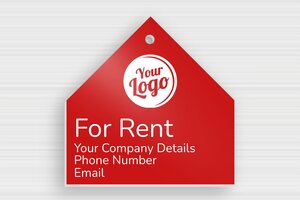
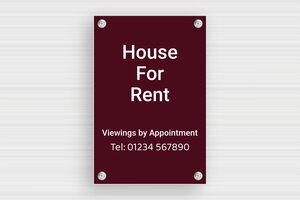
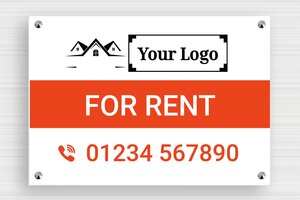
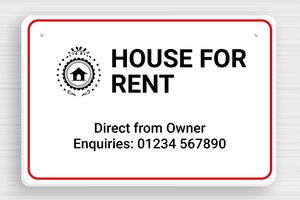

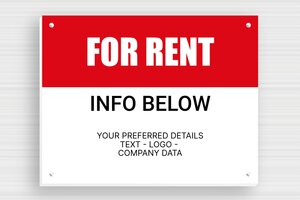
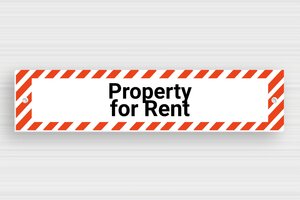
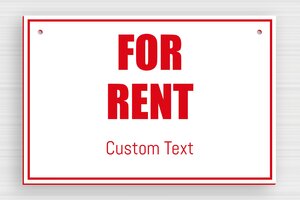
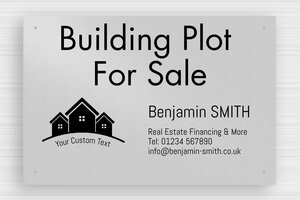
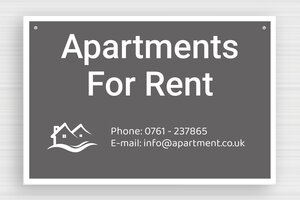
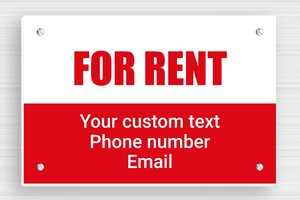

UK law requires to let signs to comply with specific size restrictions and timing requirements. For residential properties, boards must not exceed 0.5 square metres (roughly 70cm by 70cm), whilst V-shaped boards can be up to 0.6 square metres. Commercial properties are permitted larger signs up to 2.0 square metres.
The most important legal requirement is timing: to let signs must be removed within 14 days of a letting being agreed. This countdown begins when the tenancy agreement is signed, not when the tenant moves in. Failure to comply can result in enforcement action from local authorities.
Most standard to let signs fall under permitted development rights, meaning they don't require specific planning permission. However, additional restrictions may apply in conservation areas or around listed buildings.
UK law is very clear on this point: to let signs must be removed within 14 days of a letting being agreed. This is not merely a guideline but a legal requirement that can result in penalties if ignored.
The 14-day period starts from the moment a tenancy agreement is signed, regardless of when the tenant actually moves into the property. This timing requirement serves multiple purposes:
Property professionals should establish clear procedures for prompt sign removal to avoid potential enforcement action from local authorities.
The UK's unpredictable weather demands robust materials that can withstand driving rain, strong winds, and UV exposure. Here are the best material options:
For optimal performance, choose signs with UV-resistant inks and laminates to prevent fading during British summers. Anti-vandal laminates provide additional protection against both weather and intentional damage, helping maintain professional appearance throughout the display period.
Yes, modern to let signs offer extensive customisation possibilities that allow property professionals to maintain brand consistency whilst meeting regulatory requirements. Digital printing technology enables full-colour designs incorporating logos, specific colour schemes, and professional typography.
Key customisation options include:
At Otypo, our online design tools make creating professional to let signage straightforward, allowing you to experiment with different layouts whilst ensuring compliance with UK size regulations. Template options provide a starting point, whilst full customisation capabilities allow complete creative control.
For agents managing multiple properties, bulk ordering with consistent branding reinforces professional standards and brand recognition across all your signage.
Most standard to let signs fall under permitted development rights, meaning they don't require specific planning permission. However, there are important exceptions and considerations:
When planning permission may be required:
Standard requirements without planning permission:
Before installing any signage, it's advisable to check with your local planning authority, particularly in sensitive areas. This simple check can prevent potential issues and ensure your signage remains compliant with local regulations.
When you're looking to let your property in the UK, a professional to let sign becomes your most visible marketing tool. These essential boards serve as the first point of contact between your rental property and potential tenants, making them crucial for successful lettings. Whether you're an estate agent managing multiple properties or a private landlord advertising your first rental, understanding the nuances of to let signage can significantly impact your property's visibility and rental success.
The UK rental market has evolved considerably, yet physical signage remains irreplaceable for immediate local visibility. Unlike online listings that require active searching, a well-positioned to let board catches the attention of passing foot traffic and drivers, often reaching people who weren't actively house-hunting but might be interested in your area. This spontaneous discovery factor makes to let signs particularly valuable in competitive rental markets where timing can be everything.
At Otypo, we understand that every property deserves signage that reflects its quality and attracts the right tenants. Our European craftsmanship ensures your to let boards maintain their professional appearance throughout their display period, whilst our intuitive online customisation tools make creating compliant, attractive signage straightforward for property professionals across the UK.
Navigating the regulatory landscape for to let signage in the UK requires understanding both national guidelines and local authority variations. The fundamental rule centres on size restrictions: residential properties are limited to boards measuring no more than 0.5 square metres. This translates to roughly 70cm by 70cm, though the actual dimensions can vary as long as the total area doesn't exceed this limit.
For those considering V-shaped boards, which consist of two panels joined at an angle for double-sided visibility, the maximum permitted size increases slightly to 0.6 square metres. These angled displays offer enhanced visibility from multiple directions but must still comply with the overall size restrictions that govern residential property advertising.
Commercial properties operate under different parameters, with boards permitted up to 2.0 square metres. This larger allowance reflects the different nature of commercial lettings and the typically larger scale of such properties. However, even commercial signage must adhere to placement restrictions and local planning considerations.
Perhaps the most frequently overlooked regulation concerns timing. UK law requires that to let signs be removed within 14 days of a letting being agreed. This isn't merely a suggestion – it's a legal requirement that can result in enforcement action if ignored. The clock starts ticking from the moment a tenancy agreement is signed, not from when the tenant moves in.
This timing requirement serves multiple purposes: it prevents visual clutter in residential areas, ensures accurate market information for other property seekers, and maintains the professional standards expected in the UK property sector. Property professionals should establish clear procedures for prompt sign removal to avoid potential penalties.
Most standard to let signs fall under permitted development rights, meaning they don't require specific planning permission. However, this changes in conservation areas, where additional restrictions may apply. Listed buildings and their surroundings often have specific requirements that must be observed.
Some local authorities have implemented Article 4 directions that remove permitted development rights for advertising in certain areas. Before installing any signage, it's worth checking with your local planning authority, particularly in historic town centres or areas of special architectural interest.
The UK's famously unpredictable weather demands robust materials that can withstand everything from driving rain to strong winds. Corrugated plastic, often known by the brand name Correx, remains popular for its lightweight properties and weather resistance. This material offers excellent value whilst maintaining clarity of text and graphics throughout typical display periods.
For properties requiring a more premium appearance, aluminium composite boards provide superior durability and a professional finish that reflects well on both the property and the letting agent. These boards resist warping and maintain their appearance even in harsh conditions, making them ideal for high-value properties or extended display periods.
PVC boards offer a middle ground, providing good weather resistance at a reasonable cost. They're particularly suitable for standard residential lettings where durability is important but premium appearance isn't the primary concern. The key is matching the material to both your budget and the property's market position.
British summers, whilst sometimes fleeting, can be surprisingly harsh on printed materials. UV-resistant inks and laminates prevent the fading that can make signs appear unprofessional after just a few weeks of display. This is particularly important for boards that might be displayed for several months in challenging rental markets.
Anti-vandal laminates provide additional protection against both weather and intentional damage. These protective coatings resist scratches and make graffiti removal easier, helping maintain the professional appearance that attracts quality tenants.
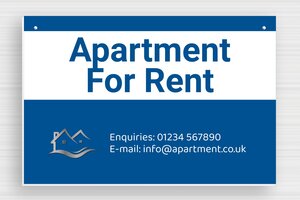
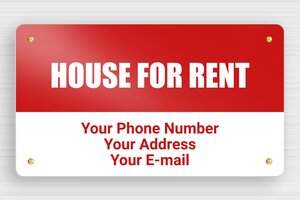
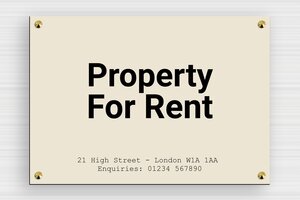
Effective to let sign design balances visibility with professionalism. High contrast colour combinations ensure readability from a distance, with dark text on light backgrounds generally providing the best legibility. However, the design should also reflect the property's character and target market.
Contact information hierarchy is crucial. The most important details – typically a phone number – should be the most prominent, followed by the letting agent's name and any relevant website. Email addresses, whilst useful, are secondary to phone numbers for immediate enquiries.
Logo placement requires careful consideration. Whilst branding is important, it shouldn't dominate the sign at the expense of essential information. The logo should reinforce professionalism without overwhelming the primary message that the property is available to let.
Text size must be sufficient for easy reading from typical viewing distances. As a general rule, letters should be at least 25mm high for main text, with contact numbers potentially larger. Sans-serif fonts typically provide better readability at distance than serif alternatives.
Avoid cramming too much information onto the board. Essential details include "To Let", contact information, and perhaps the agent's name. Additional details like rent amounts or property features are better left to online listings or property particulars.
Proper installation ensures your to let sign remains secure and visible throughout its display period. The positioning should maximise visibility from the most relevant viewing angles – typically the direction from which potential tenants are most likely to approach the property.
Height considerations are important both for visibility and safety. Signs should be positioned high enough to be clearly visible but not so high as to require unsafe installation methods. Ground-level installations using weighted bases can be effective for temporary displays, whilst wall-mounted options provide security for longer-term requirements.
Security measures prevent theft or vandalism. This might involve secure fixings for wall-mounted signs or weighted bases that are difficult to remove for ground-standing displays. The investment in proper installation pays dividends in reduced replacement costs and maintained professional appearance.
Regular cleaning maintains the professional appearance that attracts quality tenants. A simple weekly check and clean with appropriate materials keeps signs looking fresh throughout their display period. This attention to detail reflects well on both the property and the letting agent.
Weather damage should be addressed promptly. A damaged or faded sign can actually deter potential tenants rather than attract them, suggesting poor maintenance standards that might extend to the property itself.
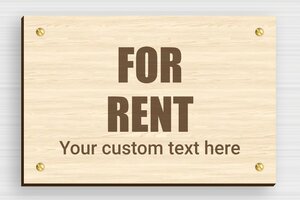
Modern to let signs offer extensive customisation possibilities that allow property professionals to maintain brand consistency whilst meeting regulatory requirements. Digital printing technology enables full-colour designs that can incorporate logos, specific colour schemes, and professional typography.
Otypo's online design tools make creating professional to let signage straightforward, allowing you to experiment with different layouts and colour combinations whilst ensuring compliance with size regulations. The ability to preview designs before ordering helps avoid costly mistakes and ensures the final product meets your expectations.
Template options provide a starting point for those who prefer not to design from scratch, whilst full customisation capabilities allow complete creative control. This flexibility ensures that whether you're a small independent agent or a large corporate entity, you can create signage that reflects your professional standards.
For agents managing multiple properties, maintaining consistency across all signage reinforces brand recognition and professional standards. Bulk ordering often provides cost advantages whilst ensuring all signs meet the same quality standards.
Template systems allow for easy customisation of individual signs whilst maintaining overall design consistency. This approach streamlines the ordering process whilst ensuring each property receives appropriate signage.
Investing in professional to let signs represents a small but significant part of successful property marketing. The right signage not only complies with UK regulations but actively contributes to faster lettings and better tenant quality. With proper material selection, thoughtful design, and reliable suppliers like Otypo, your property signage becomes a valuable marketing asset rather than merely a regulatory requirement. Remember that in the competitive UK rental market, professional presentation at every touchpoint – including your to let boards – can make the difference between a quick let and a prolonged vacancy.