PVC Signs
Your sign in just 2 minutes.
Full editor: 27 materials, 219 colors, 12 mounting options
Marking: laser engraving, mechanical or printed
starting at £2.48

Your sign in just 2 minutes.
Full editor: 27 materials, 219 colors, 12 mounting options
Marking: laser engraving, mechanical or printed

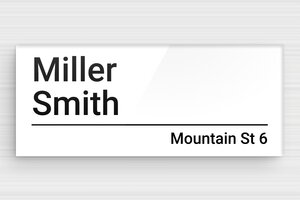


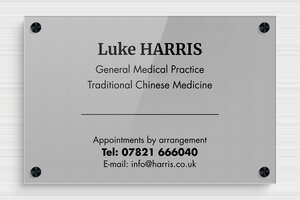
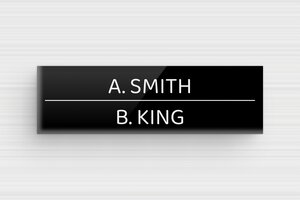
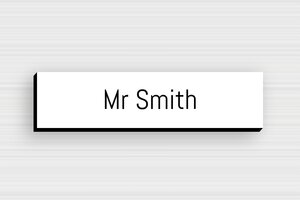
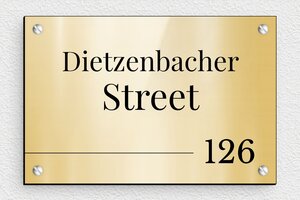


PVC signs are exceptionally well-suited to British weather conditions and typically last between 5 to 12 years outdoors, depending on environmental exposure and material thickness. The longevity stems from PVC's remarkable weather resistance properties.
Key durability factors include:
High-quality PVC formulations with UV stabilisers and impact modifiers ensure your signs maintain their original appearance for years without significant colour shift or surface deterioration, making them an excellent long-term investment for UK businesses.
PVC signs are designed for easy installation and can often be installed by customers themselves, thanks to their lightweight nature and excellent workability. The reduced weight compared to alternatives like aluminium makes handling and mounting much simpler.
DIY installation options include:
However, professional installation may be recommended for:
The choice depends on sign size, mounting location, and your comfort level with basic installation procedures.
Both rigid PVC and expanded PVC (commonly known as Foamex) are excellent signage materials, but they have distinct characteristics that make them suitable for different applications.
Rigid PVC boards:
Expanded PVC (Foamex):
The choice depends on your specific requirements for weight, durability, installation method, and budget considerations.
Yes, PVC signs are highly suitable for workplace safety and compliance signage, offering several advantages that make them ideal for critical safety communications.
Key benefits for safety applications:
Specific safety applications include:
PVC's dimensional stability and longevity ensure that critical safety information remains clearly visible and securely mounted regardless of environmental conditions, making it a reliable choice for comprehensive safety signage programmes.
PVC signs require minimal maintenance throughout their service life, which contributes significantly to their cost-effectiveness. The smooth, non-porous surface resists dirt accumulation and enables easy cleaning.
Regular cleaning procedure:
Maintenance schedule:
What to avoid:
This minimal maintenance approach ensures your PVC signs maintain their professional appearance with minimal disruption to business operations.
Yes, PVC signs can be recycled, and the recycling infrastructure for PVC materials has expanded considerably in recent years. This contributes to their environmental sustainability profile.
Recycling options available:
Best practices for recyclability:
Environmental benefits:
Contact local recycling facilities to confirm PVC acceptance and any specific preparation requirements in your area.
PVC signs offer virtually limitless customisation possibilities, making them suitable for any application from small identification labels to large-format building signage.
Size options:
Colour and graphics:
Surface finishes:
Additional options:
PVC signs represent one of the most versatile and cost-effective signage solutions available in today's market. These durable plastic panels have revolutionised how businesses, institutions, and individuals communicate essential information, from safety warnings to promotional displays. PVC signs offer exceptional weather resistance, making them ideal for both indoor and outdoor applications across the UK's challenging climate conditions. Whether you're managing a construction site, operating a retail business, or simply need clear directional signage, PVC provides the perfect balance of durability, affordability, and customisation flexibility that modern signage demands.
The growing popularity of PVC signage stems from its remarkable adaptability to diverse environments and applications. Unlike traditional materials such as wood or metal, PVC maintains its structural integrity and visual appeal through years of exposure to UV radiation, moisture, and temperature fluctuations. This resilience, combined with advanced printing technologies, allows for vibrant, long-lasting graphics that retain their clarity and colour saturation far longer than many alternative materials. For businesses seeking professional signage solutions that deliver consistent performance without breaking the budget, PVC signs have emerged as the go-to choice across industries ranging from healthcare and education to manufacturing and hospitality.
At Otypo, we've witnessed firsthand how the right signage can transform spaces and enhance communication effectiveness. Our extensive experience in custom signage production has shown us that PVC signs consistently outperform expectations, offering clients the perfect combination of European quality craftsmanship and practical functionality. With our intuitive online design tools and rapid production capabilities, creating professional-grade PVC signage has never been more accessible or efficient for UK businesses and organisations.
Polyvinyl chloride, commonly known as PVC, represents a thermoplastic polymer that has become synonymous with reliable, long-lasting signage solutions. When manufactured specifically for signage applications, PVC undergoes specialised processing that enhances its dimensional stability, surface smoothness, and printability. The resulting material exhibits exceptional resistance to environmental stressors whilst maintaining the flexibility necessary for various installation methods and mounting configurations.
The primary advantage of PVC signs lies in their remarkable durability-to-cost ratio. These signs typically withstand outdoor conditions for five to twelve years, depending on environmental exposure and material thickness. Unlike aluminium signs that may corrode or wooden signs that require regular maintenance, PVC signs maintain their appearance with minimal intervention. The material's inherent UV resistance prevents the colour fading and brittleness that plague inferior plastic alternatives, ensuring your investment continues delivering value throughout its extended lifespan.
Weight considerations make PVC signs particularly attractive for applications where structural load matters. A typical 3mm PVC panel weighs approximately 60% less than equivalent aluminium signage, reducing mounting hardware requirements and installation complexity. This weight advantage becomes especially significant for large-format displays, temporary installations, or situations where frequent repositioning might be necessary. The reduced weight also translates to lower shipping costs and easier handling during installation procedures.
British weather conditions present unique challenges for outdoor signage, from persistent drizzle and high humidity to occasional temperature extremes and strong winds. PVC signs excel in these conditions due to their non-porous surface structure, which prevents moisture absorption and the associated problems of warping, delamination, or dimensional instability. The material's thermal expansion coefficient remains relatively low, minimising the expansion and contraction cycles that can stress mounting points or cause graphic distortion.
UV stabilisation represents a critical factor in PVC sign longevity, particularly for applications involving prolonged sun exposure. High-quality PVC formulations incorporate UV stabilisers and impact modifiers that prevent the photodegradation responsible for yellowing, chalking, and surface deterioration. When combined with UV-resistant inks and protective laminates, properly manufactured PVC signs can maintain their original appearance for years without significant colour shift or surface degradation.
Temperature performance distinguishes quality PVC signs from budget alternatives. Professional-grade PVC maintains its structural integrity across temperature ranges from -20°C to +70°C, covering virtually all UK outdoor conditions. This thermal stability ensures that signs remain flat, graphics stay adhered, and mounting holes maintain their integrity regardless of seasonal temperature variations or sudden weather changes.
The economic advantages of PVC signs extend beyond their initial purchase price to encompass total cost of ownership considerations. While premium materials like brushed aluminium or cast acrylic may offer certain aesthetic advantages, PVC signs deliver comparable visual impact at a fraction of the cost. This cost efficiency becomes particularly important for applications requiring multiple signs, temporary installations, or situations where budget constraints limit material options.
Maintenance requirements for PVC signs remain minimal throughout their service life. The smooth, non-porous surface resists dirt accumulation and allows for easy cleaning with standard detergents and water. Unlike painted metal signs that may require periodic repainting or wooden signs that need regular sealing, PVC signs maintain their appearance with occasional washing. This low maintenance requirement translates to reduced long-term costs and minimal disruption to business operations.
Production efficiency contributes significantly to PVC signs' cost advantage. The material's excellent printability allows for high-speed digital printing processes that reduce manufacturing time and labour costs. Additionally, PVC's workability enables efficient cutting, drilling, and finishing operations that streamline production workflows. These manufacturing efficiencies ultimately benefit customers through competitive pricing and shorter lead times.
The versatility of PVC as a signage substrate enables its use across an extraordinarily diverse range of applications, from critical safety communications to eye-catching promotional displays. Understanding the various types of PVC signage available helps ensure optimal material selection for specific requirements and environmental conditions.
Rigid PVC boards represent the most common form of PVC signage, available in thicknesses ranging from 1mm to 19mm. Thinner materials (1-3mm) suit applications where weight minimisation is crucial or where the sign will be mounted against a solid backing. Medium thicknesses (4-6mm) provide excellent rigidity for freestanding applications whilst remaining economical for most projects. Thicker boards (10mm and above) offer superior impact resistance and dimensional stability for demanding applications or where a premium appearance is desired.
Expanded PVC, often marketed under brand names like Foamex, features a cellular core structure that reduces weight whilst maintaining rigidity. This material excels in applications where easy handling and installation are priorities, such as temporary event signage or displays requiring frequent repositioning. The cellular structure also provides excellent screw-holding properties, making expanded PVC ideal for applications requiring secure mechanical fastening.
Workplace safety signage represents one of the most critical applications for PVC signs, where durability, visibility, and regulatory compliance intersect. PVC's excellent printability allows for the precise colour reproduction required by safety standards, whilst its weather resistance ensures that critical safety information remains legible throughout the sign's service life. The material's impact resistance helps prevent damage from accidental contact or minor impacts that might compromise safety communications.
Fire safety signage benefits particularly from PVC's stability and longevity. Emergency exit signs, fire equipment location markers, and evacuation route indicators must remain clearly visible and securely mounted regardless of environmental conditions. PVC signs meet these requirements whilst offering the cost efficiency necessary for comprehensive safety signage programmes across large facilities or multiple locations.
Health and safety compliance in industrial environments demands signage that can withstand exposure to chemicals, temperature variations, and physical abuse. PVC's chemical resistance and dimensional stability make it suitable for most industrial applications, whilst its smooth surface facilitates the regular cleaning required in food processing, healthcare, and pharmaceutical environments.
Retail environments benefit enormously from PVC signage's combination of visual appeal and practical durability. Point-of-sale displays, promotional banners, and product information signs must attract attention whilst withstanding the handling and environmental stresses of busy commercial spaces. PVC's excellent print quality enables vibrant graphics and sharp text that enhance brand communication and customer engagement.
Temporary promotional signage represents another area where PVC excels, offering the professional appearance necessary for brand representation combined with the cost efficiency required for short-term campaigns. The material's lightweight nature facilitates easy installation and removal, whilst its durability ensures that signs maintain their appearance throughout campaign durations.
Real estate signage demands weather resistance, professional appearance, and cost efficiency for applications ranging from property marketing to site identification. PVC signs meet all these requirements whilst offering the customisation flexibility necessary for brand consistency across multiple properties or development phases.
The design possibilities with PVC signs are virtually limitless, thanks to advanced digital printing technologies and the material's excellent workability. Modern UV-cured inks provide exceptional colour gamut and durability, enabling reproduction of complex graphics, photographic images, and precise corporate colours. This printing capability, combined with PVC's smooth surface texture, produces professional-quality results that rival more expensive substrates.
Size flexibility represents a significant advantage of PVC signage, with standard sheets available up to 3 metres wide and virtually unlimited length through splicing techniques. This size range accommodates everything from small identification labels to large-format building signage without compromising visual continuity or structural integrity. Custom cutting services enable precise shaping for unique applications or architectural integration requirements.
Colour matching capabilities ensure brand consistency across signage programmes, with digital printing processes capable of reproducing Pantone colours and custom colour formulations. This precision becomes particularly important for corporate signage where brand guidelines specify exact colour values or where signs must coordinate with existing architectural elements or corporate materials.
Surface treatment options enhance both the aesthetic appeal and functional performance of PVC signs. Gloss finishes maximise colour vibrancy and provide easy cleaning, making them ideal for indoor applications or situations where visual impact is paramount. Matte finishes reduce glare and provide a more sophisticated appearance, particularly suitable for professional environments or applications where readability under various lighting conditions is important.
Textured surfaces offer enhanced grip for handling and can provide visual interest through light reflection patterns. These finishes prove particularly valuable for applications where the sign surface might be touched frequently or where additional tactile feedback enhances usability. Anti-graffiti treatments can be applied to PVC surfaces in high-risk environments, enabling easy removal of unwanted markings without damage to the underlying sign.
Lamination options provide additional protection and visual enhancement possibilities. Clear protective laminates extend sign life in harsh environments, whilst specialised films can add effects such as holographic patterns, texture simulation, or enhanced scratch resistance. These treatments enable PVC signs to achieve premium appearances whilst maintaining cost efficiency.
PVC's excellent machinability enables precise cutting and shaping for custom applications. CNC routing allows for intricate cutouts, precise edge profiling, and dimensional accuracy that meets architectural tolerances. This capability proves essential for applications requiring integration with existing structures or where multiple signs must align precisely.
Die-cutting services enable cost-effective production of complex shapes for high-volume applications. Custom dies can be created for unique shapes, enabling consistent reproduction across large signage programmes whilst maintaining the economic advantages of automated production processes. This approach proves particularly valuable for corporate signage programmes or applications requiring multiple identical components.
Edge finishing options enhance both appearance and durability. Polished edges provide a premium appearance suitable for high-visibility applications, whilst bevelled edges can create visual interest or facilitate specific mounting configurations. Sealed edges prevent moisture ingress in outdoor applications, extending sign life in challenging environments.
The installation versatility of PVC signs contributes significantly to their popularity across diverse applications. The material's lightweight nature reduces structural requirements whilst its workability enables various mounting methods to suit specific site conditions and aesthetic preferences. Understanding available installation options ensures optimal sign performance and longevity whilst minimising installation costs and complexity.
Mechanical fastening represents the most secure mounting method for permanent installations, particularly in high-wind environments or where sign security is paramount. PVC's excellent screw-holding properties enable secure attachment using standard fasteners, whilst the material's resistance to stress cracking around fastener holes ensures long-term reliability. Decorative screw caps or standoff fixings can enhance appearance whilst providing weather sealing around penetrations.
Adhesive mounting offers a clean, professional appearance without visible fasteners, making it ideal for indoor applications or situations where maintaining smooth wall surfaces is important. High-performance structural adhesives provide permanent bonding suitable for most PVC sign applications, whilst removable adhesives enable temporary installations or applications where future repositioning might be necessary.
Standoff mounting systems create a premium, floating appearance whilst providing excellent weather protection and visual impact. These systems use mechanical fasteners to secure the sign at a predetermined distance from the mounting surface, creating shadow lines that enhance dimensional appearance and improve readability through increased contrast. Standoff systems also facilitate air circulation behind the sign, reducing thermal stress and preventing moisture accumulation.
Adjustable standoff systems accommodate uneven mounting surfaces whilst maintaining consistent sign positioning and appearance. This flexibility proves particularly valuable in retrofit applications or when mounting to irregular surfaces such as stone or brick walls. The ability to fine-tune positioning during installation ensures optimal alignment and professional appearance regardless of substrate variations.
Integrated standoff systems combine mounting hardware with sign fabrication, creating seamless installations that appear custom-designed for specific applications. These systems often incorporate cable management, lighting integration, or other functional elements that enhance sign performance whilst maintaining clean aesthetic lines.
Temporary installations require mounting solutions that provide stability and professional appearance whilst enabling easy removal without surface damage. Magnetic mounting systems work exceptionally well with thin PVC signs on ferrous surfaces, providing secure attachment that can be easily repositioned as requirements change. High-strength rare earth magnets ensure adequate holding force even in windy conditions.
Suction cup mounting enables temporary attachment to smooth, non-porous surfaces such as glass or painted metal. This method proves particularly valuable for vehicle signage, window displays, or other applications where permanent mounting is not desired or permitted. Modern suction systems provide reliable holding force whilst enabling quick installation and removal.
Portable display systems integrate PVC signs with lightweight frames or stands, creating self-supporting displays suitable for trade shows, temporary events, or applications requiring frequent repositioning. These systems often incorporate folding mechanisms or modular components that facilitate transportation and storage whilst maintaining professional appearance during use.
The long-term performance of PVC signs depends on various factors including material quality, environmental exposure, and installation methods. Understanding these performance characteristics enables informed material selection and realistic lifespan expectations for specific applications. High-quality PVC formulations designed specifically for signage applications consistently outperform general-purpose plastics in outdoor environments.
UV resistance represents perhaps the most critical performance characteristic for outdoor signage applications. Quality PVC signs incorporate UV stabilisers that prevent the photodegradation responsible for colour fading, surface chalking, and brittleness. Laboratory testing using accelerated weathering protocols provides reliable predictions of outdoor performance, with quality PVC signs typically showing minimal degradation after exposure equivalent to several years of outdoor service.
Impact resistance ensures that signs maintain their integrity despite accidental contact or minor abuse. PVC's inherent toughness, combined with appropriate thickness selection, provides excellent resistance to cracking or shattering under impact. This characteristic proves particularly important for signs in high-traffic areas, construction environments, or applications where vandalism might be a concern.
Chemical resistance enables PVC signs to perform reliably in industrial environments where exposure to cleaning agents, process chemicals, or atmospheric pollutants might affect other materials. PVC's inherent chemical stability provides resistance to most common industrial chemicals, whilst its non-porous surface prevents absorption of contaminants that might cause staining or degradation.
Moisture resistance prevents the dimensional instability and degradation associated with water absorption. Unlike wood-based materials or some foam cores, PVC maintains its dimensional stability even under conditions of high humidity or direct water exposure. This characteristic proves essential for outdoor applications or indoor environments with high moisture levels such as swimming pools or industrial facilities.
Temperature stability ensures consistent performance across the temperature ranges encountered in typical UK applications. Quality PVC formulations maintain their mechanical properties and dimensional stability from winter lows to summer highs, preventing the warping, cracking, or mounting failures that can affect temperature-sensitive materials.
The maintenance requirements for PVC signs remain minimal throughout their service life, contributing significantly to their total cost of ownership advantages. The smooth, non-porous surface resists dirt accumulation and enables easy cleaning using standard detergents and water. Regular cleaning not only maintains appearance but also prevents the accumulation of contaminants that might eventually cause surface staining or degradation.
Cleaning procedures for PVC signs are straightforward and require no specialised equipment or chemicals. Mild detergent solutions effectively remove most accumulated dirt and grime, whilst soft brushes or cloths prevent surface scratching during cleaning. For stubborn stains or marks, isopropyl alcohol provides effective cleaning without affecting the PVC substrate or printed graphics.
Preventive maintenance involves periodic inspection for mounting hardware integrity, edge sealing condition, and overall sign condition. Early identification of potential issues enables corrective action before problems affect sign performance or appearance. This proactive approach maximises sign lifespan whilst minimising maintenance costs and service disruptions.
Environmental responsibility has become increasingly important in material selection decisions, with many organisations seeking signage solutions that minimise environmental impact whilst maintaining performance requirements. PVC signs offer several environmental advantages when considered within the context of their complete lifecycle, from raw material production through end-of-life disposal or recycling.
The longevity of PVC signs contributes significantly to their environmental profile by reducing replacement frequency and associated resource consumption. A single PVC sign that performs reliably for eight to twelve years eliminates multiple replacement cycles that would be necessary with less durable alternatives. This extended service life reduces both material consumption and waste generation over the sign's functional lifetime.
Energy efficiency in production processes has improved significantly as PVC manufacturing has modernised and optimised. Modern production facilities utilise energy recovery systems, optimised process controls, and efficient equipment that reduces the energy required per unit of production. These improvements translate to reduced carbon footprint for PVC signs compared to historical production methods.
PVC recycling infrastructure has expanded considerably in recent years, with specialised facilities capable of processing post-consumer PVC materials into new products. Clean PVC signs, particularly those without adhesive residues or complex laminates, can be effectively recycled into new PVC products, creating a closed-loop material cycle that reduces virgin material requirements.
Mechanical recycling processes can handle most PVC signs, grinding the material into flakes that are then reprocessed into new PVC products. This process works particularly well for single-material signs without complex adhesive systems or multi-material laminates. The recycled PVC maintains most of its original properties, enabling use in demanding applications including new signage products.
Chemical recycling technologies offer additional options for PVC materials that are unsuitable for mechanical recycling. These processes break down PVC into its constituent chemicals, which can then be used to produce new PVC or other chemical products. While currently less common than mechanical recycling, chemical recycling provides options for complex or contaminated PVC materials.
Design for disassembly principles can significantly improve the recyclability of PVC signs by facilitating separation of different materials at end-of-life. Using mechanical fasteners instead of permanent adhesives, avoiding unnecessary laminates, and selecting compatible materials for multi-component signs all contribute to improved recyclability and reduced waste generation.
Material efficiency in design reduces environmental impact by minimising material consumption whilst maintaining performance requirements. Optimising sign thickness for specific applications, using efficient nesting patterns to minimise waste during cutting, and designing modular systems that enable component reuse all contribute to improved environmental performance.
Local sourcing and production can reduce transportation-related environmental impacts whilst supporting regional economies. Working with suppliers who maintain local inventory and production capabilities reduces shipping distances and associated carbon emissions whilst often improving delivery times and customer service responsiveness.
Material selection for signage applications involves balancing multiple factors including cost, durability, appearance, environmental impact, and application-specific requirements. Understanding how PVC signs compare with alternative materials enables informed decisions that optimise performance whilst meeting budget and sustainability objectives.
Aluminium signs offer superior durability and premium appearance but at significantly higher cost than PVC alternatives. While aluminium provides excellent weather resistance and can achieve very thin profiles with high rigidity, the material cost and fabrication complexity result in total costs typically two to three times higher than equivalent PVC signs. Aluminium's recycling advantages must be balanced against its higher initial environmental impact and energy-intensive production processes.
Acrylic signs provide excellent optical clarity and premium appearance, making them ideal for applications where visual quality is paramount. However, acrylic's brittleness and susceptibility to stress cracking limit its suitability for outdoor applications or environments where impact resistance is important. The higher material and fabrication costs of acrylic signs also limit their use in cost-sensitive applications.
Weather resistance comparisons show PVC signs performing exceptionally well relative to their cost, with outdoor lifespans comparable to materials costing significantly more. While premium materials like powder-coated aluminium may offer slightly longer service lives, the cost differential often exceeds the proportional durability advantage, making PVC the more economical choice for many applications.
Installation flexibility favours PVC signs due to their lightweight nature and excellent workability. The reduced structural requirements for PVC signs often enable installation in locations where heavier materials would require additional support structures, expanding application possibilities whilst reducing total installation costs.
Maintenance requirements generally favour PVC signs, which require minimal ongoing care compared to materials like wood that need periodic refinishing or metals that may require protective coating renewal. This maintenance advantage becomes particularly significant for large signage programmes or remote installations where service access is difficult or expensive.
High-security applications may favour materials like aluminium or steel that offer superior tamper resistance and impact strength. However, for most commercial and institutional applications, PVC provides adequate security whilst offering significant cost and installation advantages. The decision often depends on specific risk assessments and security requirements rather than general material properties.
Aesthetic requirements may drive material selection toward premium options like brushed aluminium or cast acrylic for high-visibility corporate applications. However, modern PVC signs with quality printing and finishing can achieve professional appearances suitable for most applications whilst maintaining significant cost advantages.
Environmental conditions play a crucial role in material selection, with PVC signs excelling in most UK outdoor conditions but potentially requiring upgrades to premium materials in extreme environments such as coastal locations with high salt exposure or industrial facilities with aggressive chemical atmospheres.
The quality of PVC signs varies significantly depending on material specifications, manufacturing processes, and quality control procedures. Understanding quality indicators enables informed supplier selection and ensures that signs meet performance expectations throughout their intended service life. At Otypo, our commitment to European quality standards ensures that every PVC sign meets rigorous performance criteria before delivery.
Material specifications represent the foundation of sign quality, with factors such as PVC formulation, UV stabiliser content, and impact modifier levels directly affecting long-term performance. Quality manufacturers specify materials designed specifically for signage applications rather than using general-purpose PVC that may lack the additives necessary for outdoor durability. These specialised formulations typically cost more than commodity plastics but provide superior performance that justifies the premium.
Manufacturing processes significantly impact final product quality, with factors such as temperature control during processing, surface preparation procedures, and quality control testing affecting both appearance and durability. Modern manufacturing facilities utilise computer-controlled processes that ensure consistent quality whilst minimising material waste and production variations.
Print quality represents a critical factor in PVC sign performance, affecting both initial appearance and long-term colour retention. UV-cured inks provide superior durability compared to solvent-based alternatives, with better adhesion, colour stability, and resistance to environmental degradation. The investment in quality inks and printing equipment pays dividends through extended sign life and maintained appearance.
Colour management systems ensure consistent reproduction across multiple signs and production runs, critical for corporate signage programmes or applications requiring precise colour matching. Professional colour management involves calibrated equipment, standardised lighting conditions, and regular quality verification procedures that maintain colour accuracy throughout production.
Resolution and detail reproduction capabilities determine the suitability of PVC signs for applications involving fine text, detailed graphics, or photographic images. Modern digital printing equipment can achieve resolutions exceeding 1200 DPI, enabling reproduction of complex graphics with exceptional clarity and detail.
Accelerated weathering testing provides reliable predictions of outdoor performance by subjecting samples to controlled UV exposure, temperature cycling, and moisture conditions that simulate years of outdoor service in compressed timeframes. Quality manufacturers conduct regular testing to verify material performance and identify potential issues before they affect customer installations.
Adhesion testing ensures that printed graphics remain securely bonded to the PVC substrate throughout the sign's service life. Standard test methods evaluate both initial adhesion strength and retention after environmental exposure, providing confidence that graphics will not delaminate or peel during normal service.
Dimensional stability testing verifies that signs maintain their shape and size throughout temperature variations and environmental exposure. This testing proves particularly important for applications requiring precise tolerances or where signs must align with architectural elements or other signage components.
The combination of quality materials, advanced manufacturing processes, and rigorous testing procedures ensures that PVC signs from reputable manufacturers like Otypo deliver reliable performance that meets or exceeds customer expectations. Our decades of experience in signage production, combined with continuous investment in equipment and process improvements, enables us to offer PVC signs that represent exceptional value whilst maintaining the professional appearance and durability that UK businesses demand. Whether your application requires simple identification signage or complex promotional displays, our commitment to quality ensures that your investment in PVC signage will continue delivering value throughout its extended service life.
 Custom quotes available for bulk or special requests
'%3e%3cpath%20d='M20.5563%202.67834H1.42533C0.639422%202.67834%200%203.31772%200%204.10363V15.5822C0%2016.3682%200.639422%2017.0076%201.42533%2017.0076H15.3578C15.6167%2017.0076%2015.8265%2016.7977%2015.8265%2016.5388C15.8265%2016.2799%2015.6167%2016.0701%2015.3578%2016.0701H1.42533C1.15636%2016.0701%200.9375%2015.8512%200.9375%2015.5822V8.87691H21.0442V11.2778C21.0442%2011.5367%2021.254%2011.7465%2021.5129%2011.7465C21.7718%2011.7465%2021.9817%2011.5367%2021.9817%2011.2778V4.10363C21.9817%203.31772%2021.3423%202.67834%2020.5563%202.67834ZM1.42533%203.61584H20.5563C20.8253%203.61584%2021.0442%203.83466%2021.0442%204.10363V5.54799H0.9375V4.10363C0.9375%203.83466%201.15631%203.61584%201.42533%203.61584ZM0.9375%207.93941V6.48549H21.0442V7.93941H0.9375Z'%20fill='%230C4D5A'/%3e%3cpath%20d='M20.5563%202.67834H1.42533C0.639422%202.67834%200%203.31772%200%204.10363V15.5822C0%2016.3682%200.639422%2017.0076%201.42533%2017.0076H15.3578C15.6167%2017.0076%2015.8265%2016.7977%2015.8265%2016.5388C15.8265%2016.2799%2015.6167%2016.0701%2015.3578%2016.0701H1.42533C1.15636%2016.0701%200.9375%2015.8512%200.9375%2015.5822V8.87691H21.0442V11.2778C21.0442%2011.5367%2021.254%2011.7465%2021.5129%2011.7465C21.7718%2011.7465%2021.9817%2011.5367%2021.9817%2011.2778V4.10363C21.9817%203.31772%2021.3423%202.67834%2020.5563%202.67834ZM1.42533%203.61584H20.5563C20.8253%203.61584%2021.0442%203.83466%2021.0442%204.10363V5.54799H0.9375V4.10363C0.9375%203.83466%201.15631%203.61584%201.42533%203.61584ZM0.9375%207.93941V6.48549H21.0442V7.93941H0.9375Z'%20fill='black'%20fill-opacity='0.5'/%3e%3cpath%20d='M6.92061%2013.6835H2.61612C1.9962%2013.7059%201.99409%2014.5977%202.61612%2014.621H6.92061C7.54054%2014.5986%207.54265%2013.7067%206.92061%2013.6835Z'%20fill='%230C4D5A'/%3e%3cpath%20d='M6.92061%2013.6835H2.61612C1.9962%2013.7059%201.99409%2014.5977%202.61612%2014.621H6.92061C7.54054%2014.5986%207.54265%2013.7067%206.92061%2013.6835Z'%20fill='black'%20fill-opacity='0.5'/%3e%3cpath%20d='M6.92061%2011.7704H2.61612C1.9962%2011.7928%201.99409%2012.6846%202.61612%2012.7079H6.92061C7.54054%2012.6855%207.54265%2011.7936%206.92061%2011.7704Z'%20fill='%230C4D5A'/%3e%3cpath%20d='M6.92061%2011.7704H2.61612C1.9962%2011.7928%201.99409%2012.6846%202.61612%2012.7079H6.92061C7.54054%2012.6855%207.54265%2011.7936%206.92061%2011.7704Z'%20fill='black'%20fill-opacity='0.5'/%3e%3cpath%20fill-rule='evenodd'%20clip-rule='evenodd'%20d='M16.9424%2010.7995L14.5898%2013.152C14.5898%2016.752%2015.1919%2020.2222%2019.2948%2021.3216C23.3978%2020.2222%2023.9998%2016.752%2023.9998%2013.152L21.6473%2010.7995H16.9424Z'%20fill='%23FDF300'/%3e%3cpath%20d='M19.2949%2019.7875C16.7214%2019.0081%2016.1647%2016.8451%2016.0451%2013.9479C16.0413%2013.8187%2016.0909%2013.6937%2016.1822%2013.6023L17.4034%2012.3812C17.4913%2012.2933%2017.6105%2012.2439%2017.7348%2012.2439H20.8549C20.9792%2012.2439%2021.0985%2012.2933%2021.1864%2012.3812L22.4075%2013.6023C22.4989%2013.6937%2022.5485%2013.8187%2022.5446%2013.9478C22.4255%2016.8443%2021.8681%2019.0084%2019.2949%2019.7875ZM16.9894%2014.121C17.1385%2016.4295%2017.4228%2018.0275%2019.2949%2018.8167C21.1665%2018.0277%2021.4513%2016.4301%2021.6004%2014.121L20.6608%2013.1814H17.929L16.9894%2014.121Z'%20fill='%230C4D5A'/%3e%3cpath%20d='M19.2949%2019.7875C16.7214%2019.0081%2016.1647%2016.8451%2016.0451%2013.9479C16.0413%2013.8187%2016.0909%2013.6937%2016.1822%2013.6023L17.4034%2012.3812C17.4913%2012.2933%2017.6105%2012.2439%2017.7348%2012.2439H20.8549C20.9792%2012.2439%2021.0985%2012.2933%2021.1864%2012.3812L22.4075%2013.6023C22.4989%2013.6937%2022.5485%2013.8187%2022.5446%2013.9478C22.4255%2016.8443%2021.8681%2019.0084%2019.2949%2019.7875ZM16.9894%2014.121C17.1385%2016.4295%2017.4228%2018.0275%2019.2949%2018.8167C21.1665%2018.0277%2021.4513%2016.4301%2021.6004%2014.121L20.6608%2013.1814H17.929L16.9894%2014.121Z'%20fill='black'%20fill-opacity='0.5'/%3e%3c/g%3e%3cdefs%3e%3cclipPath%20id='clip0'%3e%3crect%20width='24'%20height='24'%20fill='white'/%3e%3c/clipPath%3e%3c/defs%3e%3c/svg%3e) Secure payment via card or PayPal
Secure payment via card or PayPal Free delivery from £60
 Up to 20% off with volume discounts!
 Create your own product easily with our online editorCustom quotes available for bulk or special requestsSecure payment via card or PayPalFree delivery from £60Up to 20% off with volume discounts!Create your own product easily with our online editor