Get a quote
express 4h


Your sign in just 2 minutes.
Full editor: 27 materials, 219 colors, 12 mounting options
Marking: laser engraving, mechanical or printed

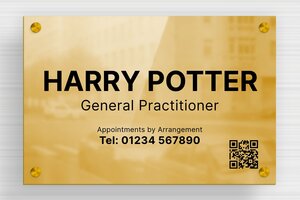

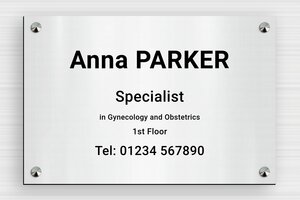

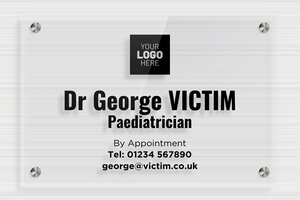

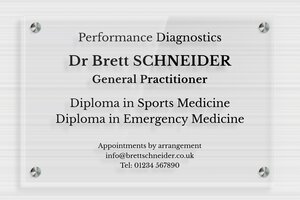
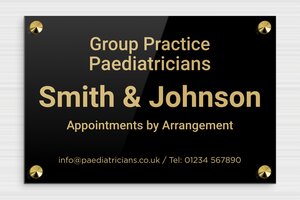
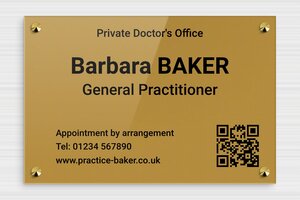
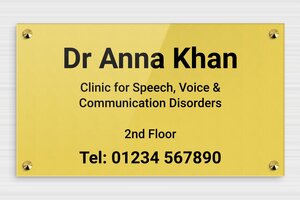

Medical practice signage requires materials that combine durability, hygiene, and professional appearance. The most suitable options include:
All materials must withstand frequent cleaning with disinfectants and sanitising solutions while maintaining their professional appearance throughout their service life.
While UK regulations don't mandate specific qualification displays on practice signs, professional standards and patient expectations make it advisable to include relevant credentials. Key considerations include:
The presentation should follow a clear hierarchy with serif fonts often preferred for their association with academic achievement. Character spacing and layout must ensure readability at typical viewing distances while maintaining elegant proportions that reflect the significance of your qualifications.
The choice between brass and acrylic depends on several factors specific to your practice needs:
Choose brass if you prioritise:
Choose acrylic if you prefer:
Both materials can be enhanced with various finishes and mounting options to perfectly align with your practice's brand identity and functional requirements.
Consulting room door signs offer various mounting solutions to accommodate different architectural requirements and security needs:
Primary mounting options include:
Healthcare-specific considerations:
The selection depends on wall construction, environmental conditions, security requirements, and future maintenance needs.
NHS accessibility standards require comprehensive consideration of inclusive design principles to serve all patients effectively:
Visual accessibility requirements:
Tactile accessibility features:
Implementation guidelines:
Professional guidance ensures your signage supports patient independence and confidence while meeting evolving accessibility standards.
Professional signage serves as the cornerstone of credibility for any medical practice, creating that crucial first impression that can influence patient confidence before they even step through your door. Doctor's practice signs represent far more than simple identification – they embody the professionalism, expertise, and care standards that patients expect from their healthcare providers. In today's competitive healthcare landscape, where patients have numerous choices for their medical care, the quality and presentation of your practice signage can significantly impact how your services are perceived and trusted.
The importance of well-crafted medical practice signage extends beyond mere aesthetics. These signs serve multiple critical functions: they provide essential wayfinding assistance for patients navigating your facility, communicate vital information about services and practitioners, and demonstrate compliance with healthcare regulations. For GP surgeries, specialist clinics, and private practices across the UK, investing in high-quality, professionally designed signage represents a commitment to excellence that resonates with patients and colleagues alike.
Modern medical practice signage encompasses a diverse range of solutions, from elegant brass nameplates that grace consulting room doors to comprehensive wayfinding systems that guide patients through complex healthcare facilities. The evolution of materials and manufacturing techniques has opened up unprecedented possibilities for customisation, allowing practices to create signage that perfectly reflects their brand identity while meeting stringent durability and hygiene requirements. With European quality manufacturing and innovative online design tools, creating bespoke medical signage has never been more accessible or efficient.
Understanding the signage needs of a medical practice requires careful consideration of both regulatory requirements and patient experience factors. UK healthcare facilities must comply with specific health and safety regulations, including clear identification of emergency exits, accessible facilities, and practitioner credentials. The Health and Safety (Safety Signs and Signals) Regulations 1996 establish fundamental requirements for workplace signage, ensuring that medical practices maintain appropriate visual communication standards that protect both patients and staff.
The regulatory landscape for medical practice signage encompasses several key areas that practitioners must address. Fire safety signage, including clearly marked emergency exits and evacuation routes, represents a legal requirement that cannot be overlooked. These signs must meet specific photoluminescent standards to ensure visibility during power outages or emergency situations. Additionally, accessibility signage, including tactile and Braille elements where appropriate, demonstrates commitment to inclusive healthcare provision and compliance with the Equality Act 2010.
The reception area serves as the central hub of patient interaction, making it essential to implement clear, professional signage that facilitates smooth operations and positive first impressions. Reception signage typically includes practice identification, opening hours, emergency contact information, and service directories. These elements must be positioned strategically to ensure maximum visibility while maintaining an uncluttered, professional appearance that reflects the practice's commitment to quality care.
Entrance signage presents unique challenges, particularly for practices operating in shared buildings or complex medical centres. External signage must withstand weather conditions while maintaining legibility and professional appearance throughout the year. Materials selection becomes crucial, with options ranging from traditional brass and bronze to modern acrylic and aluminium composites. Each material offers distinct advantages in terms of durability, maintenance requirements, and aesthetic appeal, allowing practices to select solutions that align with their specific needs and brand identity.
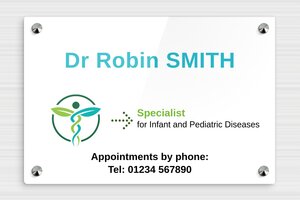
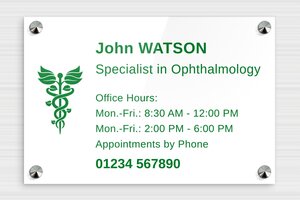
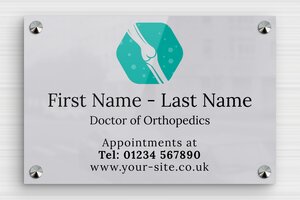
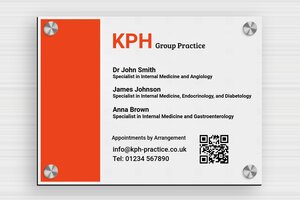
Individual consulting rooms require sophisticated signage solutions that balance privacy considerations with clear identification needs. Door signs must communicate practitioner names, qualifications, and specialties while maintaining appropriate discretion regarding patient confidentiality. Interchangeable nameplate systems offer particular value for practices with multiple practitioners or rotating schedules, allowing for flexible updates without requiring complete sign replacement.
Departmental signage within larger medical facilities requires careful coordination to ensure consistent visual identity while providing clear navigation assistance. Colour coding systems, directional arrows, and standardised typography contribute to intuitive wayfinding that reduces patient stress and improves operational efficiency. The integration of room numbering systems with practitioner identification creates comprehensive navigation solutions that benefit both patients and staff members.
The choice of materials for medical practice signage significantly impacts both aesthetic appeal and long-term performance. Healthcare environments present unique challenges, including frequent cleaning requirements, high traffic volumes, and the need for materials that project professionalism and trustworthiness. Understanding the characteristics and benefits of different signage materials enables practices to make informed decisions that balance cost considerations with performance requirements and visual impact.
Durability considerations extend beyond simple wear resistance to encompass factors such as chemical compatibility with cleaning agents, UV stability for exterior applications, and resistance to impact damage in high-traffic areas. Medical practices require signage materials that maintain their appearance and functionality despite regular exposure to disinfectants, sanitising solutions, and intensive cleaning protocols. This requirement has driven innovation in material science, resulting in advanced composites and surface treatments that deliver exceptional performance in healthcare environments.
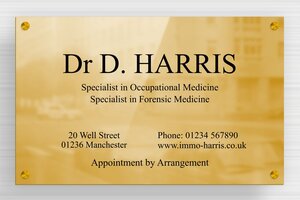
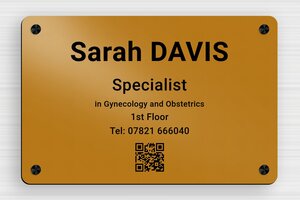
Brass signage continues to represent the gold standard for medical practice identification, offering unmatched prestige and timeless elegance that communicates professionalism and established expertise. The natural antimicrobial properties of brass provide additional benefits in healthcare settings, while the material's durability ensures decades of reliable service with minimal maintenance requirements. Traditional brass plaques can be enhanced with various finishes, from highly polished surfaces that create striking visual impact to satin finishes that offer subtle sophistication.
The engraving capabilities of brass allow for intricate detail reproduction, making it possible to incorporate complex logos, detailed qualification listings, and decorative elements that enhance visual appeal. Modern laser engraving techniques ensure precise character formation and consistent depth, creating signage that maintains its clarity and readability throughout its service life. For practices seeking to project established authority and traditional values, brass signage provides an uncompromising solution that commands respect and confidence.
Acrylic materials have revolutionised medical practice signage by offering exceptional versatility, cost-effectiveness, and design flexibility. High-quality acrylic signs provide crystal-clear transparency, vibrant colour reproduction, and excellent weather resistance, making them suitable for both interior and exterior applications. The lightweight nature of acrylic simplifies installation while reducing structural load requirements, particularly important for wall-mounted applications in older buildings.
Advanced composite materials combine the best characteristics of multiple substrates to create signage solutions that exceed the performance of traditional materials. These engineered materials can incorporate antimicrobial additives, enhanced UV resistance, and specialised surface textures that improve cleaning efficiency and maintain appearance standards. The manufacturing flexibility of composite materials enables complex shapes, integrated mounting systems, and custom colour matching that perfectly aligns with practice branding requirements.
The customisation capabilities available for modern medical practice signage enable practices to create truly unique identification solutions that reflect their individual character and professional values. Advanced design software and manufacturing techniques allow for precise control over every aspect of sign appearance, from typography selection and colour specification to dimensional characteristics and surface treatments. This level of customisation ensures that each sign perfectly represents the practice's identity while meeting specific functional requirements.
Design considerations for medical practice signage extend beyond aesthetic preferences to encompass psychological factors that influence patient perception and comfort levels. Research in environmental psychology demonstrates that well-designed signage can reduce patient anxiety, improve wayfinding efficiency, and enhance overall satisfaction with healthcare experiences. Colour psychology, typography readability, and spatial relationships all contribute to the effectiveness of medical practice signage in creating positive patient interactions.
The presentation of professional qualifications on medical practice signage requires careful attention to hierarchy, readability, and regulatory compliance. Practitioners' credentials represent significant achievements that deserve appropriate recognition while maintaining clear communication of expertise areas. The arrangement of qualification abbreviations, professional memberships, and specialty certifications must follow established conventions while ensuring maximum impact and clarity for patients seeking specific expertise.
Typography selection plays a crucial role in qualification display, with serif fonts often preferred for their traditional association with academic achievement and professional authority. Character spacing, line height, and overall layout must be optimised to ensure readability at typical viewing distances while maintaining elegant proportions that reflect the significance of the qualifications being displayed. Modern engraving techniques allow for precise character formation that maintains clarity even at smaller sizes, enabling comprehensive qualification listings without compromising visual appeal.
Successful brand integration in medical practice signage requires sophisticated understanding of visual identity principles and their application across diverse materials and manufacturing processes. Practice logos, colour schemes, and typography must be reproduced accurately and consistently across all signage elements to maintain brand coherence and professional credibility. This consistency extends from large-scale exterior identification signs to small-scale door plaques and directional markers.
Logo reproduction techniques vary significantly depending on the chosen materials and manufacturing methods. Laser engraving offers exceptional precision for monochromatic logos, while digital printing enables full-colour reproduction with photographic quality. Three-dimensional logo elements can be achieved through precision machining, creating raised or recessed features that add tactile interest and visual depth. The selection of appropriate reproduction techniques ensures optimal logo presentation while maintaining durability and cost-effectiveness.
Professional installation represents a critical factor in the long-term performance and appearance of medical practice signage. Proper mounting techniques ensure secure attachment, weather resistance, and alignment precision that maintains professional appearance throughout the sign's service life. The complexity of modern medical facilities, with their diverse architectural features and structural constraints, requires sophisticated mounting solutions that accommodate various wall types, spacing requirements, and accessibility considerations.
Mounting system selection must consider factors including wall construction, environmental conditions, security requirements, and future maintenance needs. Traditional through-bolt mounting provides maximum security and load-bearing capacity, while adhesive mounting systems offer clean installation with minimal wall damage. Stand-off mounting systems create dimensional separation that enhances visual impact while facilitating air circulation and cleaning access behind the sign.
Healthcare environments require mounting systems that prioritise security, hygiene, and tamper resistance while maintaining professional appearance standards. Anti-vandal fixings prevent unauthorised removal or adjustment, protecting both the signage investment and facility security. Concealed mounting systems eliminate visible hardware that could harbour bacteria or complicate cleaning procedures, contributing to infection control protocols that are essential in medical settings.
The selection of appropriate fixing hardware must consider the specific requirements of different healthcare areas. High-security zones may require specialised tamper-proof fixings, while patient areas benefit from smooth, hygienic mounting systems that facilitate thorough cleaning. Stainless steel hardware provides optimal corrosion resistance and biocompatibility, ensuring long-term performance in demanding healthcare environments.
Effective maintenance protocols extend the service life of medical practice signage while ensuring consistent professional appearance and regulatory compliance. Different materials require specific cleaning procedures and maintenance schedules to optimise performance and appearance retention. Understanding these requirements enables practices to implement cost-effective maintenance programs that protect their signage investment while maintaining the highest standards of cleanliness and presentation.
Preventive maintenance strategies focus on regular inspection, cleaning, and minor adjustments that prevent major issues from developing. Documentation of maintenance activities supports quality assurance programs and helps identify trends that may indicate the need for system upgrades or replacements. Professional maintenance services can provide specialised expertise and equipment for complex signage systems, ensuring optimal performance and compliance with healthcare standards.
Healthcare facility signage must navigate a complex landscape of regulations, standards, and best practices that ensure patient safety, accessibility, and operational efficiency. The NHS provides comprehensive guidance on signage requirements for healthcare facilities, covering everything from emergency evacuation procedures to accessibility considerations for patients with disabilities. Understanding and implementing these requirements represents a fundamental responsibility for healthcare providers committed to delivering safe, inclusive care.
Compliance considerations extend beyond basic regulatory requirements to encompass industry best practices that enhance patient experience and operational effectiveness. Professional healthcare organisations provide detailed guidance on signage design, placement, and maintenance that reflects current research in healthcare environmental design. Staying current with evolving standards ensures that medical practice signage continues to meet the highest professional expectations while supporting optimal patient outcomes.
Inclusive design principles ensure that medical practice signage serves all patients effectively, regardless of their individual capabilities or needs. Visual accessibility requirements include appropriate contrast ratios, font size specifications, and lighting considerations that support patients with various vision capabilities. Tactile elements, including Braille translations and raised character options, provide essential navigation assistance for patients with visual impairments.
The implementation of accessible signage design requires careful attention to placement height, viewing angles, and environmental factors that affect readability. Standardised approaches to accessibility ensure consistent patient experiences across different areas of the facility while supporting independence and confidence in navigation. Regular accessibility audits help identify opportunities for improvement and ensure ongoing compliance with evolving accessibility standards.
The psychological impact of well-designed medical practice signage extends far beyond simple information communication to influence patient emotions, expectations, and overall healthcare experiences. Research in environmental psychology demonstrates that professional, clearly designed signage can significantly reduce patient anxiety levels while enhancing perceptions of practitioner competence and facility quality. These psychological benefits translate directly into improved patient satisfaction scores and increased likelihood of positive recommendations to family and friends.
Visual design elements including colour selection, typography choices, and spatial organisation all contribute to the emotional response that signage generates in patients and visitors. Warm, welcoming colour palettes can help create a more comfortable atmosphere, while clear, professional typography communicates competence and attention to detail. The strategic use of white space and visual hierarchy guides attention naturally while avoiding the cluttered appearance that can increase stress levels in already anxious patients.
Trust represents the foundation of effective healthcare relationships, and professional signage plays a crucial role in establishing and maintaining that trust from the moment patients encounter your practice. High-quality materials, precise manufacturing, and thoughtful design communicate attention to detail and commitment to excellence that patients naturally associate with quality healthcare delivery. This initial impression sets expectations that influence the entire patient experience and relationship development.
The consistency of signage quality throughout a medical facility reinforces professional credibility and demonstrates systematic attention to all aspects of practice management. When patients observe that the same level of care and attention applied to their medical treatment is also evident in facility signage and environmental design, their confidence in the overall quality of care increases significantly. This holistic approach to professional presentation supports both patient satisfaction and practice reputation development.
Investing in professional doctor's practice signs represents a strategic decision that impacts every aspect of your medical practice's success. From regulatory compliance and patient safety to brand representation and professional credibility, quality signage serves as a silent ambassador that communicates your commitment to excellence around the clock. The combination of traditional craftsmanship with modern manufacturing capabilities ensures that today's medical practices can access signage solutions that perfectly balance aesthetic appeal with functional performance.
The evolution of signage materials and manufacturing techniques continues to expand the possibilities for medical practice identification, offering unprecedented opportunities for customisation and performance optimisation. Whether you're establishing a new practice, relocating to larger premises, or simply updating your professional image, the investment in quality signage pays dividends through enhanced patient confidence, improved operational efficiency, and strengthened professional reputation. With expert guidance and European quality manufacturing, creating signage that truly represents your practice's values and expertise has never been more achievable or rewarding.