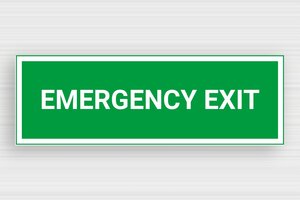
Emergency Exit Signs
Your sign in just 2 minutes.
Full editor: 27 materials, 219 colors, 12 mounting options
Marking: laser engraving, mechanical or printed
starting at £13.50

Your sign in just 2 minutes.
Full editor: 27 materials, 219 colors, 12 mounting options
Marking: laser engraving, mechanical or printed
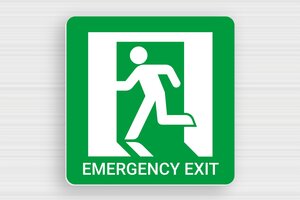
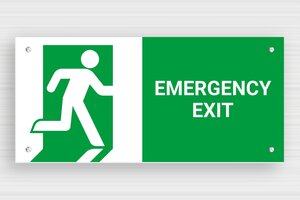
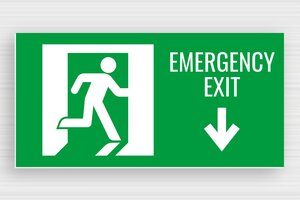
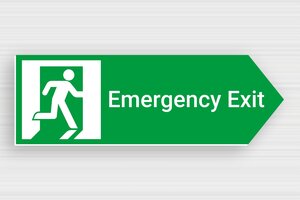

The key difference lies in how these signs operate during normal conditions and power failures:
Maintained signs are typically used in areas where continuous illumination is required for normal navigation, such as corridors and stairwells. Non-maintained signs are more common in well-lit areas where additional illumination is only needed during emergencies, helping to conserve battery life for when it's most needed.
LED emergency exit signs with integrated battery backup systems typically provide 3-8 hours of continuous operation during power failures, which exceeds the duration of most emergency situations.
The exact duration depends on several factors:
UK regulations require annual duration tests to ensure batteries maintain adequate capacity. During these tests, signs must operate on battery power for their full rated duration. Modern LED technology is highly energy-efficient, allowing smaller batteries to provide longer operation times compared to older lighting technologies.
Photoluminescent emergency exit signs can be used as a primary solution in many applications, but their suitability depends on specific building requirements and local regulations.
Key advantages of photoluminescent signs include:
However, they work best when combined with adequate ambient lighting during normal conditions to ensure proper charging. In areas with insufficient natural or artificial light, or where regulations specifically require electrical emergency lighting, LED emergency exit signs may be necessary. The choice should always align with UK fire safety regulations and the specific risk assessment of your premises.
Emergency exit signs in UK buildings should typically be mounted at a height of 2-2.5 metres above floor level, though this may vary depending on ceiling height and specific space layout.
Key positioning requirements include:
The mounting height must also comply with UK accessibility standards, ensuring people with mobility impairments or visual difficulties can locate and follow the signage. Additional considerations may apply for high-ceiling spaces where signs might need to be suspended or mounted on columns for optimal visibility.
UK fire safety legislation requires regular testing and maintenance of emergency exit signs, with frequency depending on the type of sign installed:
LED Emergency Exit Signs:
Photoluminescent Signs:
Professional maintenance services can help ensure compliance while reducing administrative burden, providing necessary documentation for compliance audits and identifying issues before they compromise safety.
Yes, high-rise office buildings have particularly strict requirements for emergency exit signs under UK fire safety regulations, reflecting the increased evacuation challenges in tall buildings.
Specific considerations for high-rise buildings include:
The Regulatory Reform (Fire Safety) Order 2005 places particular emphasis on buildings where large numbers of people gather or where evacuation presents special challenges. Recent regulatory updates effective from 2025 have strengthened requirements for enhanced record-keeping and demonstration that signs remain functional at all times, not just present.
Failure of emergency exit signs during inspection can result in serious consequences under UK fire safety legislation, ranging from immediate compliance notices to significant penalties.
Potential consequences include:
Immediate steps to take:
Regular maintenance and testing help prevent inspection failures, while quality signs from established manufacturers provide reliable long-term performance and compliance with evolving regulations.
Yes, you can mix LED and photoluminescent emergency exit signs within the same building, provided each type is appropriate for its specific location and the overall system meets UK fire safety requirements.
Strategic placement considerations:
Key requirements for mixed systems:
This mixed approach often provides the most cost-effective solution while ensuring comprehensive coverage throughout the building.
Emergency exit signs are essential safety features that can mean the difference between life and death during a fire or emergency evacuation. In the UK, these critical safety devices must meet stringent regulatory standards whilst providing clear, visible guidance to help people evacuate buildings quickly and safely. Whether you're a facilities manager, business owner, or property developer, understanding the requirements for emergency exit signs is crucial for legal compliance and, more importantly, protecting lives.
The importance of proper emergency exit signage cannot be overstated. During an emergency, panic can set in quickly, and even familiar surroundings can become confusing when filled with smoke or when lighting fails. Well-positioned, compliant emergency exit signs provide the visual cues people need to navigate to safety, even in the most challenging conditions. With new UK regulations coming into effect and stricter enforcement of existing standards, ensuring your premises have the right emergency exit signage has never been more critical.
The legal framework governing emergency exit signs in the UK is comprehensive and strictly enforced. The primary legislation is the Regulatory Reform (Fire Safety) Order 2005, which places responsibility on building owners and managers to ensure adequate fire safety measures, including proper signage. This legislation works alongside the Health and Safety (Safety Signs and Signals) Regulations 1996, which specify the technical requirements for safety signage.
Under current UK law, virtually all commercial premises must have compliant emergency exit signs. This includes offices, retail spaces, warehouses, factories, schools, hospitals, and most residential buildings with shared areas. The regulations are particularly strict for high-rise buildings and premises where large numbers of people gather. Failure to comply can result in significant penalties, including fines of up to £5,000 for minor breaches, with unlimited fines and potential imprisonment for serious violations.
Emergency exit signs in the UK must comply with British Standard BS 5499, which defines the graphical symbols, colours, and design requirements for fire safety signs. Additionally, many signs now follow ISO 7010, the international standard that provides globally recognised pictograms. The iconic "running man" symbol, universally understood as indicating an emergency exit, is central to both standards.
Recent updates to UK fire safety regulations, with new requirements taking effect in 2025, have strengthened the emphasis on sign visibility and maintenance. These changes require more rigorous inspection schedules, enhanced luminance standards for illuminated signs, and stricter record-keeping obligations. Property owners must now demonstrate not just that signs are present, but that they remain clearly visible and functional at all times.
Choosing the right type of emergency exit sign depends on your building's specific requirements, power supply arrangements, and environmental conditions. The two main categories are LED emergency exit signs and photoluminescent signs, each offering distinct advantages for different applications.
LED emergency exit signs represent the modern standard for most commercial applications. These signs incorporate energy-efficient LED technology with integrated battery backup systems, ensuring they remain illuminated even during power failures. The battery backup typically provides 3-8 hours of continuous operation, well beyond the duration of most emergency situations.
Modern LED emergency exit signs offer exceptional reliability and longevity, with LED bulbs lasting up to 25 years under normal operating conditions. They consume minimal power during normal operation, making them cost-effective over their lifetime. Many LED signs also feature self-testing capabilities, automatically checking battery condition and LED functionality, which helps ensure compliance with maintenance requirements whilst reducing manual inspection workload.
The brightness and clarity of LED emergency exit signs make them particularly suitable for areas with high ambient lighting or where signs must be visible from considerable distances. They're also ideal for environments where consistent illumination is critical, such as corridors, stairwells, and large open spaces.
Photoluminescent emergency exit signs, often called "glow-in-the-dark" signs, offer a power-free solution that charges from ambient light and glows brightly when darkness falls. These signs absorb light energy during normal conditions and release it slowly over many hours, providing visibility without any electrical connection or battery backup.
The key advantage of photoluminescent signs is their complete independence from electrical systems. During power failures, when electrical emergency lighting might fail, photoluminescent signs continue to glow reliably. They require no maintenance of electrical components, no battery replacements, and no ongoing energy costs, making them extremely cost-effective over their operational life.
High-quality photoluminescent materials can provide visibility for 24 hours or more after being charged, far exceeding the duration of typical emergency situations. They're particularly valuable in areas where electrical installation is difficult or expensive, and in buildings where maintaining electrical emergency lighting systems presents ongoing challenges.
Emergency exit signage serves two primary functions: directing people along escape routes and identifying final exits from buildings. Directional signs feature arrows indicating the path to follow, whilst final exit signs mark doors that lead directly to a place of ultimate safety outside the building.
The placement of directional arrows is crucial for effective evacuation. Signs must be positioned so that anyone following the indicated direction will encounter the next sign in the sequence, creating an unbroken chain of guidance from any point in the building to the nearest exit. This requires careful planning and understanding of how people move through spaces during emergencies.
Final exit signs, marking doors that lead directly outside, must be clearly distinguishable from directional signs. They typically feature the running man pictogram without directional arrows, sometimes accompanied by text such as "Final Exit" or "Emergency Exit". These signs must be positioned directly above or adjacent to exit doors, ensuring they're visible even when doors are open.
Proper installation and positioning of emergency exit signs is critical for their effectiveness during emergencies. UK regulations specify minimum mounting heights, viewing distances, and illumination levels to ensure signs remain visible under all conditions, including when corridors are filled with smoke.
Emergency exit signs should typically be mounted at a height of 2-2.5 metres above floor level, though this may vary depending on ceiling height and the specific layout of the space. Signs must be positioned so they're visible from the normal viewing position of people using the space, taking into account potential obstructions such as furniture, equipment, or architectural features.
The spacing between signs is equally important. In corridors and open areas, signs should be positioned so that the next sign in the sequence is always visible, typically requiring signs every 15-20 metres in straight corridors. At changes of direction, additional signs are necessary to guide people around corners or through doorways. In large open spaces, signs may need to be suspended from ceilings or mounted on columns to ensure visibility from all areas.
Compliance with UK accessibility standards requires consideration of people with mobility impairments or visual difficulties. Signs should be positioned at consistent heights and locations throughout a building, creating predictable patterns that aid navigation. Additional tactile or audio guidance may be required in some buildings to ensure full accessibility compliance.
Regular maintenance and testing of emergency exit signs is not just good practice—it's a legal requirement under UK fire safety legislation. The frequency and extent of testing depends on the type of signs installed, but all emergency exit signs require regular inspection to ensure they remain functional and clearly visible.
LED emergency exit signs with battery backup require monthly function tests and annual duration tests. Monthly tests involve briefly interrupting the power supply to verify that the sign illuminates on battery power. Annual tests require the sign to operate on battery power for its full rated duration to ensure the battery maintains adequate capacity. These tests must be documented, with records kept for inspection by fire safety authorities.
Photoluminescent signs require regular cleaning and inspection to ensure the luminescent material remains effective. Dust, dirt, or damage can significantly reduce their visibility, particularly in low-light conditions. While they don't require electrical testing, they should be inspected monthly to verify they're clean, undamaged, and properly positioned.
Professional maintenance services can help ensure compliance whilst reducing the administrative burden on building managers. Many organisations find it cost-effective to engage specialists who understand the regulatory requirements and can provide the necessary documentation for compliance audits. This approach also ensures that any issues are identified and resolved quickly, maintaining the safety of building occupants.
Selecting appropriate emergency exit signs requires careful consideration of your building's specific characteristics, occupancy patterns, and risk profile. The size and complexity of your premises will influence both the type and quantity of signs needed, whilst the building's construction and electrical systems may favour particular technologies.
For modern office buildings with reliable electrical systems, LED emergency exit signs often provide the best combination of visibility, reliability, and compliance with current standards. Their bright, consistent illumination makes them ideal for areas with high ambient lighting, such as open-plan offices or reception areas. The self-testing capabilities of advanced LED signs also simplify maintenance compliance in larger buildings.
In older buildings or areas where electrical installation is challenging, photoluminescent signs offer an effective alternative. They're particularly valuable in stairwells, storage areas, or basement levels where electrical emergency lighting might be expensive to install or maintain. The independence from electrical systems also makes them suitable for buildings with unreliable power supplies.
Material selection is equally important for long-term performance. Rigid plastic signs offer durability and cost-effectiveness for most indoor applications, whilst aluminium signs provide enhanced durability for high-traffic areas or harsh environments. Self-adhesive vinyl signs offer flexibility for temporary installations or situations where permanent mounting isn't possible, though they may require more frequent replacement.
Customisation within regulatory constraints allows signs to integrate better with building aesthetics whilst maintaining full compliance. Otypo's online configurator makes it easy to specify the exact size, material, and mounting options needed for your specific application, ensuring you get signs that meet both regulatory requirements and practical needs. With over 60 years of experience in safety signage, Otypo understands the balance between compliance, functionality, and visual integration.
While the initial investment in quality emergency exit signs might seem significant, the costs of non-compliance far outweigh the expense of proper signage. Penalties for inadequate fire safety measures can reach thousands of pounds, and the potential liability in the event of an emergency-related incident could be devastating for any business.
The total cost of ownership varies significantly between different sign types. LED signs have higher initial costs but offer long service lives and predictable maintenance schedules. Photoluminescent signs have lower upfront costs and minimal ongoing expenses, making them attractive for budget-conscious installations. However, they may require more frequent replacement in high-traffic areas where physical damage is more likely.
Insurance implications also favour proper emergency exit signage. Many insurers offer reduced premiums for premises with comprehensive, compliant fire safety measures, and claims may be affected if inadequate signage contributes to an incident. The peace of mind that comes from knowing your premises meet all regulatory requirements and provide the best possible protection for occupants is invaluable.
Long-term durability considerations favour quality signs from established manufacturers. Cheap signs may seem attractive initially, but frequent replacements, compliance failures, and potential safety risks make them a false economy. Quality signs from reputable suppliers like Otypo provide reliable performance over many years, with materials and construction designed to withstand the demands of commercial environments.
The investment in proper emergency exit signs represents not just regulatory compliance, but a commitment to the safety and wellbeing of everyone who uses your building. With clear legal requirements, proven technologies, and reliable suppliers available, there's no reason to compromise on this critical aspect of building safety. Whether you choose LED or photoluminescent technology, the key is selecting signs that meet current standards, suit your specific environment, and provide reliable guidance when it matters most.
 Custom quotes available for bulk or special requests
'%3e%3cpath%20d='M20.5563%202.67834H1.42533C0.639422%202.67834%200%203.31772%200%204.10363V15.5822C0%2016.3682%200.639422%2017.0076%201.42533%2017.0076H15.3578C15.6167%2017.0076%2015.8265%2016.7977%2015.8265%2016.5388C15.8265%2016.2799%2015.6167%2016.0701%2015.3578%2016.0701H1.42533C1.15636%2016.0701%200.9375%2015.8512%200.9375%2015.5822V8.87691H21.0442V11.2778C21.0442%2011.5367%2021.254%2011.7465%2021.5129%2011.7465C21.7718%2011.7465%2021.9817%2011.5367%2021.9817%2011.2778V4.10363C21.9817%203.31772%2021.3423%202.67834%2020.5563%202.67834ZM1.42533%203.61584H20.5563C20.8253%203.61584%2021.0442%203.83466%2021.0442%204.10363V5.54799H0.9375V4.10363C0.9375%203.83466%201.15631%203.61584%201.42533%203.61584ZM0.9375%207.93941V6.48549H21.0442V7.93941H0.9375Z'%20fill='%230C4D5A'/%3e%3cpath%20d='M20.5563%202.67834H1.42533C0.639422%202.67834%200%203.31772%200%204.10363V15.5822C0%2016.3682%200.639422%2017.0076%201.42533%2017.0076H15.3578C15.6167%2017.0076%2015.8265%2016.7977%2015.8265%2016.5388C15.8265%2016.2799%2015.6167%2016.0701%2015.3578%2016.0701H1.42533C1.15636%2016.0701%200.9375%2015.8512%200.9375%2015.5822V8.87691H21.0442V11.2778C21.0442%2011.5367%2021.254%2011.7465%2021.5129%2011.7465C21.7718%2011.7465%2021.9817%2011.5367%2021.9817%2011.2778V4.10363C21.9817%203.31772%2021.3423%202.67834%2020.5563%202.67834ZM1.42533%203.61584H20.5563C20.8253%203.61584%2021.0442%203.83466%2021.0442%204.10363V5.54799H0.9375V4.10363C0.9375%203.83466%201.15631%203.61584%201.42533%203.61584ZM0.9375%207.93941V6.48549H21.0442V7.93941H0.9375Z'%20fill='black'%20fill-opacity='0.5'/%3e%3cpath%20d='M6.92061%2013.6835H2.61612C1.9962%2013.7059%201.99409%2014.5977%202.61612%2014.621H6.92061C7.54054%2014.5986%207.54265%2013.7067%206.92061%2013.6835Z'%20fill='%230C4D5A'/%3e%3cpath%20d='M6.92061%2013.6835H2.61612C1.9962%2013.7059%201.99409%2014.5977%202.61612%2014.621H6.92061C7.54054%2014.5986%207.54265%2013.7067%206.92061%2013.6835Z'%20fill='black'%20fill-opacity='0.5'/%3e%3cpath%20d='M6.92061%2011.7704H2.61612C1.9962%2011.7928%201.99409%2012.6846%202.61612%2012.7079H6.92061C7.54054%2012.6855%207.54265%2011.7936%206.92061%2011.7704Z'%20fill='%230C4D5A'/%3e%3cpath%20d='M6.92061%2011.7704H2.61612C1.9962%2011.7928%201.99409%2012.6846%202.61612%2012.7079H6.92061C7.54054%2012.6855%207.54265%2011.7936%206.92061%2011.7704Z'%20fill='black'%20fill-opacity='0.5'/%3e%3cpath%20fill-rule='evenodd'%20clip-rule='evenodd'%20d='M16.9424%2010.7995L14.5898%2013.152C14.5898%2016.752%2015.1919%2020.2222%2019.2948%2021.3216C23.3978%2020.2222%2023.9998%2016.752%2023.9998%2013.152L21.6473%2010.7995H16.9424Z'%20fill='%23FDF300'/%3e%3cpath%20d='M19.2949%2019.7875C16.7214%2019.0081%2016.1647%2016.8451%2016.0451%2013.9479C16.0413%2013.8187%2016.0909%2013.6937%2016.1822%2013.6023L17.4034%2012.3812C17.4913%2012.2933%2017.6105%2012.2439%2017.7348%2012.2439H20.8549C20.9792%2012.2439%2021.0985%2012.2933%2021.1864%2012.3812L22.4075%2013.6023C22.4989%2013.6937%2022.5485%2013.8187%2022.5446%2013.9478C22.4255%2016.8443%2021.8681%2019.0084%2019.2949%2019.7875ZM16.9894%2014.121C17.1385%2016.4295%2017.4228%2018.0275%2019.2949%2018.8167C21.1665%2018.0277%2021.4513%2016.4301%2021.6004%2014.121L20.6608%2013.1814H17.929L16.9894%2014.121Z'%20fill='%230C4D5A'/%3e%3cpath%20d='M19.2949%2019.7875C16.7214%2019.0081%2016.1647%2016.8451%2016.0451%2013.9479C16.0413%2013.8187%2016.0909%2013.6937%2016.1822%2013.6023L17.4034%2012.3812C17.4913%2012.2933%2017.6105%2012.2439%2017.7348%2012.2439H20.8549C20.9792%2012.2439%2021.0985%2012.2933%2021.1864%2012.3812L22.4075%2013.6023C22.4989%2013.6937%2022.5485%2013.8187%2022.5446%2013.9478C22.4255%2016.8443%2021.8681%2019.0084%2019.2949%2019.7875ZM16.9894%2014.121C17.1385%2016.4295%2017.4228%2018.0275%2019.2949%2018.8167C21.1665%2018.0277%2021.4513%2016.4301%2021.6004%2014.121L20.6608%2013.1814H17.929L16.9894%2014.121Z'%20fill='black'%20fill-opacity='0.5'/%3e%3c/g%3e%3cdefs%3e%3cclipPath%20id='clip0'%3e%3crect%20width='24'%20height='24'%20fill='white'/%3e%3c/clipPath%3e%3c/defs%3e%3c/svg%3e) Secure payment via card or PayPal
Secure payment via card or PayPal Free delivery from £60
 Up to 20% off with volume discounts!
 Create your own product easily with our online editorCustom quotes available for bulk or special requestsSecure payment via card or PayPalFree delivery from £60Up to 20% off with volume discounts!Create your own product easily with our online editor