Law Office Signs
Your sign in just 2 minutes.
Full editor: 27 materials, 219 colors, 12 mounting options
Marking: laser engraving, mechanical or printed
starting at £5.50

Your sign in just 2 minutes.
Full editor: 27 materials, 219 colors, 12 mounting options
Marking: laser engraving, mechanical or printed
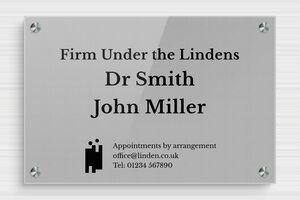
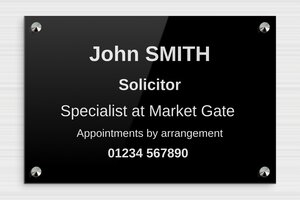


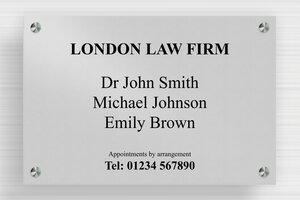
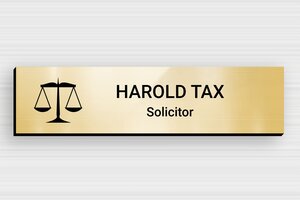
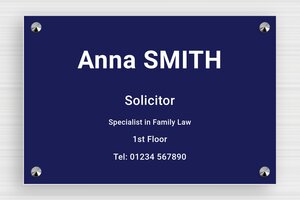
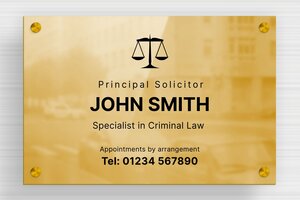
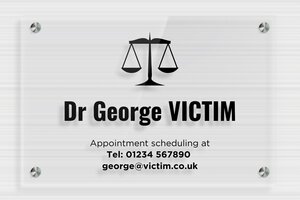

Planning permission requirements for law office signs vary significantly across UK jurisdictions, with conservation areas and listed buildings presenting additional constraints. External signage often requires formal consent, particularly for illuminated signs or installations exceeding specified size thresholds.
Key considerations include:
We recommend early consultation with your local planning authority to prevent costly modifications or removal orders. For heritage buildings, professional conservation advice ensures installations meet both regulatory requirements and long-term building preservation objectives.
The UK's variable climate demands materials that withstand moisture, temperature fluctuations, and urban pollution whilst maintaining their appearance over extended periods. Several materials excel in British weather conditions:
Traditional Brass: Remains the gold standard for legal signage, offering unparalleled durability and timeless appeal. Quality brass signage provides exceptional longevity when properly maintained, with natural patina development adding character over time.
High-Grade Aluminium: Provides exceptional durability with minimal maintenance requirements, making it ideal for exterior applications. Anodised coatings ensure long-term colour stability and weather resistance.
Premium Acrylics: Offer excellent weather resistance whilst providing greater flexibility for complex designs and colour incorporation. Modern acrylic materials maintain professional appearance standards appropriate for legal environments.
Each material offers distinct advantages, with brass providing heritage appeal, aluminium offering low maintenance, and acrylic delivering design versatility whilst all withstanding British weather conditions effectively.
The Solicitors Regulation Authority (SRA) Code of Conduct establishes clear guidelines for how legal practices may present themselves publicly, with specific implications for signage content and accuracy.
Essential requirements include:
Practices operating under alternative business structures must ensure their signage reflects their actual regulatory status and any restrictions on service provision. Misleading or inaccurate professional designations can result in regulatory sanctions, making compliance verification essential before installation.
Regular auditing of signage content ensures ongoing compliance as practices evolve, staff changes occur, and regulatory requirements develop.
Barrister chamber signs must meet accessibility requirements to ensure all visitors can navigate effectively, regardless of physical abilities or visual impairments.
Key accessibility considerations include:
Directory boards serving multiple tenants require particular attention to information hierarchy and readability. The most effective designs incorporate traditional materials with contemporary mounting systems that maintain accessibility whilst honouring legal traditions.
Professional accessibility audits can ensure chamber signage meets all relevant guidelines whilst maintaining the gravitas expected of legal institutions.
Modern legal practice signage offers sophisticated customisation capabilities that accommodate diverse branding requirements whilst maintaining professional standards. Successful customisation requires balancing creativity with regulatory compliance and professional appropriateness.
Customisation options include:
The most successful legal signage projects begin with comprehensive brand analysis, ensuring consistency across all client touchpoints. Multi-location practices benefit from standardised design templates that accommodate local variations whilst maintaining overall brand consistency and strengthening market recognition.
Professional law office signs serve as the cornerstone of your legal practice's first impression, establishing credibility and trust from the moment clients encounter your premises. Whether you're a solicitor establishing a new practice, a barrister updating chamber signage, or managing a multi-tenant legal building, the right nameplate communicates professionalism whilst ensuring regulatory compliance. In today's competitive legal landscape, quality signage isn't merely functional—it's an investment in your practice's reputation and client confidence.
The UK legal profession demands signage that reflects both tradition and modern professionalism. From brass nameplates that honour centuries-old legal heritage to contemporary acrylic designs that project forward-thinking expertise, your choice of office signage speaks volumes about your practice's values. Otypo understands these nuanced requirements, offering European-quality materials and bespoke customisation options that meet the exacting standards of legal professionals throughout Britain.
Beyond aesthetics, law office signs must navigate complex regulatory considerations, from SRA compliance requirements to local planning permissions. The investment in quality signage pays dividends through enhanced client trust, improved wayfinding, and adherence to professional standards that protect your practice's reputation.
The diversity of legal practice structures across the UK necessitates equally varied signage solutions. Solicitor firms require different approaches compared to barristers' chambers, whilst shared legal buildings present unique directory and wayfinding challenges. Understanding these distinctions ensures your signage investment delivers maximum professional impact.
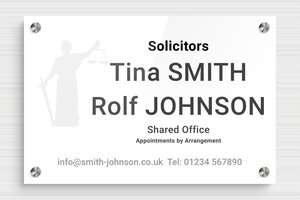
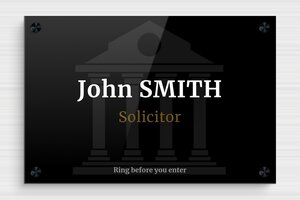
Traditional solicitor practices typically favour door nameplates that clearly identify individual offices whilst maintaining consistency with firm branding. These signs must balance personal identification with corporate identity, often incorporating partnership details and professional qualifications. The challenge lies in creating signage that remains current as staff changes occur, whilst projecting the stability and permanence that clients expect from established legal practices.
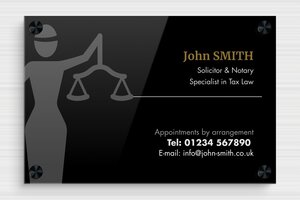
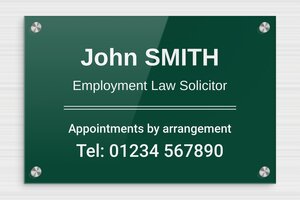
Individual office identification within solicitor practices requires careful consideration of hierarchy, professional titles, and firm branding consistency. Modern solicitor nameplates often incorporate the practitioner's name, professional qualifications, and areas of specialisation, creating an informative yet elegant presentation that guides clients and visitors effectively.
The most successful solicitor door signs balance personal identification with firm cohesion. Brass nameplates remain popular for their traditional appeal and durability, whilst contemporary acrylic alternatives offer flexibility for practices embracing modern aesthetics. The key consideration is ensuring all nameplates within a practice maintain visual consistency whilst allowing for individual professional identity.
Partnership structures present particular challenges, as nameplates must reflect changing hierarchies and new appointments without requiring complete replacement. Modular design approaches, where individual elements can be updated independently, offer practical solutions for dynamic legal practices.
Barristers' chambers require sophisticated directory systems that accommodate multiple tenants whilst maintaining the gravitas expected of legal institutions. These signs must clearly present tenant listings, call-to-bar dates, and QC designations in formats that honour legal traditions whilst ensuring practical functionality.
Chamber directory boards serve dual purposes: internal navigation for visitors and external representation of the chambers' collective expertise. The most effective designs incorporate traditional materials like brass or bronze with contemporary mounting systems that allow for regular updates as tenancies change.
Individual barrister nameplates within chambers must balance personal branding with collective chamber identity. This often involves standardised formats that accommodate varying name lengths, qualification levels, and specialisation areas whilst maintaining visual harmony throughout the building.
Material selection for law office signs extends far beyond aesthetic preferences, encompassing durability, maintenance requirements, and professional appropriateness. The UK's variable climate demands materials that withstand moisture, temperature fluctuations, and urban pollution whilst maintaining their appearance over extended periods.
Traditional brass remains the gold standard for legal signage, offering unparalleled durability and timeless appeal that resonates with legal profession heritage. However, modern alternatives like high-grade aluminium and premium acrylics provide compelling benefits including lighter weight, lower maintenance requirements, and greater design flexibility.
The choice between materials often reflects the practice's positioning and client base. Traditional practices serving established clientele may favour brass for its heritage associations, whilst innovative firms targeting modern businesses might opt for sleek acrylic or brushed aluminium alternatives that project contemporary expertise.
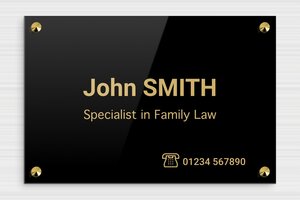
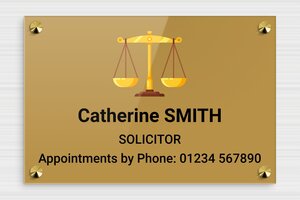
Brass nameplates embody the gravitas and permanence that legal clients expect, offering exceptional longevity when properly maintained. The material's natural patina development over time adds character whilst the deep engraving possibilities ensure text remains legible for decades. Quality brass signage represents a long-term investment that enhances rather than detracts from property values.
Modern brass nameplate production combines traditional craftsmanship with contemporary precision, ensuring consistent quality and professional appearance. Engraving techniques have evolved to provide crisp, deep lettering that resists wear whilst accommodating complex logos and professional crests that many legal practices require.
Maintenance considerations for brass signage are minimal but important. Regular cleaning maintains the material's lustrous appearance, whilst protective coatings can prevent excessive tarnishing in urban environments. The investment in quality brass signage typically pays dividends through reduced replacement costs and enhanced professional image.
Contemporary legal practices increasingly embrace acrylic and aluminium signage for its versatility, cost-effectiveness, and modern aesthetic appeal. These materials offer excellent weather resistance whilst providing greater flexibility for complex designs, colour incorporation, and frequent updates that dynamic practices require.
Acrylic signage excels in applications requiring colour integration or illumination, whilst maintaining professional appearance standards appropriate for legal environments. The material's workability allows for intricate cutting and shaping that accommodates complex logos and contemporary typography preferences.
Aluminium alternatives provide exceptional durability with minimal maintenance requirements, making them ideal for exterior applications or high-traffic areas. Brushed finishes offer sophisticated appearances that complement modern architectural styles whilst anodised coatings ensure long-term colour stability and weather resistance.
Navigating the regulatory landscape for legal practice signage requires understanding multiple compliance frameworks, from professional conduct rules to local planning regulations. The Solicitors Regulation Authority (SRA) Code of Conduct establishes clear guidelines for how legal practices may present themselves publicly, with implications for signage content and accuracy.
Professional title usage on signage must reflect actual qualifications and registrations, with particular attention to terms like "solicitor," "barrister," and "legal executive" that carry specific regulatory meanings. Misleading or inaccurate professional designations on signage can result in regulatory sanctions, making compliance verification essential before installation.
Planning permission requirements vary significantly across UK jurisdictions, with conservation areas and listed buildings presenting additional constraints. External signage often requires formal consent, particularly for illuminated signs or installations exceeding specified size thresholds. Early consultation with local planning authorities prevents costly modifications or removal orders.
The SRA Code of Conduct requires solicitor practices to ensure all public communications, including signage, accurately represent their services and qualifications. This extends to partnership structures, authorised body status, and any claims about expertise or specialisation areas that must be substantiated and current.
Signage must clearly identify the practice as a solicitor firm where appropriate, using terminology that doesn't mislead the public about the nature of services offered. Practices operating under alternative business structures must ensure their signage reflects their actual regulatory status and any restrictions on their service provision.
Regular auditing of signage content ensures ongoing compliance as practices evolve, staff changes occur, and regulatory requirements develop. This proactive approach prevents inadvertent breaches that could result in regulatory intervention or public confusion about the practice's status.
Modern legal practice signage demands sophisticated customisation capabilities that accommodate diverse branding requirements whilst maintaining professional standards. From incorporating firm logos and colour schemes to accommodating multiple languages in diverse communities, today's signage solutions must balance creativity with regulatory compliance.
The most successful legal signage projects begin with comprehensive brand analysis, ensuring consistency across all client touchpoints from business cards to building signage. This holistic approach strengthens brand recognition whilst projecting the professionalism that legal clients expect throughout their service experience.
Typography selection plays a crucial role in legal signage effectiveness, with traditional serif fonts projecting established authority whilst contemporary sans-serif alternatives suggest modern efficiency. The key lies in selecting typefaces that remain legible across various sizes whilst reflecting the practice's personality and target market preferences.
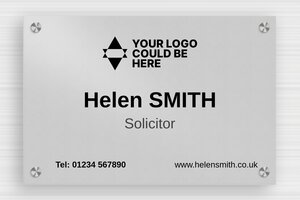
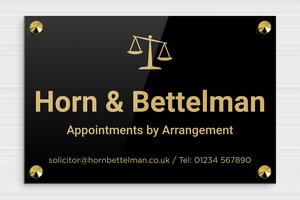
Successful logo integration requires careful consideration of scale, positioning, and production techniques that maintain visual impact across different viewing distances. Legal practice logos often incorporate traditional elements like scales of justice or heraldic devices that require precise reproduction to maintain their symbolic significance.
Colour consistency across signage materials presents technical challenges, particularly when combining different substrates or production methods. Professional colour matching ensures brand colours appear consistent whether rendered in brass, acrylic, or illuminated formats, maintaining brand integrity across all applications.
Multi-location practices require standardised design templates that accommodate local variations whilst maintaining overall brand consistency. This systematic approach reduces costs whilst ensuring consistent brand presentation across all practice locations, strengthening overall market recognition.
Professional installation ensures signage performs optimally whilst protecting both the signs and the building fabric. Legal practices often occupy prestigious buildings with architectural significance, requiring installation methods that respect the structure whilst ensuring secure, long-term mounting.
Wall-mounted nameplates require careful consideration of substrate materials, from modern plasterboard partitions to historic masonry walls that may require specialist fixings. The mounting system must distribute loads appropriately whilst allowing for future removal without building damage, particularly important in leased premises.
Security considerations have become increasingly important for legal practice signage, with theft prevention measures necessary for valuable materials like brass whilst ensuring signs remain easily readable and professionally presented. Discrete security fixings and strategic positioning can deter opportunistic theft whilst maintaining aesthetic appeal.
Listed buildings and conservation areas present unique challenges for legal practice signage, often requiring specialist conservation advice and formal consent procedures. The installation methods must respect historic fabric whilst ensuring signs remain secure and professionally presented over extended periods.
Traditional fixing methods often prove most appropriate for heritage buildings, using techniques and materials that complement the building's age and architectural style. This approach ensures planning consent whilst maintaining the building's historic integrity that often attracts legal practices to prestigious locations.
Modern discrete fixing systems can accommodate heritage requirements whilst providing the security and adjustability that contemporary practices require. Professional conservation advice ensures installations meet both regulatory requirements and long-term building preservation objectives.
Selecting an appropriate signage supplier requires evaluating technical capabilities, design expertise, and understanding of legal profession requirements. The most successful partnerships combine manufacturing excellence with genuine appreciation for the professional standards and regulatory complexities that legal practices navigate daily.
Quality assurance becomes paramount when signage represents your professional reputation to clients and peers. Suppliers should demonstrate consistent production standards, appropriate quality control procedures, and willingness to rectify any issues promptly and professionally. References from other legal practices provide valuable insights into supplier reliability and service quality.
Otypo's extensive experience in professional signage, combined with European manufacturing standards and comprehensive customisation capabilities, positions us as an ideal partner for legal practices seeking quality signage solutions. Our online design tools enable precise specification whilst our production expertise ensures consistent results that meet the exacting standards legal professionals demand.
The investment in quality law office signs extends far beyond immediate visual impact, contributing to long-term practice success through enhanced professional credibility and client confidence. Whether you're establishing a new practice, updating existing signage, or managing a complex multi-tenant legal building, the right signage partner ensures your investment delivers lasting value whilst meeting all regulatory and professional requirements that define successful legal practice in today's competitive market.
 Custom quotes available for bulk or special requests
'%3e%3cpath%20d='M20.5563%202.67834H1.42533C0.639422%202.67834%200%203.31772%200%204.10363V15.5822C0%2016.3682%200.639422%2017.0076%201.42533%2017.0076H15.3578C15.6167%2017.0076%2015.8265%2016.7977%2015.8265%2016.5388C15.8265%2016.2799%2015.6167%2016.0701%2015.3578%2016.0701H1.42533C1.15636%2016.0701%200.9375%2015.8512%200.9375%2015.5822V8.87691H21.0442V11.2778C21.0442%2011.5367%2021.254%2011.7465%2021.5129%2011.7465C21.7718%2011.7465%2021.9817%2011.5367%2021.9817%2011.2778V4.10363C21.9817%203.31772%2021.3423%202.67834%2020.5563%202.67834ZM1.42533%203.61584H20.5563C20.8253%203.61584%2021.0442%203.83466%2021.0442%204.10363V5.54799H0.9375V4.10363C0.9375%203.83466%201.15631%203.61584%201.42533%203.61584ZM0.9375%207.93941V6.48549H21.0442V7.93941H0.9375Z'%20fill='%230C4D5A'/%3e%3cpath%20d='M20.5563%202.67834H1.42533C0.639422%202.67834%200%203.31772%200%204.10363V15.5822C0%2016.3682%200.639422%2017.0076%201.42533%2017.0076H15.3578C15.6167%2017.0076%2015.8265%2016.7977%2015.8265%2016.5388C15.8265%2016.2799%2015.6167%2016.0701%2015.3578%2016.0701H1.42533C1.15636%2016.0701%200.9375%2015.8512%200.9375%2015.5822V8.87691H21.0442V11.2778C21.0442%2011.5367%2021.254%2011.7465%2021.5129%2011.7465C21.7718%2011.7465%2021.9817%2011.5367%2021.9817%2011.2778V4.10363C21.9817%203.31772%2021.3423%202.67834%2020.5563%202.67834ZM1.42533%203.61584H20.5563C20.8253%203.61584%2021.0442%203.83466%2021.0442%204.10363V5.54799H0.9375V4.10363C0.9375%203.83466%201.15631%203.61584%201.42533%203.61584ZM0.9375%207.93941V6.48549H21.0442V7.93941H0.9375Z'%20fill='black'%20fill-opacity='0.5'/%3e%3cpath%20d='M6.92061%2013.6835H2.61612C1.9962%2013.7059%201.99409%2014.5977%202.61612%2014.621H6.92061C7.54054%2014.5986%207.54265%2013.7067%206.92061%2013.6835Z'%20fill='%230C4D5A'/%3e%3cpath%20d='M6.92061%2013.6835H2.61612C1.9962%2013.7059%201.99409%2014.5977%202.61612%2014.621H6.92061C7.54054%2014.5986%207.54265%2013.7067%206.92061%2013.6835Z'%20fill='black'%20fill-opacity='0.5'/%3e%3cpath%20d='M6.92061%2011.7704H2.61612C1.9962%2011.7928%201.99409%2012.6846%202.61612%2012.7079H6.92061C7.54054%2012.6855%207.54265%2011.7936%206.92061%2011.7704Z'%20fill='%230C4D5A'/%3e%3cpath%20d='M6.92061%2011.7704H2.61612C1.9962%2011.7928%201.99409%2012.6846%202.61612%2012.7079H6.92061C7.54054%2012.6855%207.54265%2011.7936%206.92061%2011.7704Z'%20fill='black'%20fill-opacity='0.5'/%3e%3cpath%20fill-rule='evenodd'%20clip-rule='evenodd'%20d='M16.9424%2010.7995L14.5898%2013.152C14.5898%2016.752%2015.1919%2020.2222%2019.2948%2021.3216C23.3978%2020.2222%2023.9998%2016.752%2023.9998%2013.152L21.6473%2010.7995H16.9424Z'%20fill='%23FDF300'/%3e%3cpath%20d='M19.2949%2019.7875C16.7214%2019.0081%2016.1647%2016.8451%2016.0451%2013.9479C16.0413%2013.8187%2016.0909%2013.6937%2016.1822%2013.6023L17.4034%2012.3812C17.4913%2012.2933%2017.6105%2012.2439%2017.7348%2012.2439H20.8549C20.9792%2012.2439%2021.0985%2012.2933%2021.1864%2012.3812L22.4075%2013.6023C22.4989%2013.6937%2022.5485%2013.8187%2022.5446%2013.9478C22.4255%2016.8443%2021.8681%2019.0084%2019.2949%2019.7875ZM16.9894%2014.121C17.1385%2016.4295%2017.4228%2018.0275%2019.2949%2018.8167C21.1665%2018.0277%2021.4513%2016.4301%2021.6004%2014.121L20.6608%2013.1814H17.929L16.9894%2014.121Z'%20fill='%230C4D5A'/%3e%3cpath%20d='M19.2949%2019.7875C16.7214%2019.0081%2016.1647%2016.8451%2016.0451%2013.9479C16.0413%2013.8187%2016.0909%2013.6937%2016.1822%2013.6023L17.4034%2012.3812C17.4913%2012.2933%2017.6105%2012.2439%2017.7348%2012.2439H20.8549C20.9792%2012.2439%2021.0985%2012.2933%2021.1864%2012.3812L22.4075%2013.6023C22.4989%2013.6937%2022.5485%2013.8187%2022.5446%2013.9478C22.4255%2016.8443%2021.8681%2019.0084%2019.2949%2019.7875ZM16.9894%2014.121C17.1385%2016.4295%2017.4228%2018.0275%2019.2949%2018.8167C21.1665%2018.0277%2021.4513%2016.4301%2021.6004%2014.121L20.6608%2013.1814H17.929L16.9894%2014.121Z'%20fill='black'%20fill-opacity='0.5'/%3e%3c/g%3e%3cdefs%3e%3cclipPath%20id='clip0'%3e%3crect%20width='24'%20height='24'%20fill='white'/%3e%3c/clipPath%3e%3c/defs%3e%3c/svg%3e) Secure payment via card or PayPal
Secure payment via card or PayPal Free delivery from £60
 Up to 20% off with volume discounts!
 Create your own product easily with our online editorCustom quotes available for bulk or special requestsSecure payment via card or PayPalFree delivery from £60Up to 20% off with volume discounts!Create your own product easily with our online editor