Get a quote
express 4h


Your sign in just 2 minutes.
Full editor: 27 materials, 219 colors, 12 mounting options
Marking: laser engraving, mechanical or printed


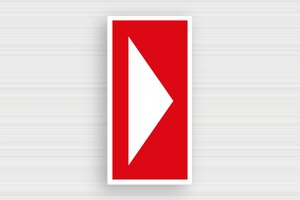
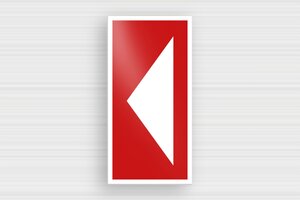

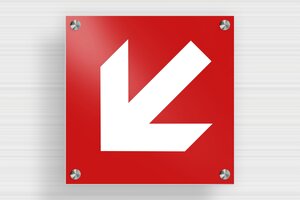
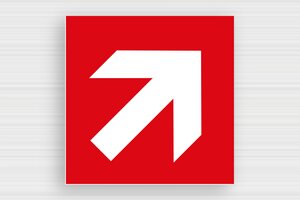
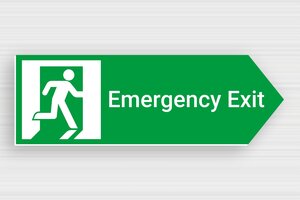
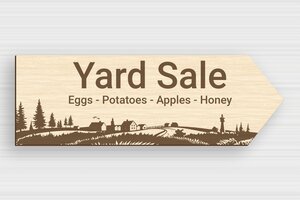
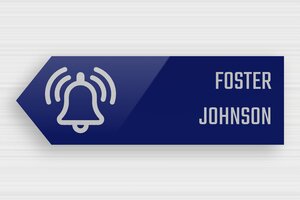
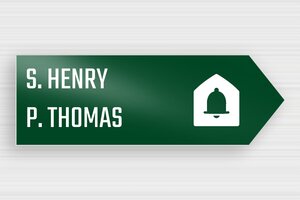

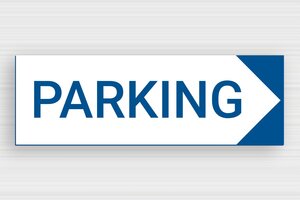
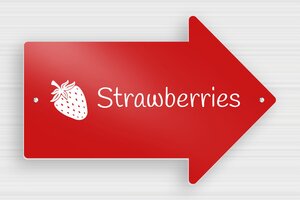
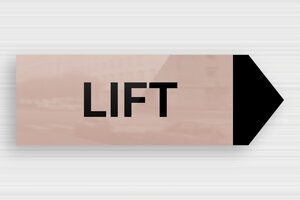
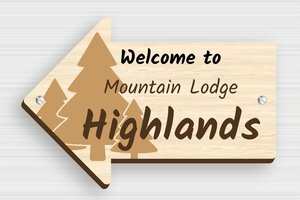
Arrow-shaped signs offer several key advantages over standard rectangular directional signage. The most significant difference lies in their immediate visual communication - the arrow shape itself conveys direction at a glance, without requiring users to read and interpret text first.
Key differences include:
This makes arrow-shaped signs particularly effective in environments like hospitals, shopping centres, and industrial complexes where quick, clear guidance is essential for smooth traffic flow.
Planning permission requirements for external arrow signs depend on several factors including size, location, and local authority regulations. Generally, small directional signs may fall under permitted development rights, but larger or more prominent signage often requires approval.
Key considerations include:
We recommend consulting your local planning authority before installing external arrow signs to ensure compliance. They can provide specific guidance based on your location and intended signage specifications, preventing costly compliance issues later.
Aluminium arrow signs are exceptionally well-suited to UK weather conditions and typically provide 10-15 years of reliable service in outdoor applications. This durability makes them a cost-effective choice for permanent installations across Britain's varied climate zones.
Factors contributing to their longevity include:
Regular maintenance, such as periodic cleaning and inspection of mounting points, can extend the lifespan even further. The combination of material quality and proper installation ensures your aluminium arrow signs will continue providing clear directional guidance for many years, regardless of Scottish winters or southern England's varied conditions.
Yes, modern arrow signage can successfully combine brand identity with safety compliance requirements. The key is understanding which elements are regulated and which allow for customisation flexibility.
Compliance considerations include:
Branding opportunities within compliance:
At Otypo, our design platform helps you create arrow signs that meet regulatory requirements while incorporating your brand elements, ensuring both compliance and professional appearance.
The choice between temporary and permanent mounting methods depends on your specific application needs, installation duration, and environmental factors.
Permanent mounting solutions:
Temporary mounting options:
Consider factors such as wind exposure, ground conditions, and frequency of relocation when selecting your mounting method. Permanent installations offer superior stability and weather resistance, while temporary solutions provide flexibility for changing directional needs or seasonal applications.
Arrow-shaped signs serve as essential directional tools across countless UK environments, from busy car parks and construction sites to office buildings and retail spaces. These distinctive arrow-shaped signs offer immediate visual clarity that transcends language barriers, making them invaluable for guiding visitors, customers, and staff efficiently through any space. Unlike traditional rectangular signage that relies heavily on text, arrow-shaped directional signs communicate through universally understood visual cues, reducing confusion and improving traffic flow in both indoor and outdoor settings.
The versatility of custom arrow signage extends far beyond simple left-or-right directions. Modern arrow-shaped signs can incorporate company branding, specific messaging, and comply with UK safety regulations whilst maintaining their primary function as wayfinding tools. Whether you're managing a bustling retail environment, overseeing construction site safety, or simply wanting to direct visitors to your business entrance, the right arrow signage solution can transform how people navigate your space.
At Otypo, we understand that effective directional signage requires more than just pointing in the right direction. Our European-quality manufacturing processes ensure that every arrow-shaped sign meets the demanding standards of UK weather conditions whilst offering complete customisation through our intuitive online design platform. With over 60 years of experience in creating professional signage solutions, we've helped thousands of UK businesses and organisations implement clear, durable directional systems that stand the test of time.
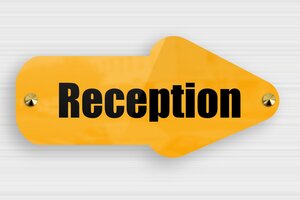
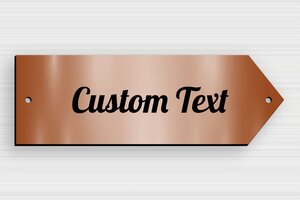
Arrow-shaped signs represent a specialised category of directional signage that combines form with function to create immediately recognisable wayfinding solutions. Unlike standard rectangular signs that require reading and interpretation, the arrow shape itself communicates direction at a glance, making these signs particularly effective in high-traffic areas where quick decision-making is essential.
The effectiveness of arrow-shaped signage lies in its ability to cut through visual noise. In environments saturated with information – such as shopping centres, hospitals, or industrial complexes – the distinctive arrow profile stands out amongst other signage, drawing the eye naturally towards the intended direction. This visual hierarchy proves invaluable for facilities managers who need to guide large numbers of people efficiently without creating bottlenecks or confusion.
Construction and industrial sites represent one of the largest markets for custom arrow signs in the UK. These environments require clear directional guidance for both workers and visitors, often in challenging conditions where visibility and durability are paramount. Arrow signs indicating site entrances, emergency exits, and restricted areas help maintain safety protocols whilst ensuring smooth operational flow.
Healthcare facilities rely heavily on directional arrow signage to guide patients and visitors through complex building layouts. The stress and urgency often associated with hospital visits make clear wayfinding essential, and arrow-shaped signs provide intuitive navigation that reduces anxiety and improves the overall patient experience. From car park entrances to specific department locations, these signs create a logical flow that benefits everyone using the facility.
Educational institutions, particularly universities and large schools, use arrow-shaped directional signs to help students, staff, and visitors navigate sprawling campuses. These signs often incorporate institutional branding whilst maintaining their primary wayfinding function, creating a cohesive visual identity that reinforces the organisation's professional image.
Retail and hospitality environments benefit significantly from well-designed arrow signage systems. Car parks, in particular, require clear directional guidance to prevent congestion and frustrated customers. Arrow signs indicating entrances, exits, and different parking zones help create a positive first impression whilst improving traffic flow during peak periods.
The British climate presents unique challenges for outdoor signage, making material selection crucial for long-term performance. Weatherproof arrow signs must withstand everything from Scottish winters to coastal salt spray, whilst maintaining their visual impact and structural integrity year after year.
Aluminium remains the gold standard for outdoor arrow-shaped signs due to its exceptional durability and weather resistance. This lightweight yet robust material resists corrosion, maintains its finish in harsh conditions, and provides an excellent surface for both digital printing and laser engraving. Aluminium arrow signs typically last 10-15 years in outdoor applications, making them a cost-effective choice for permanent installations.
Acrylic, often referred to as Perspex in the UK, offers excellent versatility for both indoor and outdoor applications. This material provides crystal-clear visibility, excellent weather resistance, and can be easily cut into precise arrow shapes whilst maintaining smooth, professional edges. Acrylic arrow signs work particularly well in retail environments where aesthetic appeal is as important as functionality.
Laser engraving creates permanent, weather-resistant text and graphics that won't fade or peel over time. This technique works exceptionally well with materials like aluminium and acrylic, creating crisp, professional results that maintain their appearance for years. Engraved arrow signs are particularly suitable for outdoor applications where longevity is essential.
Digital printing allows for complex graphics, multiple colours, and photographic elements whilst remaining cost-effective for both small and large quantities. Modern UV-resistant inks ensure that printed arrow signs maintain their vibrancy even under prolonged sun exposure, making this technique ideal for branded directional signage that needs to incorporate company colours and logos.
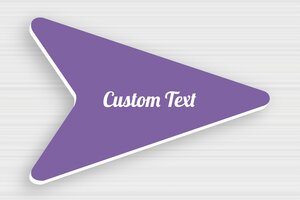
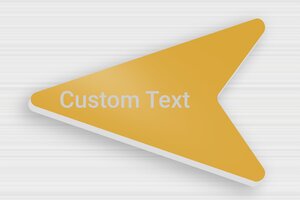
Modern personalised arrow signage goes far beyond simple directional indicators, offering businesses and organisations the opportunity to create cohesive wayfinding systems that reinforce their brand identity whilst serving their practical purpose. The customisation process begins with selecting the appropriate arrow style – from traditional pointed arrows to more contemporary chevron designs – each offering different visual impacts and suitability for various environments.
Text customisation allows for multiple languages, specific terminology, and varying font sizes to ensure optimal readability at the intended viewing distances. For international businesses or tourist areas, multilingual arrow signs can incorporate English alongside other relevant languages, creating inclusive wayfinding solutions that serve diverse user groups effectively.
Colour selection plays a crucial role in both visibility and brand alignment. High-contrast combinations such as white text on dark backgrounds ensure maximum legibility, whilst corporate colour schemes can be incorporated to maintain brand consistency throughout a facility. Reflective options enhance visibility during low-light conditions, particularly important for car park and roadway applications.
Effective arrow sign design requires careful consideration of viewing distances, environmental conditions, and user needs. Text sizing must account for the typical distance from which the sign will be read, with larger lettering required for car park applications compared to indoor corridor signage. The arrow itself should be proportioned to ensure clear directional indication without overwhelming accompanying text or graphics.
Mounting options significantly impact both the sign's effectiveness and its longevity. Wall-mounted arrow signs work well for permanent installations on buildings, whilst post-mounted solutions offer flexibility for outdoor applications where wall mounting isn't feasible. Temporary mounting systems allow for seasonal or event-based directional signage that can be easily relocated as needs change.
Understanding UK regulations for directional signage ensures that your arrow-shaped safety signs meet all necessary legal requirements whilst serving their intended purpose effectively. The Health and Safety at Work Act requires employers to provide clear information and instruction to employees and visitors, which often includes appropriate directional signage to guide people safely through work environments.
Fire safety regulations, particularly BS 5499 and EN ISO 7010, specify requirements for emergency directional signage including arrow signs that indicate escape routes and assembly points. These standards dictate specific colours, symbols, and sizing requirements to ensure consistency and immediate recognition during emergency situations. Compliance with these standards isn't just good practice – it's often a legal requirement for commercial premises.
Building regulations for commercial premises may require specific types of directional signage to ensure accessibility for all users, including those with visual impairments. This might involve particular colour contrasts, text sizing, or supplementary tactile elements to create inclusive wayfinding systems that serve everyone effectively.
External arrow signs, particularly those visible from public highways, may require planning permission depending on their size, location, and local authority regulations. Understanding these requirements before installation prevents costly compliance issues and ensures that your directional signage contributes positively to the local environment.
Conservation areas and listed buildings often have additional restrictions on external signage, requiring careful consideration of materials, colours, and mounting methods to maintain the character of historic environments whilst providing necessary directional information.
Professional installation ensures that outdoor arrow signs perform reliably throughout their intended lifespan whilst maintaining their visual impact and structural integrity. Wall mounting requires appropriate fixings for the specific surface material, whether brick, concrete, or metal cladding, with particular attention to weatherproofing around mounting points to prevent water ingress and subsequent damage.
Post-mounted installations offer greater flexibility but require careful consideration of ground conditions, wind loading, and potential impact from vehicles or maintenance equipment. Proper foundation work ensures stability whilst appropriate height positioning optimises visibility for the intended user group.
Regular maintenance schedules help preserve both the appearance and functionality of arrow signage systems. Simple cleaning with appropriate materials removes accumulated dirt and grime that can reduce visibility, whilst periodic inspections identify potential issues before they compromise the sign's effectiveness or safety.
Different materials offer varying lifespans under UK conditions, with aluminium and acrylic signs typically providing 10-15 years of reliable service in outdoor applications. Understanding these expectations helps with budgeting and ensures that replacement signage can be planned before existing signs deteriorate to the point where they compromise safety or professional appearance.
Proactive replacement strategies, particularly for safety-critical applications, ensure continuity of service whilst potentially taking advantage of improved materials or design options that have become available since the original installation.
Selecting appropriate directional arrow signs requires careful consideration of multiple factors including environmental conditions, viewing distances, user requirements, and budget constraints. Indoor applications typically allow for a wider range of materials and finishes, whilst outdoor installations demand more robust solutions that can withstand weather exposure whilst maintaining their effectiveness.
Size selection directly impacts both visibility and cost, with larger signs offering better visibility at greater distances but requiring more substantial mounting systems and higher material costs. The optimal size balances visibility requirements with practical and economic considerations, ensuring effective communication without unnecessary expense.
Temporary versus permanent installations require different approaches, with temporary applications often benefiting from portable mounting systems that allow for easy relocation, whilst permanent installations can utilise more robust mounting methods that provide superior long-term stability and weather resistance.
When choosing your arrow signage solution, consider the complete system rather than individual signs. Consistent design, materials, and mounting methods create cohesive wayfinding systems that are more effective than disparate individual signs, whilst potentially offering economies of scale in both procurement and maintenance.
Professional arrow-shaped signs represent an investment in clear communication that pays dividends through improved traffic flow, reduced confusion, and enhanced safety for everyone using your facility. At Otypo, our commitment to European quality manufacturing, combined with our user-friendly online customisation platform and rapid delivery service, ensures that you receive directional signage solutions that meet your specific requirements whilst exceeding your expectations for quality and durability. Whether you need a single custom arrow sign or a comprehensive wayfinding system, our experienced team is ready to help you create effective directional solutions that serve your organisation reliably for years to come.