Oval Signs
Your sign in just 2 minutes.
Full editor: 27 materials, 219 colors, 12 mounting options
Marking: laser engraving, mechanical or printed
starting at £5.90

Your sign in just 2 minutes.
Full editor: 27 materials, 219 colors, 12 mounting options
Marking: laser engraving, mechanical or printed
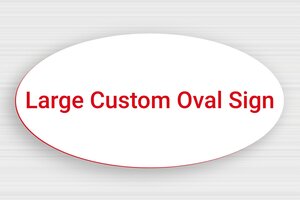
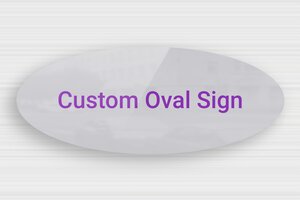
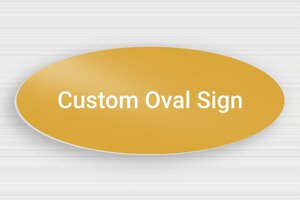
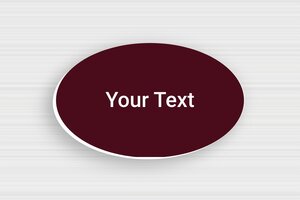

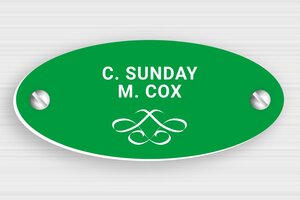
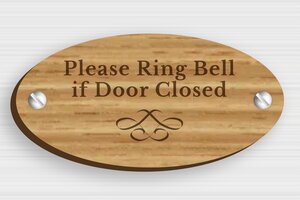
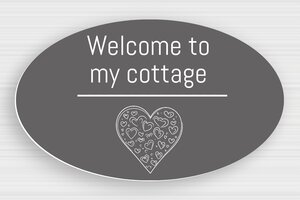
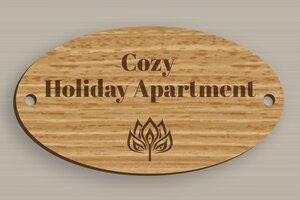

For UK weather conditions, several materials offer excellent durability and weather resistance for oval signs. Acrylic is the most popular choice, providing UV stability that prevents colour fading and flexibility that resists cracking during temperature changes. Modern acrylic formulations maintain structural integrity through British winters whilst resisting thermal expansion.
Metal options deliver premium durability:
For heritage applications, properly treated hardwoods such as oak or mahogany provide decades of reliable service whilst developing rich patinas that complement period properties. All materials are selected specifically to withstand the UK's challenging weather conditions including temperature fluctuations, moisture, and UV exposure.
Choosing the right size oval sign depends on several key factors including viewing distance, text content, and architectural proportions. The oval shape naturally provides optimal space utilisation for text layouts, particularly when displaying names, addresses, or short descriptive phrases.
Consider these guidelines:
Professional designers recognise that oval formats reduce wasted space compared to circular signs whilst avoiding the stark formality of rectangular layouts. The proportions work particularly well for UK addressing conventions, where house names often consist of two or three words that benefit from the oval's natural emphasis on horizontal text flow.
Yes, oval signs offer extensive customisation options for logos and brand colours. Modern manufacturing techniques allow virtually unlimited personalisation possibilities, from simple text variations to complex multi-colour designs incorporating logos, graphics, and special effects.
Logo integration options include:
Brand colour applications:
Professional design software ensures optimal spacing and proportion regardless of logo complexity. Corporate branding extends beyond simple logo placement to encompass typography choices and overall aesthetic approaches that reinforce brand identity, creating professional impressions that build customer confidence and recognition.
Various mounting solutions accommodate different wall types and installation requirements, ensuring optimal results whilst maintaining both appearance and structural integrity.
Wall-mounted options:
Alternative mounting methods:
Professional installation ensures compliance with safety regulations whilst considering factors such as ground conditions, underground utilities, and structural capacity. Quality mounting hardware includes decorative caps or covers to maintain clean appearances whilst protecting fixings from weather exposure.
Quality oval signs provide decades of reliable service when properly specified and maintained for UK outdoor conditions. Longevity varies by material choice and environmental factors, but professional-grade signs are designed to withstand the UK's challenging weather patterns.
Expected lifespans by material:
Factors affecting longevity:
With over 60 years of experience in the signage industry, Otypo's expertise ensures each oval sign is built to stand the test of time whilst maintaining its visual impact throughout its service life.
Oval signs represent a perfect balance between traditional elegance and modern functionality, making them an increasingly popular choice for businesses and homeowners across the UK. These distinctive curved designs offer a softer alternative to rectangular signage whilst maintaining excellent readability and visual impact. Whether you're looking to enhance your property's kerb appeal with a classic house name sign or establish professional credibility with bespoke business signage, oval signs provide the versatility and timeless appeal that suits virtually any setting.
The enduring popularity of oval signage stems from its unique ability to complement both contemporary and traditional architectural styles. Unlike harsh geometric shapes, the gentle curves of an oval create a welcoming impression that draws the eye without appearing aggressive or overly commercial. This makes them particularly well-suited to the UK market, where heritage properties and conservation areas often require signage solutions that respect historical aesthetics whilst meeting modern practical needs.
At Otypo, we understand that every sign tells a story. Our expertise in creating premium oval signs combines European craftsmanship with cutting-edge customisation technology, ensuring each piece reflects your unique requirements. With over 60 years of experience in the signage industry, we've perfected the art of transforming simple materials into striking visual statements that stand the test of time.
The appeal of oval signage extends far beyond mere aesthetics. From a practical standpoint, the elongated shape provides optimal space utilisation for text layouts, particularly when displaying names, addresses, or short descriptive phrases. The curved edges naturally guide the reader's eye along the text flow, improving legibility compared to signs with sharp corners that can create visual tension points.
For business applications, oval signs convey professionalism with a touch of sophistication that rectangular alternatives often lack. Estate agents, solicitors, medical practices, and boutique retailers frequently choose oval signage because it suggests established credibility without appearing overly corporate. The shape itself has historical associations with quality craftsmanship – think of the oval plaques adorning Georgian townhouses or the elegant nameplates found in prestigious London clubs.
Residential users appreciate how oval house signs enhance property presentation without overwhelming architectural features. The gentle curves complement everything from Victorian terraces to modern developments, making them a safe choice for homeowners concerned about planning restrictions or neighbourhood aesthetics. Unlike bold rectangular signs that can appear intrusive, oval designs integrate harmoniously with existing visual elements.
One often overlooked advantage of oval signs lies in their superior text accommodation capabilities. The shape naturally creates wider central areas perfect for primary information (such as house names or business titles) whilst the tapered ends can accommodate secondary details like house numbers or contact information. This organic hierarchy guides viewers through the information in a logical sequence.
Professional designers recognise that oval formats reduce wasted space compared to circular signs whilst avoiding the stark formality of rectangular layouts. The proportions work particularly well for UK addressing conventions, where house names often consist of two or three words that benefit from the oval's natural emphasis on horizontal text flow.
Selecting appropriate materials forms the foundation of any successful signage project, particularly in the UK's challenging weather conditions. Our comprehensive range of materials ensures every oval sign meets both aesthetic preferences and practical durability requirements, from coastal properties facing salt spray to urban environments dealing with pollution and temperature fluctuations.
Acrylic represents the most popular choice for contemporary oval signage, offering exceptional versatility at competitive pricing. Modern acrylic formulations provide UV stability that prevents colour fading even under intense sunlight, whilst maintaining flexibility that resists cracking during temperature changes. The material's lightweight nature simplifies installation whilst reducing stress on mounting surfaces.
For business applications, acrylic's smooth surface accepts various finishing techniques including laser engraving, vinyl lettering, and digital printing. The material's optical clarity allows for sophisticated effects such as edge-lit illumination or layered designs that create depth and visual interest. Maintenance requirements remain minimal – regular cleaning with standard glass cleaners maintains pristine appearance for years.
Weather resistance proves particularly impressive with quality acrylic formulations. Unlike cheaper alternatives that become brittle or discoloured, premium acrylic maintains structural integrity through British winters whilst resisting the thermal expansion that can compromise inferior materials. The non-porous surface prevents moisture absorption that leads to internal stress and eventual failure.
When longevity and prestige take priority, metal oval signs deliver unmatched performance and visual impact. Aluminium compositions offer excellent corrosion resistance whilst remaining lightweight enough for straightforward installation. The material accepts various finishing processes including anodising, powder coating, and brushed textures that create sophisticated appearances suitable for upmarket applications.
Brass oval signs command particular respect in professional settings, conveying established authority and attention to detail. The material's natural antimicrobial properties make it ideal for medical practices or food service establishments where hygiene considerations matter. Over time, brass develops an attractive patina that enhances rather than detracts from its appearance, creating signs that actually improve with age.
Stainless steel provides the ultimate durability for harsh environments, resisting corrosion even in coastal locations where salt spray challenges lesser materials. The material's strength allows for thinner profiles that appear more elegant whilst maintaining structural integrity. Various surface finishes from mirror polish to brushed satin accommodate different aesthetic preferences.
Wooden oval signs offer warmth and natural beauty that synthetic materials cannot replicate. Properly treated hardwoods such as oak or mahogany develop rich patinas that complement period properties whilst providing decades of reliable service. Modern preservation techniques ensure weather resistance without compromising the material's organic appearance.
For applications requiring absolute authenticity, cast iron oval signs recreate the substantial presence of Victorian-era signage. Though heavier than modern alternatives, cast iron's durability and traditional associations make it invaluable for heritage properties or businesses seeking to establish historical credibility. Proper maintenance ensures these signs can serve for generations.
Creating successful oval signs requires understanding how the shape influences visual perception and information processing. Unlike rectangular formats that rely on rigid grid systems, oval designs demand more nuanced approaches that work with rather than against the curved boundaries. Professional design principles ensure maximum impact whilst maintaining readability across various viewing distances and lighting conditions.
Font choice significantly impacts oval sign effectiveness, with certain typefaces complementing the curved format better than others. Sans-serif fonts generally work well because their clean lines contrast nicely with the organic shape, whilst serif fonts can add traditional elegance when historical associations matter. Script fonts should be used sparingly, as their decorative nature can conflict with the oval's inherent sophistication.
Text layout within oval boundaries requires careful consideration of optical balance. Centre-aligned text typically works best, creating symmetrical compositions that feel stable and professional. However, left-aligned text can work effectively when the oval's proportions accommodate natural reading patterns. Avoid justified text, as the varying line lengths can create awkward spacing within the curved boundaries.
Hierarchy becomes crucial when incorporating multiple information elements. Primary text (such as business names) should occupy the oval's widest central area, with secondary information (addresses, phone numbers) positioned in the narrower sections. This natural progression guides viewers through the information in logical sequence whilst maintaining visual balance.
Colour selection influences both aesthetic appeal and practical functionality. High contrast combinations ensure readability from distance, whilst subtle tonal variations can create sophisticated effects for close-viewing applications. Consider the surrounding environment when selecting colours – signs that stand out dramatically against building facades may appear garish, whilst insufficient contrast renders them ineffective.
Traditional colour combinations like white text on dark backgrounds provide maximum legibility, particularly important for address signs that must be readable by delivery drivers or emergency services. However, modern applications often benefit from more nuanced approaches that reflect brand identities or architectural contexts. Metallic finishes can add premium appeal whilst maintaining excellent visibility.
Remember that colours appear differently under various lighting conditions. What looks perfect in daylight may become difficult to read under street lighting or in shadowy areas. Testing colour combinations under different conditions ensures consistent performance throughout daily and seasonal cycles.
Proper installation determines both the immediate visual impact and long-term durability of oval signs. Different mounting methods suit various applications, from lightweight acrylic signs requiring minimal hardware to substantial metal installations demanding robust structural support. Understanding these options ensures optimal results whilst avoiding common installation pitfalls that compromise appearance or safety.
Direct wall mounting offers the cleanest appearance for most oval signs, creating the impression that the sign forms an integral part of the building's architecture. This method works particularly well for business premises where professional appearance matters, as the sign appears purposeful rather than temporary. Proper wall mounting requires careful attention to both the sign's weight and the wall's structural capacity.
For masonry walls, mechanical fixings provide superior holding power compared to adhesive methods. Stainless steel screws and wall plugs resist corrosion whilst providing reliable long-term attachment. Pre-drilling mounting holes ensures accurate positioning whilst preventing material damage during installation. Consider using decorative caps or covers to maintain clean appearances whilst protecting fixing hardware.
Rendered or painted walls require special consideration to prevent water ingress that could cause structural damage. Proper sealing around mounting points prevents moisture penetration whilst allowing for thermal movement that occurs with temperature changes. Quality sealants maintain flexibility over time, preventing the cracking that leads to water damage.
When wall mounting isn't practical or desirable, post-mounted installations provide excellent visibility whilst maintaining professional appearance. This approach works particularly well for properties set back from roads or where multiple signs require coordination. Post mounting also allows for easier maintenance and replacement when business circumstances change.
Ground conditions significantly influence post installation requirements. Soft soils may require concrete footings to prevent movement, whilst rocky ground might need specialised drilling equipment. Consider underground utilities before excavating, as damage to gas, water, or electrical services can prove both dangerous and expensive. Professional installation ensures compliance with relevant safety regulations.
Free-standing oval signs offer maximum flexibility for temporary applications or locations where permanent installation isn't permitted. Weighted bases provide stability without requiring ground penetration, making them ideal for rental properties or temporary business locations. Quality free-standing systems resist wind loading whilst remaining portable enough for repositioning when needed.
The true value of professional oval signage lies in its customisation potential. Modern manufacturing techniques allow virtually unlimited personalisation options, from simple text variations to complex multi-colour designs incorporating logos, graphics, and special effects. Understanding these possibilities enables informed decisions that maximise both visual impact and practical functionality.
Contemporary oval signs accommodate extensive text customisation options that go far beyond basic name displays. Multiple font families, sizes, and weights can be combined within single designs to create sophisticated hierarchies that guide viewer attention effectively. Professional design software ensures optimal spacing and proportion regardless of text length or complexity.
Logo integration requires careful consideration of scale and positioning to maintain both brand recognition and overall design balance. Vector-based logos reproduce most effectively, maintaining crisp edges at any size whilst avoiding the pixelation that affects bitmap images. Consider how logo colours interact with background choices to ensure both elements remain clearly visible.
Corporate branding extends beyond simple logo placement to encompass colour schemes, typography choices, and overall aesthetic approaches that reinforce brand identity. Consistent application of brand guidelines across all signage elements creates professional impressions that build customer confidence and recognition. This attention to detail often distinguishes successful businesses from their competitors.
Modern manufacturing capabilities enable sophisticated effects that were previously impossible or prohibitively expensive. Laser engraving creates precise, permanent markings that won't fade or peel like applied graphics. The technique works particularly well with metal and acrylic materials, producing crisp text and fine detail that maintains clarity even at small sizes.
Edge-lit illumination transforms oval signs into striking focal points that remain visible during evening hours. LED technology provides energy-efficient operation whilst offering colour options that can reinforce branding or create seasonal variations. Proper electrical installation ensures safe operation whilst maintaining weather resistance in outdoor applications.
Textured finishes add tactile interest whilst improving visibility under certain lighting conditions. Brushed metal effects create subtle light reflection that enhances readability, whilst raised lettering provides both visual and physical emphasis. These techniques prove particularly valuable for applications where signs must perform under challenging viewing conditions.
Investing in quality oval signage makes financial sense only when proper maintenance preserves both appearance and functionality over extended periods. Different materials require varying maintenance approaches, from simple cleaning routines to periodic refinishing that maintains like-new appearance. Understanding these requirements enables realistic budgeting whilst maximising return on investment.
Most oval signs benefit from regular cleaning that removes accumulated dirt, pollution, and biological growth before permanent staining occurs. Gentle cleaning solutions and soft cloths prevent surface damage whilst maintaining optimal appearance. Avoid abrasive cleaners or rough materials that can scratch surfaces or remove protective coatings.
Acrylic signs require particular care during cleaning, as the material can scratch easily if improper techniques are used. Rinse thoroughly before wiping to remove gritty particles, then use clean microfibre cloths with appropriate cleaning solutions. Anti-static treatments help repel dust accumulation, reducing cleaning frequency whilst maintaining pristine appearance.
Metal signs generally tolerate more aggressive cleaning approaches, though stainless steel and aluminium benefit from specialised cleaners that enhance their natural lustre. Brass signs may require periodic polishing to maintain their distinctive appearance, though many owners prefer the natural patina that develops over time. Regular inspection identifies potential issues before they require expensive repairs.
Quality oval signs should provide decades of reliable service when properly specified and maintained. However, changing business needs, updated branding requirements, or simply evolving aesthetic preferences may necessitate replacement before materials reach their service limits. Planning for these eventualities ensures smooth transitions whilst minimising disruption.
Document installation details including mounting methods, electrical connections, and structural modifications to simplify future maintenance or replacement projects. Photographs of installation processes prove invaluable when original installers are unavailable or when troubleshooting problems years later. Proper documentation also helps maintain warranty coverage that might otherwise be voided.
Consider future flexibility when specifying new oval signs. Modular designs that allow text updates without complete replacement provide long-term value for businesses that might relocate or rebrand. Similarly, mounting systems that accommodate different sign sizes enable cost-effective upgrades when requirements change.
The investment in professional oval signs reflects a commitment to quality presentation that serves businesses and homeowners for years to come. Whether enhancing residential kerb appeal or establishing commercial credibility, these versatile design elements combine traditional elegance with modern functionality. At Otypo, our dedication to European quality standards and innovative customisation options ensures every oval sign exceeds expectations whilst providing exceptional value. With rapid production capabilities and comprehensive design support, we transform your vision into reality with the precision and attention to detail that defines truly professional signage solutions.
 Custom quotes available for bulk or special requests
'%3e%3cpath%20d='M20.5563%202.67834H1.42533C0.639422%202.67834%200%203.31772%200%204.10363V15.5822C0%2016.3682%200.639422%2017.0076%201.42533%2017.0076H15.3578C15.6167%2017.0076%2015.8265%2016.7977%2015.8265%2016.5388C15.8265%2016.2799%2015.6167%2016.0701%2015.3578%2016.0701H1.42533C1.15636%2016.0701%200.9375%2015.8512%200.9375%2015.5822V8.87691H21.0442V11.2778C21.0442%2011.5367%2021.254%2011.7465%2021.5129%2011.7465C21.7718%2011.7465%2021.9817%2011.5367%2021.9817%2011.2778V4.10363C21.9817%203.31772%2021.3423%202.67834%2020.5563%202.67834ZM1.42533%203.61584H20.5563C20.8253%203.61584%2021.0442%203.83466%2021.0442%204.10363V5.54799H0.9375V4.10363C0.9375%203.83466%201.15631%203.61584%201.42533%203.61584ZM0.9375%207.93941V6.48549H21.0442V7.93941H0.9375Z'%20fill='%230C4D5A'/%3e%3cpath%20d='M20.5563%202.67834H1.42533C0.639422%202.67834%200%203.31772%200%204.10363V15.5822C0%2016.3682%200.639422%2017.0076%201.42533%2017.0076H15.3578C15.6167%2017.0076%2015.8265%2016.7977%2015.8265%2016.5388C15.8265%2016.2799%2015.6167%2016.0701%2015.3578%2016.0701H1.42533C1.15636%2016.0701%200.9375%2015.8512%200.9375%2015.5822V8.87691H21.0442V11.2778C21.0442%2011.5367%2021.254%2011.7465%2021.5129%2011.7465C21.7718%2011.7465%2021.9817%2011.5367%2021.9817%2011.2778V4.10363C21.9817%203.31772%2021.3423%202.67834%2020.5563%202.67834ZM1.42533%203.61584H20.5563C20.8253%203.61584%2021.0442%203.83466%2021.0442%204.10363V5.54799H0.9375V4.10363C0.9375%203.83466%201.15631%203.61584%201.42533%203.61584ZM0.9375%207.93941V6.48549H21.0442V7.93941H0.9375Z'%20fill='black'%20fill-opacity='0.5'/%3e%3cpath%20d='M6.92061%2013.6835H2.61612C1.9962%2013.7059%201.99409%2014.5977%202.61612%2014.621H6.92061C7.54054%2014.5986%207.54265%2013.7067%206.92061%2013.6835Z'%20fill='%230C4D5A'/%3e%3cpath%20d='M6.92061%2013.6835H2.61612C1.9962%2013.7059%201.99409%2014.5977%202.61612%2014.621H6.92061C7.54054%2014.5986%207.54265%2013.7067%206.92061%2013.6835Z'%20fill='black'%20fill-opacity='0.5'/%3e%3cpath%20d='M6.92061%2011.7704H2.61612C1.9962%2011.7928%201.99409%2012.6846%202.61612%2012.7079H6.92061C7.54054%2012.6855%207.54265%2011.7936%206.92061%2011.7704Z'%20fill='%230C4D5A'/%3e%3cpath%20d='M6.92061%2011.7704H2.61612C1.9962%2011.7928%201.99409%2012.6846%202.61612%2012.7079H6.92061C7.54054%2012.6855%207.54265%2011.7936%206.92061%2011.7704Z'%20fill='black'%20fill-opacity='0.5'/%3e%3cpath%20fill-rule='evenodd'%20clip-rule='evenodd'%20d='M16.9424%2010.7995L14.5898%2013.152C14.5898%2016.752%2015.1919%2020.2222%2019.2948%2021.3216C23.3978%2020.2222%2023.9998%2016.752%2023.9998%2013.152L21.6473%2010.7995H16.9424Z'%20fill='%23FDF300'/%3e%3cpath%20d='M19.2949%2019.7875C16.7214%2019.0081%2016.1647%2016.8451%2016.0451%2013.9479C16.0413%2013.8187%2016.0909%2013.6937%2016.1822%2013.6023L17.4034%2012.3812C17.4913%2012.2933%2017.6105%2012.2439%2017.7348%2012.2439H20.8549C20.9792%2012.2439%2021.0985%2012.2933%2021.1864%2012.3812L22.4075%2013.6023C22.4989%2013.6937%2022.5485%2013.8187%2022.5446%2013.9478C22.4255%2016.8443%2021.8681%2019.0084%2019.2949%2019.7875ZM16.9894%2014.121C17.1385%2016.4295%2017.4228%2018.0275%2019.2949%2018.8167C21.1665%2018.0277%2021.4513%2016.4301%2021.6004%2014.121L20.6608%2013.1814H17.929L16.9894%2014.121Z'%20fill='%230C4D5A'/%3e%3cpath%20d='M19.2949%2019.7875C16.7214%2019.0081%2016.1647%2016.8451%2016.0451%2013.9479C16.0413%2013.8187%2016.0909%2013.6937%2016.1822%2013.6023L17.4034%2012.3812C17.4913%2012.2933%2017.6105%2012.2439%2017.7348%2012.2439H20.8549C20.9792%2012.2439%2021.0985%2012.2933%2021.1864%2012.3812L22.4075%2013.6023C22.4989%2013.6937%2022.5485%2013.8187%2022.5446%2013.9478C22.4255%2016.8443%2021.8681%2019.0084%2019.2949%2019.7875ZM16.9894%2014.121C17.1385%2016.4295%2017.4228%2018.0275%2019.2949%2018.8167C21.1665%2018.0277%2021.4513%2016.4301%2021.6004%2014.121L20.6608%2013.1814H17.929L16.9894%2014.121Z'%20fill='black'%20fill-opacity='0.5'/%3e%3c/g%3e%3cdefs%3e%3cclipPath%20id='clip0'%3e%3crect%20width='24'%20height='24'%20fill='white'/%3e%3c/clipPath%3e%3c/defs%3e%3c/svg%3e) Secure payment via card or PayPal
Secure payment via card or PayPal Free delivery from £60
 Up to 20% off with volume discounts!
 Create your own product easily with our online editorCustom quotes available for bulk or special requestsSecure payment via card or PayPalFree delivery from £60Up to 20% off with volume discounts!Create your own product easily with our online editor