Signs by Size
Your sign in just 2 minutes.
Full editor: 27 materials, 219 colors, 12 mounting options
Marking: laser engraving, mechanical or printed
starting at £6.30

Your sign in just 2 minutes.
Full editor: 27 materials, 219 colors, 12 mounting options
Marking: laser engraving, mechanical or printed












For pedestrian traffic, the minimum readable sign size depends on your typical viewing distance. A general rule suggests that for every inch of letter height, your sign remains legible from approximately 10 feet away. This means 3-inch letters work effectively for signs viewed from 30 feet.
For shopfront applications, consider these guidelines:
Remember that contrast, lighting conditions, and font choice significantly affect readability. Sans-serif fonts like Arial or Helvetica maintain clarity at smaller sizes, whilst high contrast combinations ensure visibility across varying lighting conditions.
Planning permission requirements for business signage vary depending on sign size, location, and local authority regulations. Generally, larger signs are more likely to require planning consent.
Key considerations include:
We recommend consulting your local planning authority before installing large format signage. Professional installation services can help navigate regulatory requirements and ensure compliance with local guidelines, protecting your investment and avoiding potential enforcement issues.
Material selection varies significantly based on sign dimensions and exposure to British weather conditions. Different materials perform optimally within specific size ranges.
For small signs (up to 200mm):
For medium signs (200-400mm):
For large signs (400mm+):
All materials require appropriate thickness selection and weather-resistant finishes to withstand British conditions effectively.
Calculating optimal letter height involves understanding the relationship between viewing distance and legibility. The fundamental rule suggests that for every inch of letter height, your sign remains readable from approximately 10 feet away.
Here's how to calculate your requirements:
For example:
Remember to adjust for factors like lighting conditions, background contrast, font choice, and viewing angles. Poor lighting or low contrast may require 20-30% larger letters for optimal readability.
Yes, we specialise in custom-sized signage that goes far beyond standard A-board dimensions. Our manufacturing capabilities encompass the complete size spectrum, from compact identification to substantial architectural installations.
For outdoor events, we offer:
Large outdoor signs require specific considerations:
Our design consultation services help optimise dimensions for maximum impact whilst ensuring structural integrity and regulatory compliance for your specific event requirements.
Standard UK sign sizes follow established conventions, whilst custom dimensions offer significant advantages for specific applications.
Standard UK dimensions include:
Custom sizing advantages:
Custom dimensions allow precise specification for your exact requirements, whether you need a 1200×300mm reception sign that aligns with desk dimensions or a 2400×600mm shopfront display that maximises fascia space. This ensures optimal visual impact and professional integration with your environment.
Mounting requirements become increasingly complex and critical as sign dimensions increase, affecting both safety and visual effectiveness.
For small signs (up to 200mm):
For medium signs (200-400mm):
For large signs (400mm+):
Large installations may require building consent and must comply with structural engineering requirements to ensure public safety and long-term stability.
Yes, UK safety regulations significantly influence sign dimension requirements, particularly for specific applications and environments.
Key regulatory considerations include:
Specific applications with dimensional requirements:
Industrial environments particularly demand compliance with regulatory sizing requirements, where safety considerations override aesthetic preferences. Professional consultation ensures your signage meets all applicable regulations whilst achieving your communication objectives effectively.
Choosing the right sign size transforms your business visibility from overlooked to unmissable. Whether you're marking a compact office door or commanding attention with a towering shopfront display, signs by size represent the foundation of effective commercial communication. At Otypo, we understand that one size definitely doesn't fit all—which is why our comprehensive range of custom-sized signage solutions caters to every requirement, from intimate interior wayfinding to bold exterior branding that stops traffic.
Getting your sign dimensions spot on isn't just about aesthetics; it's about maximising return on investment through strategic visibility. Too small, and potential customers walk straight past. Too large, and you risk overwhelming your space or falling foul of planning regulations. Our decades of European manufacturing expertise have taught us that the perfect sign size balances viewing distance, available space, regulatory compliance, and budget considerations—creating that sweet spot where form meets function beautifully.
The science behind effective signage sizing revolves around viewing distance calculations and human visual perception. A general rule suggests that for every inch of letter height, your sign remains legible from approximately 10 feet away—meaning 6-inch letters work brilliantly for signs viewed from 60 feet. However, this basic formula requires adjustment for factors like lighting conditions, background contrast, font choice, and viewing angles.
Your sign's dimensions directly influence brand perception and customer behaviour. Research consistently demonstrates that appropriately sized signage increases foot traffic by up to 30% compared to undersized alternatives. Large, confident displays suggest established, successful businesses, while cramped or oversized signs can appear unprofessional or desperate for attention.
Consider the psychological impact: a well-proportioned reception sign immediately establishes credibility, whilst an oversized safety notice ensures compliance without dominating the environment. Size communicates before words do, making dimensional decisions crucial for first impressions.
British signage traditionally follows certain dimensional conventions—A4 (210×297mm) for basic notices, A3 (297×420mm) for prominent displays, and standardised safety sign dimensions mandated by health and safety regulations. However, custom signs by size offer significant advantages over these limitations.
Standard sizes work adequately for generic applications, but custom dimensions allow perfect integration with your architectural features, brand guidelines, and specific functional requirements. Whether you need a 1200×300mm reception sign that aligns precisely with your desk dimensions or a 2400×600mm shopfront display that maximises your available fascia space, bespoke sizing ensures optimal visual impact.
Compact signage serves crucial identification and wayfinding functions where space constraints demand efficiency. Door plates, desk nameplates, directional arrows, and compliance labels typically fall within this category, requiring careful attention to legibility despite their modest dimensions.
Material selection becomes particularly important for small format signage. Engraved brass or aluminium provides excellent contrast and durability, whilst high-quality acrylic offers cost-effective versatility with crisp, professional results. The key lies in maximising contrast between text and background—dark lettering on light surfaces or vice versa ensures readability even at modest sizes.
Typography choices significantly impact small sign effectiveness. Sans-serif fonts like Arial or Helvetica maintain clarity at reduced scales, whilst decorative typefaces often become illegible below certain thresholds. Letter spacing also requires careful consideration—too tight, and characters merge visually; too loose, and words lose cohesion.
Mounting considerations for compact signs include discrete fixings that don't overwhelm the sign itself. Self-adhesive applications work well for temporary or lightweight installations, whilst mechanical fixings provide permanent security for high-value materials like engraved metal plates.
This dimensional range represents the workhorse category of commercial signage, perfectly suited for reception areas, department identification, facility wayfinding, and general business communication. Medium-sized signs offer excellent visibility without dominating their environment, making them ideal for professional settings where subtle authority matters.
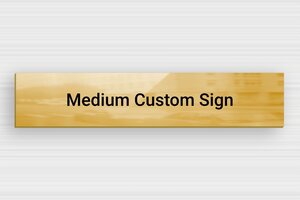
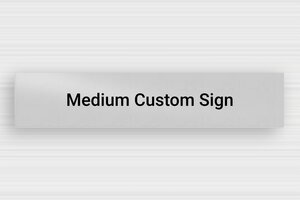
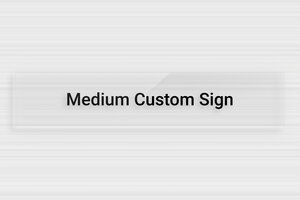
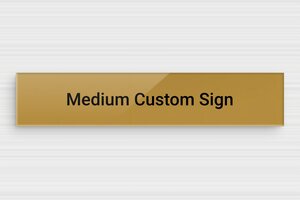
The versatility of medium format signage allows creative exploration of materials and finishes. Brushed aluminium provides contemporary sophistication, whilst traditional engraved wood offers timeless elegance. Acrylic options include clear, frosted, or coloured variants, each contributing different aesthetic qualities to your overall design scheme.
Design flexibility increases significantly within this size range. Multi-line text layouts become practical, allowing comprehensive information display without cramming. Logo integration works beautifully, providing brand reinforcement alongside functional messaging. Colour combinations expand possibilities—contrasting backgrounds and text colours create striking visual impact whilst maintaining professional credibility.
Installation options multiply with medium-sized signage. Wall-mounted applications using standoff fixings create attractive floating effects, whilst flush-mounted alternatives provide seamless integration with architectural features. Consideration of viewing angles becomes important—signs positioned too high or low relative to typical eye level reduce effectiveness significantly.
When you need to make a statement, large format signage delivers uncompromising visibility and brand presence. Shopfront displays, building identification, promotional graphics, and directional totems typically require substantial dimensions to achieve their communication objectives effectively.
Structural considerations become paramount with large signage installations. Wind loading calculations ensure outdoor signs withstand British weather conditions safely, whilst weight distribution affects mounting requirements significantly. Professional installation often becomes necessary, both for safety reasons and to achieve the precise positioning that maximises visual impact.
Material choices for large format applications prioritise durability and weather resistance. Aluminium composite materials offer excellent strength-to-weight ratios, whilst dibond provides superior flatness for large panels. UV-resistant inks and protective laminates ensure colour stability over extended periods, protecting your investment against fading and degradation.
The design opportunities with large signage allow creative expression whilst maintaining functional effectiveness. Illumination options including LED backlighting or halo effects create stunning night-time visibility. Multiple mounting configurations—from building-mounted panels to freestanding totems—accommodate diverse architectural requirements and planning constraints.
Retail signage sizing requires careful balance between visibility and visual hierarchy. Primary identification signs—your business name and key messaging—deserve prominent dimensions that command attention from passing traffic. Secondary information like opening hours or contact details works effectively at smaller scales, creating layered communication that guides customer attention logically.
Shopfront visibility calculations must account for typical viewing distances and angles. Pedestrian traffic views signs from closer range than vehicular traffic, allowing smaller dimensions for foot-fall-dependent businesses. However, dual-purpose locations serving both markets require sizing strategies that work effectively for both audiences.
Internal retail signage follows different principles, focusing on wayfinding clarity and promotional effectiveness. Department identification, price displays, and promotional graphics each serve distinct functions requiring appropriate dimensional treatment. Consistency across your signage family creates cohesive brand experiences whilst functional differentiation ensures each sign serves its specific purpose effectively.
Home signage balances personal expression with neighbourhood integration, requiring sensitivity to architectural context and local character. House name plates and address markers must remain legible for postal delivery and emergency services whilst complementing your property's aesthetic qualities.
Garden signage and boundary markers offer creative opportunities for personal expression. Welcome signs, property identification, and decorative elements can embrace larger dimensions where space permits, creating distinctive character that reflects your personality whilst maintaining neighbourhood harmony.
Postbox and gate identification requires specific dimensional considerations for practical functionality. Royal Mail guidelines suggest minimum letter heights for address visibility, whilst gate signs must remain clearly readable from typical approach distances. Weather resistance becomes crucial for external residential applications, demanding materials and finishes that maintain appearance despite constant exposure.
Industrial environments demand signage that prioritises safety and compliance alongside identification functions. Health and safety regulations specify minimum dimensions for warning signs, emergency information, and hazard identification. These requirements often override aesthetic preferences, making regulatory compliance the primary sizing consideration.
Educational institutions require comprehensive wayfinding systems that serve diverse user groups from young children to adult visitors. Sizing strategies must accommodate varying eye levels and reading abilities whilst maintaining institutional dignity and professional appearance. Durability becomes particularly important in high-traffic educational environments where signs face constant use and occasional abuse.
Healthcare facilities present unique challenges combining wayfinding clarity with sensitive communication requirements. Directional signage must work effectively for stressed visitors and patients with potential visual impairments, often requiring larger dimensions than typical commercial applications. Privacy considerations also influence sizing decisions, balancing visibility with discretion for sensitive areas.
Different materials perform optimally within specific size ranges, making material selection crucial for achieving both aesthetic and functional objectives. Understanding these relationships ensures your custom-sized signs deliver maximum impact whilst maintaining structural integrity and visual appeal.
Acrylic excels across medium to large applications, offering excellent optical clarity and weather resistance. Smaller acrylic signs can appear fragile, whilst larger panels provide substantial presence without excessive weight. Thickness selection becomes important—3mm acrylic suits compact applications, whilst 10mm or greater provides impressive substance for large installations.
Aluminium materials scale beautifully from tiny identification plates to massive building signs. Brushed finishes hide minor scratches and fingerprints, making them ideal for high-traffic applications. Anodised treatments provide colour options whilst maintaining metallic character, offering design flexibility without compromising durability.
Composite materials like dibond combine aluminium faces with lightweight cores, creating large panels with minimal weight penalties. This makes them perfect for applications where structural loading limits traditional solid metal options. The flat, stable surface accepts various printing and engraving techniques, providing design versatility for complex graphics.
Font selection dramatically impacts readability across different sign sizes, making typography choices crucial for effective communication. Sans-serif typefaces generally perform better at smaller sizes, maintaining character definition when space constraints limit letter dimensions. Serif fonts can work beautifully for larger applications where decorative details enhance rather than compromise legibility.
Letter spacing requires careful adjustment based on sign dimensions and viewing distances. Compact signs benefit from slightly increased spacing to prevent character crowding, whilst large displays may require tighter spacing to maintain word cohesion. The relationship between letter height, spacing, and overall sign proportions determines ultimate readability success.
Contrast ratios become increasingly important as sign sizes decrease. High contrast combinations—dark text on light backgrounds or vice versa—ensure maximum legibility across varying lighting conditions. Subtle colour combinations that work beautifully on large displays often fail completely when reduced to compact dimensions.
Colour psychology influences perception regardless of sign size, but dimensional constraints affect colour choice effectiveness. Bright, attention-grabbing colours work excellently for large promotional displays but can appear garish on small identification signs. Conversely, subtle, sophisticated colour schemes that enhance compact signage may lack impact when applied to large format applications.
Finish durability varies significantly with size and exposure conditions. Large outdoor signs require UV-resistant treatments and protective coatings to maintain appearance over extended periods. Smaller indoor applications can utilise decorative finishes that prioritise aesthetics over extreme durability, offering broader creative possibilities.
Maintenance considerations scale with sign dimensions—large installations require professional cleaning and maintenance, making finish selection crucial for long-term appearance retention. Smaller signs often allow easier replacement when appearance deteriorates, permitting more experimental finish choices.
Accurate measurement forms the foundation of successful custom signage projects, requiring systematic approaches that account for installation requirements, viewing conditions, and regulatory constraints. Professional measurement services eliminate costly errors whilst ensuring optimal dimensional specifications for your specific application.
Site surveys for large installations must consider structural loading, wind exposure, access requirements, and potential planning restrictions. These factors often influence final dimensions significantly, making early professional assessment crucial for project success. Digital measurement tools and 3D modelling help visualise proposed signage within existing environments before commitment to final specifications.
Design consultation services bridge the gap between functional requirements and aesthetic aspirations, helping optimise sign dimensions for maximum effectiveness. Experienced designers understand the relationships between size, materials, typography, and viewing conditions, providing guidance that ensures your investment delivers intended results.
Technical drawing and approval processes formalise dimensional specifications whilst providing clear communication between all project stakeholders. Detailed drawings prevent misunderstandings and ensure manufacturing accuracy, whilst approval procedures confirm satisfaction before production begins.
European manufacturing standards ensure consistent quality across all sign dimensions, from compact identification plates to substantial architectural installations. Rigorous quality control processes monitor dimensional accuracy, material specifications, and finish quality throughout production, guaranteeing results that meet exacting professional standards.
Testing procedures vary according to sign size and intended application, with large outdoor installations requiring structural analysis and weather resistance verification. Smaller signs undergo precision measurement and finish quality assessment, ensuring every product meets specification regardless of scale.
Manufacturing capabilities encompass the complete size spectrum, from precision-cut small components to large-format panels requiring specialised handling and transportation. Advanced production equipment ensures consistent results across all dimensional ranges whilst maintaining competitive delivery schedules.
Environmental considerations influence manufacturing processes and material selection, with sustainable options available across all size categories. Recyclable materials and energy-efficient production methods demonstrate commitment to environmental responsibility without compromising quality or performance.
Selecting the perfect sign size requires balancing multiple factors including visibility requirements, space constraints, regulatory compliance, and budget considerations. Our comprehensive range of bespoke sign sizes ensures optimal solutions for every application, backed by decades of European manufacturing expertise and unwavering commitment to customer satisfaction. Whether you need discrete identification or commanding presence, professional consultation ensures your signage investment delivers maximum impact and lasting value for your specific requirements.
 Custom quotes available for bulk or special requests
'%3e%3cpath%20d='M20.5563%202.67834H1.42533C0.639422%202.67834%200%203.31772%200%204.10363V15.5822C0%2016.3682%200.639422%2017.0076%201.42533%2017.0076H15.3578C15.6167%2017.0076%2015.8265%2016.7977%2015.8265%2016.5388C15.8265%2016.2799%2015.6167%2016.0701%2015.3578%2016.0701H1.42533C1.15636%2016.0701%200.9375%2015.8512%200.9375%2015.5822V8.87691H21.0442V11.2778C21.0442%2011.5367%2021.254%2011.7465%2021.5129%2011.7465C21.7718%2011.7465%2021.9817%2011.5367%2021.9817%2011.2778V4.10363C21.9817%203.31772%2021.3423%202.67834%2020.5563%202.67834ZM1.42533%203.61584H20.5563C20.8253%203.61584%2021.0442%203.83466%2021.0442%204.10363V5.54799H0.9375V4.10363C0.9375%203.83466%201.15631%203.61584%201.42533%203.61584ZM0.9375%207.93941V6.48549H21.0442V7.93941H0.9375Z'%20fill='%230C4D5A'/%3e%3cpath%20d='M20.5563%202.67834H1.42533C0.639422%202.67834%200%203.31772%200%204.10363V15.5822C0%2016.3682%200.639422%2017.0076%201.42533%2017.0076H15.3578C15.6167%2017.0076%2015.8265%2016.7977%2015.8265%2016.5388C15.8265%2016.2799%2015.6167%2016.0701%2015.3578%2016.0701H1.42533C1.15636%2016.0701%200.9375%2015.8512%200.9375%2015.5822V8.87691H21.0442V11.2778C21.0442%2011.5367%2021.254%2011.7465%2021.5129%2011.7465C21.7718%2011.7465%2021.9817%2011.5367%2021.9817%2011.2778V4.10363C21.9817%203.31772%2021.3423%202.67834%2020.5563%202.67834ZM1.42533%203.61584H20.5563C20.8253%203.61584%2021.0442%203.83466%2021.0442%204.10363V5.54799H0.9375V4.10363C0.9375%203.83466%201.15631%203.61584%201.42533%203.61584ZM0.9375%207.93941V6.48549H21.0442V7.93941H0.9375Z'%20fill='black'%20fill-opacity='0.5'/%3e%3cpath%20d='M6.92061%2013.6835H2.61612C1.9962%2013.7059%201.99409%2014.5977%202.61612%2014.621H6.92061C7.54054%2014.5986%207.54265%2013.7067%206.92061%2013.6835Z'%20fill='%230C4D5A'/%3e%3cpath%20d='M6.92061%2013.6835H2.61612C1.9962%2013.7059%201.99409%2014.5977%202.61612%2014.621H6.92061C7.54054%2014.5986%207.54265%2013.7067%206.92061%2013.6835Z'%20fill='black'%20fill-opacity='0.5'/%3e%3cpath%20d='M6.92061%2011.7704H2.61612C1.9962%2011.7928%201.99409%2012.6846%202.61612%2012.7079H6.92061C7.54054%2012.6855%207.54265%2011.7936%206.92061%2011.7704Z'%20fill='%230C4D5A'/%3e%3cpath%20d='M6.92061%2011.7704H2.61612C1.9962%2011.7928%201.99409%2012.6846%202.61612%2012.7079H6.92061C7.54054%2012.6855%207.54265%2011.7936%206.92061%2011.7704Z'%20fill='black'%20fill-opacity='0.5'/%3e%3cpath%20fill-rule='evenodd'%20clip-rule='evenodd'%20d='M16.9424%2010.7995L14.5898%2013.152C14.5898%2016.752%2015.1919%2020.2222%2019.2948%2021.3216C23.3978%2020.2222%2023.9998%2016.752%2023.9998%2013.152L21.6473%2010.7995H16.9424Z'%20fill='%23FDF300'/%3e%3cpath%20d='M19.2949%2019.7875C16.7214%2019.0081%2016.1647%2016.8451%2016.0451%2013.9479C16.0413%2013.8187%2016.0909%2013.6937%2016.1822%2013.6023L17.4034%2012.3812C17.4913%2012.2933%2017.6105%2012.2439%2017.7348%2012.2439H20.8549C20.9792%2012.2439%2021.0985%2012.2933%2021.1864%2012.3812L22.4075%2013.6023C22.4989%2013.6937%2022.5485%2013.8187%2022.5446%2013.9478C22.4255%2016.8443%2021.8681%2019.0084%2019.2949%2019.7875ZM16.9894%2014.121C17.1385%2016.4295%2017.4228%2018.0275%2019.2949%2018.8167C21.1665%2018.0277%2021.4513%2016.4301%2021.6004%2014.121L20.6608%2013.1814H17.929L16.9894%2014.121Z'%20fill='%230C4D5A'/%3e%3cpath%20d='M19.2949%2019.7875C16.7214%2019.0081%2016.1647%2016.8451%2016.0451%2013.9479C16.0413%2013.8187%2016.0909%2013.6937%2016.1822%2013.6023L17.4034%2012.3812C17.4913%2012.2933%2017.6105%2012.2439%2017.7348%2012.2439H20.8549C20.9792%2012.2439%2021.0985%2012.2933%2021.1864%2012.3812L22.4075%2013.6023C22.4989%2013.6937%2022.5485%2013.8187%2022.5446%2013.9478C22.4255%2016.8443%2021.8681%2019.0084%2019.2949%2019.7875ZM16.9894%2014.121C17.1385%2016.4295%2017.4228%2018.0275%2019.2949%2018.8167C21.1665%2018.0277%2021.4513%2016.4301%2021.6004%2014.121L20.6608%2013.1814H17.929L16.9894%2014.121Z'%20fill='black'%20fill-opacity='0.5'/%3e%3c/g%3e%3cdefs%3e%3cclipPath%20id='clip0'%3e%3crect%20width='24'%20height='24'%20fill='white'/%3e%3c/clipPath%3e%3c/defs%3e%3c/svg%3e) Secure payment via card or PayPal
Secure payment via card or PayPal Free delivery from £60
 Up to 20% off with volume discounts!
 Create your own product easily with our online editorCustom quotes available for bulk or special requestsSecure payment via card or PayPalFree delivery from £60Up to 20% off with volume discounts!Create your own product easily with our online editor