Private Parking Signs
Your sign in just 2 minutes.
Full editor: 27 materials, 219 colors, 12 mounting options
Marking: laser engraving, mechanical or printed
starting at £5.50

Your sign in just 2 minutes.
Full editor: 27 materials, 219 colors, 12 mounting options
Marking: laser engraving, mechanical or printed
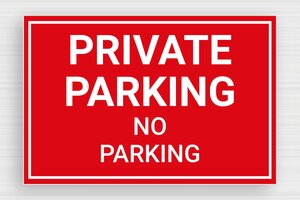
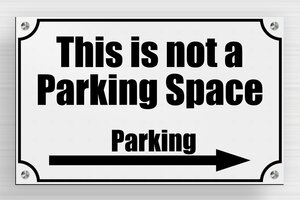
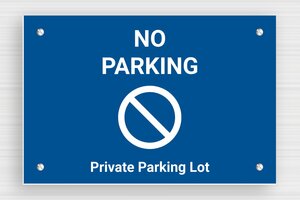
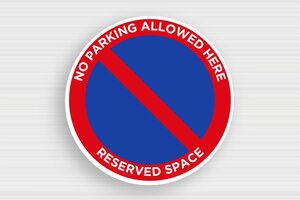

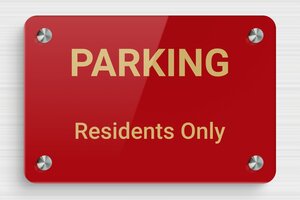
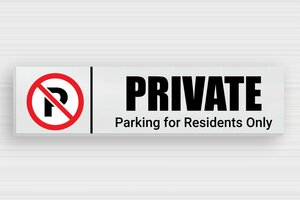
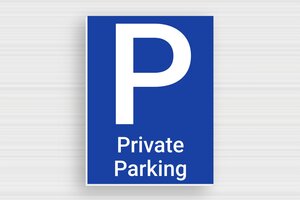
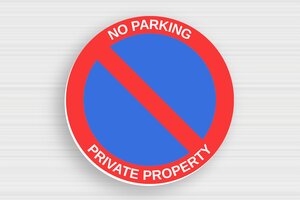
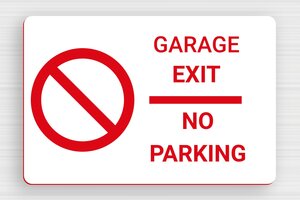
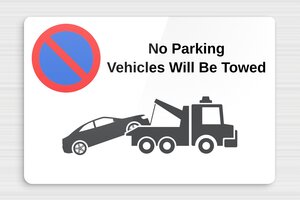

In the UK, private parking signs must comply with specific legal frameworks to be effective. Under UK law, landowners have the right to exclude others from their property, but this right must be exercised reasonably and clearly communicated.
Key legal requirements include:
The Protection of Freedoms Act 2012 established frameworks for private parking enforcement, requiring clear signage, reasonable charges, and proper appeals processes. Professional signage helps ensure compliance whilst maximising deterrent effect.
The British climate presents unique challenges for outdoor signage, requiring materials that can withstand persistent rain, UV exposure, snow, ice, and strong winds.
Recommended materials include:
For high-risk locations, consider anti-graffiti laminates and security fixings to prevent vandalism and casual removal whilst maintaining professional appearance.
Strategic positioning ensures maximum visibility whilst complying with regulations and maintaining good relationships with neighbours and legitimate users.
Best practices for sign placement include:
Consider seasonal factors such as vegetation growth, snow accumulation, or changing sun angles that might affect visibility. Signs near deciduous trees may require periodic trimming to maintain clear sight lines.
Yes, customisation allows property owners to create bespoke signage that addresses specific needs whilst maintaining professional quality and legal compliance.
Customisation options include:
Professional online customisation tools enable creation of signs that communicate exactly the right message for your situation whilst ensuring appropriate materials and manufacturing quality. However, avoid excessive text that reduces readability or creates confusion about primary restrictions.
Proper maintenance extends sign life whilst ensuring continued effectiveness of your parking control measures and legal compliance.
Essential maintenance practices include:
For persistent stains or graffiti, consult manufacturer guidelines or professional cleaning services. Plan replacement schedules for signs showing significant wear, as faded or damaged signage may undermine legal effectiveness and professional appearance. Quality materials and proper installation significantly extend service life and maintain compliance.
Protecting your private property from unauthorised parking has become increasingly important for UK homeowners and businesses alike. Private parking signs serve as the first line of defence against inconsiderate drivers who might otherwise treat your driveway, car park, or access route as their personal parking space. Whether you're dealing with commuters using your residential driveway as free parking near a train station, or customers overstaying in your business premises, clear and professional signage can make all the difference in maintaining control over your property.
The challenge many property owners face isn't just about deterring unwanted vehicles – it's about finding signage that combines legal compliance, visual impact, and long-lasting durability. Otypo understands these concerns and offers comprehensive solutions that address the unique requirements of the UK market, from weather-resistant materials to customisable messaging that speaks directly to your specific situation.
This guide explores everything you need to know about selecting, installing, and maximising the effectiveness of private parking signs, ensuring you make informed decisions that protect your property whilst maintaining good relationships with legitimate users and neighbours.
Private parking signs represent more than simple notices – they're formal declarations of property boundaries and usage expectations. In the UK legal framework, property owners possess inherent rights to control access to their land, and appropriate signage helps communicate these boundaries clearly to the public. Unlike public parking restrictions enforced by local councils, private parking signs operate within civil law, making their design and placement crucial for effectiveness.
The distinction between public and private parking enforcement is fundamental. Whilst local authorities can issue penalty charge notices with statutory backing, private landowners rely on contract law and trespass principles. This means your signage must clearly establish the terms under which vehicles may use your property, creating what lawyers term an "implied contract" between the landowner and anyone choosing to park.
Under UK law, landowners have the right to exclude others from their property, but this right must be exercised reasonably and clearly communicated. The Torts (Interference with Goods) Act 1977 and various trespass laws provide the legal foundation, but practical enforcement depends heavily on proper signage that meets specific criteria for visibility, clarity, and fairness.
Planning regulations also play a role, particularly for larger signs. The Town and Country Planning (Control of Advertisements) Regulations 2007 generally permit signs up to 0.3 square metres without advertisement consent, provided they relate to the property's use. Larger signs may require planning permission, especially in conservation areas or listed building settings.
Residential properties often face parking challenges from commuters seeking free alternatives to station car parks, shoppers avoiding paid parking, or visitors to nearby businesses. Rural properties might deal with ramblers, fly-tippers, or unauthorised camping, whilst urban businesses frequently encounter customers who overstay, staff from neighbouring premises, or general public treating private spaces as convenient parking.
Each scenario requires tailored messaging and strategic placement. A residential driveway might benefit from a polite but firm "Private Driveway – No Parking" sign, whilst a business car park might need more detailed information about time limits, permit requirements, or consequences for unauthorised use.
The British climate presents unique challenges for outdoor signage, from persistent rain and UV exposure to occasional snow, ice, and strong winds. Material selection directly impacts both the longevity of your investment and the ongoing effectiveness of your parking control measures. Understanding the properties of different materials helps ensure your signs maintain their professional appearance and clear messaging throughout their service life.
Aluminium composite panels represent the gold standard for outdoor parking signs, offering exceptional durability whilst remaining lightweight and easy to install. These panels consist of two aluminium sheets bonded to a polyethylene core, creating a rigid structure that resists warping, corrosion, and impact damage. The smooth surface accepts high-quality vinyl graphics or direct printing, ensuring sharp text and symbols that remain legible for years.
Coastal properties face additional challenges from salt air, which can accelerate corrosion of metal components. Marine-grade aluminium with protective coatings provides enhanced resistance, whilst stainless steel fixings prevent rust staining that can detract from your sign's professional appearance. UV-stabilised inks and laminates protect against the gradual fading that affects many outdoor signs, ensuring your message remains clearly visible.
For budget-conscious applications, high-grade PVC offers reasonable durability at lower cost. Modern PVC formulations include UV inhibitors and impact modifiers that significantly extend service life compared to basic plastic signs. However, PVC may become brittle in extreme cold and can warp under intense heat, making it less suitable for exposed locations.
Urban locations often require additional protection against vandalism, graffiti, and deliberate damage. Anti-graffiti laminates allow easy removal of marker pen, spray paint, and stickers without damaging the underlying graphics. Some property owners opt for textured surfaces that make graffiti application more difficult, whilst others choose darker colour schemes that better hide minor damage.
Security fixings prevent casual removal whilst maintaining professional appearance. Tamper-proof screws, concealed mounting systems, and reinforced edges all contribute to sign longevity. For high-risk locations, consider signs mounted behind protective glazing or recessed into purpose-built frames.
Effective private parking sign design balances legal requirements, visual impact, and practical considerations specific to your property and local context. The most expensive materials and professional installation cannot compensate for poor design choices that fail to communicate clearly or create confusion about parking restrictions. Understanding design principles helps ensure your investment delivers the intended results.
Colour psychology plays a significant role in sign effectiveness. Red commands immediate attention and conveys prohibition, making it ideal for "No Parking" messages. Blue suggests information and guidance, suitable for permit holder areas or visitor instructions. Yellow/amber indicates caution and is often used for time-limited parking or conditional restrictions. Maintaining consistency with established colour conventions helps drivers understand your message quickly.
Text size and font selection directly impact readability from typical viewing distances. For parking signs viewed from vehicles, minimum text heights of 25mm for primary messages and 15mm for supplementary information ensure legibility. Sans-serif fonts like Arial or Helvetica provide better readability than decorative typefaces, particularly in challenging lighting conditions.
Contrast ratios between text and background colours affect visibility across different lighting conditions and weather. Dark text on light backgrounds generally provides superior legibility, though white text on dark backgrounds can be effective for night-time visibility when combined with reflective materials. Avoid colour combinations that may be difficult for colour-blind individuals to distinguish.
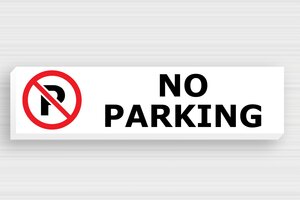
International symbols transcend language barriers and provide instant recognition, particularly valuable in diverse urban areas. The crossed-out "P" symbol universally indicates no parking, whilst clock symbols effectively communicate time restrictions. Disability symbols, electric vehicle charging indicators, and directional arrows all contribute to clear communication without requiring extensive text.
Combining pictograms with text reinforces your message whilst accommodating different learning styles and cultural backgrounds. However, avoid cluttering signs with excessive symbols that might confuse rather than clarify your parking restrictions.
Even the most professionally designed and manufactured signs fail to achieve their purpose without proper placement and installation. Strategic positioning ensures maximum visibility whilst complying with relevant regulations and maintaining good relationships with neighbours and legitimate users. Understanding sight lines, traffic patterns, and human behaviour helps optimise sign effectiveness.
Primary signs should be positioned at all vehicle entrances to your property, ensuring every driver encounters clear information before parking. For larger properties with multiple access points, consistency in messaging and positioning reinforces your parking policy. Secondary signs within the parking area serve as reminders and help visitors locate appropriate spaces.
Mounting height affects visibility from different vehicle types, from small cars to large vans and lorries. Generally, positioning sign centres between 1.5 and 2.5 metres above ground level provides good visibility whilst preventing obstruction by parked vehicles. Slight forward tilting (5-10 degrees) can improve readability for drivers in tall vehicles, but excessive angles may create reflection problems.
Consider seasonal factors that might affect visibility, such as vegetation growth, snow accumulation, or changing sun angles. Signs positioned near deciduous trees may require periodic trimming to maintain clear sight lines, whilst those in exposed locations might need additional securing against strong winds.
Extensive car parks or properties with complex layouts benefit from hierarchical signage systems. Primary signs at entrances establish overall parking policy, whilst secondary signs provide specific guidance for different areas. Directional signs help visitors locate appropriate parking whilst avoiding restricted zones.
Repetition reinforces your message without appearing excessive when signs serve different functions. An entrance sign might state "Private Car Park – Permit Holders Only", whilst internal signs specify "Visitor Parking – 2 Hour Maximum" or "Reserved for Flat 3B". This approach provides clear guidance whilst demonstrating reasonable accommodation for legitimate users.
Understanding the practical limitations and legal framework surrounding private parking enforcement helps set realistic expectations whilst maximising the deterrent value of your signage. Whilst private parking signs cannot carry the same enforcement powers as council-issued restrictions, they serve important legal and practical functions when properly implemented.
The Protection of Freedoms Act 2012 and subsequent regulations established frameworks for private parking enforcement, including requirements for clear signage, reasonable charges, and proper appeals processes. These regulations primarily affect commercial parking operators rather than individual property owners, but understanding the principles helps ensure your signage supports rather than undermines any potential enforcement action.
Legally effective parking signs create implied contracts between landowners and vehicle users. For this contract to be valid, signs must be clearly visible before parking occurs, contain unambiguous terms, and specify reasonable consequences for non-compliance. Vague threats or unreasonable penalties may render the entire contract unenforceable.
Professional legal advice becomes valuable for complex situations or high-value properties where enforcement might be necessary. However, many property owners find that clear, professional signage provides sufficient deterrent effect without requiring formal legal action.
When signage alone proves insufficient, understanding available options helps maintain control over your property. Initial approaches might include polite notices placed on vehicles, direct conversation with offenders, or requests for assistance from local authorities where appropriate. More serious situations might require formal trespass warnings or civil legal action.
Documentation becomes crucial if situations escalate. Photographs showing clear signage, vehicle registration details, and evidence of unauthorised parking help support any formal action. However, most parking disputes resolve through communication and reasonable accommodation rather than legal proceedings.
Every property presents unique challenges requiring tailored solutions that standard off-the-shelf signs cannot address. Customisation allows property owners to communicate specific requirements, incorporate branding elements, and adapt messaging to local circumstances whilst maintaining professional appearance and legal compliance.
Otypo's online customisation tools enable property owners to create bespoke signage that addresses their specific needs whilst ensuring professional quality and appropriate materials. From simple text modifications to complete design overhauls, customisation ensures your signs communicate exactly the right message for your situation.
Standard "No Parking" messages may require modification to address specific situations. Residential properties might benefit from "Private Driveway – Residents Only" or "No Parking – Access Required 24/7". Business premises might specify "Customer Parking Only – 2 Hour Maximum" or "Staff Parking – Permit Required". Rural properties could use "Private Land – No Unauthorised Vehicles" or "Agricultural Access – Keep Clear".
Including contact information, permit details, or specific time restrictions helps legitimate users whilst deterring unauthorised parking. However, avoid excessive text that reduces readability or creates confusion about primary restrictions.
Business premises often benefit from incorporating company colours, logos, or design elements that complement existing signage and architecture. This integration reinforces brand identity whilst maintaining professional parking control. Residential properties might prefer discrete designs that complement rather than dominate their visual environment.
Colour coordination with existing signage, building materials, or landscape features helps signs appear purposeful rather than afterthoughts. Professional design advice can help balance visibility requirements with aesthetic considerations, ensuring effective communication without visual pollution.
Proper maintenance extends sign life whilst ensuring continued effectiveness of your parking control measures. Regular inspection and cleaning maintain professional appearance, whilst prompt attention to damage prevents minor issues becoming major problems. Understanding maintenance requirements helps budget for long-term costs and plan replacement schedules.
Weather exposure gradually affects all outdoor signage, but quality materials and proper installation significantly extend service life. UV exposure fades colours and degrades plastics, whilst moisture penetration can cause delamination or corrosion. Wind loading stresses mounting systems, particularly for larger signs in exposed locations.
Monthly visual inspections identify developing problems before they compromise sign effectiveness. Check for loose fixings, damaged edges, fading colours, or accumulating dirt that reduces visibility. Simple cleaning with mild detergent and soft brushes removes most environmental contamination without damaging graphics or protective coatings.
Avoid high-pressure washing or abrasive cleaners that might damage vinyl graphics or protective laminates. For persistent stains or graffiti, consult manufacturer guidelines or professional cleaning services that understand specific material requirements.
Even high-quality signs eventually require replacement due to weather exposure, changing requirements, or updated regulations. Planning replacement schedules helps budget for ongoing costs whilst ensuring continuous parking control. Consider upgrading to improved materials or designs when replacement becomes necessary.
Technology advances continually improve available options, from better UV-resistant inks to more durable substrate materials. Staying informed about developments helps ensure future investments provide improved performance and value.
Effective parking control doesn't require enormous investment, but understanding the relationship between cost, quality, and performance helps optimise spending for long-term value. Budget considerations must balance initial costs against replacement frequency, maintenance requirements, and effectiveness in achieving parking control objectives.
Entry-level solutions using quality PVC materials and standard designs provide reasonable performance for many applications, particularly temporary installations or low-risk environments. Mid-range options incorporating aluminium substrates and custom graphics offer enhanced durability and professional appearance suitable for most permanent installations. Premium solutions with marine-grade materials and advanced protective coatings justify their cost in challenging environments or high-visibility locations.
Property management companies, landlords with multiple properties, or community groups often benefit from bulk ordering that reduces per-unit costs whilst ensuring consistency across different locations. Standardised designs with variable text elements allow customisation whilst maintaining economies of scale.
Coordinated ordering also enables better quality control and delivery scheduling, reducing overall project management time and costs. Consider future requirements when planning bulk orders, as additional signs matching existing designs often cost less than separate orders.
Large or complex properties might benefit from phased sign installation that spreads costs whilst allowing evaluation of effectiveness before completing the project. Priority areas receiving immediate attention might include main entrances and problem parking locations, with secondary areas addressed as budget permits.
This approach also allows refinement of messaging and design based on initial results, ensuring later phases benefit from lessons learned during early implementation.
Investing in quality private parking signs represents a practical and cost-effective approach to maintaining control over your property whilst deterring unauthorised parking. The combination of clear messaging, appropriate materials, and strategic placement creates powerful deterrent effects that protect your interests without requiring constant supervision or confrontation. Whether you're addressing residential driveway abuse, business car park management, or rural property protection, professional signage provides the foundation for effective parking control.
Otypo's expertise in customised signage ensures your investment delivers lasting value through superior materials, professional design, and manufacturing quality that withstands UK weather conditions. Our online customisation tools make it simple to create signs that address your specific requirements whilst maintaining the professional appearance that reinforces your message. With rapid delivery and comprehensive support, protecting your property has never been more straightforward or effective.
 Custom quotes available for bulk or special requests
'%3e%3cpath%20d='M20.5563%202.67834H1.42533C0.639422%202.67834%200%203.31772%200%204.10363V15.5822C0%2016.3682%200.639422%2017.0076%201.42533%2017.0076H15.3578C15.6167%2017.0076%2015.8265%2016.7977%2015.8265%2016.5388C15.8265%2016.2799%2015.6167%2016.0701%2015.3578%2016.0701H1.42533C1.15636%2016.0701%200.9375%2015.8512%200.9375%2015.5822V8.87691H21.0442V11.2778C21.0442%2011.5367%2021.254%2011.7465%2021.5129%2011.7465C21.7718%2011.7465%2021.9817%2011.5367%2021.9817%2011.2778V4.10363C21.9817%203.31772%2021.3423%202.67834%2020.5563%202.67834ZM1.42533%203.61584H20.5563C20.8253%203.61584%2021.0442%203.83466%2021.0442%204.10363V5.54799H0.9375V4.10363C0.9375%203.83466%201.15631%203.61584%201.42533%203.61584ZM0.9375%207.93941V6.48549H21.0442V7.93941H0.9375Z'%20fill='%230C4D5A'/%3e%3cpath%20d='M20.5563%202.67834H1.42533C0.639422%202.67834%200%203.31772%200%204.10363V15.5822C0%2016.3682%200.639422%2017.0076%201.42533%2017.0076H15.3578C15.6167%2017.0076%2015.8265%2016.7977%2015.8265%2016.5388C15.8265%2016.2799%2015.6167%2016.0701%2015.3578%2016.0701H1.42533C1.15636%2016.0701%200.9375%2015.8512%200.9375%2015.5822V8.87691H21.0442V11.2778C21.0442%2011.5367%2021.254%2011.7465%2021.5129%2011.7465C21.7718%2011.7465%2021.9817%2011.5367%2021.9817%2011.2778V4.10363C21.9817%203.31772%2021.3423%202.67834%2020.5563%202.67834ZM1.42533%203.61584H20.5563C20.8253%203.61584%2021.0442%203.83466%2021.0442%204.10363V5.54799H0.9375V4.10363C0.9375%203.83466%201.15631%203.61584%201.42533%203.61584ZM0.9375%207.93941V6.48549H21.0442V7.93941H0.9375Z'%20fill='black'%20fill-opacity='0.5'/%3e%3cpath%20d='M6.92061%2013.6835H2.61612C1.9962%2013.7059%201.99409%2014.5977%202.61612%2014.621H6.92061C7.54054%2014.5986%207.54265%2013.7067%206.92061%2013.6835Z'%20fill='%230C4D5A'/%3e%3cpath%20d='M6.92061%2013.6835H2.61612C1.9962%2013.7059%201.99409%2014.5977%202.61612%2014.621H6.92061C7.54054%2014.5986%207.54265%2013.7067%206.92061%2013.6835Z'%20fill='black'%20fill-opacity='0.5'/%3e%3cpath%20d='M6.92061%2011.7704H2.61612C1.9962%2011.7928%201.99409%2012.6846%202.61612%2012.7079H6.92061C7.54054%2012.6855%207.54265%2011.7936%206.92061%2011.7704Z'%20fill='%230C4D5A'/%3e%3cpath%20d='M6.92061%2011.7704H2.61612C1.9962%2011.7928%201.99409%2012.6846%202.61612%2012.7079H6.92061C7.54054%2012.6855%207.54265%2011.7936%206.92061%2011.7704Z'%20fill='black'%20fill-opacity='0.5'/%3e%3cpath%20fill-rule='evenodd'%20clip-rule='evenodd'%20d='M16.9424%2010.7995L14.5898%2013.152C14.5898%2016.752%2015.1919%2020.2222%2019.2948%2021.3216C23.3978%2020.2222%2023.9998%2016.752%2023.9998%2013.152L21.6473%2010.7995H16.9424Z'%20fill='%23FDF300'/%3e%3cpath%20d='M19.2949%2019.7875C16.7214%2019.0081%2016.1647%2016.8451%2016.0451%2013.9479C16.0413%2013.8187%2016.0909%2013.6937%2016.1822%2013.6023L17.4034%2012.3812C17.4913%2012.2933%2017.6105%2012.2439%2017.7348%2012.2439H20.8549C20.9792%2012.2439%2021.0985%2012.2933%2021.1864%2012.3812L22.4075%2013.6023C22.4989%2013.6937%2022.5485%2013.8187%2022.5446%2013.9478C22.4255%2016.8443%2021.8681%2019.0084%2019.2949%2019.7875ZM16.9894%2014.121C17.1385%2016.4295%2017.4228%2018.0275%2019.2949%2018.8167C21.1665%2018.0277%2021.4513%2016.4301%2021.6004%2014.121L20.6608%2013.1814H17.929L16.9894%2014.121Z'%20fill='%230C4D5A'/%3e%3cpath%20d='M19.2949%2019.7875C16.7214%2019.0081%2016.1647%2016.8451%2016.0451%2013.9479C16.0413%2013.8187%2016.0909%2013.6937%2016.1822%2013.6023L17.4034%2012.3812C17.4913%2012.2933%2017.6105%2012.2439%2017.7348%2012.2439H20.8549C20.9792%2012.2439%2021.0985%2012.2933%2021.1864%2012.3812L22.4075%2013.6023C22.4989%2013.6937%2022.5485%2013.8187%2022.5446%2013.9478C22.4255%2016.8443%2021.8681%2019.0084%2019.2949%2019.7875ZM16.9894%2014.121C17.1385%2016.4295%2017.4228%2018.0275%2019.2949%2018.8167C21.1665%2018.0277%2021.4513%2016.4301%2021.6004%2014.121L20.6608%2013.1814H17.929L16.9894%2014.121Z'%20fill='black'%20fill-opacity='0.5'/%3e%3c/g%3e%3cdefs%3e%3cclipPath%20id='clip0'%3e%3crect%20width='24'%20height='24'%20fill='white'/%3e%3c/clipPath%3e%3c/defs%3e%3c/svg%3e) Secure payment via card or PayPal
Secure payment via card or PayPal Free delivery from £60
 Up to 20% off with volume discounts!
 Create your own product easily with our online editorCustom quotes available for bulk or special requestsSecure payment via card or PayPalFree delivery from £60Up to 20% off with volume discounts!Create your own product easily with our online editor