Get a quote
express 4h


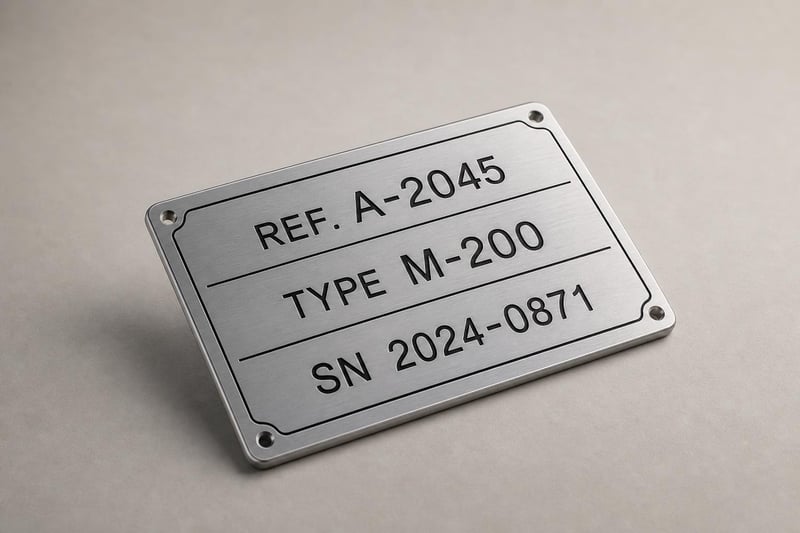
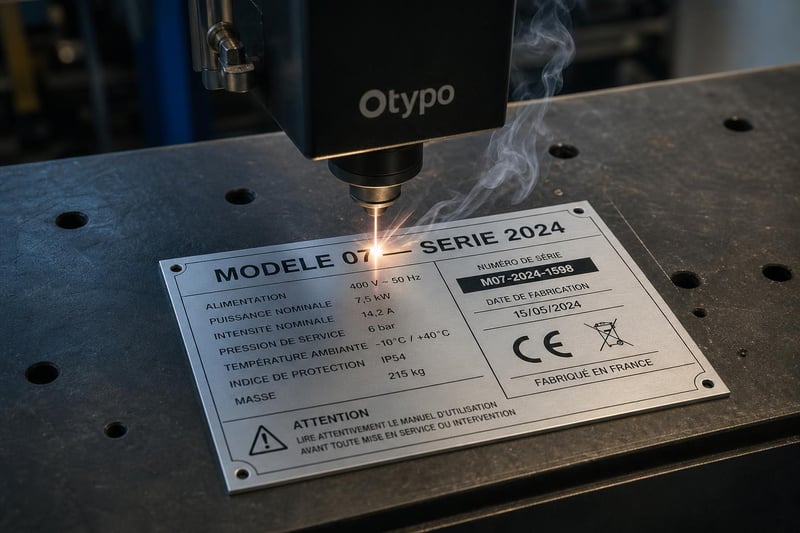
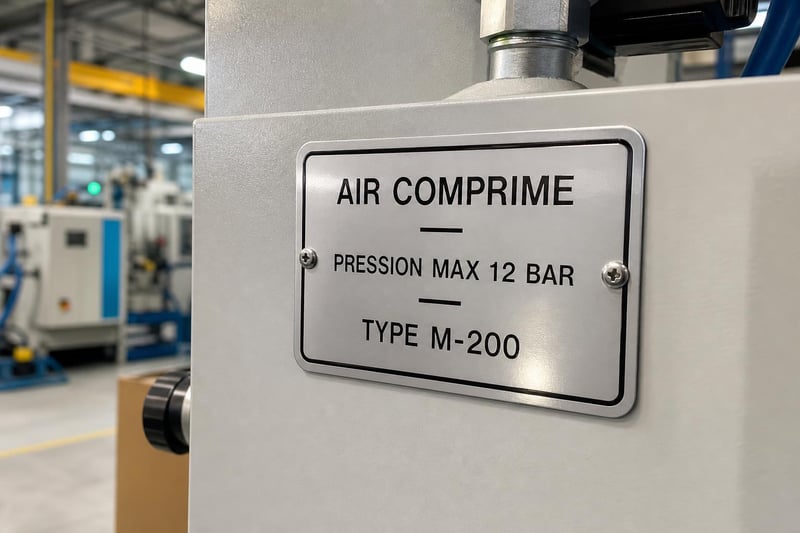
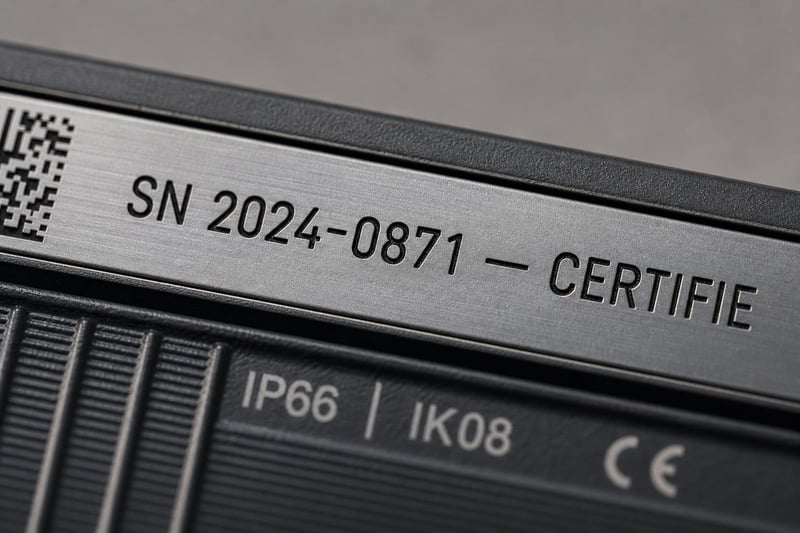
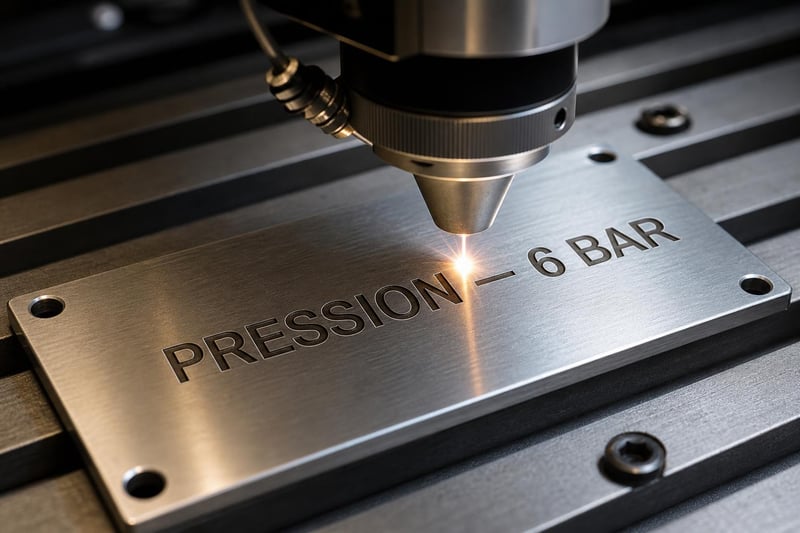
Text and graphics cut directly into the substrate (precision to 0.08 mm), producing a permanent, tamper-proof mark.
Surface withstands harsh industrial contact including solvents, mild acids, oils, greases, and heavy-duty cleaning agents.
Suitable for prolonged outdoor exposure. Material and colours resist fading and degradation under direct sunlight.
Premium industrial aesthetic. Anodised surface treatment ensures lasting corrosion resistance in demanding conditions.
Full-colour CMYK printing with UV-cured inks, delivering photographic-quality output and vibrant, long-lasting colours.
Matt or textured finish providing robust protection against impact, abrasion, and everyday wear in industrial settings.
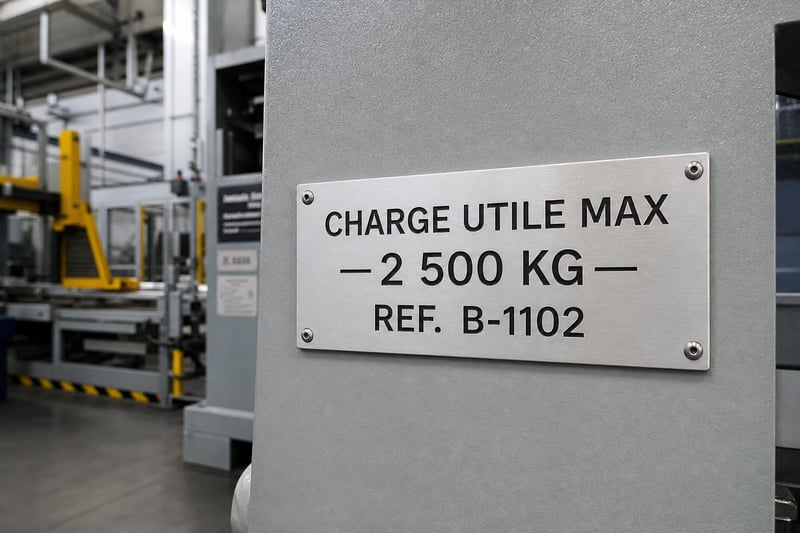
From machine identification in manufacturing to cable and pipework labelling in energy and petrochemicals, industrial data plates cover a wide range of applications. They also support batch traceability in food production and asset management in logistics, often with integrated QR codes or barcodes.
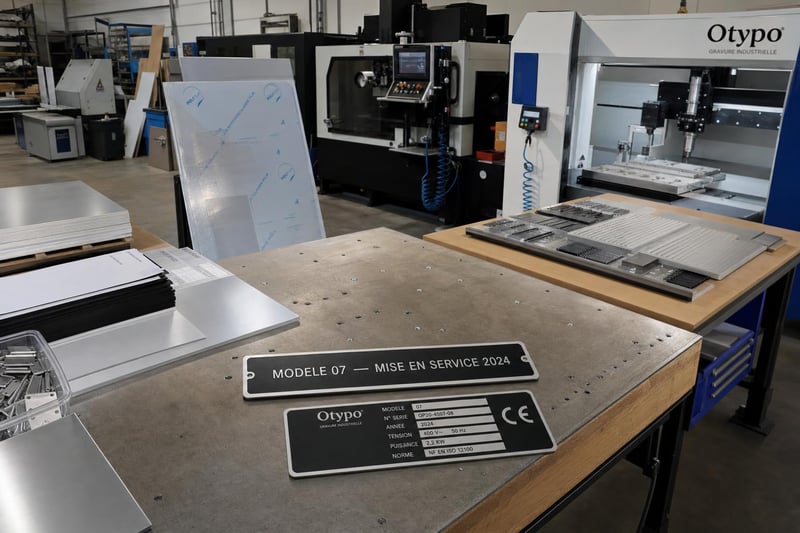
The durability of an industrial self-adhesive data plate depends on the combined selection of faceplate, adhesive and marking process. Each parameter is chosen according to the actual constraints of the operating environment.
Send us your plans or your specifications. Our design office analyses your requirements and sends you a bespoke commercial proposal within 4 to 8 working hours.
An industrial data plate is an identification, traceability or warning substrate designed to withstand the real operating conditions of an industrial site. Unlike a logistics or commercial label, it is selected primarily for its durability in the environment rather than its appearance. Its typical construction combines a faceplate (the visible face), a printing or marking layer, an adhesive suited to the substrate and, where required, a surface protection layer. Each layer serves a specific function and contributes to long-term performance.
In an industrial environment, a single equipment identification plate may simultaneously carry a serial number, a safety instruction and a maintenance reference. This density of information demands a clear visual hierarchy and a marking process that guarantees the legibility of every element throughout the entire service life of the equipment.
Polyester is the most versatile faceplate material for indoor industrial environments: it resists common solvents, oils, greases and industrial cleaning agents. Its surface can be lacquered or laminated to enhance scratch and UV resistance. Anodised aluminium is the preferred choice when equipment is used outdoors, exposed to corrosion or subject to more aggressive chemical agents — it is the standard reference for machine nameplates and equipment in the energy and construction sectors. Stainless steel is reserved for the most demanding environments: marine, aggressive chemical processing and food-production facilities subject to high-pressure washdowns. Polycarbonate and polypropylene complete the range for specific applications where flexibility or substrate transparency is required.
Selecting the right faceplate is not sufficient: an adhesive that is unsuitable for the substrate will compromise the entire durability of the plate. Permanent acrylic adhesives are appropriate for painted metals and rigid plastics. High-bond formulations are required on rough surfaces, powder coatings and low-surface-energy materials. For thermally demanding environments, high-temperature adhesives maintain bond integrity without delamination or edge lifting.
Laser engraving cuts the mark into the material to a precision of a tenth of a millimetre. The result is indelible and unaffected by abrasion, chemical cleaning or weathering. It is the reference process for sectors subject to permanent marking obligations throughout the service life of the equipment, and is particularly suited to anodised aluminium, stainless steel and bi-layer composite faceplates.
UV-cured printing allows QR codes, barcodes, safety pictograms and variable data to be incorporated with high-definition output and inks resistant to UV exposure and chemical agents. Screen printing remains relevant for large runs with spot colours, offering precise chromatic reproducibility. Doming — the application of a transparent polyurethane resin over the plate — adds three-dimensional mechanical protection against impact and scratches, which is particularly valued in intensive handling environments.
In manufacturing, self-adhesive data plates provide identification for machinery, production equipment and tooling. They carry serial numbers, manufacturer references and planned maintenance information. In the energy and petrochemical sectors, they are used for the identification of cables, pipework, valves and electrical enclosures — applications where long-term legibility under conditions of heat, humidity and chemical exposure is a non-negotiable requirement.
In food production and pharmaceutical environments, data plates ensure industrial traceability of batches, bins and containers, with specific requirements for resistance to high-pressure washdowns and disinfectants. In logistics and facilities management, they take the form of barcodes or QR codes for asset management and stock control. On construction sites, they identify equipment, site distribution boards and temporary installations under conditions of prolonged outdoor exposure.
In environments subject to permanent equipment marking obligations, the data plate is not an aesthetic option: it is a compliance requirement in its own right. Regulatory requirements applicable to work equipment, technical installations and high-risk sectors stipulate that marking must remain legible throughout the entire service life of the equipment, regardless of operating conditions. An illegible or detached label identified during an audit can result in an immediate non-conformance finding.
Sectors exposed to potentially explosive atmospheres, pressure processes or food-production environments face enhanced requirements regarding process indelibility, substrate resistance and marking content. We regularly find that non-conformances identified during audits are attributable to plates whose material or adhesive was not suited to the actual operating environment — not to an error in the content itself. Selecting the correct material-process combination at the marking design stage prevents premature replacement, reduces corrective maintenance interventions and secures long-term site compliance.