Get a quote
express 4h


Suitable for prolonged outdoor exposure. Material and colours resist fading and degradation under direct sunlight.
Surface withstands harsh industrial contact including solvents, mild acids, oils, greases, and heavy-duty cleaning agents.
Designed for demanding environments. Thermal integrity guaranteed from -40°C to +80°C with no warping or distortion.
Text and graphics cut directly into the substrate (precision to 0.08 mm), producing a permanent, tamper-proof mark.
Full-colour CMYK printing with UV-cured inks, delivering photographic-quality output and vibrant, long-lasting colours.
Matt or textured finish providing robust protection against impact, abrasion, and everyday wear in industrial settings.
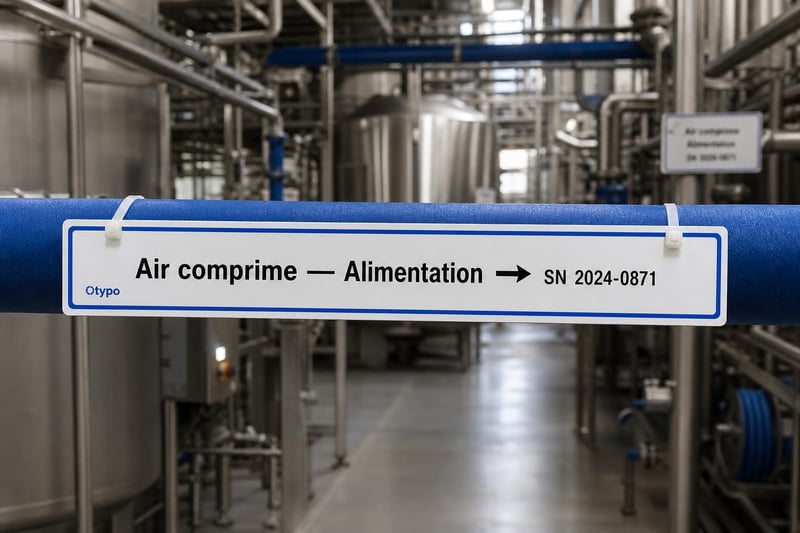
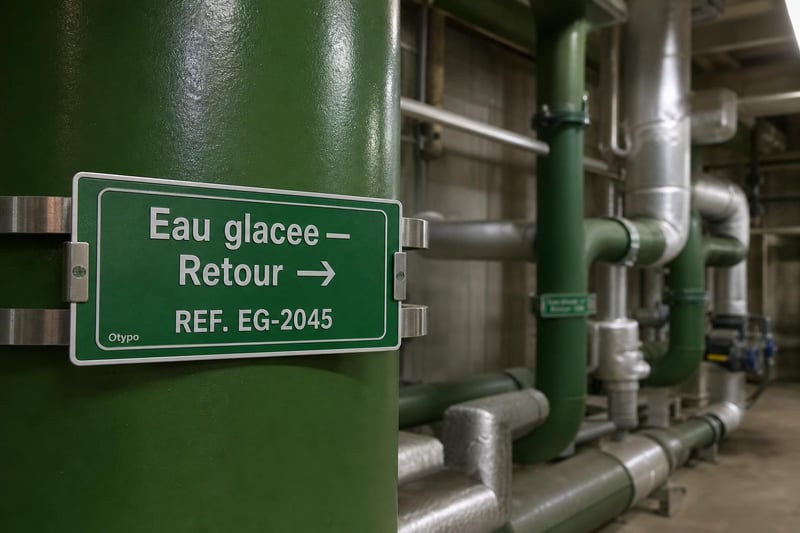
From compressed air lines in manufacturing workshops to cleaning circuits in food processing facilities, pipe marking covers a wide range of environments. In petrochemical and energy applications, hazardous fluids require reinforced substrates. In commercial and public sector buildings, clear identification of HVAC pipework simplifies operation and speeds up maintenance.
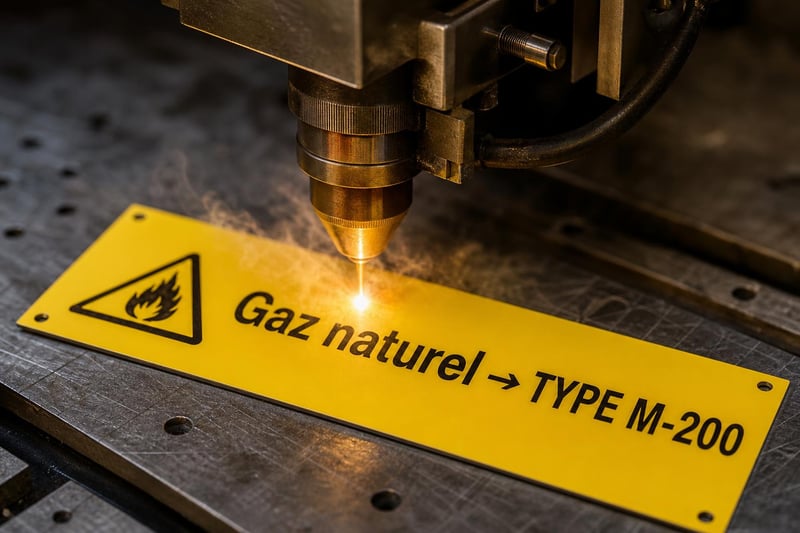
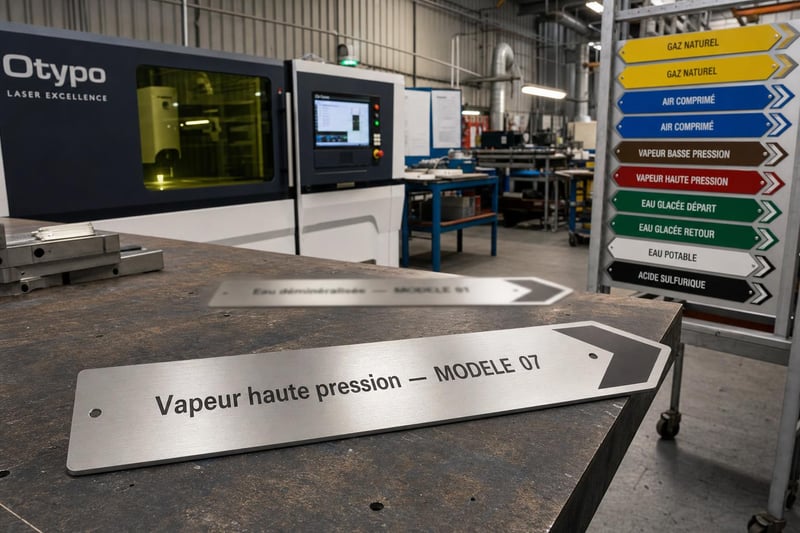
The durability of a pipe marker depends on the process and substrate selected. Laser engraving, UV printing or screen printing: each technique addresses a specific operational requirement, from standard workshops to high-temperature corrosive zones.
Send us your plans or your specifications. Our design office analyses your requirements and sends you a bespoke commercial proposal within 4 to 8 working hours.
Industrial pipe marking goes beyond a simple administrative requirement. It is the primary safety tool for any pipework system: it allows any person on site — maintenance technician, contractor or emergency responder — to read essential information without hesitation. Fluid type, direction of flow, level of danger: this data must be immediately accessible, even in an emergency situation.
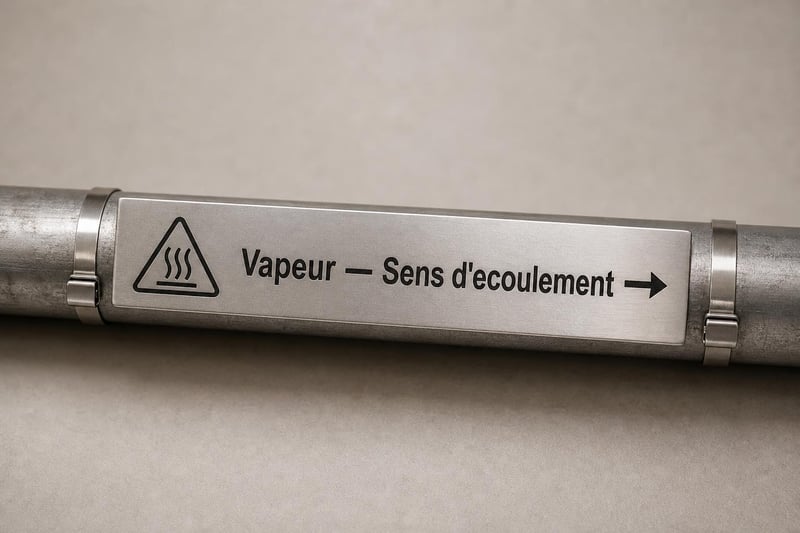
Three elements are required on any compliant pipe marker: the nature of the fluid being carried (full name or standardised abbreviation), the direction of flow indicated by a directional arrow, and the regulatory background colour associated with the fluid family. Depending on the context, additional information may be required: hazard pictograms, concentration, service pressure, or the location of the nearest isolation valve. Placement at critical points — valves, changes of direction, wall penetrations, branch connections — determines the practical value of the marking. In the UK, pipe marking requirements are guided by BS 1710 and aligned with relevant EN standards.
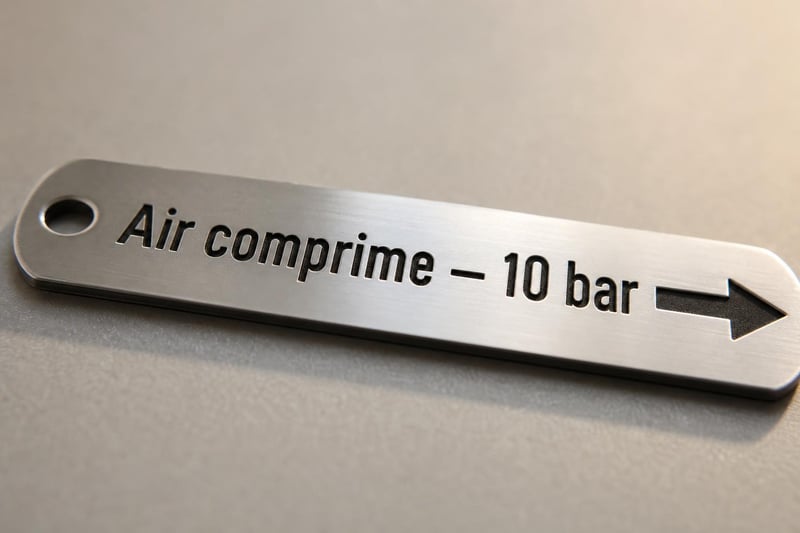
Laminated polyester labels meet everyday requirements in standard workshop environments: adequate mechanical resistance, good compatibility with common cleaning products, and fast application to clean, dry pipework. High-performance vinyl takes over for outdoor installations exposed to UV radiation and significant thermal variation. Rigid plastic plates are the right choice in wet areas or where repeated impact is likely. Laser-engraved stainless steel plates are the reference solution for corrosive environments, high temperatures and potentially explosive atmospheres, where adhesive or surface-printed substrates cannot guarantee the required service life.
A pipe marker that peels away, fades or becomes illegible no longer meets current regulatory requirements — regardless of its original quality. Substrate selection is therefore both a technical and a regulatory decision. We regularly find that premature replacement campaigns result from an under-specified substrate relative to actual exposure conditions, rather than from normal wear.
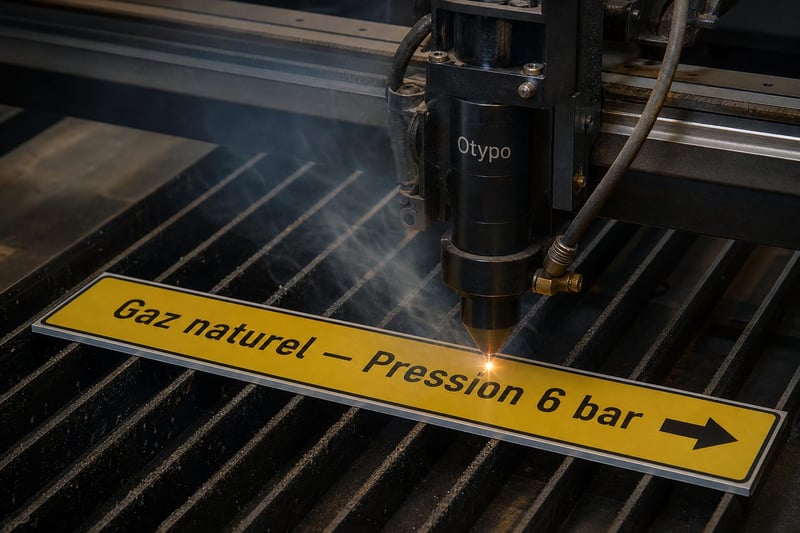
Screen printing is suited to large runs using inks formulated to withstand chemical attack and frequent cleaning. UV digital printing delivers optimal colour accuracy for reproducing standardised colours and incorporating variable content — serial numbers, barcodes, datamatrix codes — with no minimum print run constraint. Laser engraving produces a permanent mark recessed into the material, resistant to years of exposure to solvents or mild acids. CNC routing completes the range for thick metal plates intended for permanent identification on heavy plant and equipment.
Having supported hundreds of maintenance managers and HSE officers in selecting their pipe marking solutions, we consistently find that on-site durability depends as much on the process as on the material. UV printing on laminated polyester will last several years in a clean workshop environment; the same print without lamination on a pipe subject to oil splatter will become illegible within months. Matching the process, the substrate and the operating conditions is the prerequisite for pipework identification that remains reliable over time.
The main factors that degrade pipe marking are UV exposure, high-pressure washing, mechanical abrasion and cyclical condensation. A visual check integrated into maintenance rounds allows detached or faded labels to be identified before they constitute a non-compliance issue. Industry best practice recommends ordering a replacement stock at the time of the initial order: this ensures consistency of standardised colours and content across the entire network, even several years after the original installation.
Bespoke production delivers real value in pipework identification: formats matched to the actual pipe diameter, personalised content incorporating the specific fluid name used on the installation, internal numbering or zone codes, and the ability to produce mixed runs covering an entire heterogeneous network in a single order. For pipework systems subject to traceability requirements — food and beverage, pharmaceutical, energy — integrating barcodes or datamatrix codes on each pipe identification plate links the physical marking to the computerised maintenance management system (CMMS).
Otypo manages the entire production chain, from selecting the substrate appropriate to the fluid and environment through to bespoke manufacture by laser engraving, UV printing or screen printing. This end-to-end capability means we can produce the right marking for the right context — with no compromise on legibility, durability or regulatory compliance.