Get a quote
express 4h


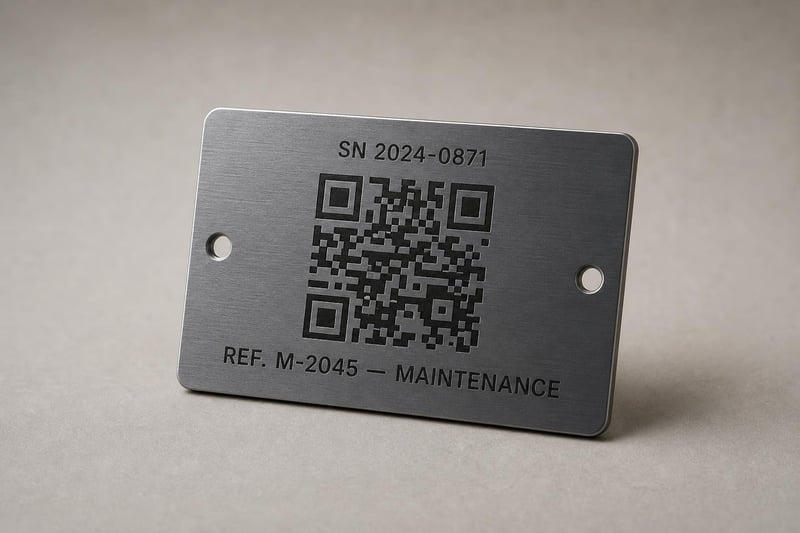
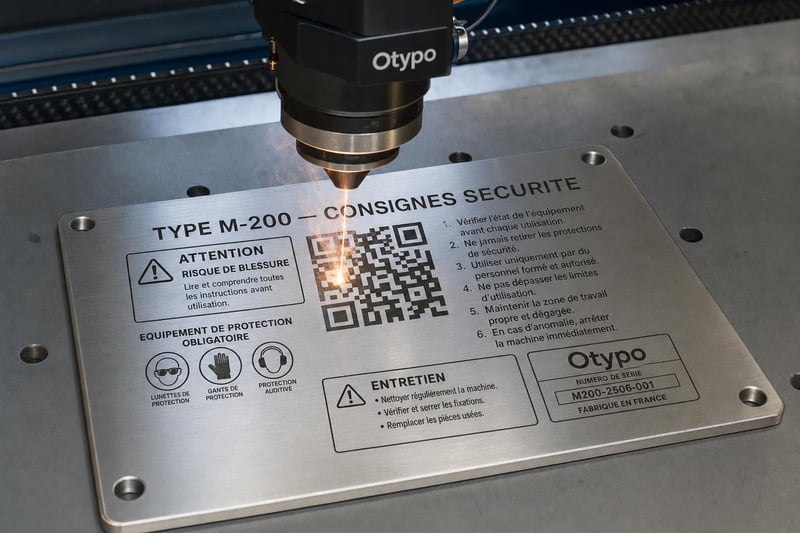
Text and graphics cut directly into the substrate (precision to 0.08 mm), producing a permanent, tamper-proof mark.
Premium industrial aesthetic. Anodised surface treatment ensures lasting corrosion resistance in demanding conditions.
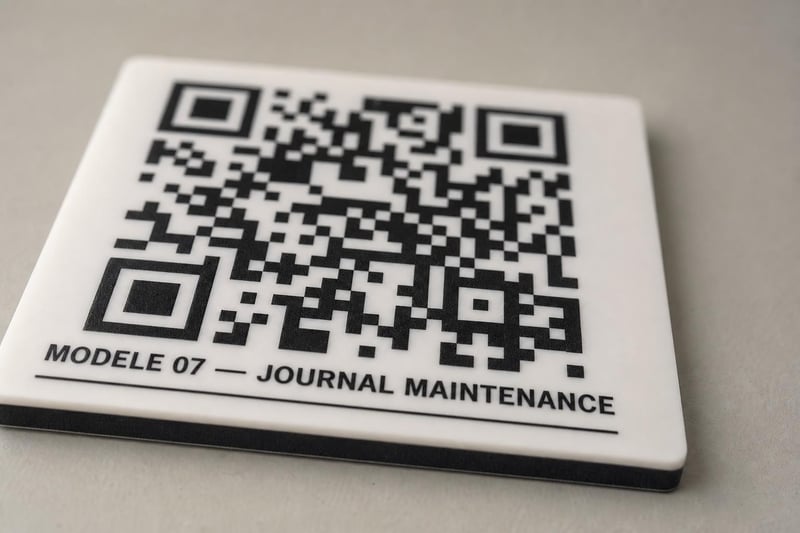
Premium acrylic engineered with a thin cap layer (0.05 mm) over a contrasting core, delivering sharp legibility and crisp engraved detail.
Suitable for prolonged outdoor exposure. Material and colours resist fading and degradation under direct sunlight.
Surface withstands harsh industrial contact including solvents, mild acids, oils, greases, and heavy-duty cleaning agents.
Full-colour CMYK printing with UV-cured inks, delivering photographic-quality output and vibrant, long-lasting colours.
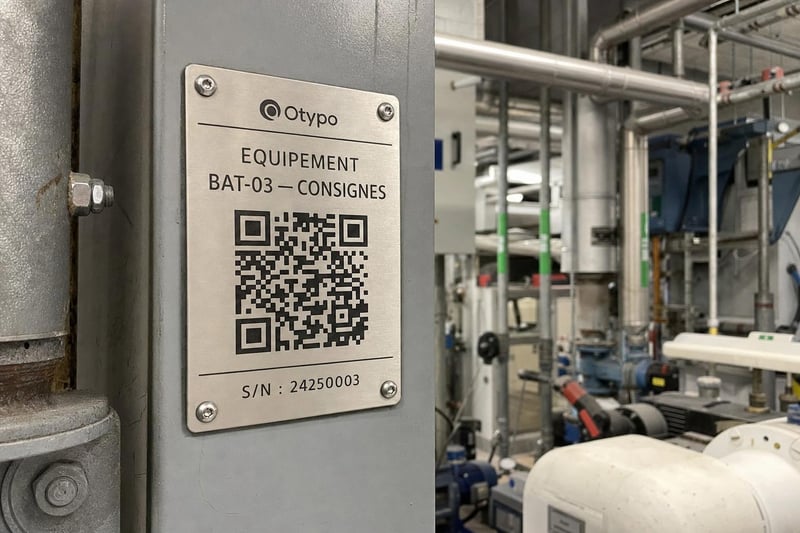
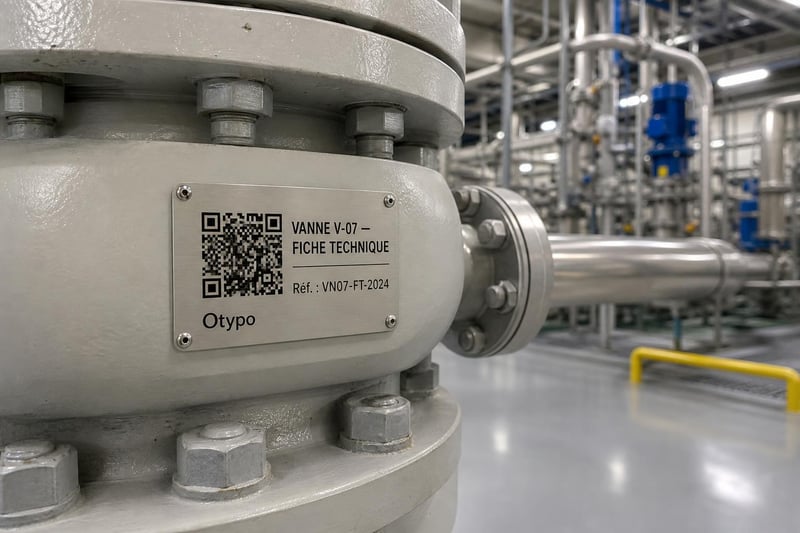
The industrial QR code plate is well established in machine identification, equipment traceability in food and pharmaceutical settings, and building signage for public sector and construction. In logistics, it identifies racking, cabinets and loading bays with immediate access to the documentation associated with each asset.
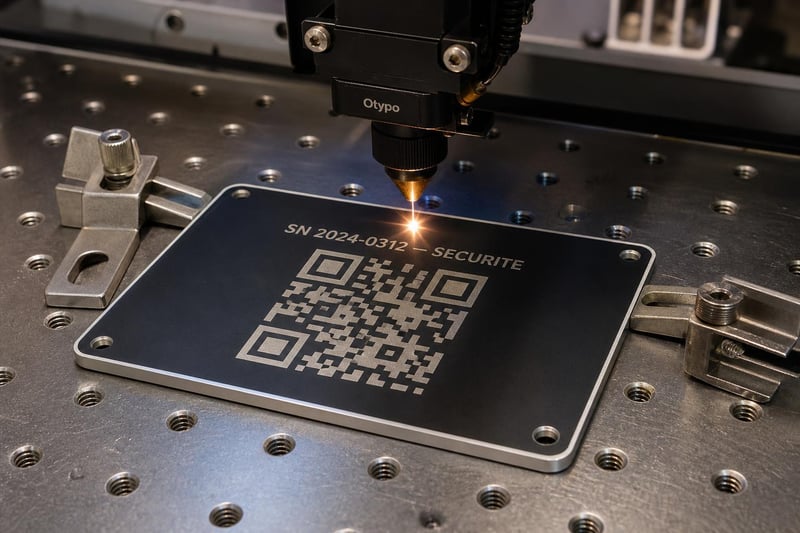
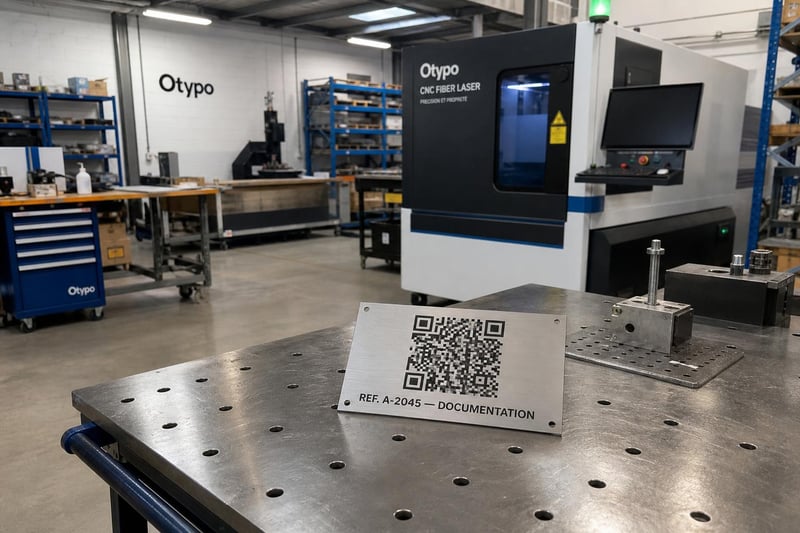
The durability of an engraved QR code plate depends on both the process and the material. Laser engraving cuts the code into the substrate: no risk of fading, peeling or degradation from chemicals or high-pressure cleaning.
Send us your plans or your specifications. Our design office analyses your requirements and sends you a bespoke commercial proposal within 4 to 8 working hours.
Stainless steel and anodised aluminium are the reference materials for environments exposed to corrosion, moisture or chemicals. Their surfaces withstand frequent cleaning and industrial aggression without affecting the readability of the QR code marking. Two-layer acrylic, with its coloured top layer and contrasting core, produces optical contrast particularly well suited to 2D code readers, including in difficult lighting conditions. Aluminium composite is appropriate for plates requiring accurate colour reproduction or a larger print area. This material is less suited to environments subject to repeated impact or extreme temperatures.
Laser engraving cuts the code into the material with precision to a tenth of a millimetre. The resulting marking is permanent: it does not peel, fade under solvents, abrasion or UV exposure. This process is recommended for all aggressive environments and long-term applications. Direct UV printing polymerises inks on the surface: it delivers a full-colour finish suited to plates incorporating a logo, zone colour code or pictogram, in environments with lower chemical exposure. CNC milling is used on thicker materials — brass or solid aluminium — for premium finishes or plates intended for painted relief.
Each bespoke QR code plate can point to a unique URL: equipment datasheet, maintenance log, secure document portal or reporting form. The digital information can be updated server-side without replacing the physical plate. This architecture is particularly suited to asset management in sectors where documentation changes regularly — pharmaceutical, energy, manufacturing. Regulatory requirements mandating permanent, legible marking on industrial equipment mean the QR code plate complements mandatory labelling by providing access to associated documentation without replacing it.
In areas subject to strict marking durability requirements — explosive atmospheres, medical or quality-controlled sectors — only appropriate materials and processes ensure long-term compliance. The evolving European regulatory framework is progressively opening the way for digital documentation accessible via 2D code, reinforcing the relevance of a durable physical support as the entry point to identification and traceability data.
QR code plates can be fixed using industrial double-sided adhesive, rivets, screws or recessed mounting depending on the substrate and operational constraints. The fixing method must be compatible with the thermal and chemical demands of the environment: a high-temperature industrial adhesive behaves differently from a standard adhesive in damp or vibrating conditions. The positioning of the plate must also account for scanning conditions: avoid reflective surfaces, unfavourable reading angles and areas exposed to direct splashing that could obscure the code.
An order for industrial QR code plates in series requires specifying the chosen material, the marking process, the content of each code (URL, identifier, encoded data), the quantity per reference and the preferred fixing method. Where each plate carries a unique code linked to a specific asset, it is recommended to supply a structured file associating each physical identifier with its digital content. This upfront preparation simplifies production, reduces the risk of errors and facilitates future restocking as the fleet or addressing evolves.
Otypo regularly supports engineering teams and maintenance managers in structuring their multi-reference orders, from defining the appropriate material through to approving the artwork before series production. Projects that are best prepared — with a clean data file and a precise brief — consistently deliver the most reliable results in the field.