Get a quote
express 4h


Premium industrial aesthetic. Anodised surface treatment ensures lasting corrosion resistance in demanding conditions.
Surface withstands harsh industrial contact including solvents, mild acids, oils, greases, and heavy-duty cleaning agents.
Text and graphics cut directly into the substrate (precision to 0.08 mm), producing a permanent, tamper-proof mark.
Full-colour CMYK printing with UV-cured inks, delivering photographic-quality output and vibrant, long-lasting colours.
Matt or textured finish providing robust protection against impact, abrasion, and everyday wear in industrial settings.
Suitable for prolonged outdoor exposure. Material and colours resist fading and degradation under direct sunlight.
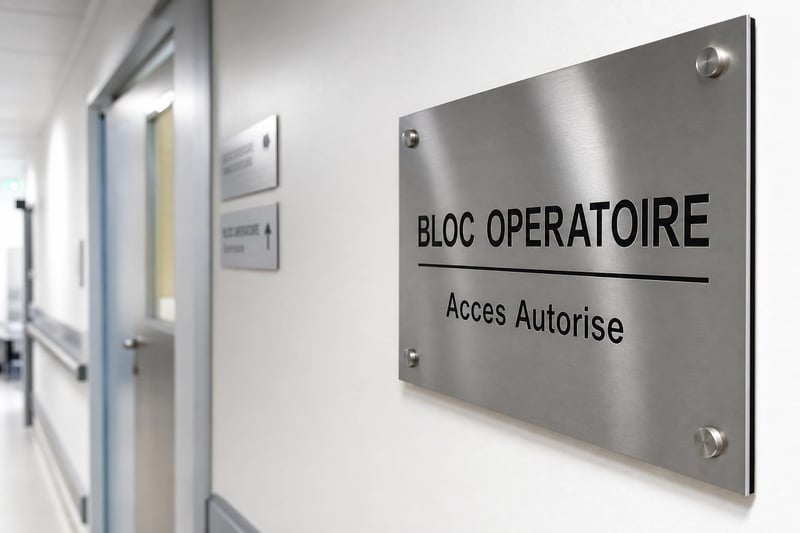
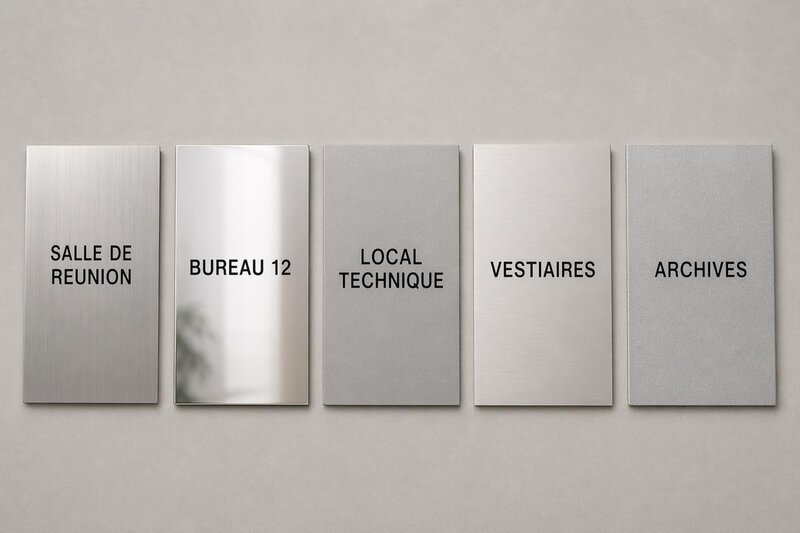
Brushed stainless steel is used for machine plates, control cabinets and pipe identification in industrial settings. Sandblasting is the preferred choice in food processing and pharmaceutical environments for its uniform, easy-to-clean surfaces. Directional brushing meets the aesthetic requirements of the hospitality sector and architectural construction projects.
Polishing is well suited to institutional spaces and architectural facades where a high-gloss finish is expected. Each sector imposes its own maintenance, resistance and visual integration requirements, which the chosen finish must address from the outset of the design process.
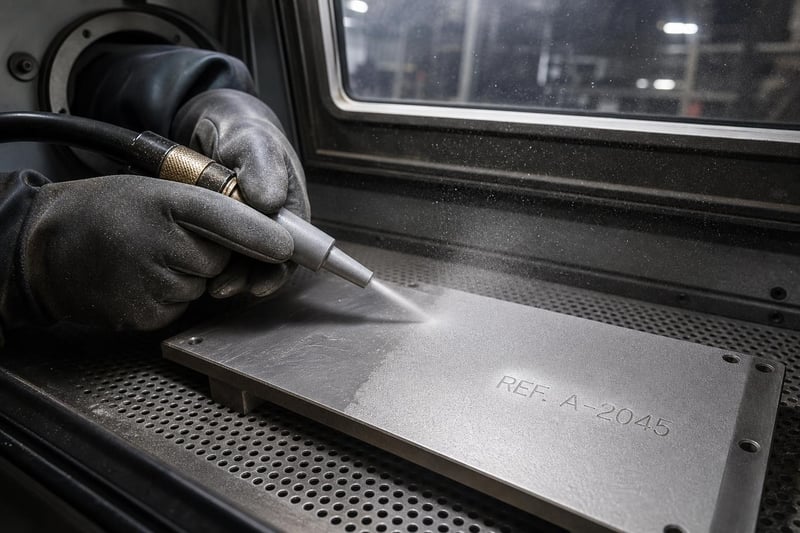
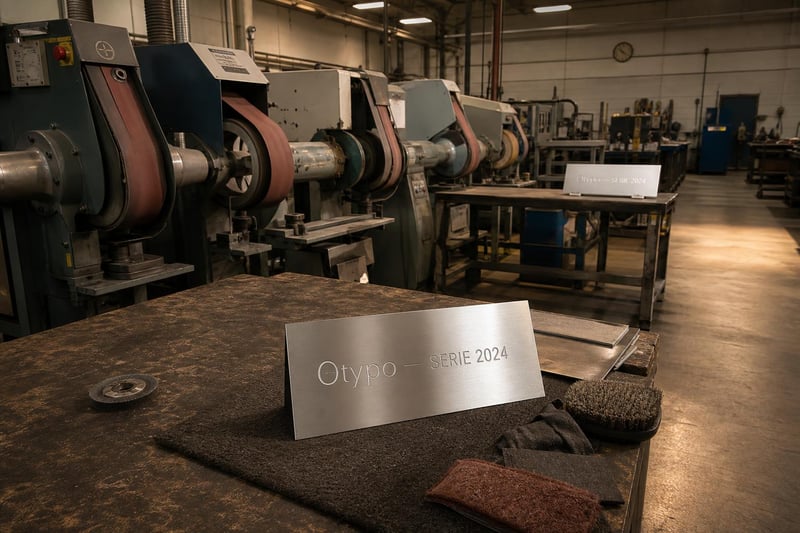
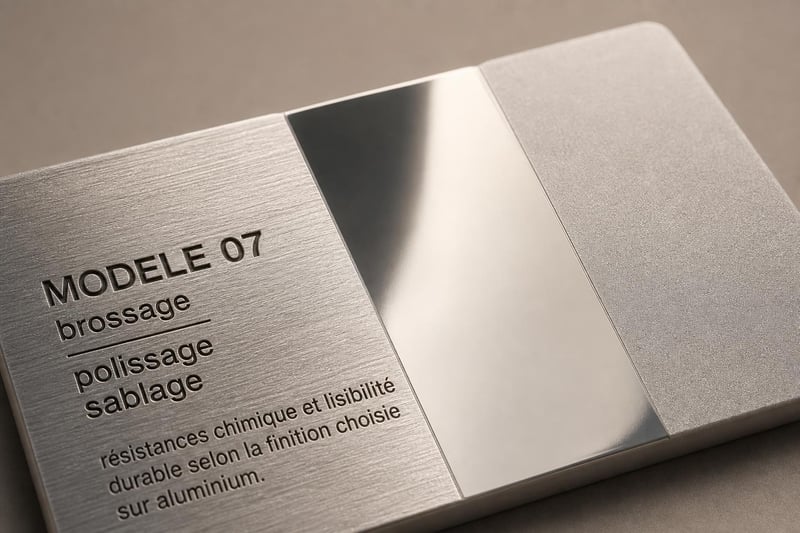
Brushing, polishing and sandblasting each act differently on the material and combine with laser engraving and UV printing processes to produce marking that is consistent, durable and suited to the demands of the operating environment.
Send us your plans or your specifications. Our design office analyses your requirements and sends you a bespoke commercial proposal within 4 to 8 working hours.
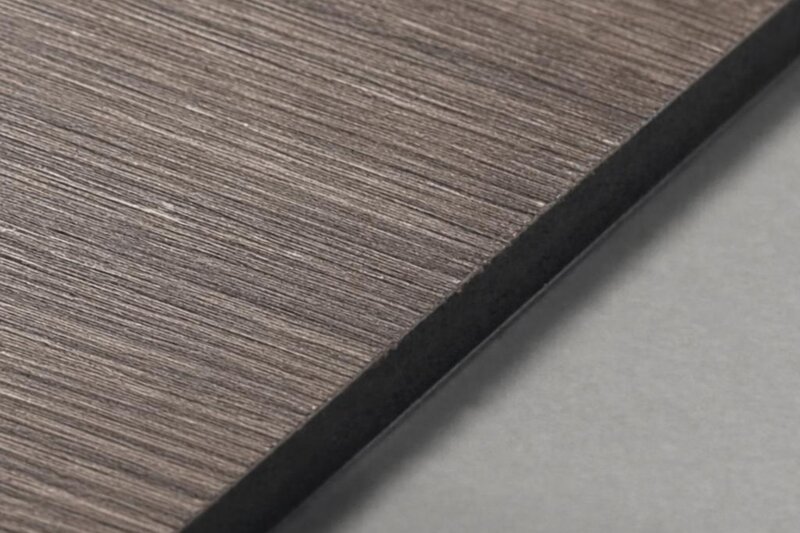
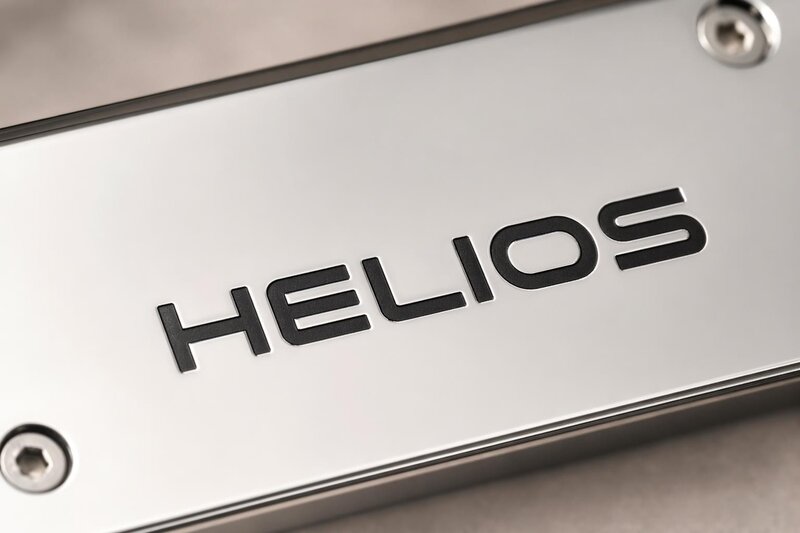
Brushing generates fine, regular striations that reduce specular reflections and create a directional micro-roughness. This texture visually conceals surface wear and provides a surface that promotes adhesion of UV and screen-printing inks, provided thorough prior degreasing is carried out. Polishing produces a smooth to high-gloss surface, ideal for prestige applications or areas requiring strong visual contrast — laser engraving on polished metal generates maximum contrast between the engraved area and the background. Sandblasting, or shot blasting, uniformly matts the surface, removes machining defects and prepares the material before anodising, painting or doming. Where brushing orientates the roughness, sandblasting homogenises it.
Brushing and sandblasting both produce a matt surface, but their underlying logic is opposite: brushing is directional and retains a slight visual anisotropy, whereas sandblasting is isotropic and eliminates any preferential orientation. Polishing should not be confused with simple surface cleaning — it modifies the topography of the material and determines how light interacts with the plate.
In food processing or pharmaceutical environments, the surface must withstand repeated cleaning with concentrated detergents and must not trap residues. Sandblasting homogenises the surface and simplifies maintenance; combined with anodising, it meets the most stringent hygiene requirements. In industrial environments exposed to corrosion or chemical agents, anodised brushed aluminium or brushed stainless steel offer greater long-term durability than a polished surface, which is more susceptible to micro-scratches that can initiate degradation. For reception areas, architectural facades and institutional plates, directional brushing on stainless steel or aluminium produces an understated satin finish that resists fingerprints and remains visually stable over time.
Industrial equipment and installations subject to permanent marking requirements demand plates whose legibility is maintained throughout their expected service life. Surface finish directly determines this performance: a correctly prepared surface resists thermal, chemical and mechanical stresses in the operating environment more effectively. The choice of finish forms an integral part of the response to applicable regulatory requirements — including those under BS EN standards and the Equality Act 2010 where relevant — in the same way as the choice of material or marking process.
Surface finish is not an isolated step — it forms part of a manufacturing sequence whose order determines the final result. Fibre laser engraving on brushed aluminium or stainless steel produces a natural contrast between the engraved area and the background, without altering the surrounding texture. Sandblasting carried out before UV printing improves ink adhesion by creating a uniform micro-roughness. Polishing on CNC-milled parts prepares the surface for resin doming or decorative applications requiring a high-impact visual result. Experience consistently shows that the most successful projects are those where the finish was defined at the design stage, in line with the chosen marking process.
The orientation of the brushing is taken into account during artwork layout to ensure visual consistency across all parts within a batch. This attention to detail prevents variations in appearance between parts from the same order — a frequent problem when finishing is subcontracted to an external supplier not integrated into the manufacturing chain.
A finish correctly paired with complementary protection — anodising on aluminium, lacquer on stainless steel — significantly extends the service life of the marking without the need for intervention. Brushing visually attenuates wear by concealing micro-scratches along the line of the striations; sandblasting creates a uniform surface that ages consistently. Conversely, an unprotected polished surface in an industrial environment will rapidly show signs of visual degradation, even without any functional impairment of the marking.
In an industrial context, a finish must be reproducible from one order to the next — the same grain, the same level of gloss, the same orientation. Having supported hundreds of procurement managers and engineering teams in building or renewing their signage inventory, we know precisely how significantly finish repeatability is underestimated at the point of first purchase and how consistently it becomes a priority requirement at renewal. A variation in grain between two successive batches creates a visual inconsistency that is immediately apparent on site, and may constitute a documentary non-conformance during audits or inspections. Control of finishing parameters within an integrated workshop is the only reliable answer to this challenge.