Get a quote
express 4h


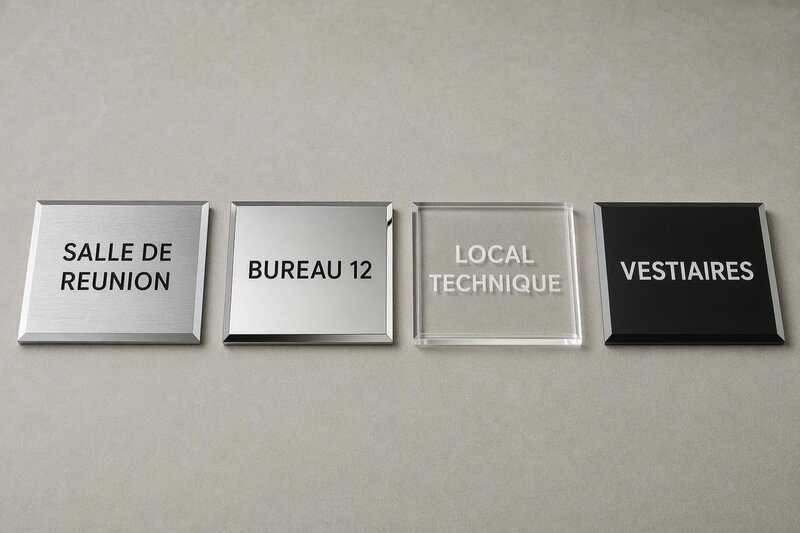
Premium industrial aesthetic. Anodised surface treatment ensures lasting corrosion resistance in demanding conditions.
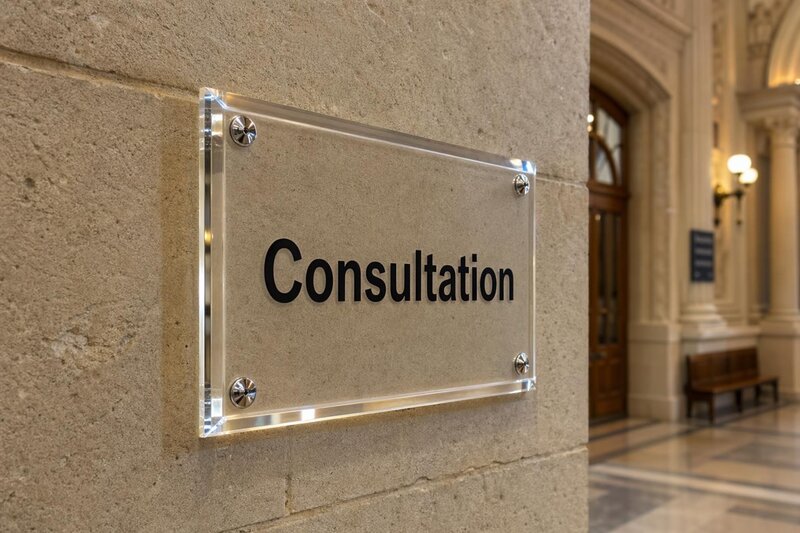
High-purity cast acrylic offering exceptional transparency, brilliant gloss, and cleanly polished edges.
Premium acrylic engineered with a thin cap layer (0.05 mm) over a contrasting core, delivering sharp legibility and crisp engraved detail.
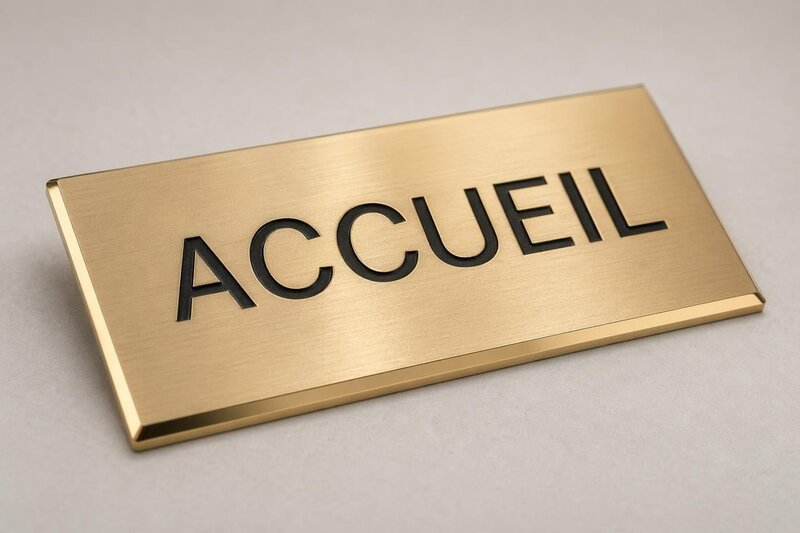
Deep mechanical engraving by rotary cutting. Ideal for solid brass and aluminium where infilled painted lettering is required.
Surface withstands harsh industrial contact including solvents, mild acids, oils, greases, and heavy-duty cleaning agents.
Matt or textured finish providing robust protection against impact, abrasion, and everyday wear in industrial settings.
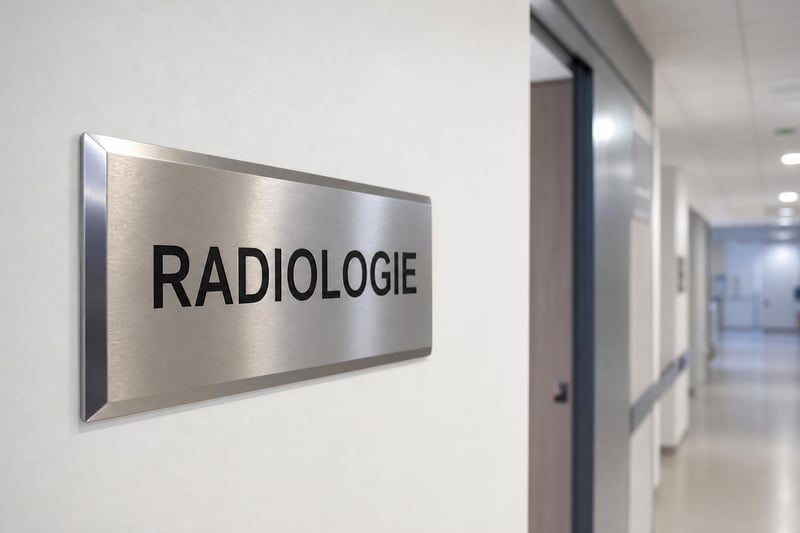
From electrical cabinet identification in industrial facilities to door signs in hotels, the chamfered edge finish is the right choice wherever the perceived quality of the edge matters as much as the content of the plate.
It meets the aesthetic requirements of commercial offices and hospitality as well as the functional demands of production environments, without any compromise on durability.
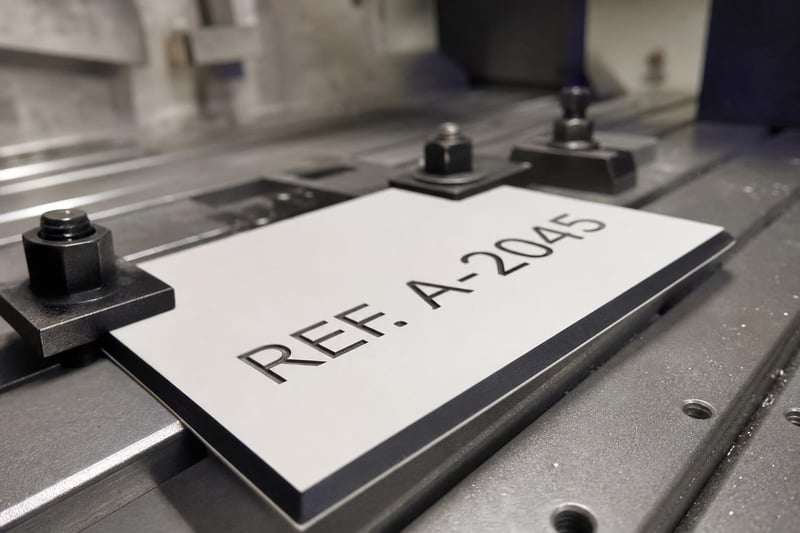
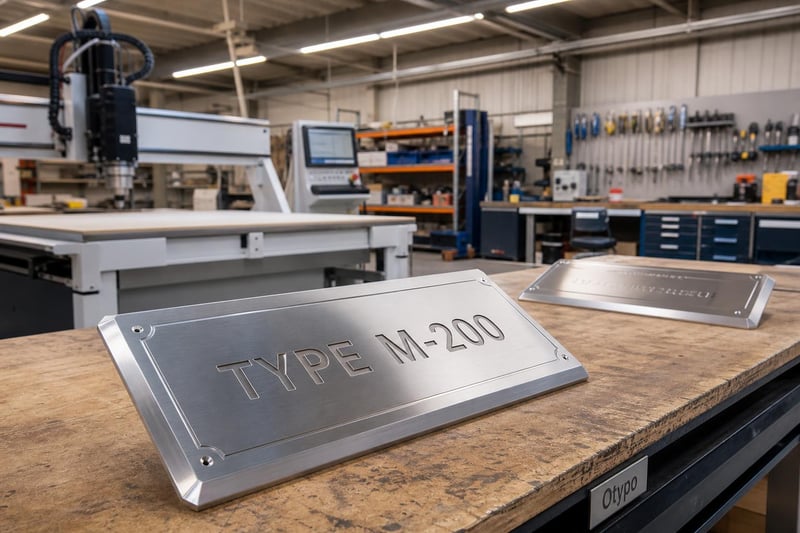
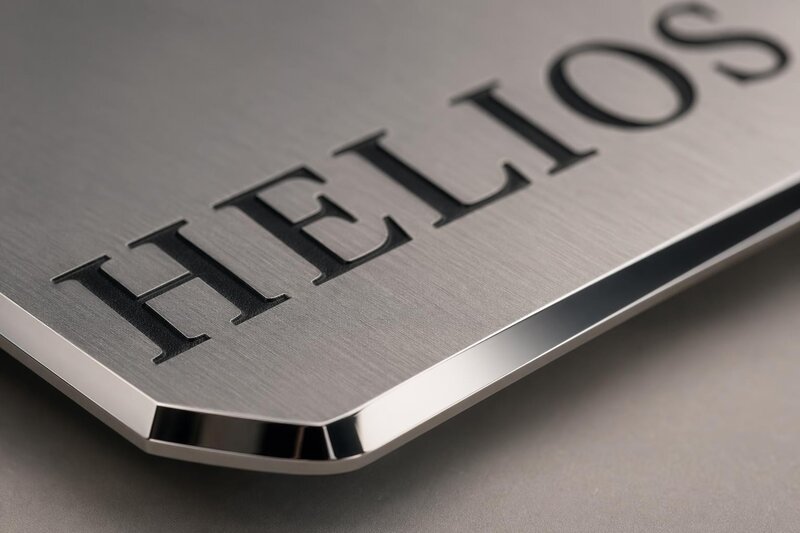
The chamfered edge is produced by CNC milling with a chamfer cutter. The angle is consistent around the full perimeter and fully repeatable in batch production. On PMMA, an additional polishing step produces a crystal effect; on two-colour laminate, it reveals the core colour of the material.
Send us your plans or your specifications. Our design office analyses your requirements and sends you a bespoke commercial proposal within 4 to 8 working hours.
The chamfered edge finish refers to an angled facet machined onto the peripheral edge of a sign plate, produced by CNC milling using a chamfer cutter. The standard angle is 45°, though this can be adjusted to achieve a specific appearance. This is not a surface treatment or a decorative addition: it is a manufacturing decision that alters the geometry of the edge, eliminates sharp corners and transforms the overall perception of the plate. In our experience, this choice is frequently underestimated at the design stage, despite having a direct impact on both perceived quality and long-term edge durability.
A bevel runs continuously and uniformly around the full perimeter of the plate. A chamfer, in the strict sense, refers to a localised edge break — often carried out manually. In professional signage, a chamfered edge finish involves full CNC machining with a consistent angle and a regular facet surface, which distinguishes it from simple deburring.
On metallic substrates, a chamfered aluminium sign plate delivers a refined industrial finish, particularly well suited to manufacturer plates and machine identification signs. When the bevel is machined before anodising or powder coating, the surface treatment protects the edge uniformly. Machined after treatment, bare metal is exposed at the edge — acceptable in dry indoor conditions, but this must be planned for in humid or corrosive environments. The same logic applies to brass and stainless steel: the sequence of operations determines how well the edge is protected over time.
On PMMA sign plates with a chamfered edge, polishing the edge after milling produces a bright crystal effect that is highly sought after in high-end reception and door signage. On two-colour laminate, the chamfered edge reveals the core colour of the material, creating a coloured border that reinforces the visual definition of the plate outline — a visual advantage appreciated in both engraved industrial signage and commercial office environments.
In industrial signage, machine identification plates and manufacturer plates must meet requirements for legibility and marking permanence. A chamfered edge reduces wear on the border in production environments, offers better resistance to repeated impacts and simplifies cleaning — no sharp edge to trap residue, which integrates naturally into the hygiene protocols of food production and pharmaceutical facilities.
In commercial office or hospitality settings, a 45° chamfered edge signage finish gives door signs, name plates and reception signage a refined architectural appearance without requiring complex decorative treatments. The bevelled facet catches light differently from a straight edge and gives the plate an immediately noticeable visual presence, even on standard substrates.
The durability of a custom chamfered edge sign plate depends on the correct choice of substrate and the sequencing of machining and surface treatment operations. In corrosive or humid environments, an unprotected metal edge can deteriorate more rapidly than the main face: this must be addressed at the project design stage. On PMMA and laminate, the chamfered edge is naturally protected by the material itself and does not present this constraint.
The absence of sharp edges simplifies cleaning with cloths or standard products without risk of snagging or damaging the border. In industrial settings, best practice for permanent marking requires identification that withstands vibration, repeated cleaning and intensive use: the chamfered edge finish, combined with an appropriate substrate, meets these requirements without compromising visual quality. Having supported numerous projects in manufacturing and energy sectors, we consistently recommend confirming the operation sequence with the production team before placing any order involving treated metal.