Get a quote
express 4h


Premium industrial aesthetic. Anodised surface treatment ensures lasting corrosion resistance in demanding conditions.
Suitable for prolonged outdoor exposure. Material and colours resist fading and degradation under direct sunlight.
Surface withstands harsh industrial contact including solvents, mild acids, oils, greases, and heavy-duty cleaning agents.
Matt or textured finish providing robust protection against impact, abrasion, and everyday wear in industrial settings.
Designed for demanding environments. Thermal integrity guaranteed from -40°C to +80°C with no warping or distortion.
Deep mechanical engraving by rotary cutting. Ideal for solid brass and aluminium where infilled painted lettering is required.
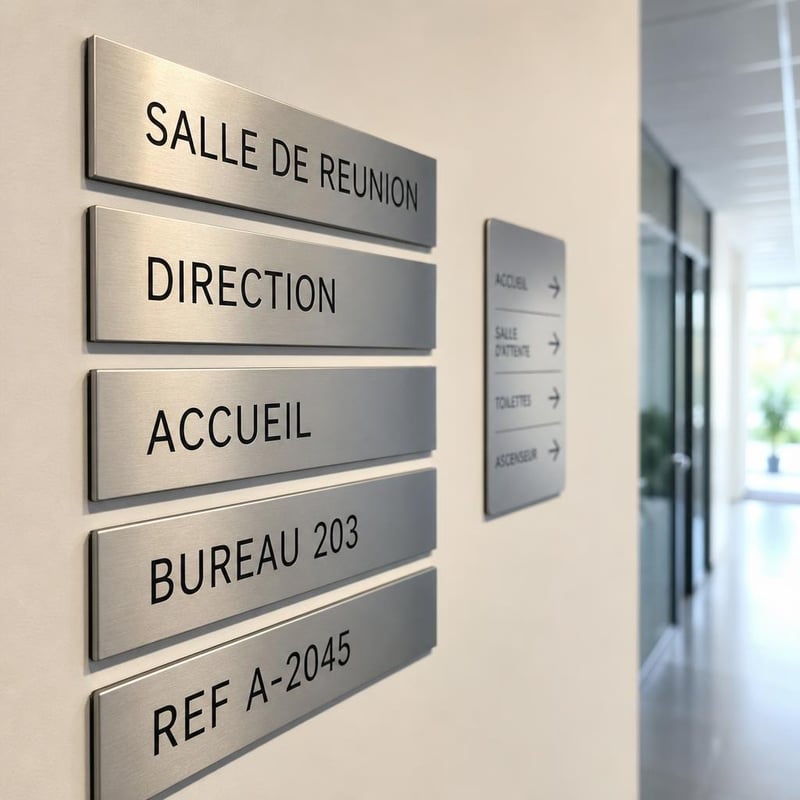
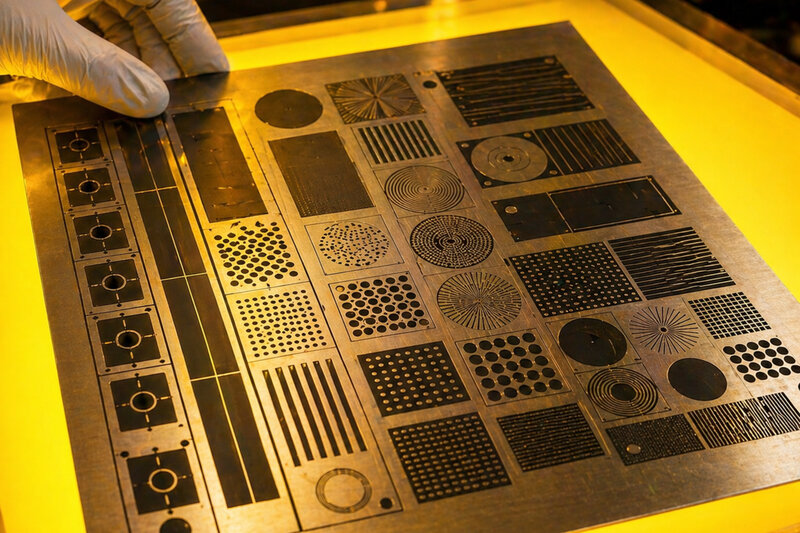
Chemical etching on metal covers a wide range of requirements: machine and pressure equipment identification, pipe marking in petrochemical and food processing environments, industrial control panel fascias, and decorative plates for high-end hospitality.
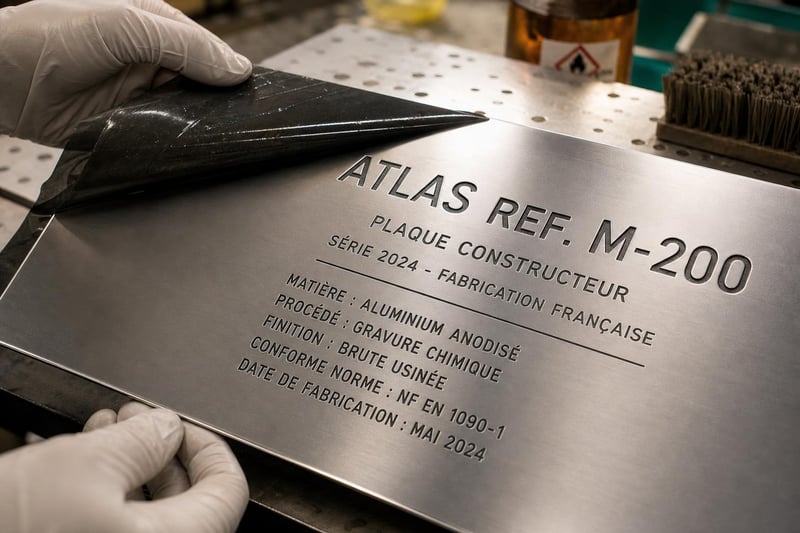
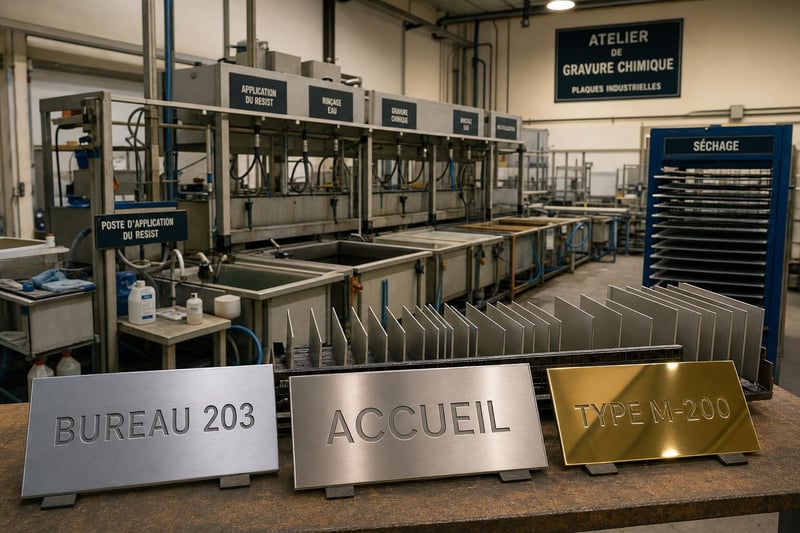
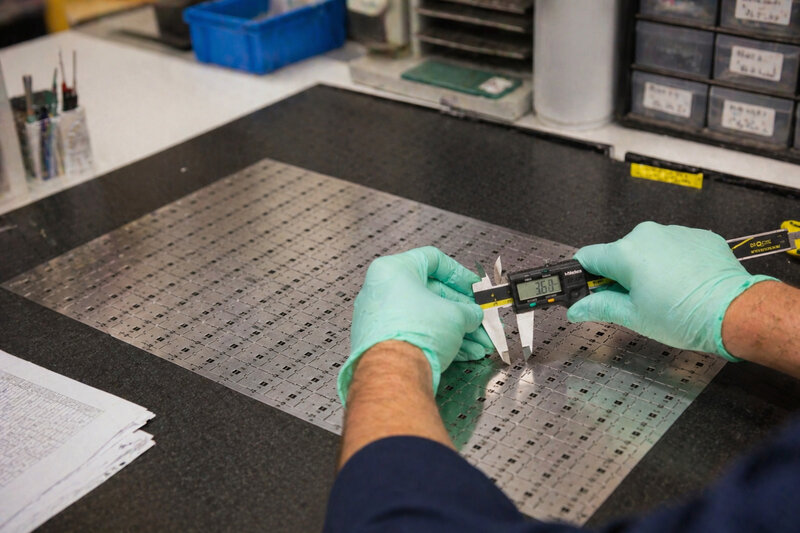
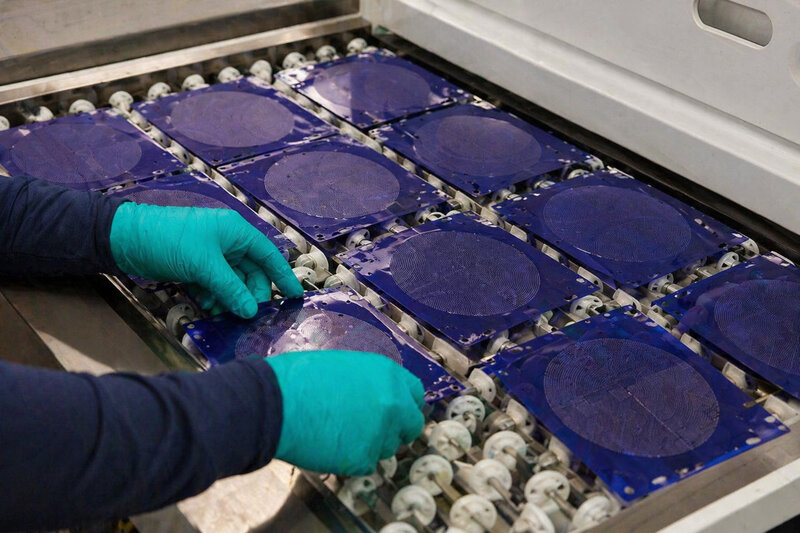
The subtractive principle of chemical etching delivers a durability that surface processes cannot match: the information is in the metal, not on it. No layer to maintain, no film to replace.
Send us your plans or your specifications. Our design office analyses your requirements and sends you a bespoke commercial proposal within 4 to 8 working hours.
The choice of substrate determines the durability of the mark and its suitability for the intended environment. Anodised aluminium offers excellent resistance to atmospheric corrosion and is suitable for both indoor and outdoor use; anodising strengthens the surface whilst preserving the sharpness of the etched relief. Stainless steel, in brushed or polished finish, is the reference material for wet environments, chemically demanding conditions or applications subject to frequent cleaning with aggressive products. Brass, with its warm appearance and capacity for mirror polishing, is the material of choice for high-end decorative applications and reception signage; it requires a protective lacquer when exposed to moisture or climatic variation.
Compared with laser engraving, chemical etching holds an advantage on large surfaces and high volumes: the acid bath treats the entire unmasked surface simultaneously, without multiple passes. Laser engraving excels on short runs and very fine geometries. CNC milling is the preferred option for thick workpieces requiring significant relief depth, particularly for paint-filled raised lettering. Direct UV printing on metal offers unrivalled photographic and chromatic reproduction, but remains a surface technique: it is not suitable for environments where abrasion or solvents are present. We regularly find that procurement managers choose chemical etching precisely because it eliminates the risk of corrective maintenance on the marking.
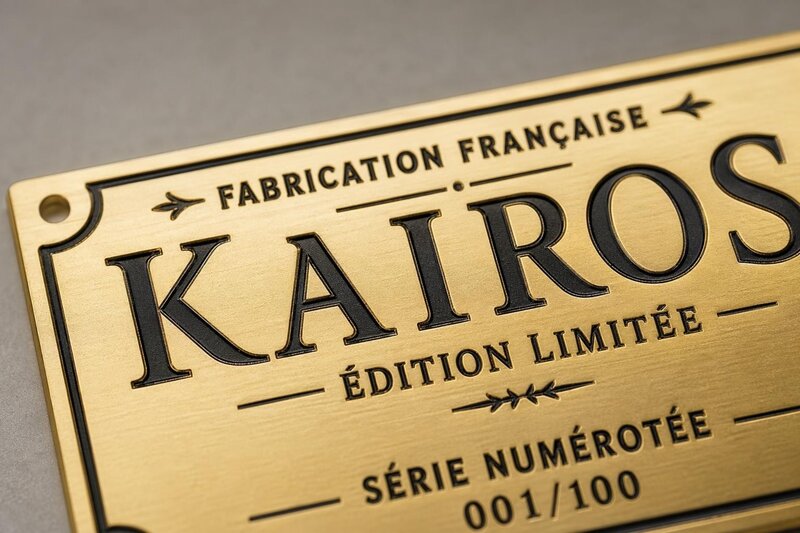
A chemically etched mark can be left in its natural state: contrast is then created by the play of shadow within the relief, particularly legible on a brushed or satin background. To improve legibility at distance or to meet a regulatory colour code, the recesses are filled with paint or lacquer after etching. The inlaid colour benefits from the mechanical protection of the surrounding relief, giving it abrasion resistance far superior to that of a surface-applied print. On aluminium, anodising the base prior to etching allows sharp contrast to be achieved between the anodised tone and the bare metal revealed in the recesses.
Relief etched into the body of the metal is impervious to UV, freeze-thaw cycles and significant thermal variation: it does not degrade, yellow or peel. After ten or twenty years of service, the marking remains structurally intact. The only points to monitor concern the long-term performance of inlaid paints in highly abrasive environments — a simple lacquer touch-up is sufficient to restore contrast without re-etching — and the surface protection of brass exposed outdoors, which should be checked periodically. We regularly assist maintenance teams who replace illegible adhesive labels with chemically etched plates, putting an end to recurring replacement cycles.
Regulated sectors — manufacturing, energy, food processing, medical — require permanent, legible marking on equipment throughout its service life. An adhesive label, even of industrial quality, remains an applied layer that can peel, yellow or be torn off during maintenance. Chemical etching eliminates this risk: the information is physically inscribed in the metal and cannot be altered without mechanical intervention on the part itself. For nameplates, pipe markers, pressure equipment identification or hazardous area markings, this non-substitutable character provides concrete documentary assurance during audits and regulatory inspections under BS and EN standards.
Chemical etching allows precise reproduction of serial numbers, alphanumeric codes, barcodes and standardised pictograms on metal. The line definition achieved by this process guarantees optical legibility and the scannability of codes, even after years of exposure to operating conditions. For machine manufacturers, industrial network installers and HSE managers, having marking that remains compliant without maintenance is a direct response to the durable identification obligations set out in industry best practice and BS EN standards.