Get a quote
express 4h


Text and graphics cut directly into the substrate (precision to 0.08 mm), producing a permanent, tamper-proof mark.
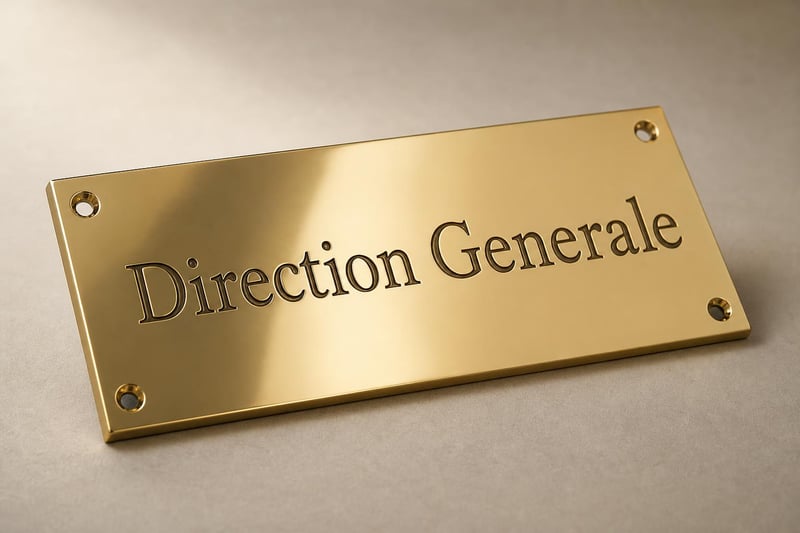
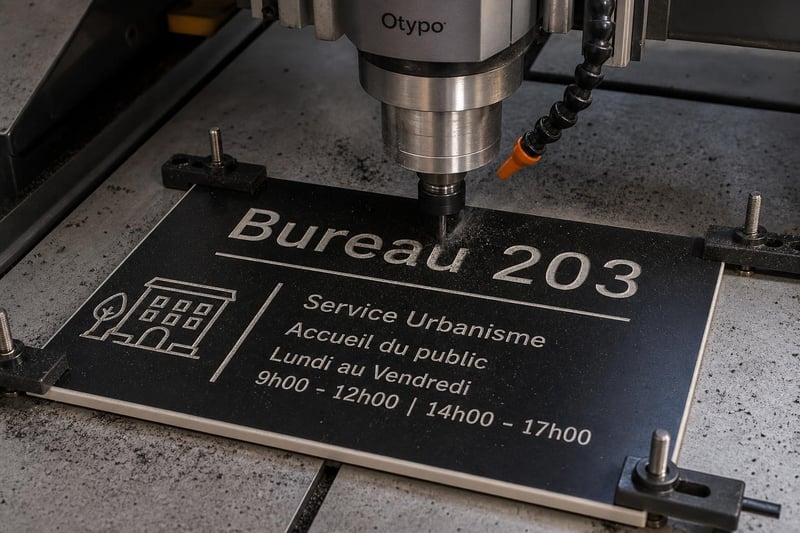
Deep mechanical engraving by rotary cutting. Ideal for solid brass and aluminium where infilled painted lettering is required.
Premium acrylic engineered with a thin cap layer (0.05 mm) over a contrasting core, delivering sharp legibility and crisp engraved detail.
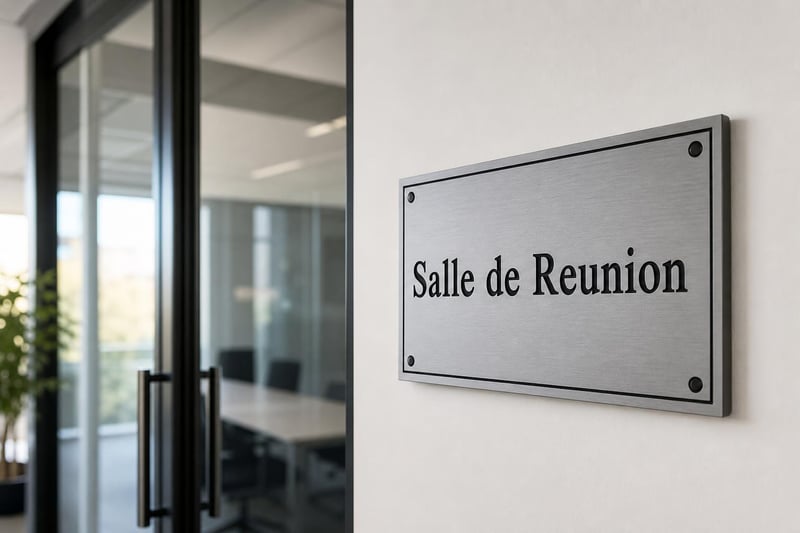
Premium industrial aesthetic. Anodised surface treatment ensures lasting corrosion resistance in demanding conditions.
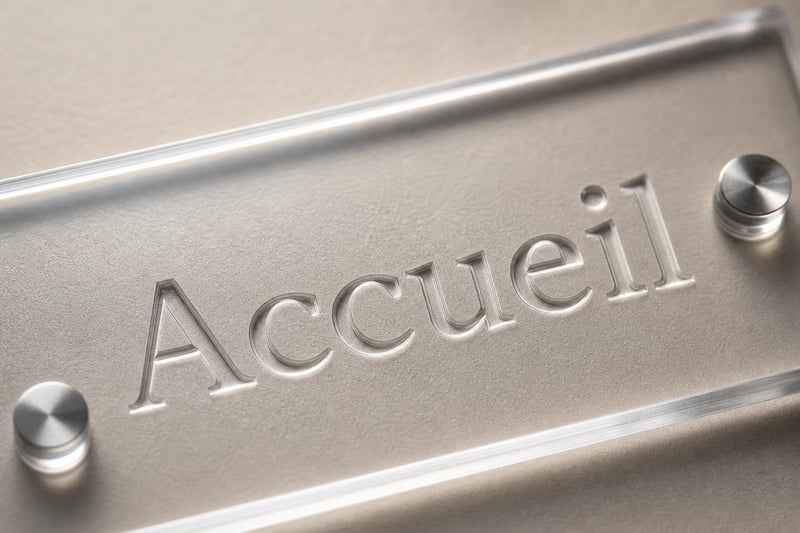
High-purity cast acrylic offering exceptional transparency, brilliant gloss, and cleanly polished edges.
Surface withstands harsh industrial contact including solvents, mild acids, oils, greases, and heavy-duty cleaning agents.
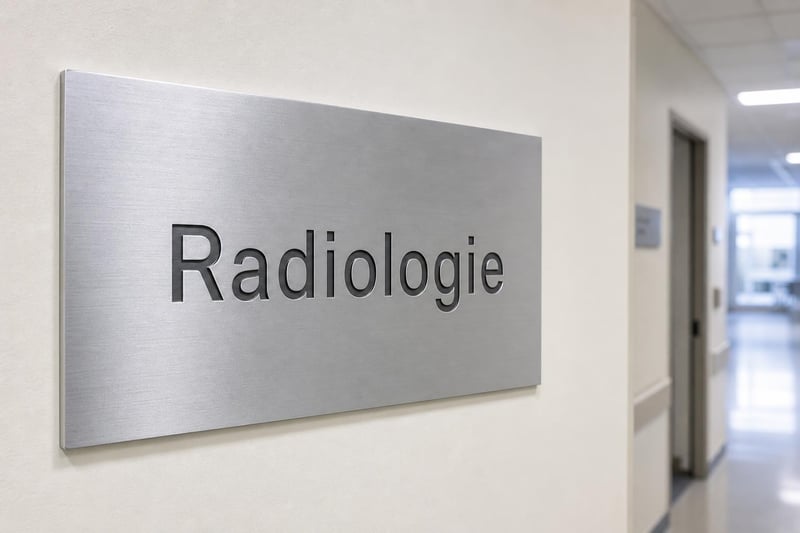
The engraved decorative plaque adapts to contrasting environments: machine identification in industrial settings, door signage in public buildings, room plaques in hotels, zone marking in healthcare facilities. The process remains the same; the material and finish change according to the context.
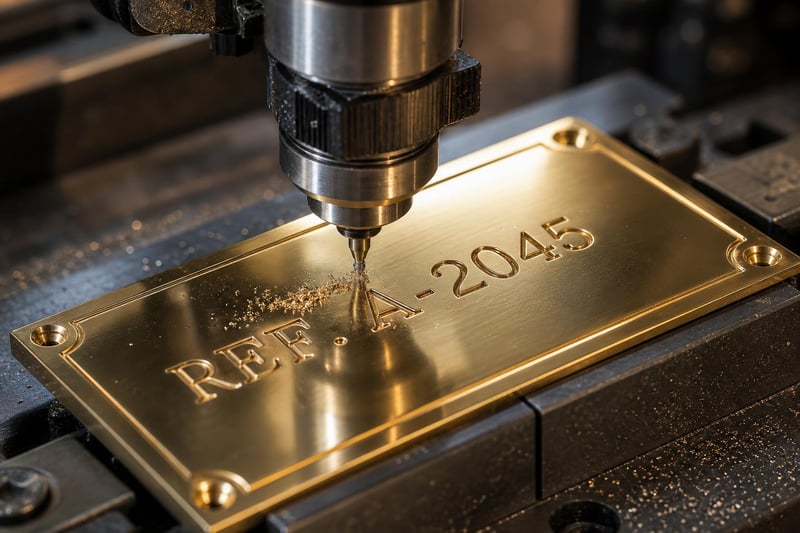
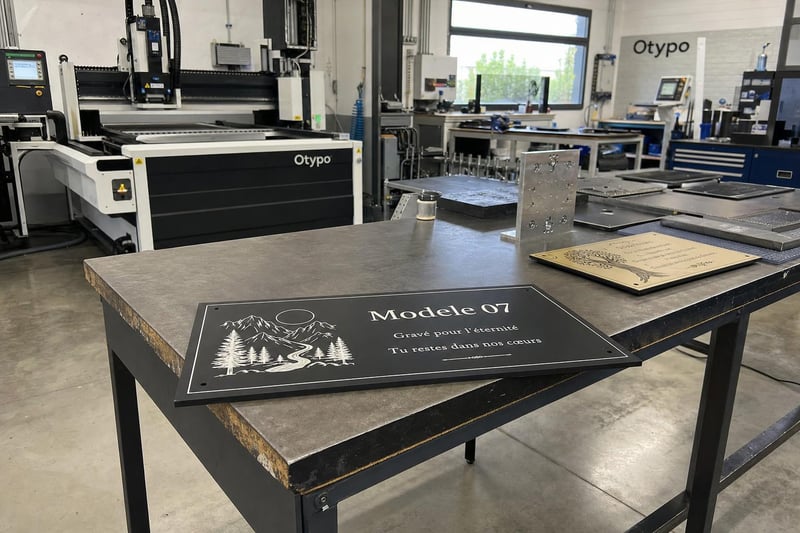
Laser engraving delivers high precision on dual-layer acrylic and PMMA for fine detail work. CNC milling is preferred on brass and solid aluminium for deep lettering intended to be infilled with paint. Both processes produce an indelible marking.
Send us your plans or your specifications. Our design office analyses your requirements and sends you a bespoke commercial proposal within 4 to 8 working hours.
Laser engraving and CNC mechanical milling share a common principle: the marking is cut into the substrate, not deposited on the surface. On dual-layer acrylic, the removed top layer reveals the contrasting core — the text or logo becomes inseparable from the material. On anodised aluminium or brass, engraving modifies the surface irreversibly. No abrasion, no aggressive cleaning agent can erase this type of marking.
Laser engraving achieves a precision of approximately one tenth of a millimetre, enabling the reproduction of fine typefaces, complex pictograms and detailed logotypes with a fidelity that surface printing processes cannot guarantee over time. For projects requiring a strict brand identity, this is a decisive advantage.
Dual-layer acrylic is the reference material for engraved interior signage: the top layer and contrasting core combination produces immediate legibility. Transparent or tinted PMMA suits environments where visual impact is paramount — reception areas, retail spaces, hotels. Both materials are laser-engraved to a high degree of precision and accommodate a wide variety of finishes.
Anodised aluminium resists UV, moisture and industrial cleaning agents without any degradation of the marking — it is the natural choice for outdoor plaques or environments subject to severe conditions. Brushed brass adds a premium dimension appreciated in the hospitality and luxury sectors. Stainless steel meets the constraints of food production and medical environments where chemical cleaning is frequent.
Beyond material selection, customisation options cover background colour, surface finish (matt, satin, brushed, polished) and colour infill within engraved areas to reinforce contrast or respect a brand identity. Combining engraving with UV printing allows full-colour elements to be integrated — useful for multicolour logos or standardised pictograms.
Laser engraving allows QR codes or DataMatrix codes to be integrated directly into the plaque, without the addition of a label. These elements remain readable over time and withstand the most demanding conditions of use. For the industrial and energy sectors, this is a permanent traceability solution that fits into maintenance and asset management processes.
Depending on the material and the location, an engraved plaque can be fixed using double-sided adhesive, discreet screwing or standoff fixings. Standoffs, often chosen for PMMA or aluminium plaques in reception areas, add a visual depth that enhances the plaque. The fixing method should be determined at the design stage to ensure a clean and lasting installation.
An engraved plaque requires no specific maintenance of the marking itself. Only the substrate may require cleaning appropriate to its nature — a soft cloth for PMMA, a neutral product for anodised aluminium. As engraving files are retained, like-for-like replacement is possible at any time without re-entry, simplifying signage estate management in large facilities.
In industry, the engraved sign plate identifies machines, electrical cabinets and workstations with permanent marking that meets the regulatory obligations applicable to equipment under BS and EN standards. In public sector buildings, it provides door, room and service signage with durability suited to high footfall and straightforward like-for-like replacement when organisational changes occur.
In the hospitality sector, the choice of material — brass, brushed aluminium, tinted PMMA — is guided by the positioning of the establishment as much as by durability. In healthcare settings and educational establishments, the engraved door plaque meets requirements for permanent legibility and ease of renewal, including compliance with the Equality Act 2010 where applicable. These sectors favour engraving precisely because it eliminates maintenance interventions on the marking itself.