Get a quote
express 4h


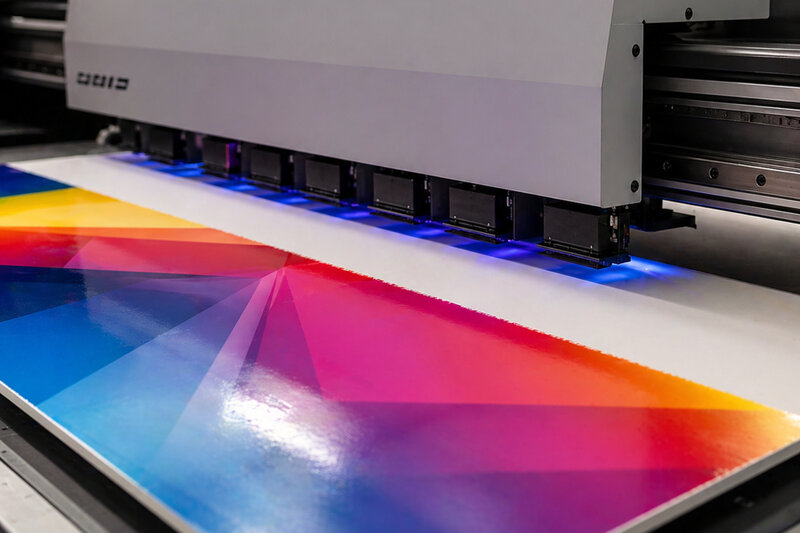
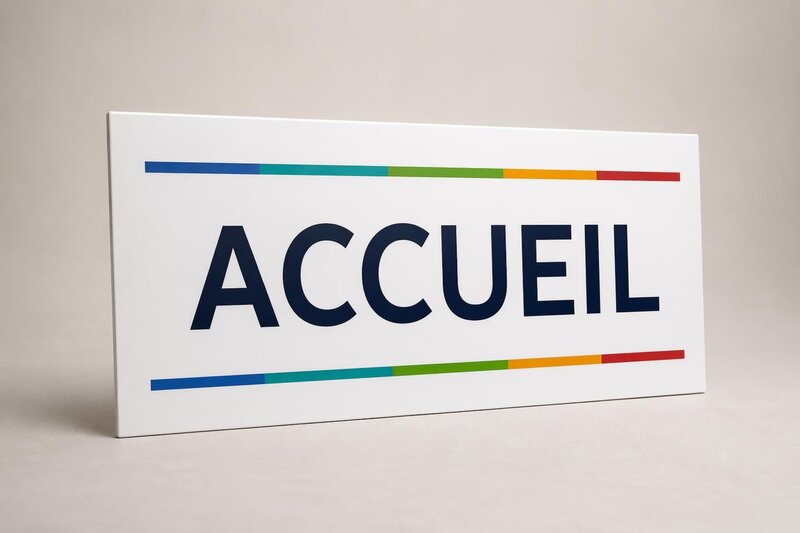
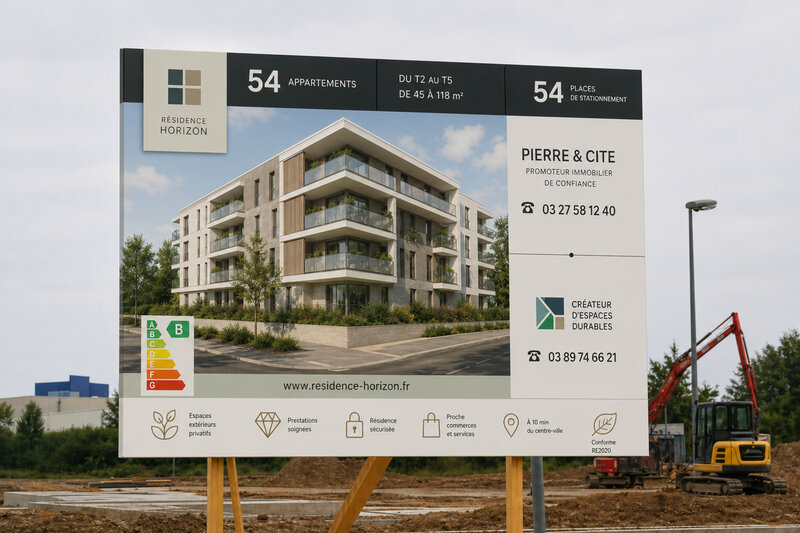
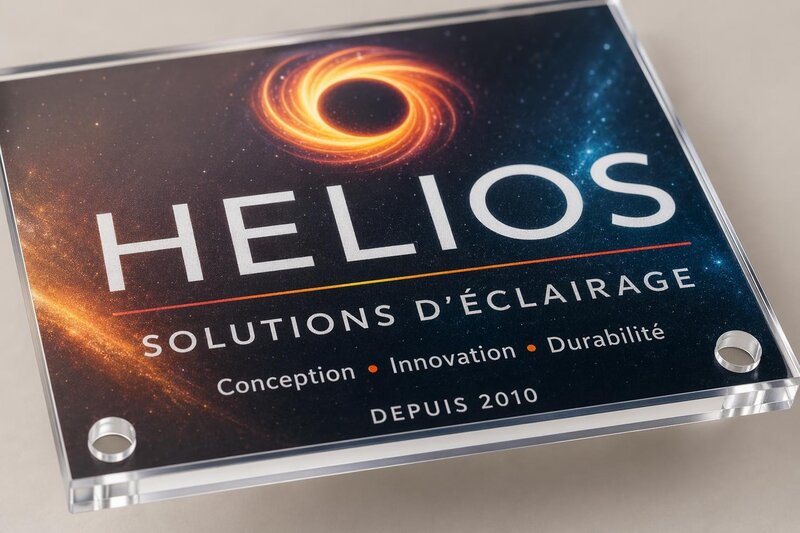
Full-colour CMYK printing with UV-cured inks, delivering photographic-quality output and vibrant, long-lasting colours.
Suitable for prolonged outdoor exposure. Material and colours resist fading and degradation under direct sunlight.
Surface withstands harsh industrial contact including solvents, mild acids, oils, greases, and heavy-duty cleaning agents.
All-purpose material equally suited to smart interior signage and durable long-term outdoor display.
Precision cutting to the millimetre. Easily processed by laser, saw, or guillotine shear to suit your production requirements.
Through-body pigmentation blocks light completely, ensuring maximum legibility with no translucency or bleed-through.
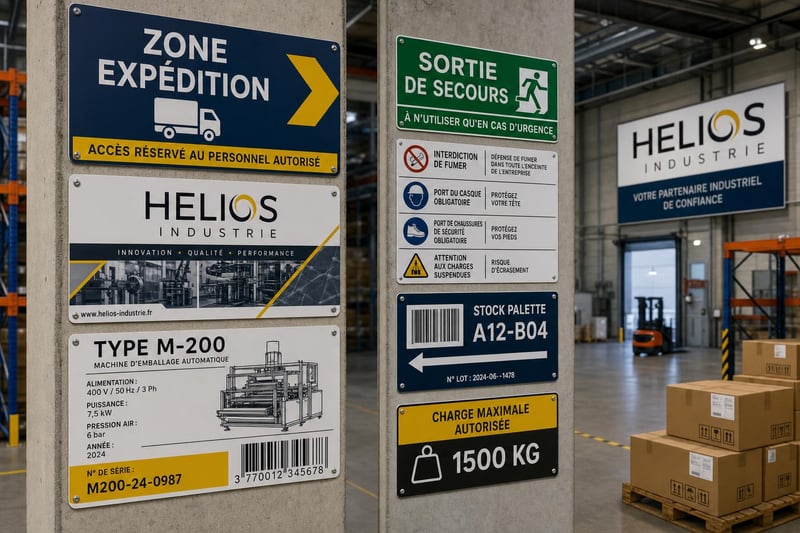
Digital printing is used for machine identification plates, control panel fascias, site directional signs and traceability labels with QR codes. It also covers reception and wayfinding signage requirements, as well as photographic-quality displays for the hospitality and events sectors.
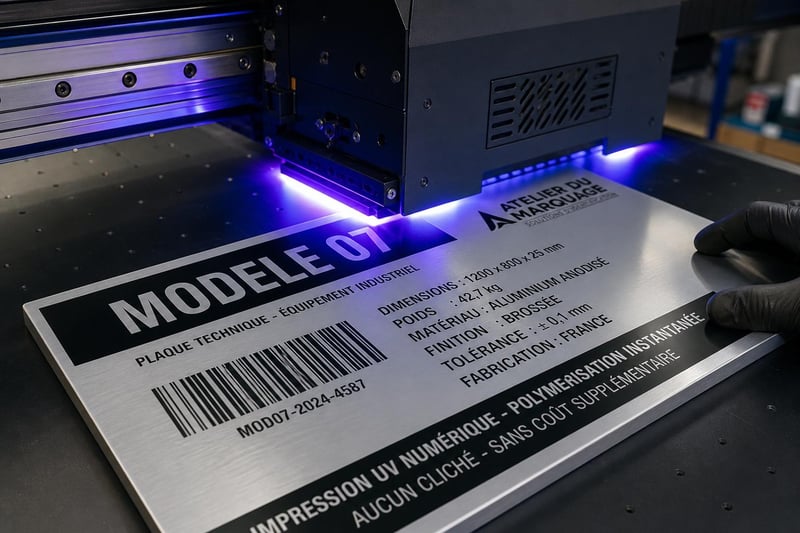
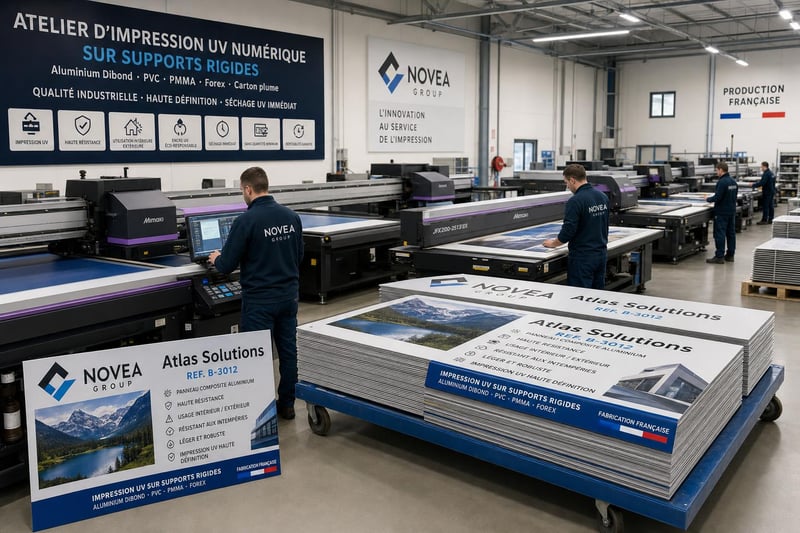
With no plates or stencils required, UV digital printing goes into production as soon as the file is received. Each piece can carry a unique identifier, a full-colour logo or a traceability code, with no surcharge for the number of colours or visual complexity.
Send us your plans or your specifications. Our design office analyses your requirements and sends you a bespoke commercial proposal within 4 to 8 working hours.
The choice of marking process depends on four parameters: the number of colours, the volume of pieces, the required durability and the presence of variable data. Digital printing is the natural choice whenever the artwork involves multiple colours, a complex logo or unique identifiers per piece. Screen printing remains relevant for very large monochrome runs where cost control is paramount. Laser engraving is essential when the marking must be permanently embedded in the material, particularly when exposed to aggressive solvents or high temperatures.
This process is less suited to extreme chemical environments where surface inks — even UV-cured — cannot match the performance of a recessed marking. In such cases, laser engraving or CNC milling with infilled paint offer superior longevity.
Direct UV digital printing is applied to raw, powder-coated or anodised aluminium, rigid PVC, polycarbonate and aluminium composite. Laminated adhesive film is suited to complex surfaces or substrates requiring a removable fixing method. The choice between the two methods depends on substrate rigidity, UV exposure and on-site fixing requirements.
Outdoors, powder-coated aluminium combined with UV lamination offers the best durability. In damp indoor environments — food processing, pharmaceutical — polycarbonate or PVC withstand frequent cleaning more effectively. Aluminium composite panels combine low weight and rigidity for directional signs and large-format synoptic displays.
The principle of variable data involves feeding the print file from an external database: each piece automatically receives its serial number, barcode or QR code without any manual intervention between prints. This capability meets the requirements for permanent marking in regulated sectors — pharmaceutical, food and beverage, energy — and simplifies asset management across equipment fleets.
The scan quality of a DataMatrix or QR code produced by digital printing depends on print resolution, contrast between the background and the code, and the absence of unwanted reflections on the substrate. A matt opaque background combined with dense black ink ensures optimal read rates, including with handheld industrial scanners.
The service life of a digital marking depends primarily on UV exposure, humidity, chemical agents and mechanical abrasion. Three protection options are available: matt or gloss lamination for outdoor use, reverse printing on the back of a transparent substrate for maximum indoor protection, and treated technical substrates for demanding industrial environments.
Retaining the source files and colour profiles used during the initial production run is the essential prerequisite for guaranteeing a perfect match on reorders. Industry best practice recommends documenting colour references — CMYK values and Pantone codes — from the initial order, so as to facilitate compliance checks during site audits.
Vector files (AI, EPS, high-resolution PDF) are preferable to bitmap formats for ensuring sharp edges and text. Embedded images must reach a minimum resolution of 150 dpi at the final print size. The CMYK colour mode is mandatory — any file submitted in RGB will be converted, which may result in a colour shift on saturated shades.
Allowing a bleed of 2 to 3 mm around the final format prevents white borders after cutting. Important text and graphic elements must remain within a safe zone to avoid being trimmed. We regularly find that orders submitted without bleed or safe zones generate avoidable back-and-forth during approval — providing a calibrated template from the outset speeds up production and guarantees a result that matches the first run.