Get a quote
express 4h


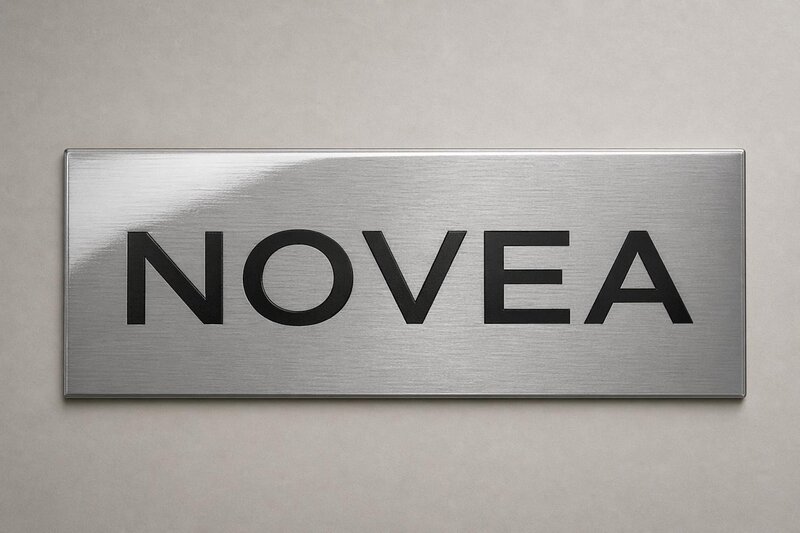
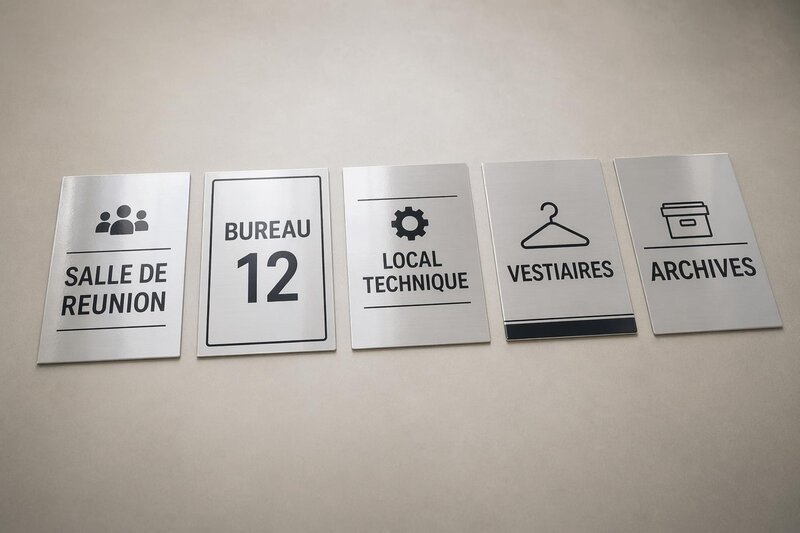
Suitable for prolonged outdoor exposure. Material and colours resist fading and degradation under direct sunlight.
Surface withstands harsh industrial contact including solvents, mild acids, oils, greases, and heavy-duty cleaning agents.
Matt or textured finish providing robust protection against impact, abrasion, and everyday wear in industrial settings.
Designed for demanding environments. Thermal integrity guaranteed from -40°C to +80°C with no warping or distortion.
All-purpose material equally suited to smart interior signage and durable long-term outdoor display.
Full-colour CMYK printing with UV-cured inks, delivering photographic-quality output and vibrant, long-lasting colours.
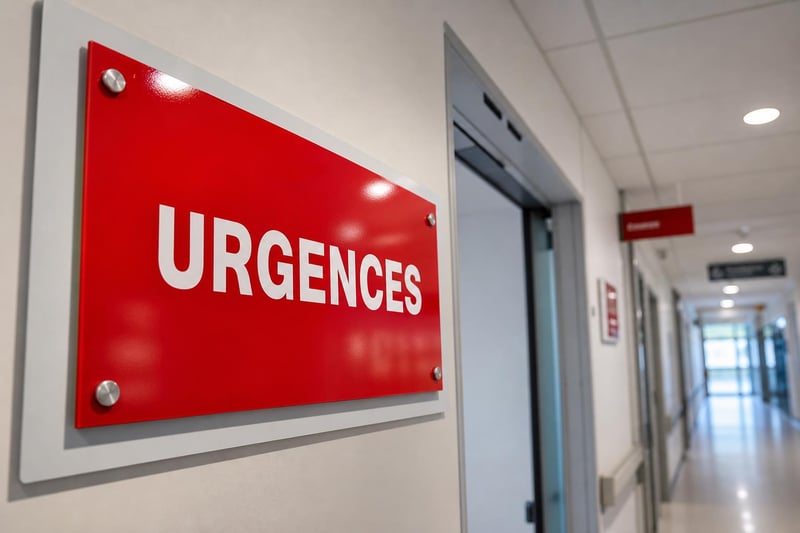
From petrochemical plants to food production lines, construction sites and transport equipment, every sector imposes specific exposure constraints.
An appropriate finish maintains marking legibility against oils, disinfectants, UV radiation and repeated mechanical impacts, regardless of how demanding the environment.
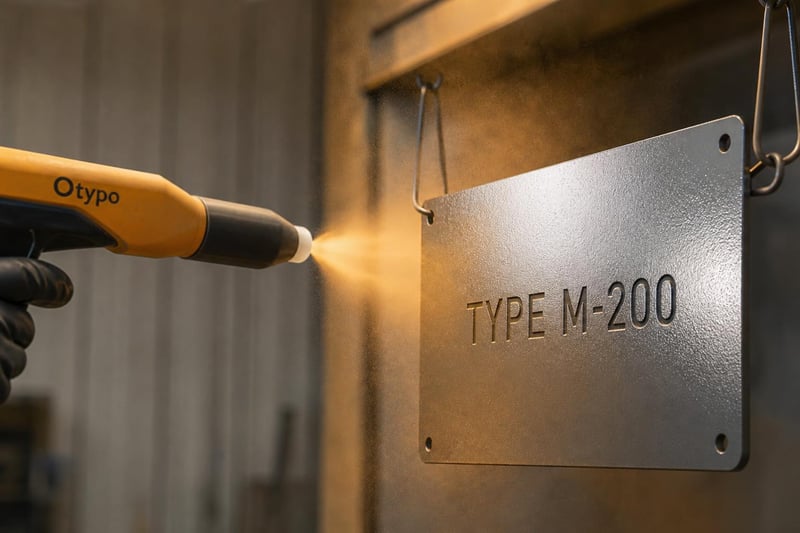
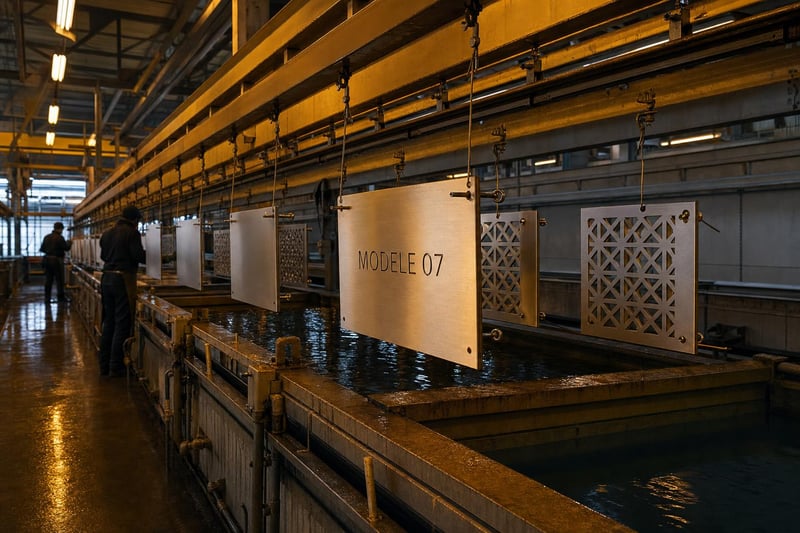
The choice of protective finish process directly determines the resistance of the marking. Each technique addresses specific substrate, environment and mechanical stress requirements.
Send us your plans or your specifications. Our design office analyses your requirements and sends you a bespoke commercial proposal within 4 to 8 working hours.
Industrial marking without an appropriate finish is exposed to progressive deterioration: delamination, fading, yellowing or loss of legibility. Protective finish for signage is not a purely aesthetic treatment — it is a functional layer that determines the service life of the marking in its real environment. The choice between UV varnish, lamination film or doming resin is based on an analysis of exposure constraints: moisture, chemical agents, solar radiation, mechanical abrasion.
UV varnish, once cured, forms a continuous film over the printed surface, resistant to light scratches and common chemicals. Its finish can be matt, satin or gloss depending on legibility requirements. Polyurethane varnish offers application flexibility on complex substrates or irregular surfaces where lamination cannot be applied uniformly. Both formulations are suitable for the majority of standard industrial environments.
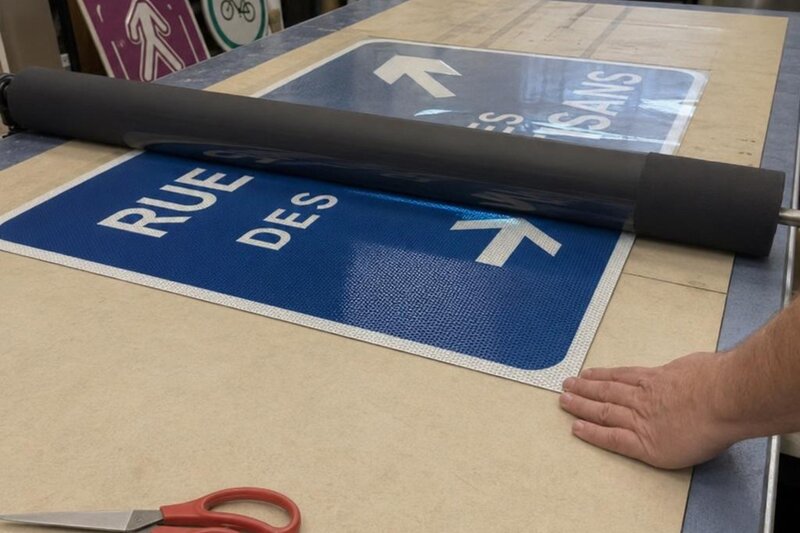
Lamination film encapsulates the print within a barrier layer that fully isolates the marking from the external environment. It provides superior resistance to moisture, abrasion and UV radiation, on both flexible and rigid substrates. This technique is particularly suited to signs exposed to frequent cleaning or to atmospheres laden with vapours. A film incorporating UV stabilisers maintains colour stability during prolonged outdoor exposure.
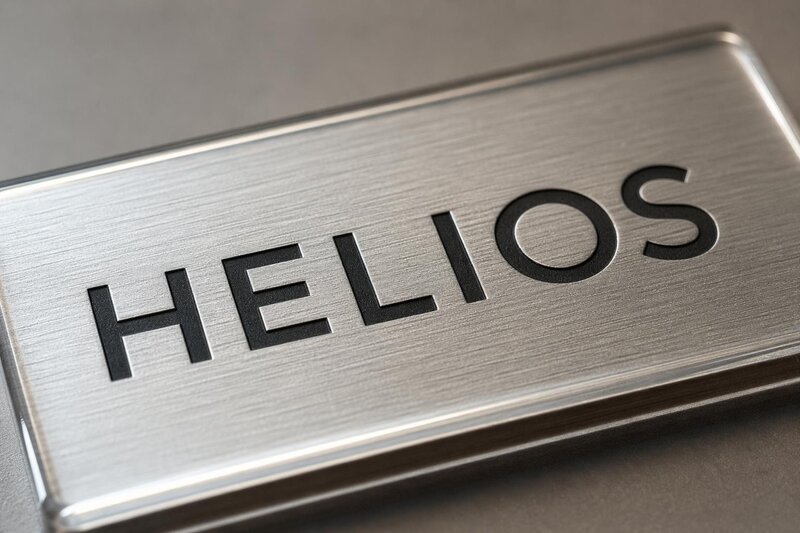
Doming resin is cast over the marking to form a transparent raised dome. It provides enhanced mechanical protection against impacts and localised friction, whilst creating a three-dimensional visual effect. This technique is reserved for small formats — badges, labels, compact identification plates — subject to repeated handling or frequent direct contact.
Industrial environments expose markings to a variety of chemical agents: cutting oils, greases, alkaline detergents, chlorinated disinfectants. A polyurethane varnish or lamination film selected for its chemical resistance maintains print integrity against these common aggressors. For strong solvents or concentrated acids, the selection of substrate and finish must be subject to prior technical validation — some environments exceed the capabilities of standard finishes.
Exposure to UV radiation accelerates the ageing of inks and unprotected substrates: discolouration, embrittlement, delamination. Finishes incorporating UV stabilisers significantly slow this process. Thermal stability must also be considered in environments subject to repeated hot-cold cycles — a poorly matched finish can crack or delaminate under the effect of differential expansion between the substrate and the protective layer.
Industrial equipment is subject to obligations for legible and permanent identification throughout its service life. Degraded marking no longer meets these requirements and necessitates immediate replacement, with the operational risks associated with a period of defective signage. Protective finish is the direct technical response to this obligation: it guarantees the longevity of the marking without maintenance intervention between inspection cycles.
In the food processing, pharmaceutical and medical sectors, surfaces in contact with production areas must be compatible with the cleaning protocols in force. The choice of finish directly determines the hygienic compliance of the signage. In areas subject to the Dangerous Substances and Explosive Atmospheres Regulations (DSEAR) or in corrosive environments, the deterioration of marking constitutes a documented risk: surface protection is an operational response to the safety requirements imposed in these environments.
At Otypo, protective finish is not an afterthought added at the end of production — it is integrated from the design phase. The choice of substrate (aluminium, PVC, dibond, polycarbonate), print process (HD UV printing, laser engraving) and finish forms a coherent whole designed around the identified on-site constraints. This approach prevents inter-layer incompatibilities and guarantees optimal long-term adhesion.
The Otypo workshop allows several techniques to be combined on a single piece: permanent laser engraving for critical information, HD digital printing for graphic elements, and a protective finish matched to the final environment. This mastery of the complete production cycle enables the most severe constraints to be met without compromise on legibility, aesthetics or marking compliance.