Get a quote
express 4h


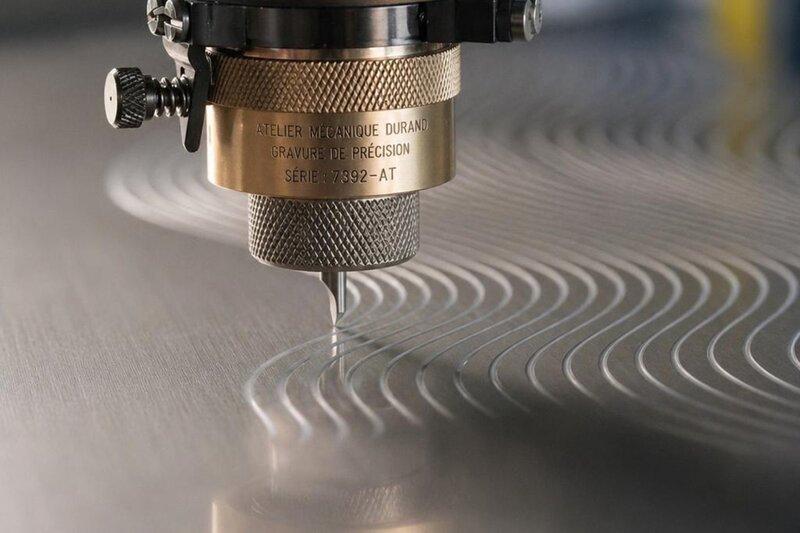
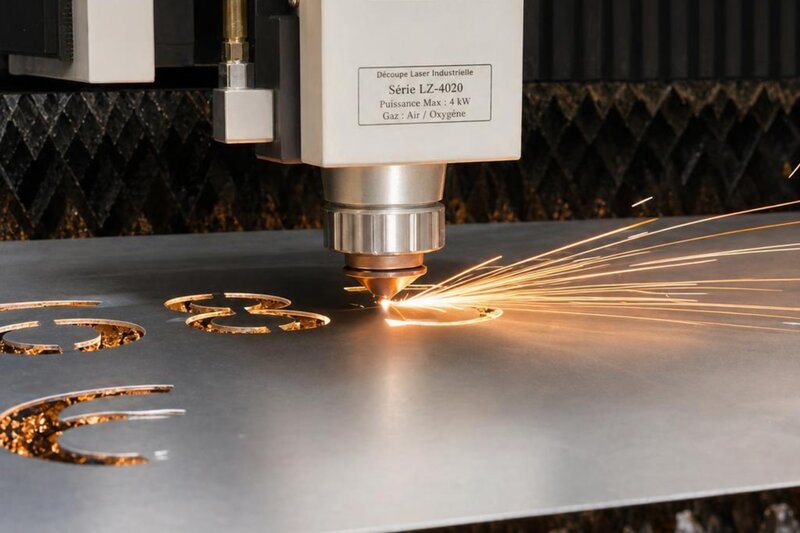
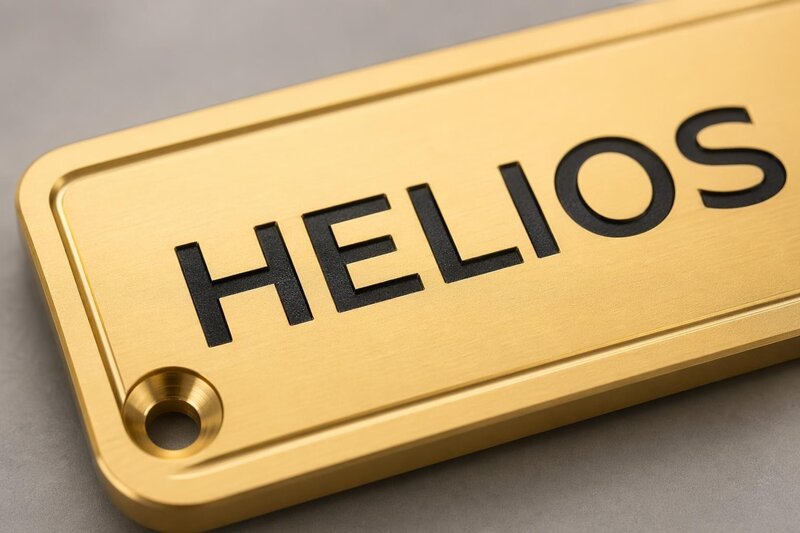
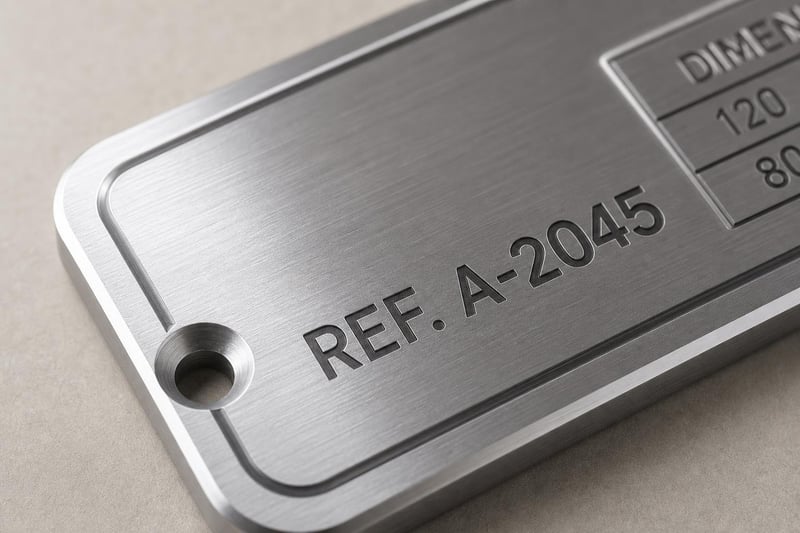
Deep mechanical engraving by rotary cutting. Ideal for solid brass and aluminium where infilled painted lettering is required.
Premium industrial aesthetic. Anodised surface treatment ensures lasting corrosion resistance in demanding conditions.
Surface withstands harsh industrial contact including solvents, mild acids, oils, greases, and heavy-duty cleaning agents.
Matt or textured finish providing robust protection against impact, abrasion, and everyday wear in industrial settings.
Designed for demanding environments. Thermal integrity guaranteed from -40°C to +80°C with no warping or distortion.
Text and graphics cut directly into the substrate (precision to 0.08 mm), producing a permanent, tamper-proof mark.
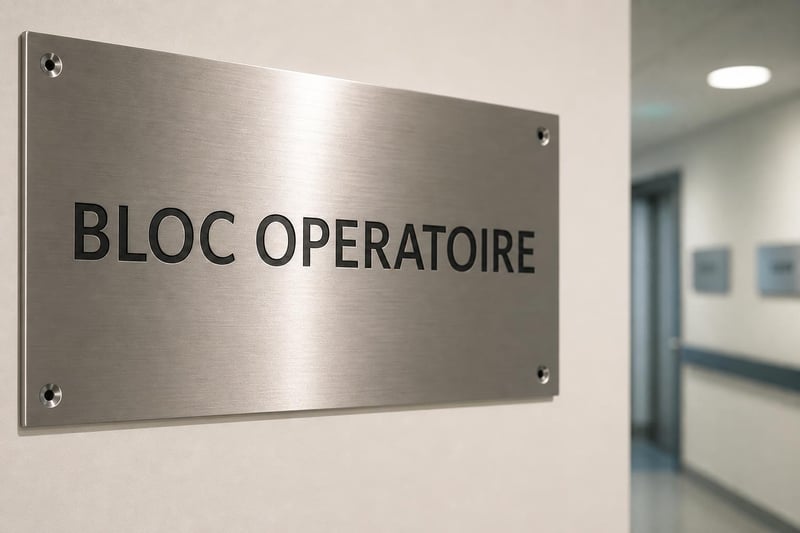
From heavy industry to premium hospitality, the machining finish meets contexts where print or labels are not sufficient: pipework identification, nameplate marking on machinery, traceability in food processing environments, numbering of technical rooms.
Each sector imposes specific constraints — chemical resistance, vibration tolerance, long-term legibility — which determine the choice of material and surface condition required.
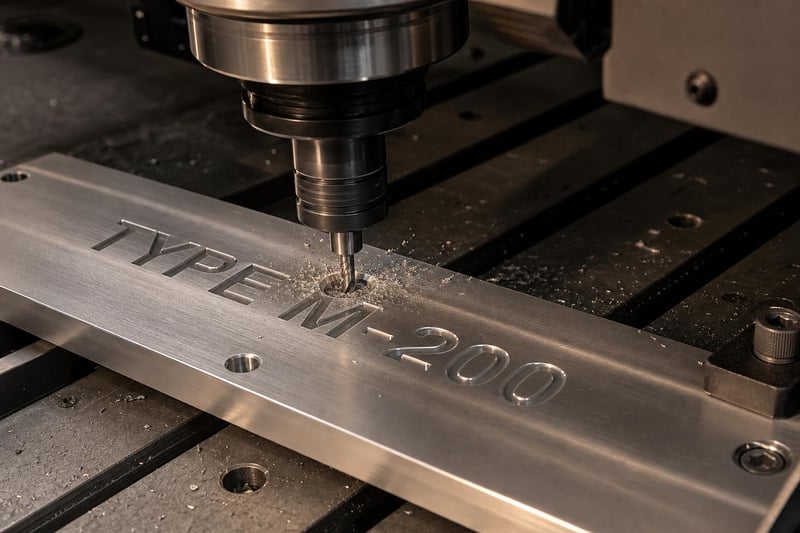
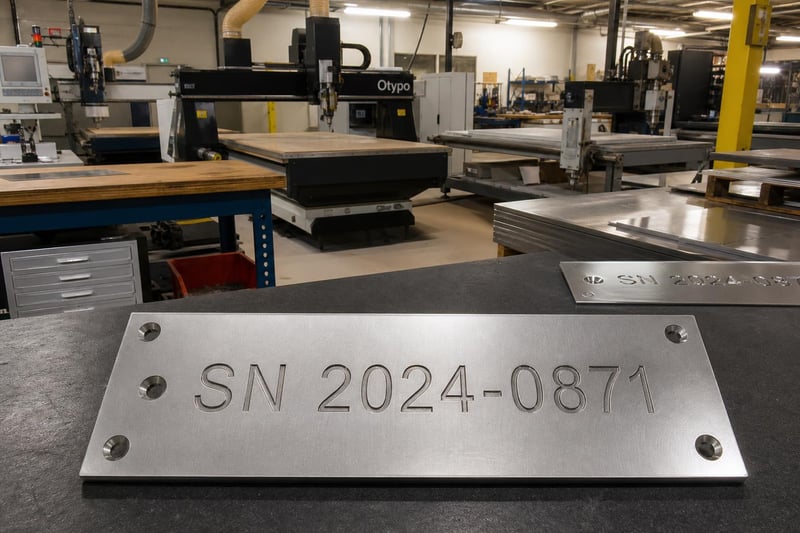
CNC milling combines cutting, drilling and recessed engraving in a single operation. On dual-layer plastics, material removal reveals the contrasting core — a clean, permanent marking that is impervious to solvents and abrasion.
Send us your plans or your specifications. Our design office analyses your requirements and sends you a bespoke commercial proposal within 4 to 8 working hours.
The machining finish encompasses mechanical operations — milling, drilling, chamfering, recessed engraving — that transform raw stock into a functional plate with a defined geometry that is immediately ready for integration. Unlike additive processes such as printing or screen printing, machining produces marking that is integral to the substrate: it cannot peel away, cannot be erased and does not degrade on contact with the chemical or mechanical agents present in industrial environments.
The choice of material directly determines the quality of the machined plate and its service life. Stainless steel is the reference material for wet, chemically aggressive or intensive-cleaning environments — food processing, pharmaceutical and petrochemical industries. Anodised aluminium is suitable for moderate outdoor environments and applications requiring a good balance between light weight and corrosion resistance. Brass, which can be machined with very sharp edge definition, is preferred for nameplates and high-perceived-value signage. Dual-layer plastics deliver clean contrast through material removal, without any additional treatment.
CNC milling allows cut-to-size profiling, fixing drillings, countersinks for flush-head screws and engraving of text or pictograms to be combined on a single part. This integration reduces secondary operations and guarantees dimensional consistency between the marking and the plate geometry. On dual-layer plastics, the milling cutter reveals the core colour at the surface, producing a permanent contrast that neither friction nor solvents can alter.
Digital programming of tool paths guarantees exact dimensional repeatability from part to part and from batch to batch. CNC files are retained and can be rerun at any time for a restock or one-off replacement, without reconfiguration or dedicated tooling. This traceability is particularly valuable for uniform equipment fleets where visual and dimensional consistency of plates is an operational requirement.
An industrial machined plate is designed to fit its mounting surface exactly, not the other way around. Fixing drillings, countersinks to recess screw heads and safety chamfers on edges are defined at the programming stage and completed in a single set-up. Supplying a fully dimensioned drawing to the manufacturer eliminates all manual rework on site and guarantees immediate installation, even in difficult-access configurations.
In environments subject to vibration, significant thermal cycling or high-pressure cleaning, the mechanical fixing of a machined plate offers superior durability compared with adhesive bonding. Removability is also an advantage in contexts where the plate must be detachable for maintenance or replacement without damaging the substrate.
Many industrial assets — machinery, pressure vessels, electrical installations, transport equipment — are subject to permanent identification obligations under BS and EN standards. These requirements impose indelible marking that remains legible throughout the service life of the equipment, is integral to the substrate and withstands operating conditions. A machined plate meets these obligations structurally: recessed marking cannot be erased, peeled off or degraded by agents present in the operating environment.
The energy, heavy industry, medical and transport sectors are most exposed to permanent regulatory marking obligations. In these contexts, machining finish on metal — stainless steel or aluminium depending on the environment — is the process that most directly meets the legibility, durability and traceability requirements imposed by client specifications and sector standards.
A machined metal plate — stainless steel or anodised aluminium — requires no particular maintenance in the vast majority of use cases. The machined surface withstands routine cleaning, UV exposure and thermal cycling without additional treatment. On lacquered aluminium in chemically aggressive environments, a suitable surface protection can be applied to the machined areas to maintain coating integrity over time.
Retention of digital manufacturing files allows any custom machined plate to be reproduced identically, even several years after the original order. This restock capability is decisive for industrial estate managers who must maintain consistent signage across evolving installations or those undergoing progressive renewal.