Get a quote
express 4h


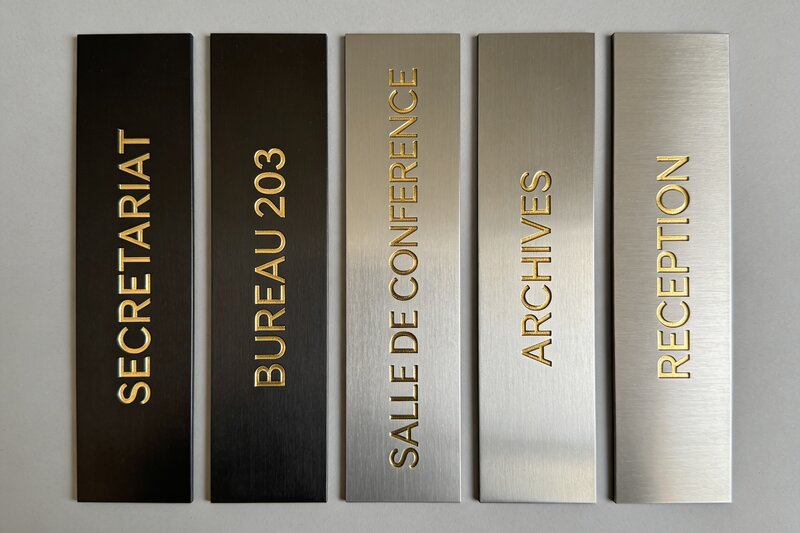
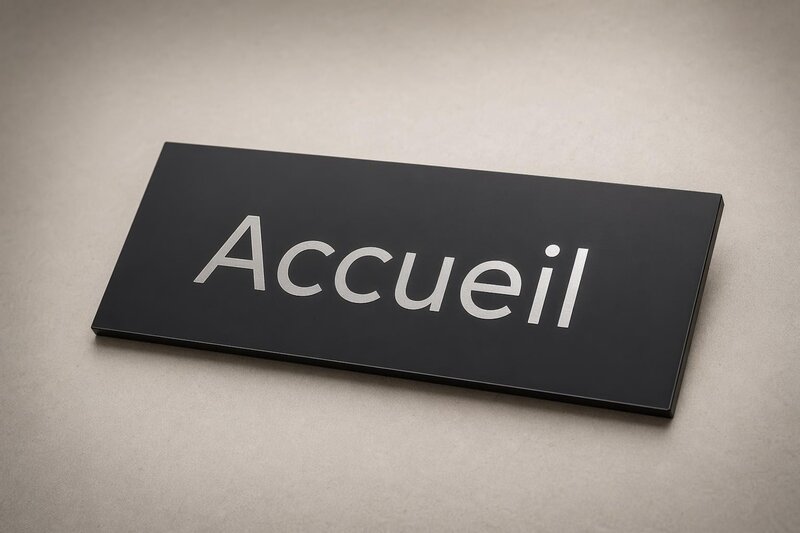
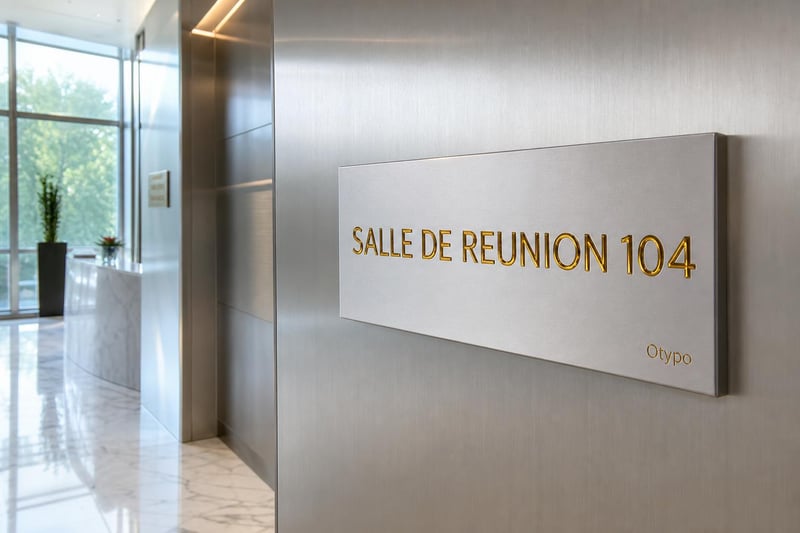
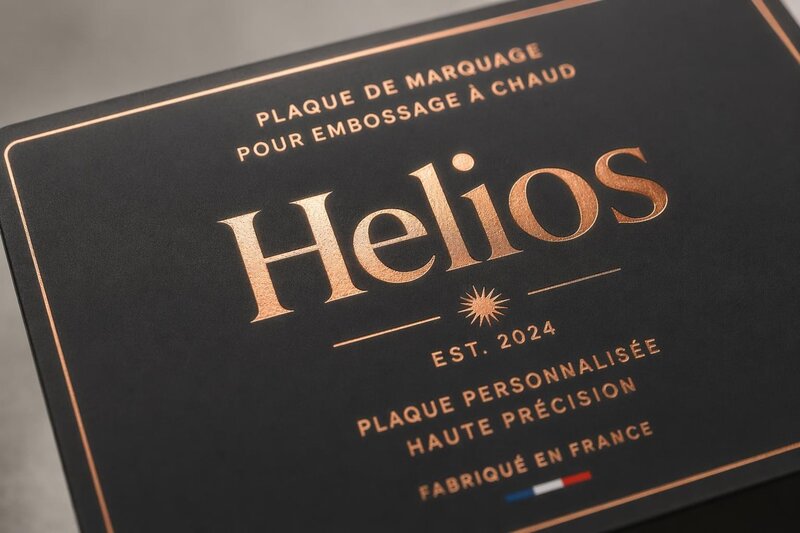
Premium industrial aesthetic. Anodised surface treatment ensures lasting corrosion resistance in demanding conditions.
Suitable for prolonged outdoor exposure. Material and colours resist fading and degradation under direct sunlight.
Designed for demanding environments. Thermal integrity guaranteed from -40°C to +80°C with no warping or distortion.
Surface withstands harsh industrial contact including solvents, mild acids, oils, greases, and heavy-duty cleaning agents.
Text and graphics cut directly into the substrate (precision to 0.08 mm), producing a permanent, tamper-proof mark.
Full-colour CMYK printing with UV-cured inks, delivering photographic-quality output and vibrant, long-lasting colours.
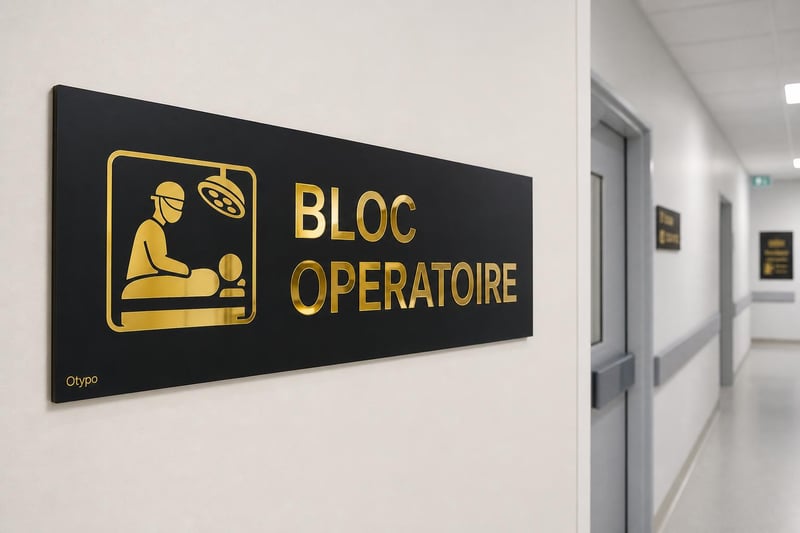
The hot foil stamping finish is the preferred choice for projects where identification must combine legibility with a polished image: manufacturer plates in industry, institutional signage in the public sector, door plates in hospitality, premium labels in food and beverage, and equipment identification in the energy sector.
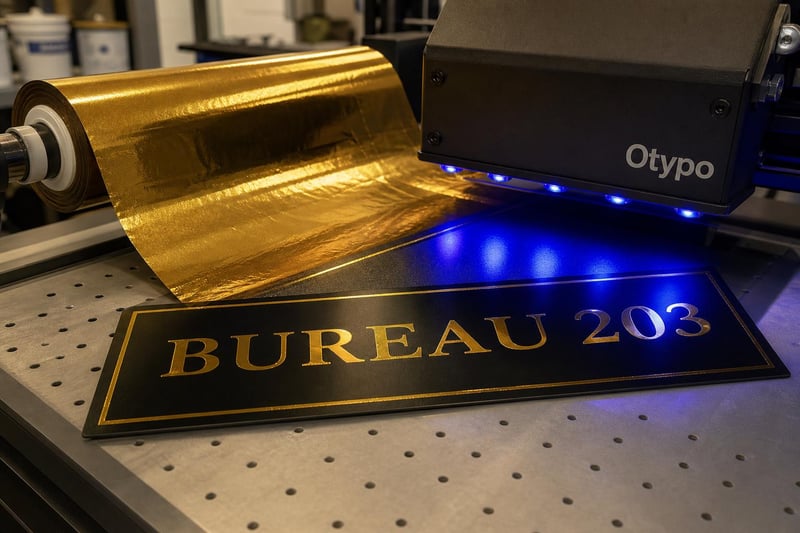
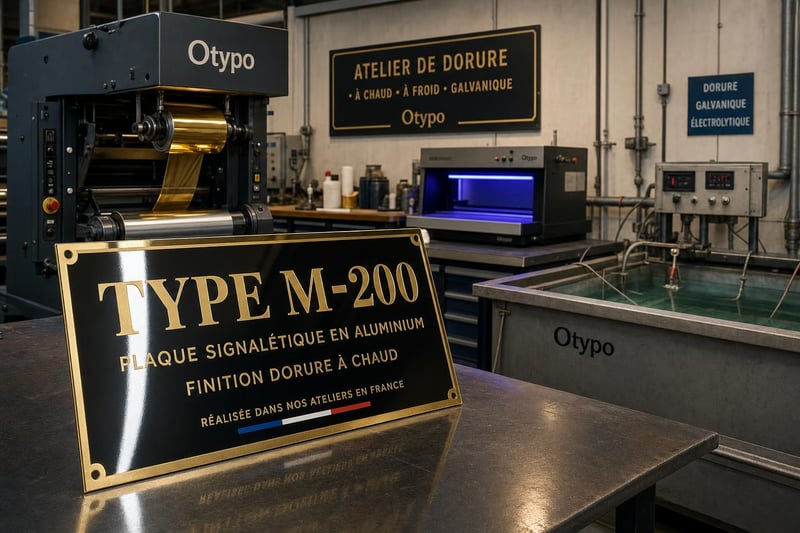
The hot stamping transfer encapsulates the metallic layer between the polyester film and the lacquers, limiting tarnishing under normal use. Compatible with a wide range of substrates, the finish can be reinforced with an overprint varnish for demanding environments.
Send us your plans or your specifications. Our design office analyses your requirements and sends you a bespoke commercial proposal within 4 to 8 working hours.
The hot foil stamping finish relies on a pressure-and-heat transfer process: a metallised aluminium layer, carried on a polyester film, bonds permanently to the substrate. The result is a continuous mirror effect, with a visual depth and light reflection that gold ink printing — regardless of its resolution — cannot replicate. This fundamental difference is what justifies choosing hot foil stamping for premium signage and institutional marking projects.
Hot foil stamping is available in several finishes: gloss gold, matt gold, silver, copper and holographic. It can be applied to a wide range of substrates — acrylic, PVC, polycarbonate, aluminium, brass, glass, paper and card — provided the thermoreactive film is selected in accordance with the base material. In our experience, film selection is consistently the most critical technical step in guaranteeing adhesion and the long-term durability of the gold foil finish.
In manufacturing, the gold manufacturer's plate enhances product image on exposed machinery or special editions. In public sector buildings and civic facilities, gold foil gives inauguration plaques and room signs an institutional finish that is both legible and durable. In hospitality and premium retail, it directly reinforces the perceived positioning of the establishment at every physical touchpoint. In food and beverage and pharmaceutical environments, it visually distinguishes premium-range products without compromising their identification function.
In construction, architect plates and reception signage use gold foil for a refined and lasting finish. In the energy sector, hot foil stamping for industrial marking is used on equipment identification plates, provided the film and substrate have been validated for the actual conditions of use — temperature, humidity and light vibration.
In standard indoor use, the metallic layer encapsulated between the polyester film and the lacquers protects the metallisation from tarnishing and ordinary abrasion. Outdoors, durability depends on the film selected: a film formulated for exterior exposure, combined with an overprint varnish, guarantees performance for several years under moderate conditions. Against strong solvents, aggressive cleaning agents or intensive repeated abrasion, additional surface protection is required — this must be specified at the outset so that chemical resistance is matched to the actual environment.
Having supported numerous projects in regulated sectors, we consistently observe that long-term performance failures stem almost entirely from a mismatch between the film chosen and the actual conditions of use. For plates subject to permanent marking obligations — industrial, medical, energy — validating the film and surface treatment prior to production is a non-negotiable step.
Hot foil stamping is the reference process when a continuous metallic effect is a non-negotiable visual requirement: metallic raised logos, institutional text on dark backgrounds, presentation badges. It produces a result that neither laser engraving nor UV printing can replicate exactly.
Hot foil stamping is frequently combined with permanent laser engraving — text engraved into the material with foil as a background, or gold zones around an engraved marking — for identification plates that combine lasting legibility with a premium finish. It can also be paired with high-definition digital printing for projects integrating full-colour and metallic effects on a single substrate, such as premium-range labels or high-end marketing materials.
Otypo handles all of these processes in-house, which allows the technical compatibility between the gold foil finish, substrate and complementary process to be validated before production begins — a concrete assurance for projects with regulatory constraints or high brand-image requirements.