Get a quote
express 4h


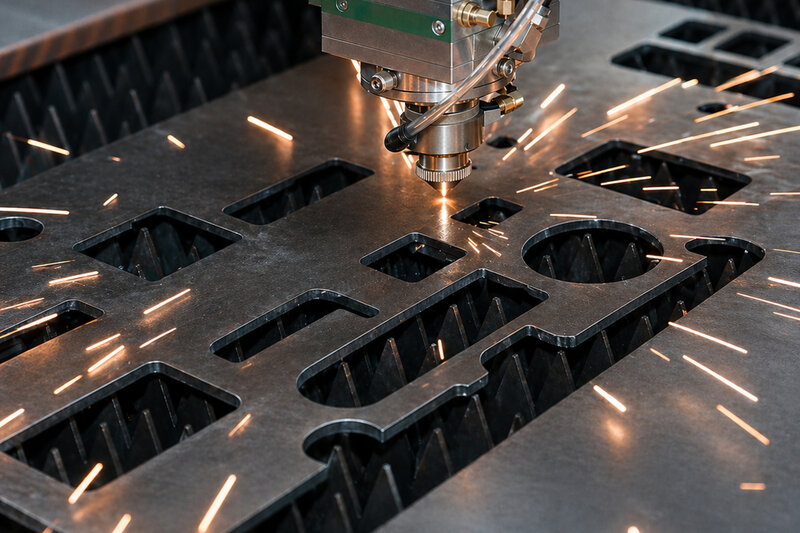
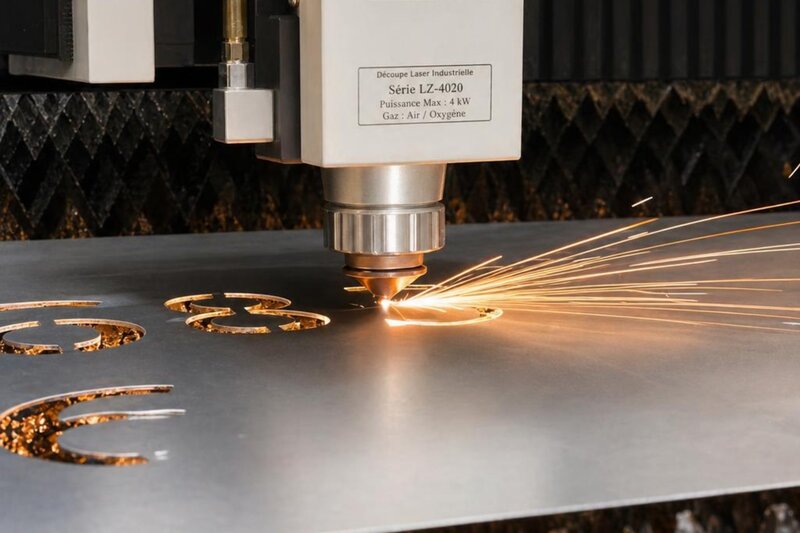
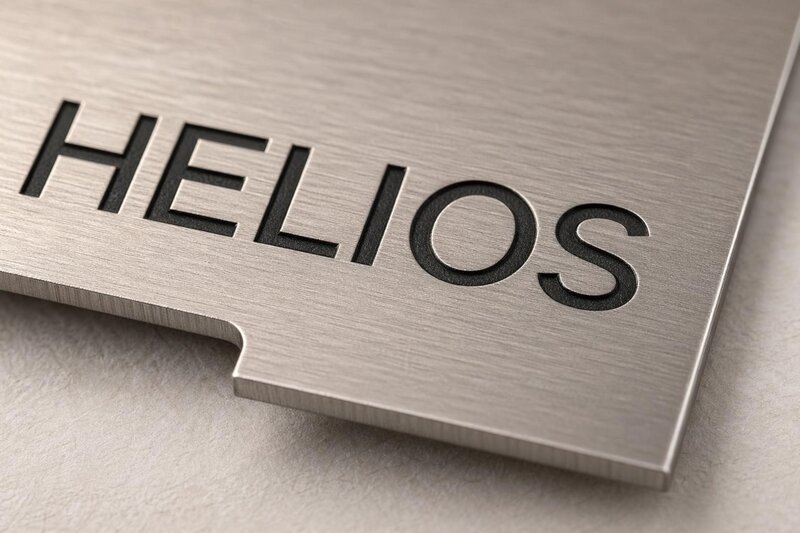
Text and graphics cut directly into the substrate (precision to 0.08 mm), producing a permanent, tamper-proof mark.
Premium industrial aesthetic. Anodised surface treatment ensures lasting corrosion resistance in demanding conditions.
Suitable for prolonged outdoor exposure. Material and colours resist fading and degradation under direct sunlight.
Surface withstands harsh industrial contact including solvents, mild acids, oils, greases, and heavy-duty cleaning agents.
Premium acrylic engineered with a thin cap layer (0.05 mm) over a contrasting core, delivering sharp legibility and crisp engraved detail.
Precision cutting to the millimetre. Easily processed by laser, saw, or guillotine shear to suit your production requirements.
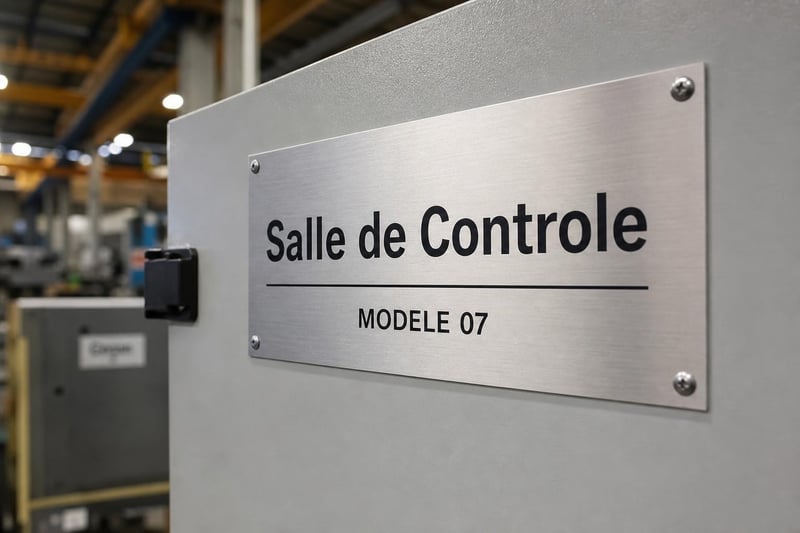
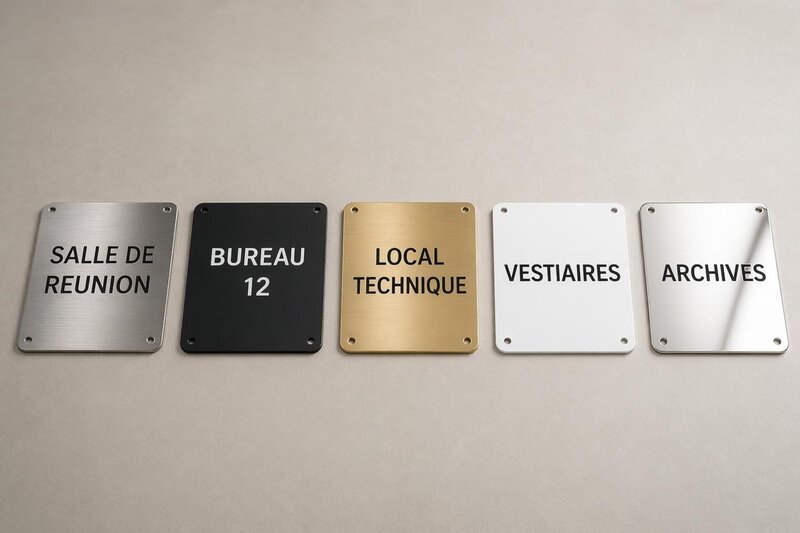
From industrial machine identification to door plates in the hospitality sector, laser marking is the go-to solution wherever permanent legibility is non-negotiable. Manufacturing, energy, food and beverage, construction, medical: every sector finds an answer tailored to its environmental constraints and regulatory traceability requirements.
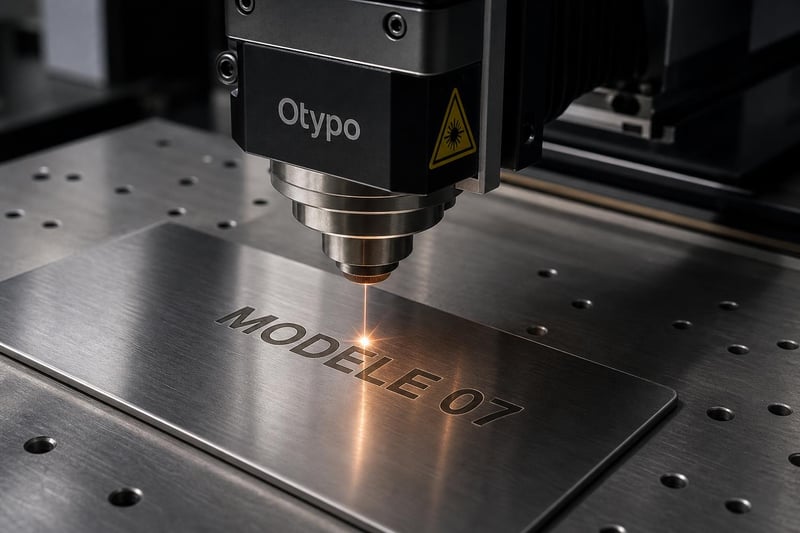
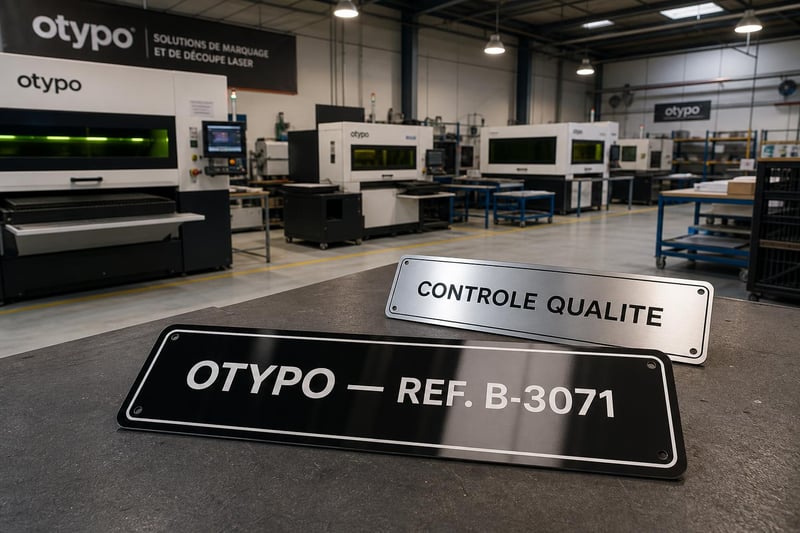
The laser works without mechanical contact: no distortion of the substrate, clean edges, and a precision of 0.08 mm that allows logos, barcodes, and DataMatrix codes to be reproduced at very small scales without loss of legibility.
Send us your plans or your specifications. Our design office analyses your requirements and sends you a bespoke commercial proposal within 4 to 8 working hours.
Laser engraving modifies the surface of the material through ablation or thermal colouration, creating a legible contrast without removing the full thickness of material. Laser cutting sections the part through its entire thickness to produce a free-form shape. Both operations can be combined on the same part within the same production run, eliminating repositioning and guaranteeing perfect alignment between the marking and the final profile.
For a custom-made signage plate, cutting defines the shape and any fixing holes, while engraving integrates the text, logo, or traceability code. The result is a finished part produced in a single operation, with no intermediate handling.
Stainless steel and anodised aluminium are the natural choice for industrial and outdoor environments: corrosion resistance, UV stability, and tolerance of aggressive cleaning regimes. Two-layer engraving laminates offer maximum contrast for regulatory interior signage. Acrylic (PMMA) is suited to directional or decorative applications where the fine laser line enhances the graphic finish.
In wet or chemically aggressive areas, stainless steel remains the benchmark. In controlled indoor environments, two-layer laminates deliver optimum legibility at lower weight. The choice of material determines the durability of the marking as much as the process itself: we consistently find that long-term legibility issues are linked to the substrate, not to the engraving.
In sectors subject to mandatory marking obligations — machinery, pressure equipment, hazardous areas, food production lines — identification must remain legible throughout the service life of the part without maintenance. Laser marking meets this requirement intrinsically: there is nothing to re-stick, nothing to repaint, nothing to inspect periodically.
The micrometric precision of the laser allows DataMatrix codes and serial numbers to be engraved directly onto the part, with no risk of label loss or substitution. Every marking originates from a traceable digital file, reproducible identically for renewals or fleet extensions.
The process follows a straightforward logic: validated vector file, machine parameters set to the material, marking and cutting executed, visual and dimensional inspection. The absence of physical tooling means that a mixed batch — several different references within the same order — generates no additional preparation cost. Having supported hundreds of professionals in setting up their industrial signage, we find that this flexibility is the decisive factor for facilities managers handling ad hoc repeat orders.
Every production file is retained and can be rerun identically, even several years after the original order. This complete reproducibility is particularly valuable for fleet extensions or replacements following accidental damage, with no risk of divergence between new parts and the originals.
The primary advantage of permanent laser marking over the product lifecycle is the elimination of identification-related maintenance: no labels to re-stick, no paint to touch up, no film to replace. On substrates matched to the operating environment, the engraved part retains its legibility without intervention throughout its service life.
The marking itself does not degrade, but the physical substrate may be damaged by impact, advanced corrosion, or prolonged exposure to extreme conditions. In such cases, replacement is straightforward thanks to the retention of production files: the new part is produced identically, with no redesign lead time. Structuring orders with stable references and archived files is the best practice that experienced technical managers adopt as standard.