Get a quote
express 4h


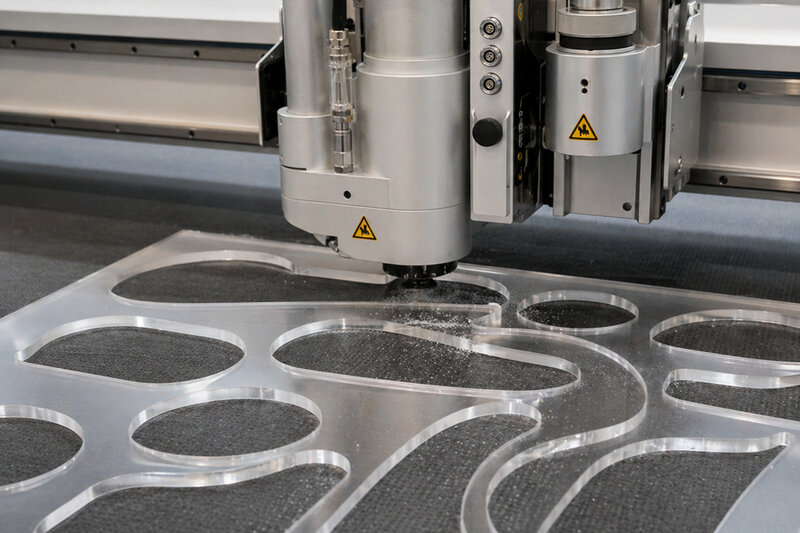
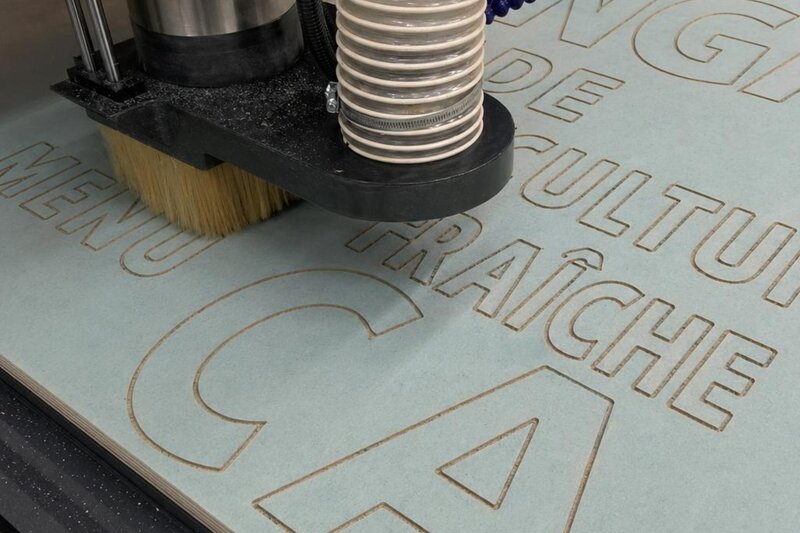
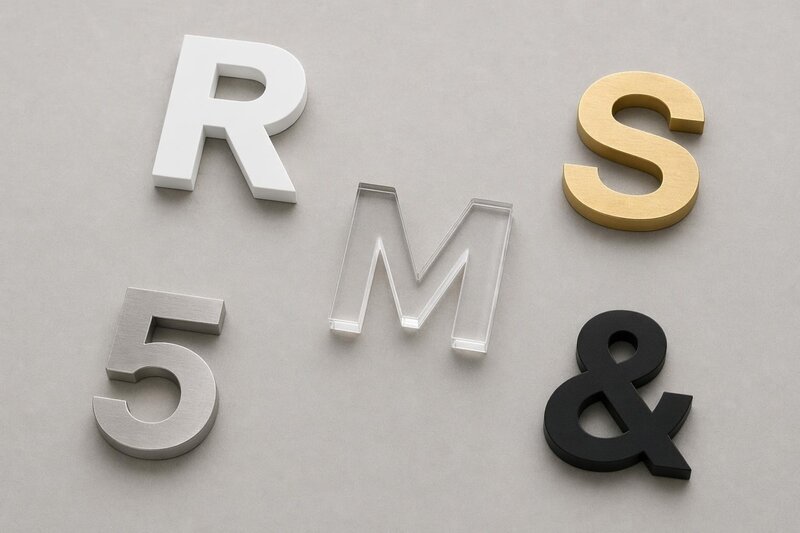
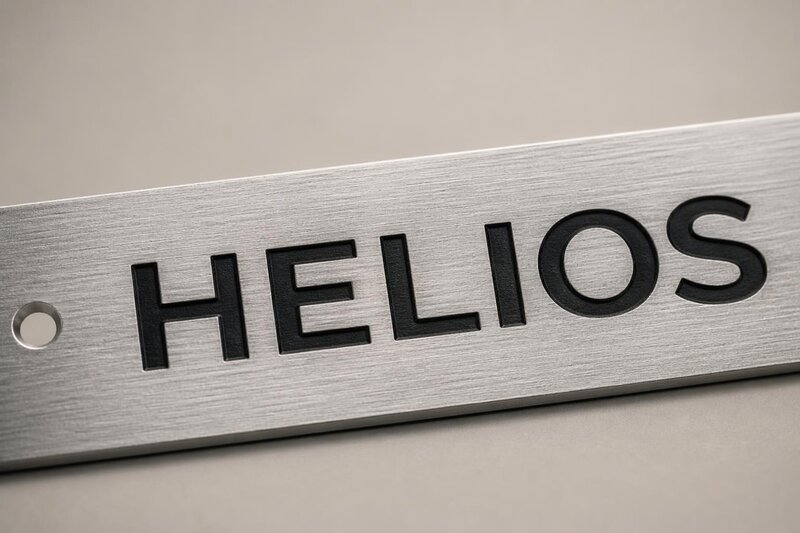
Text and graphics cut directly into the substrate (precision to 0.08 mm), producing a permanent, tamper-proof mark.
Surface withstands harsh industrial contact including solvents, mild acids, oils, greases, and heavy-duty cleaning agents.
Suitable for prolonged outdoor exposure. Material and colours resist fading and degradation under direct sunlight.
Designed for demanding environments. Thermal integrity guaranteed from -40°C to +80°C with no warping or distortion.
Premium industrial aesthetic. Anodised surface treatment ensures lasting corrosion resistance in demanding conditions.
Precision cutting to the millimetre. Easily processed by laser, saw, or guillotine shear to suit your production requirements.
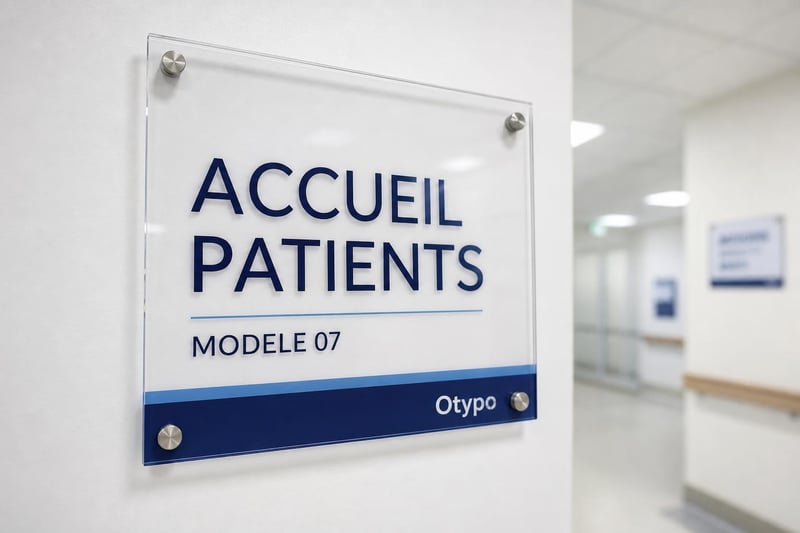
CNC laser marking covers a wide range of uses: machine identification plates, valve and electrical panel labelling, Data Matrix tags for industrial traceability, and indoor directional signage. A single process meets the requirements of manufacturing, energy, construction and food processing industries.
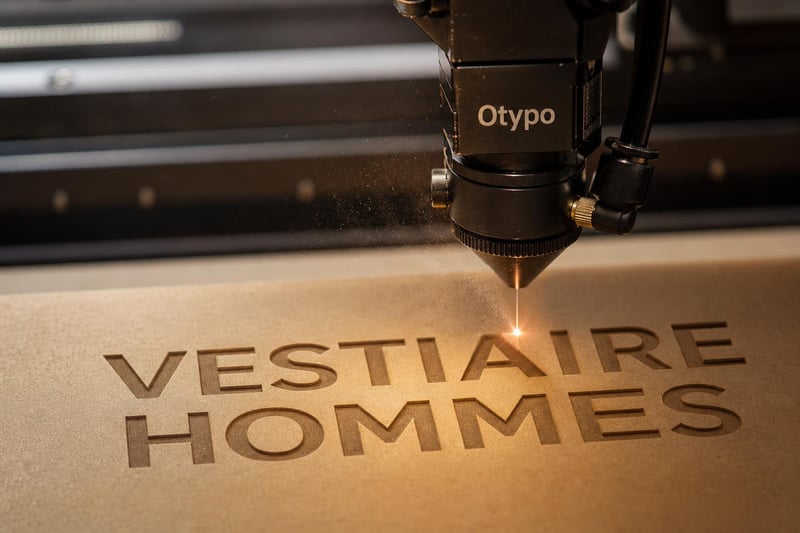
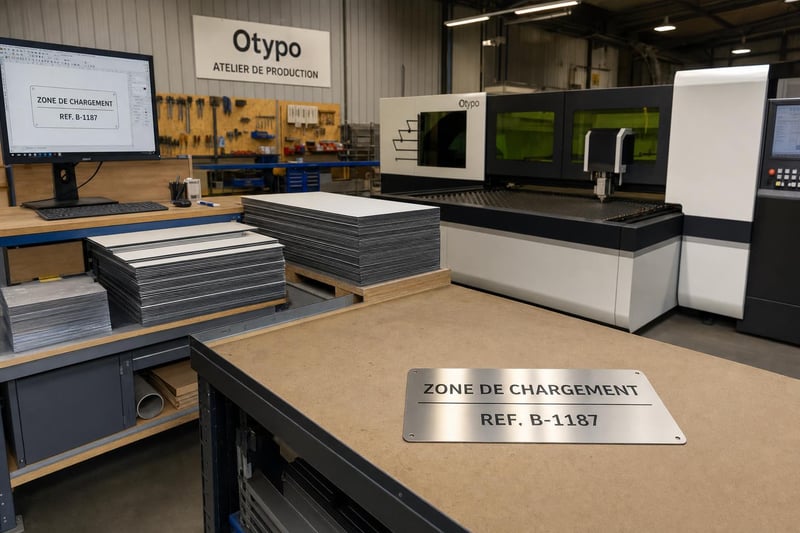
The laser beam exerts no mechanical force on the workpiece: no distortion, no burring. Ink-free marking provides native chemical resistance to solvents, oils and industrial cleaning agents without any additional protective coating.
Send us your plans or your specifications. Our design office analyses your requirements and sends you a bespoke commercial proposal within 4 to 8 working hours.
The term laser marking actually covers several distinct effects depending on beam settings and the material being processed. On metal, the laser produces controlled surface oxidation that generates a sharp contrast without material removal: this is marking in the strict sense. Laser engraving cuts into the material to produce a groove or tactile relief, particularly suited to sign plates intended for use in demanding environments. Cutting, finally, sections the material along the outline defined in the digital file, with accuracy to a tenth of a millimetre. These three operations can be combined on a single piece according to the requirements of the specification.
On two-layer laminate, the laser removes the top layer to reveal the contrasting core: the result is a sharp, opaque marking with no apparent relief. On acrylic (PMMA), laser cutting produces a polished edge that catches the light. On anodised aluminium or brushed stainless steel, laser marking creates a matt contrast against a bright background, legible at distance and resistant to repeated abrasion.
Stainless steel is the reference substrate for harsh environments: corrosion resistance, tolerance of acids and alkalis, and a wide operating temperature range. Anodised aluminium offers a refined aesthetic finish with good UV resistance, suited to outdoor applications and clean environments. Brass, being denser, is favoured for prestige plates or applications requiring deep milling with paint infill. It is less suited to strongly corrosive environments without additional surface treatment.
Laser-specific two-layer laminates are the preferred substrate for safety signage, panel labelling and indoor directional signage. Their surface resists solvents and common cleaning agents. Acrylic (PMMA) is chosen for its optical clarity and the quality of its laser-cut edges. Polycarbonate, being more flexible and impact-resistant, is suitable for environments where breakage is a risk. Each material family meets specific requirements in terms of indoor or outdoor use, chemical resistance and visual finish.
Many sectors — energy, manufacturing, food processing, medical devices, transport — require permanent identification marking that cannot be peeled off, erased or degraded over the service life of the equipment. Laser is the reference process for meeting these obligations without maintenance or periodic renewal. Regulatory requirements covering machine marking, pressure equipment identification and medical device traceability under frameworks such as the UK PSSR 2000 and UKCA marking converge on this requirement for permanence, which the laser process satisfies as standard.
Data Matrix and QR codes laser-engraved on sign plates retain their geometry and contrast throughout the service life of the component, with no risk of peeling or degradation by chemical agents. The precision of CNC control ensures that every cell of the code meets automatic reading tolerances — an essential condition for automated traceability systems. The CNC digital file provides a traceable reference: every repeat order reproduces the original piece exactly, with no quality drift between production runs.
Unlike stamping or screen printing, CNC laser requires no jig or physical tool specific to a given reference. Changing text, format or material between orders incurs no tooling surcharge. This makes the process particularly well suited to maintenance managers handling ad hoc renewals, design engineers who update their references frequently, and marketing teams who need to produce limited runs of bespoke signage.
An experienced buyer assesses a laser-engraved sign against several objective criteria: the sharpness of cut edges (absence of burring or residual carbonisation), the quality of the marking (uniformity across the entire surface, without variation in intensity), and the readability of 2D codes by different types of scanners. Long-term durability is verified by the marking's resistance to firm abrasion and exposure to common cleaning products. Repeatability from one run to the next is a supplier selection criterion that is often underestimated: CNC control guarantees that the hundredth piece is identical to the first, which underpins the reliability of automated traceability systems over the long term.
Otypo manages the entire CNC laser production chain — from digital file to finished piece — across an extensive range of technical substrates. This process expertise, combined with a thorough understanding of sector-specific constraints, enables us to recommend the right material and laser parameters for each application, whether it is an industrial identification plate, network labelling or safety signage built to last.