Get a quote
express 4h


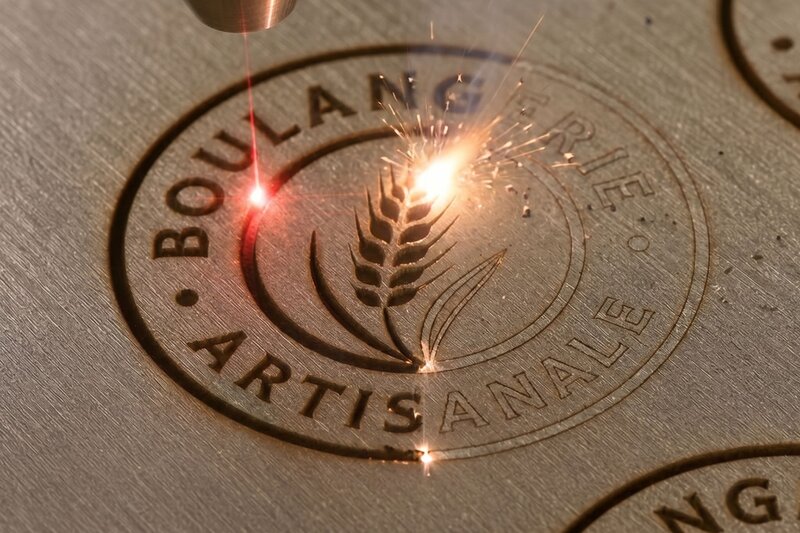
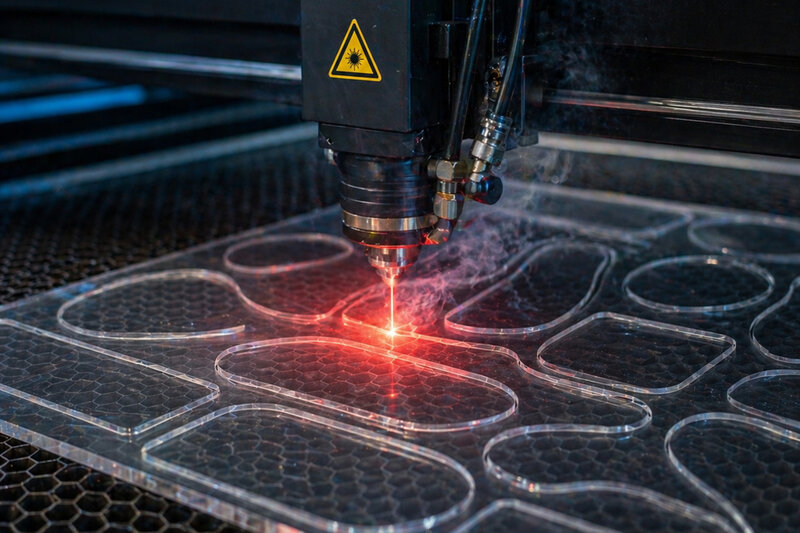
Text and graphics cut directly into the substrate (precision to 0.08 mm), producing a permanent, tamper-proof mark.
Premium industrial aesthetic. Anodised surface treatment ensures lasting corrosion resistance in demanding conditions.
Surface withstands harsh industrial contact including solvents, mild acids, oils, greases, and heavy-duty cleaning agents.
Suitable for prolonged outdoor exposure. Material and colours resist fading and degradation under direct sunlight.
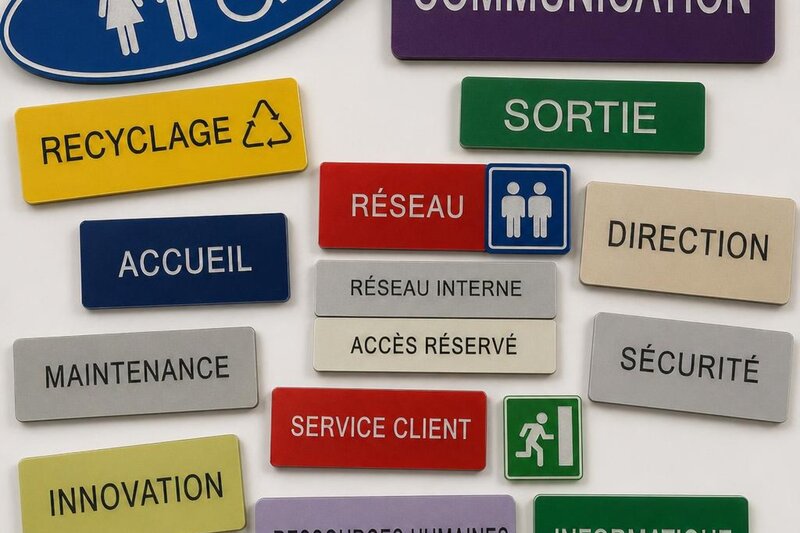
Premium acrylic engineered with a thin cap layer (0.05 mm) over a contrasting core, delivering sharp legibility and crisp engraved detail.
Matt or textured finish providing robust protection against impact, abrasion, and everyday wear in industrial settings.
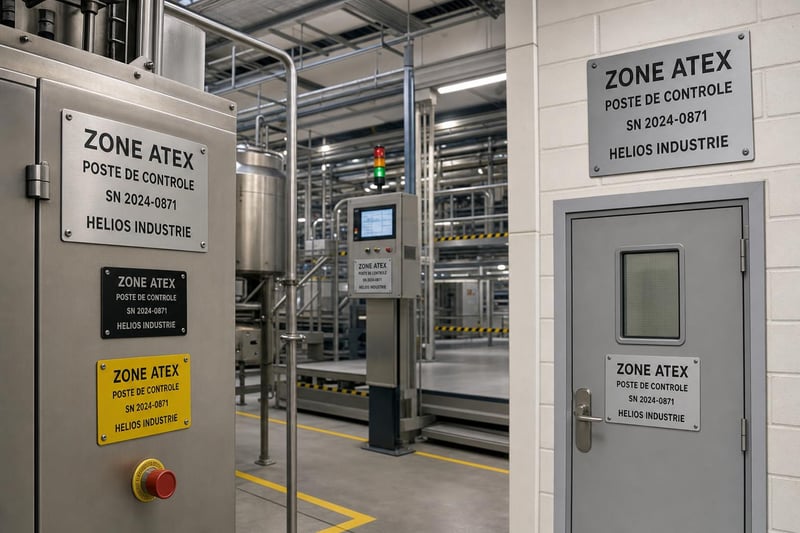
Laser engraving covers radically different applications with a single process: manufacturer's nameplates and machine plates, traceability via DataMatrix codes, valve and pipework identification, hotel room numbering and high-end name plates.
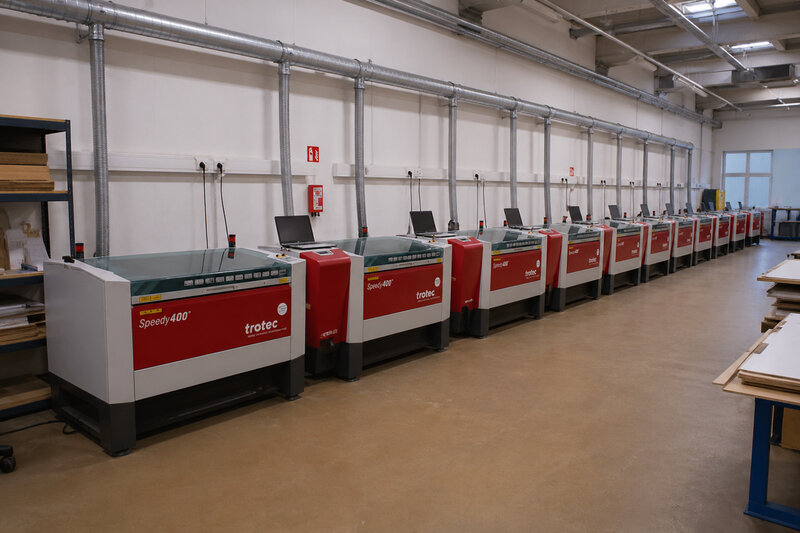
This process is equally suited to small personalised runs and repetitive production, with a consistently guaranteed finish across all parts — no intermediate adjustments, no variation in quality between the first and last plate.
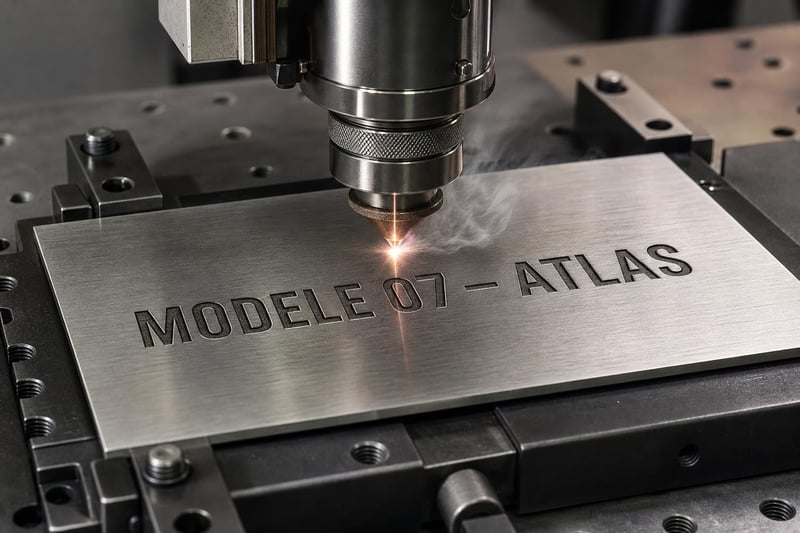
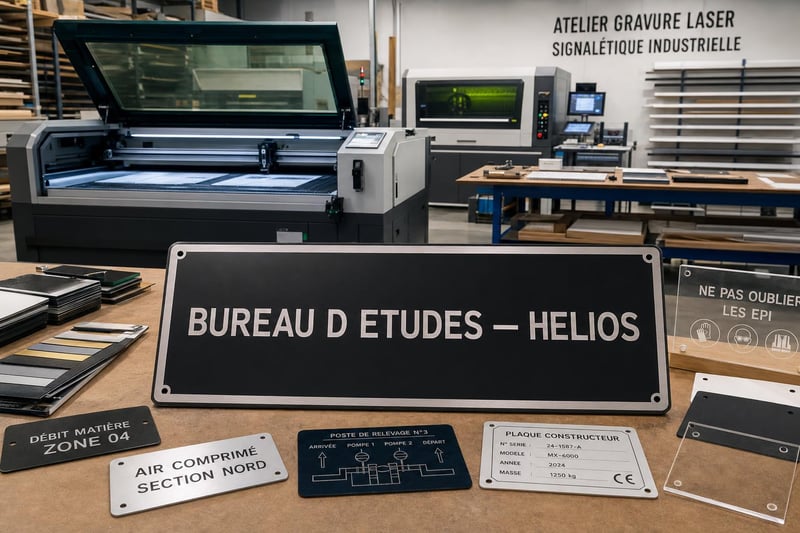
Unlike printing or labelling, laser engraving inscribes information directly into the material — no ink, no adhesive, no varnish. The result is inseparable from the substrate.
Send us your plans or your specifications. Our design office analyses your requirements and sends you a bespoke commercial proposal within 4 to 8 working hours.
Laser engraving excels on thin metals, technical plastics and two-layer materials: it offers 0.08 mm precision, a clean non-contact finish and perfect reproducibility across small and medium runs. CNC milling, through mechanical machining, is preferable for deep engraving on solid brass or thick aluminium intended for paint-filled lettering. Both processes complement one another depending on the specification: desired depth, material, required finish and volume of parts.
For serial marking on stainless steel or anodised aluminium, laser engraving stands out for its consistency and absence of consumables. For prestige plates in brass with paint-filled recessed lettering, CNC milling remains the benchmark. In both cases, the supplier's mastery of the process directly determines the quality of the final result.
On stainless steel, the laser causes controlled oxidation of the surface, generating a permanent black contrast without altering the metal's structure. On anodised aluminium, the beam locally destroys the anodic layer and reveals the bare metal, creating a highly legible matt contrast. On two-layer plastics, the laser ablates the top layer and exposes the contrasting core — no ink, no paint, no adhesive.
Clear acrylic and certain highly reflective materials present specific constraints that may limit the contrast achieved or require particular settings. Specifying the exact material and intended environment at the quotation stage avoids adjustments during production.
A laser-engraved DataMatrix code or QR code must meet precise requirements: a flat surface, sufficient contrast between the background and the code cells, and sizing appropriate to the density of information encoded. The laser's precision guarantees clean, regular cells, readable by optical scanner even after partial surface wear — a decisive advantage over labels or printed markings.
The automotive, energy, food and beverage, and petrochemical sectors make extensive use of laser engraving for traceability on their parts and equipment. The marking survives subsequent surface treatments, aggressive cleaning and demanding operating conditions — with no fragile intermediate substrate liable to peel or deteriorate.
A laser-engraved plate requires no specific maintenance. The absence of an applied layer means there is nothing to protect, nothing to re-varnish, nothing to monitor. Common industrial cleaning agents — solvents, degreasers, mild acids — do not affect the marking. For maintenance and HSE managers, this is a concrete consideration: the marking will be just as legible at the end of the equipment's service life as it was on day one.
In food-processing or pharmaceutical environments subject to regular disinfection protocols, the absence of ink or adhesive eliminates any risk of contamination linked to the marking. This criterion frequently becomes decisive in the choice of process for manufacturers operating in these sectors.
The stated precision must be verifiable and consistent across an entire run, not just on a validation sample. The range of available materials must cover common substrates — stainless steel, anodised aluminium, two-layer plastics — with genuine command of the laser parameters specific to each material. The ability to handle mixed runs, from a handful of parts to several hundred, without any loss of quality or consistency, is a reliable indicator of the level of equipment and expertise on offer.
For sectors subject to permanent identification obligations — industrial equipment, machinery, pressure installations — the supplier must be able to produce plates whose marking meets current regulatory requirements without any additional steps being required on the client's part. Command of bespoke formats, consistency of production files and order traceability are all criteria to assess before making any commitment.