Get a quote
express 4h


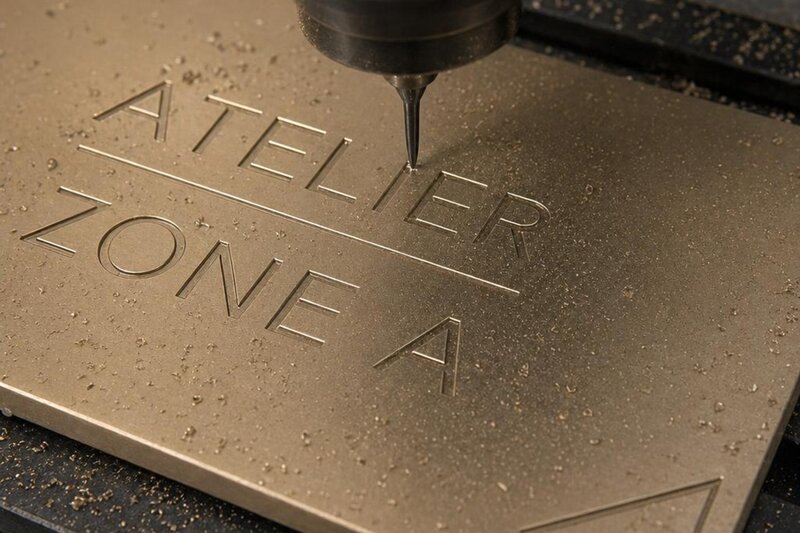
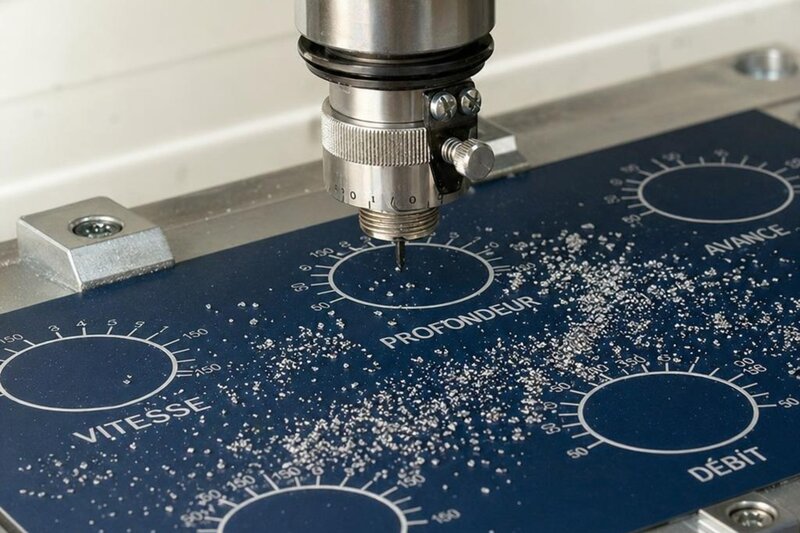
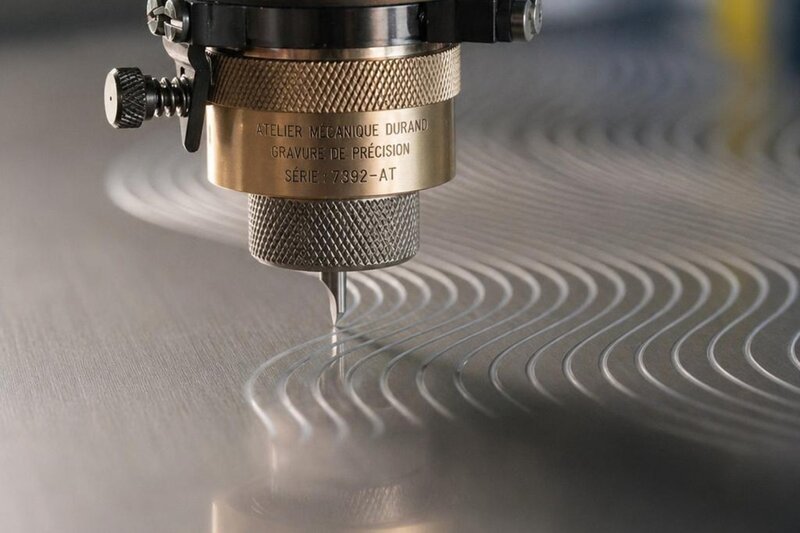
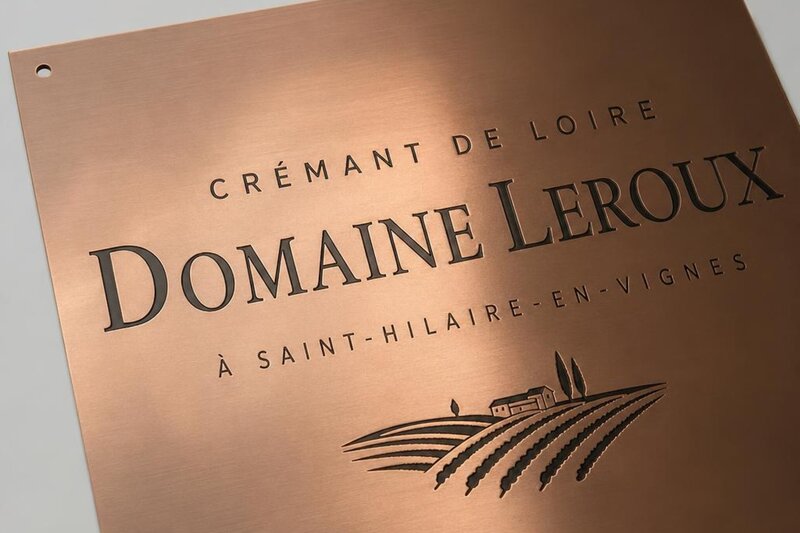
Deep mechanical engraving by rotary cutting. Ideal for solid brass and aluminium where infilled painted lettering is required.
Premium industrial aesthetic. Anodised surface treatment ensures lasting corrosion resistance in demanding conditions.
Surface withstands harsh industrial contact including solvents, mild acids, oils, greases, and heavy-duty cleaning agents.
Matt or textured finish providing robust protection against impact, abrasion, and everyday wear in industrial settings.
Suitable for prolonged outdoor exposure. Material and colours resist fading and degradation under direct sunlight.
Premium acrylic engineered with a thin cap layer (0.05 mm) over a contrasting core, delivering sharp legibility and crisp engraved detail.
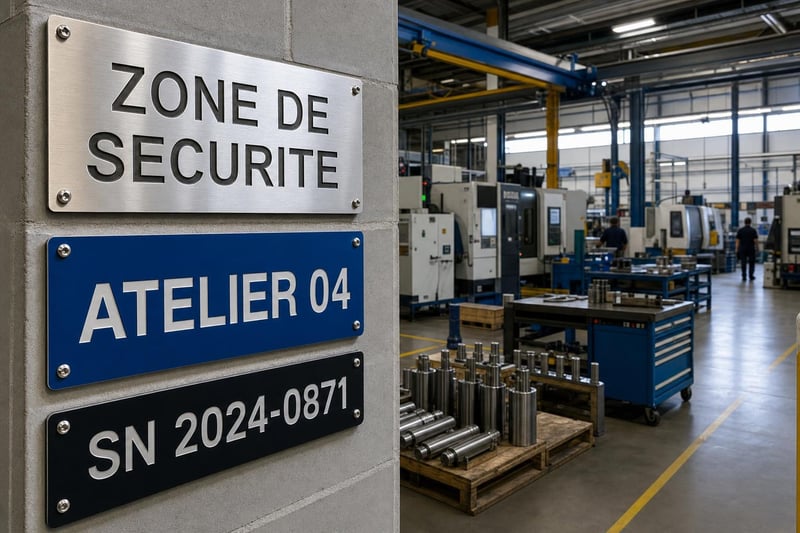
Industrial mechanical engraving covers machine identification plates, control panel fascias, electrical enclosure labelling and durable building signage.
Wherever information must remain legible throughout the entire service life of the equipment, this process stands as the natural technical response to the demands of permanent marking.
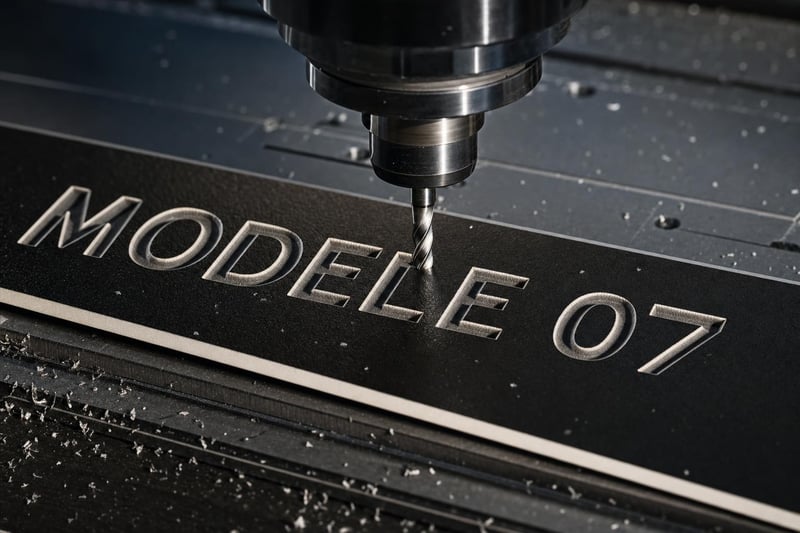
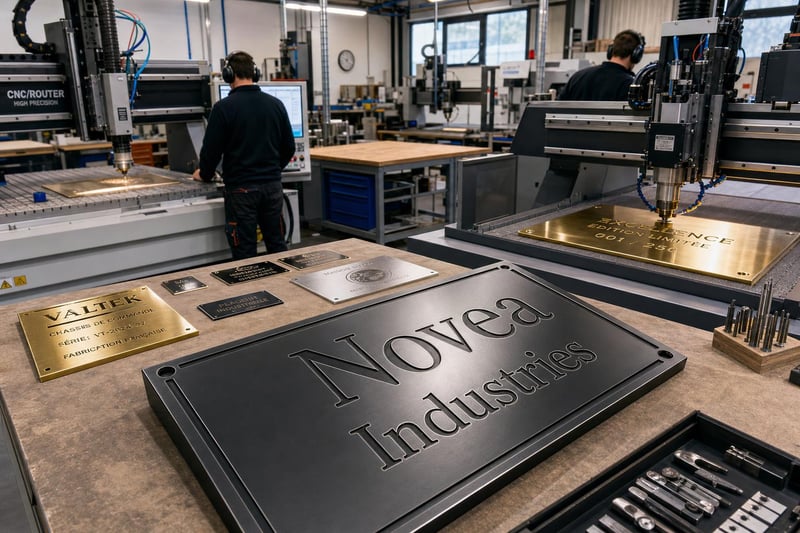
CNC milling inscribes information into the material by removing it, without heat. The result is marking that is inseparable from the substrate, unaffected by abrasion, solvents and UV ageing.
Send us your plans or your specifications. Our design office analyses your requirements and sends you a bespoke commercial proposal within 4 to 8 working hours.
CNC mechanical engraving relies on a rotating tool — the milling cutter — which follows a precise digital path to cut into the material according to the text, logo or code to be inscribed. Unlike laser engraving, no heat is transferred to the surrounding material: the process is purely mechanical. Engraving depth is adjustable, from a simple legible inscription through to a pronounced relief suited to the aesthetic requirements of hospitality or branding. Two groove profiles are common: V-engraving, which delivers strong visual contrast, and U-engraving, better suited to fine inscriptions or 2D codes.
Aluminium is the most common substrate for manufacturer plates and building signage: lightweight, easy to machine and available in anodised form for enhanced corrosion resistance. Stainless steel is the material of choice in wet, chemical or food-processing environments where long-term durability is a compliance requirement. Brass meets the aesthetic demands of the hospitality, luxury and prestige building sectors. Two-layer engraving plastics — comprising a coloured top layer and a contrasting core — are the reference substrate for control panel fascias, enclosure labelling and interior signage: engraving reveals the contrast without ink or additional treatment. PMMA and ABS plastics are suited to interior applications requiring light weight and ease of installation.
In manufacturing, mechanical engraving is used for machine identification plates carrying serial numbers, part references, safety instructions and electrical data. This information must remain legible throughout the entire service life of the equipment, including in environments subject to vibration, oils and frequent cleaning. In the energy and petrochemical sectors, valve, pipework and sub-assembly identification using engraved stainless steel plates meets traceability and operational safety requirements.
Durable building signage — door plates, technical room numbering, services identification — benefits from the permanence of engraved marking, with no risk of peeling or fading. In the hospitality and luxury sectors, engraving on brass or brushed aluminium delivers a premium finish suited to reception areas. Local authorities and healthcare facilities find in this process a reliable solution for the mandatory identification of rooms and equipment.
Regulations applicable to machinery and industrial equipment require marking that is legible, visible and durable throughout the entire service life of the product. Recessed engraving naturally satisfies this requirement: the inscription cannot disappear through wear or ageing. In hazardous areas, the permanence of marking is a compliance condition, not merely an operational convenience. CNC engraving also allows Data Matrix or QR codes to be machined directly into the substrate, readable by industrial scanners or smartphones, to meet documentary traceability obligations in regulated sectors.
Mechanically engraved plates withstand cleaning with powerful industrial products — solvents, degreasers, mild acids — without any degradation of the marking. Unlike self-adhesive labels or surface-printed markings, there is no risk of peeling, erasure or fading. CNC reproducibility simplifies like-for-like replacement of a damaged or lost plate: the digital file guarantees perfect conformity between the original and the duplicate, regardless of the time elapsed between the two production runs.
Professionals who have opted for mechanical engraving on their critical equipment consistently find that they do not revert to adhesive or printed solutions: the permanence of the marking eliminates maintenance interventions related to replacing degraded labels, and legibility remains intact throughout the entire service life of the substrate.