Get a quote
express 4h


Suitable for prolonged outdoor exposure. Material and colours resist fading and degradation under direct sunlight.
Full-colour CMYK printing with UV-cured inks, delivering photographic-quality output and vibrant, long-lasting colours.
Surface withstands harsh industrial contact including solvents, mild acids, oils, greases, and heavy-duty cleaning agents.
Matt or textured finish providing robust protection against impact, abrasion, and everyday wear in industrial settings.
Precision cutting to the millimetre. Easily processed by laser, saw, or guillotine shear to suit your production requirements.
All-purpose material equally suited to smart interior signage and durable long-term outdoor display.
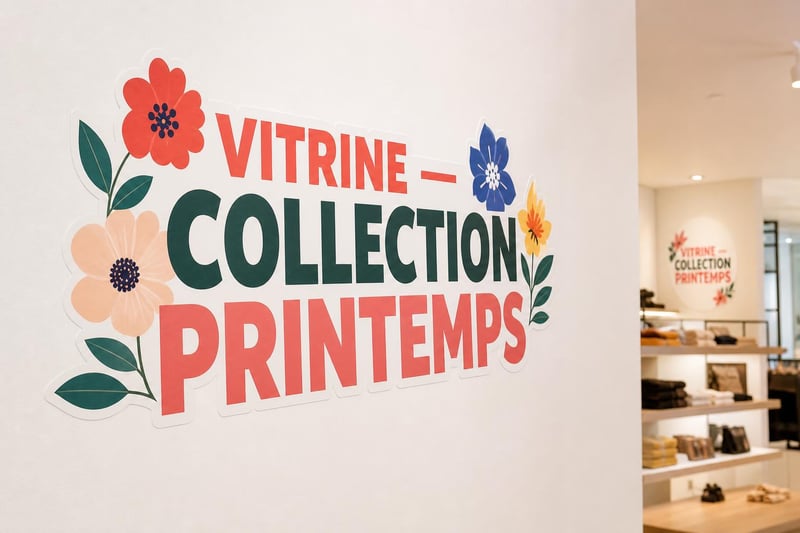
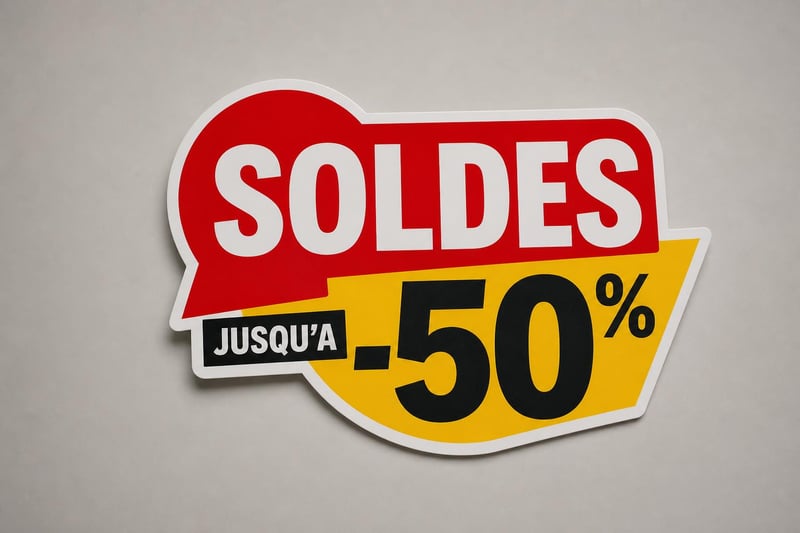
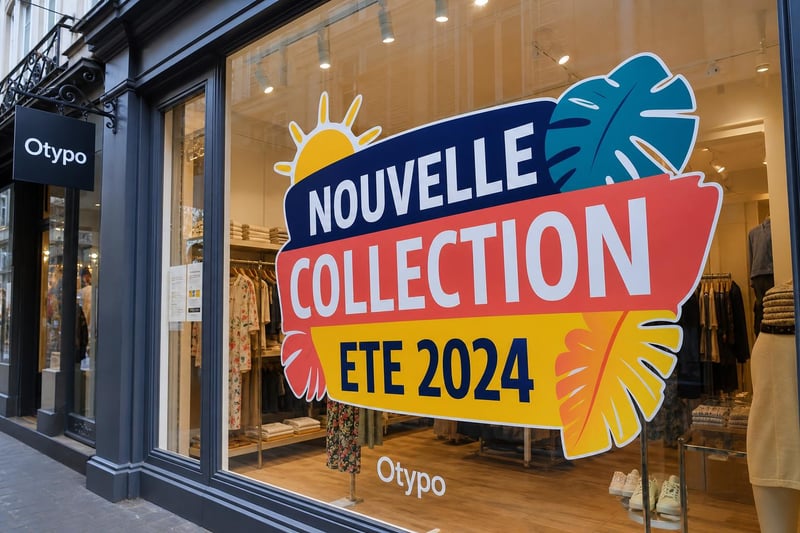
From fleet graphics to seasonal shopfront stickers, advertising stickers cover a broad range of applications: commercial vehicles, glazed doors, technical cabinets, site cabins and event reception areas.
Each application has its own durability and adhesion requirements: UV exposure, cleaning frequency, substrate type and expected service life all determine the choice of film and finish.
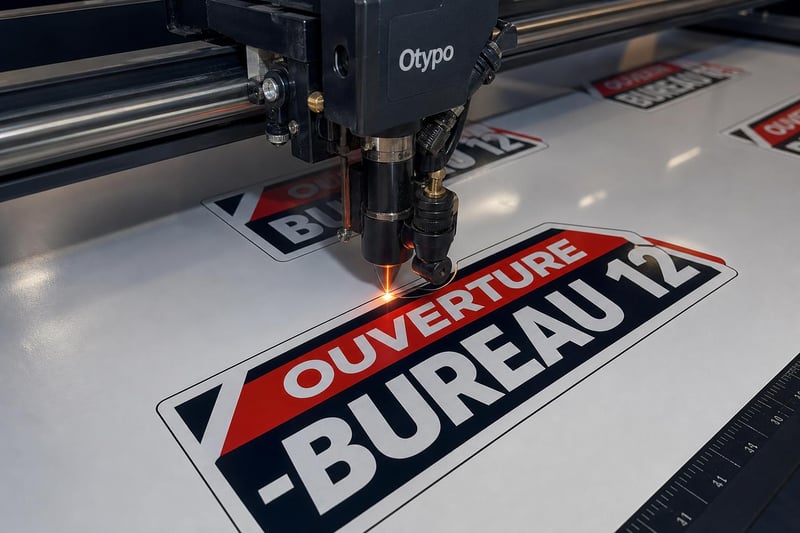
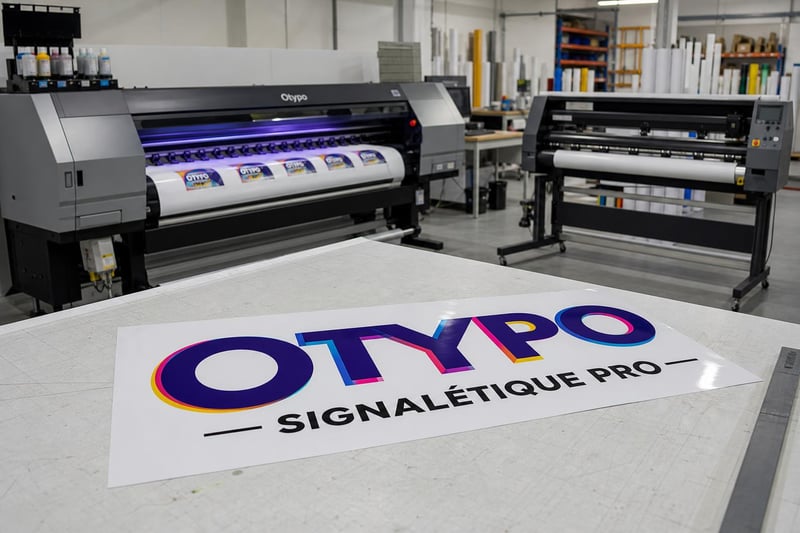
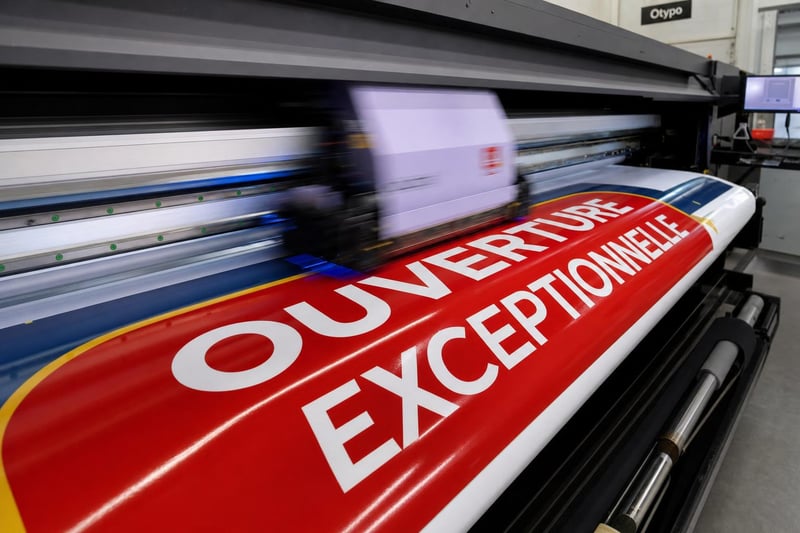
The quality of a custom advertising sticker depends on the combination of printing process and surface finish. High-definition UV digital printing ensures accurate reproduction of brand guidelines, whilst laser cutting delivers complex contours with no burring or rough edges.
Send us your plans or your specifications. Our design office analyses your requirements and sends you a bespoke commercial proposal within 4 to 8 working hours.
An advertising sticker intended for a seasonal promotional campaign does not follow the same criteria as fleet graphics designed to last several years. For temporary applications — sales events, exhibitions, site signage — monomeric vinyl delivers a clean finish with a controlled service life. For durable outdoor graphics on vehicles, facades or equipment, polymeric vinyl is the appropriate choice: its dimensional stability withstands thermal cycling and UV exposure without shrinking or premature delamination.
A south-facing surface in continuous direct sunlight places far greater demands on the ink and adhesive than a sheltered interior surface. In such cases, a laminated protective film becomes essential to maintain legibility and colour retention over the intended service life. These parameters should be factored in from the outset when specifying a custom printed advertising sticker.
UV digital printing cures the ink instantly under ultraviolet light, giving it superior abrasion resistance and colour stability compared to conventional solvent printing. Four-colour output faithfully reproduces even the most demanding brand guidelines, including fine gradients and solid blocks of colour. For a professional custom sticker, this level of precision is essential to maintaining visual brand consistency.
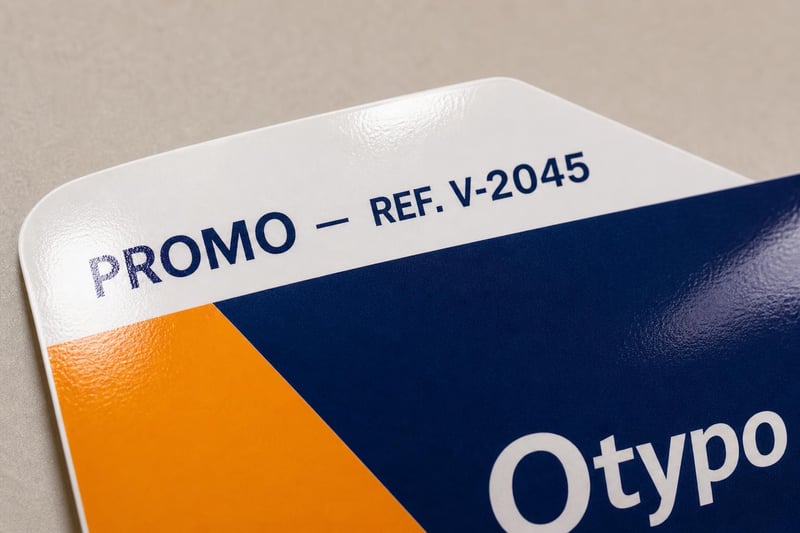
Laser cutting produces clean edges on complex shapes — logos, pictograms, silhouettes — without film distortion or tearing. The choice of surface finish directly affects legibility in context: matt reduces glare on illuminated shopfronts, gloss intensifies colours on vehicle bodywork, and transparent finishes allow the underlying substrate to show through. Each finishing decision should correspond to the visual environment in which the business self-adhesive graphic will be seen.
Glass, painted metal and vehicle bodywork are all suitable substrates for outdoor vinyl stickers, provided the surface is clean, degreased and free from residual moisture. Low surface energy plastics — polyethylene and polypropylene — require high-performance specialist adhesives. On porous or heavily textured surfaces, adhesion is structurally limited and an intermediate substrate solution should be considered.
Laminated vinyl films withstand a service temperature range compatible with standard indoor and outdoor environments. Resistance to moisture and neutral detergents is provided by the laminate, which isolates the ink from direct contact with cleaning agents. In sectors where surfaces are cleaned frequently — food production, healthcare, logistics — the combination of UV inks and a protective film meets hygiene requirements without compromising the legibility of the shopfront sticker or equipment marking.
A laminated vinyl adhesive label is well suited to communication applications: zone identification, furniture dressing, fleet graphics and event signage. Where marking must meet permanent regulatory obligations — machine identification, manufacturer data plates, safety instructions subject to legibility requirements throughout the equipment's service life — a rigid engraved aluminium or polyester panel is required. Its mechanical resistance and longevity ensure compliance with regulatory standards that vinyl alone cannot guarantee in environments subject to abrasion or prolonged exposure.
Advertising stickers offer a structural advantage for organisations that undergo regular changes to their visual identity or content: they can be replaced without any major intervention on the underlying substrate. Retaining production files allows repeat orders to be placed quickly, or graphic updates to be incorporated without redesign delays. This flexibility is particularly valued across retail networks, vehicle fleets and commercial spaces with seasonal communications.
Applying a professional custom sticker requires a clean, dry and degreased surface. The ambient temperature at the time of application affects the quality of initial adhesion: application below 10°C or onto a damp surface significantly reduces long-term durability. A drying period of 24 to 48 hours before exposure to water or detergents is recommended to allow the adhesive to reach its full bond strength.
Maintaining a laminated sticker requires nothing more than wiping with a soft cloth and a diluted neutral detergent. Abrasive products, solvents and high-pressure washers directed at the film edges should be avoided. At the end of a campaign or during a rebrand, removal is carried out with a soft spatula, assisted if necessary by gentle heat. Managing production files in advance allows recurring orders to be planned efficiently and ensures consistent visual coherence across all business self-adhesive graphics.
Supporting professionals in defining their self-adhesive marking solution — from film selection to surface finish — requires a precise understanding of real-world constraints. It is this approach, grounded in actual usage rather than generic criteria, that enables the right medium to be recommended for each application and avoids costly premature replacements in terms of both time and operational disruption.